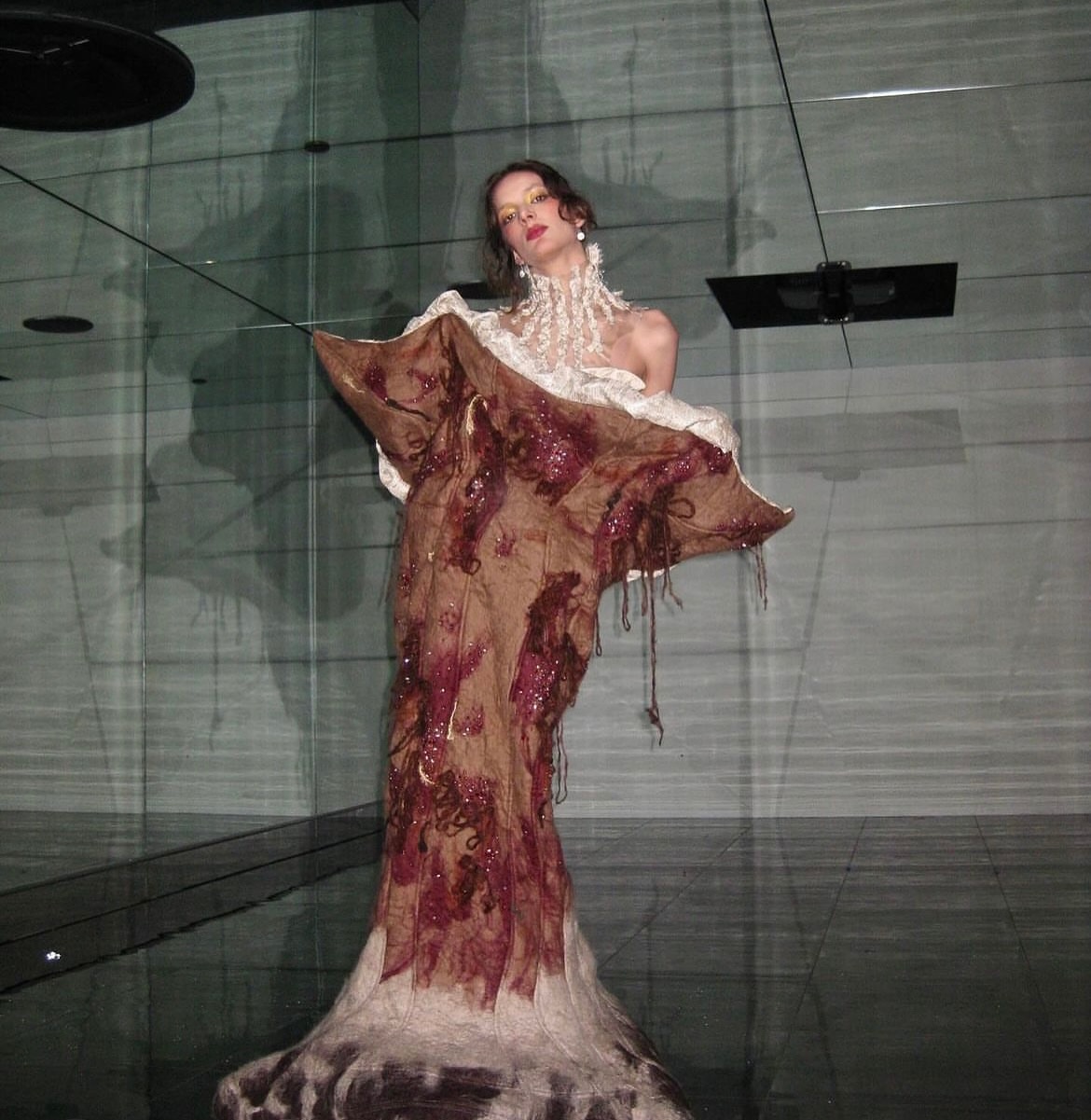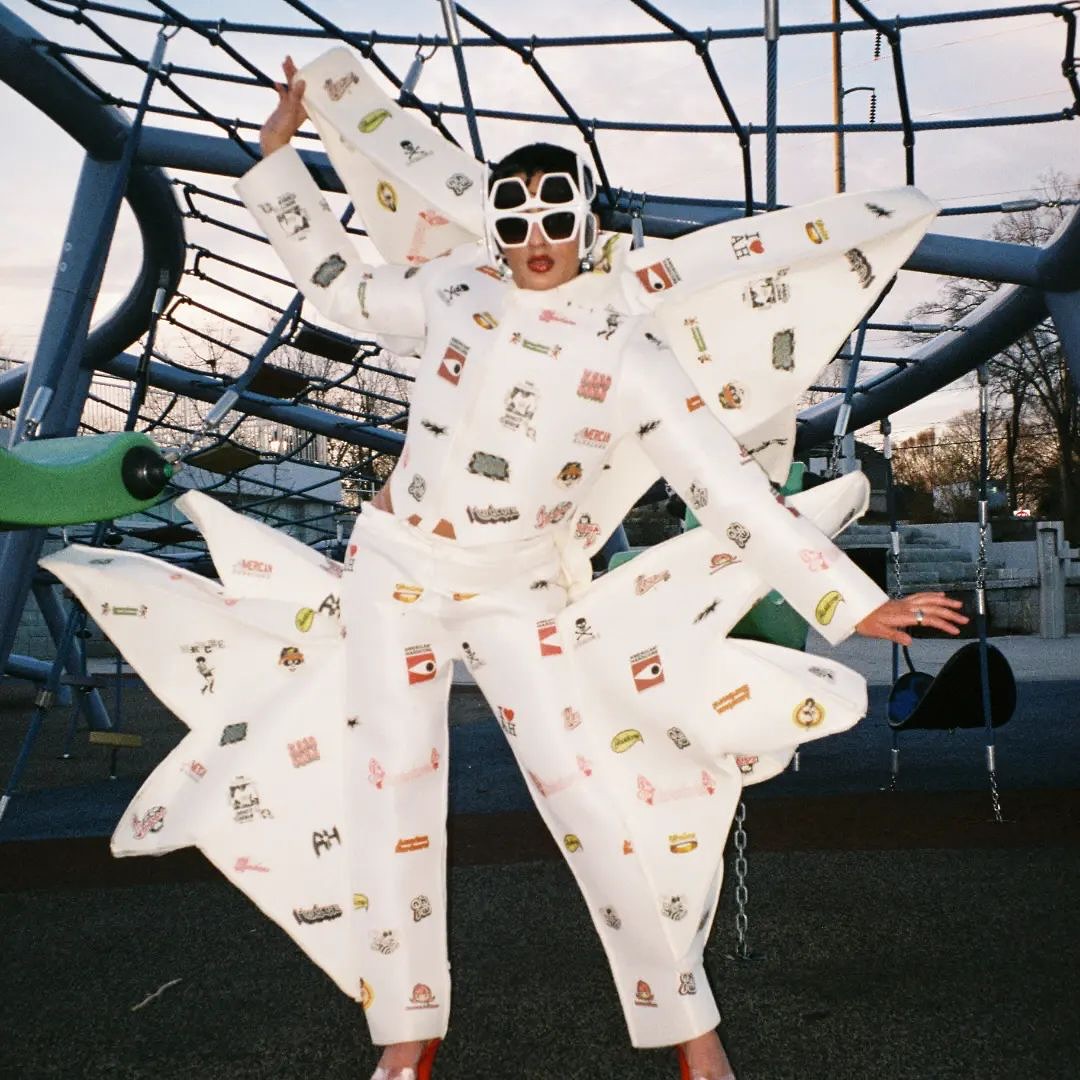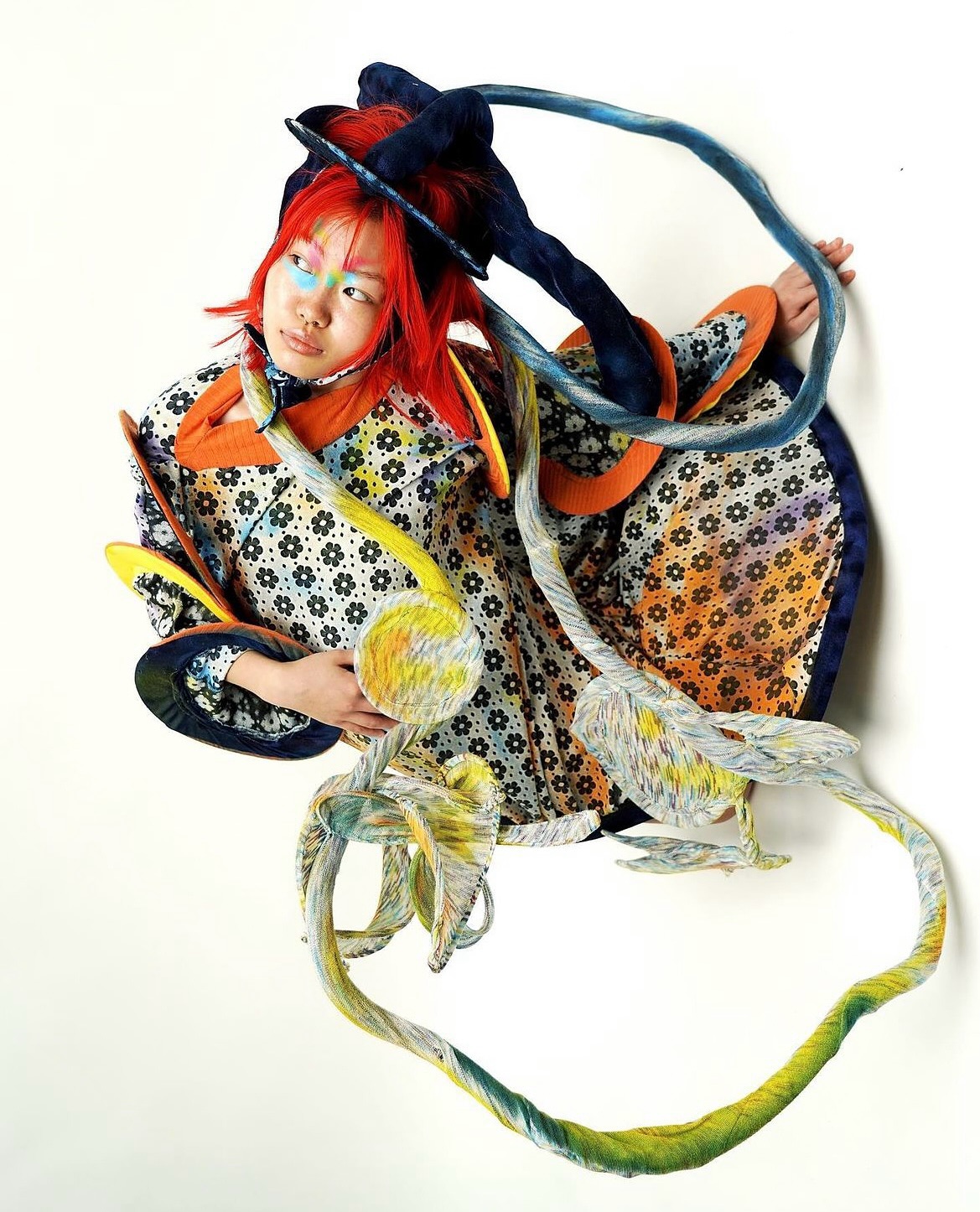
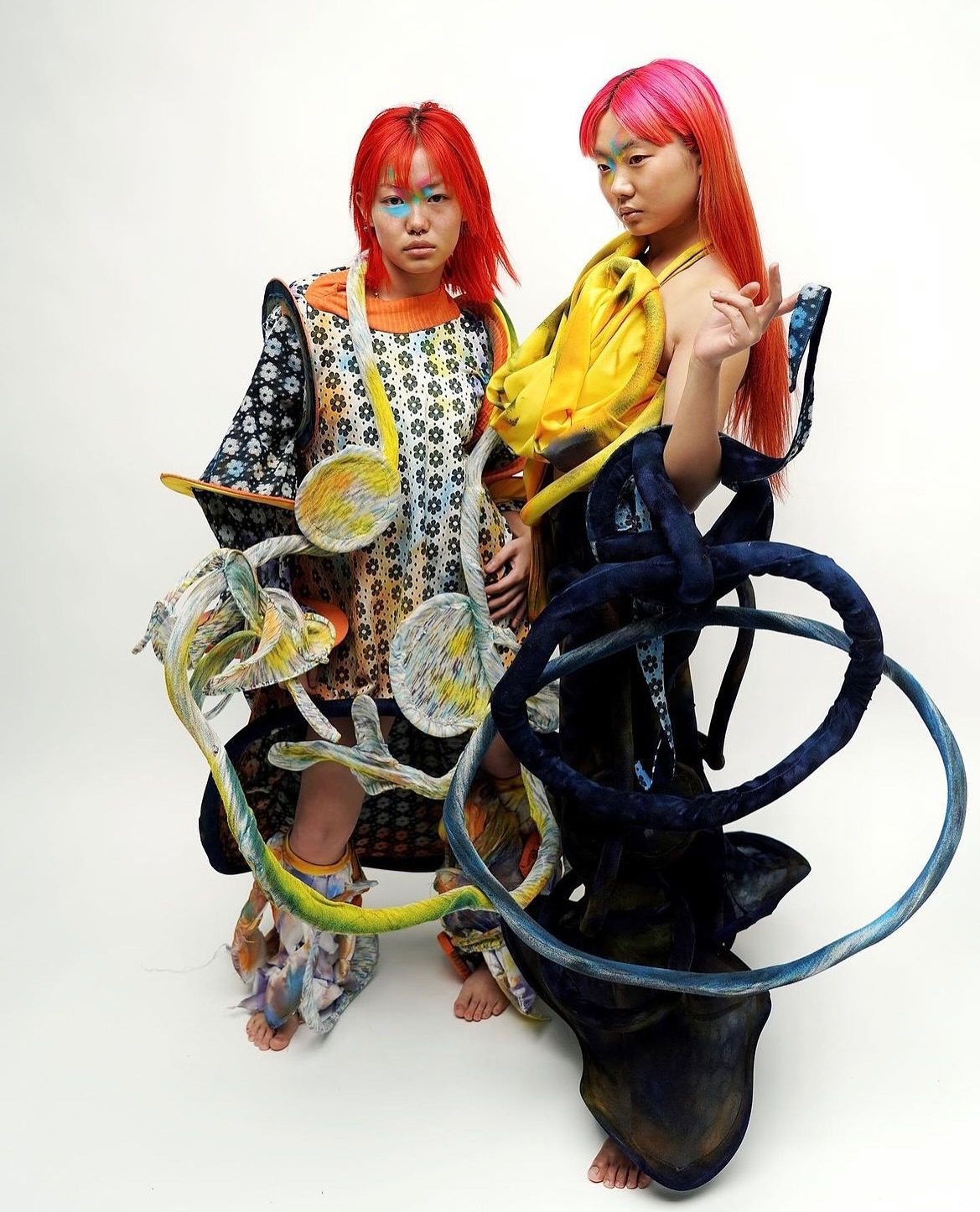
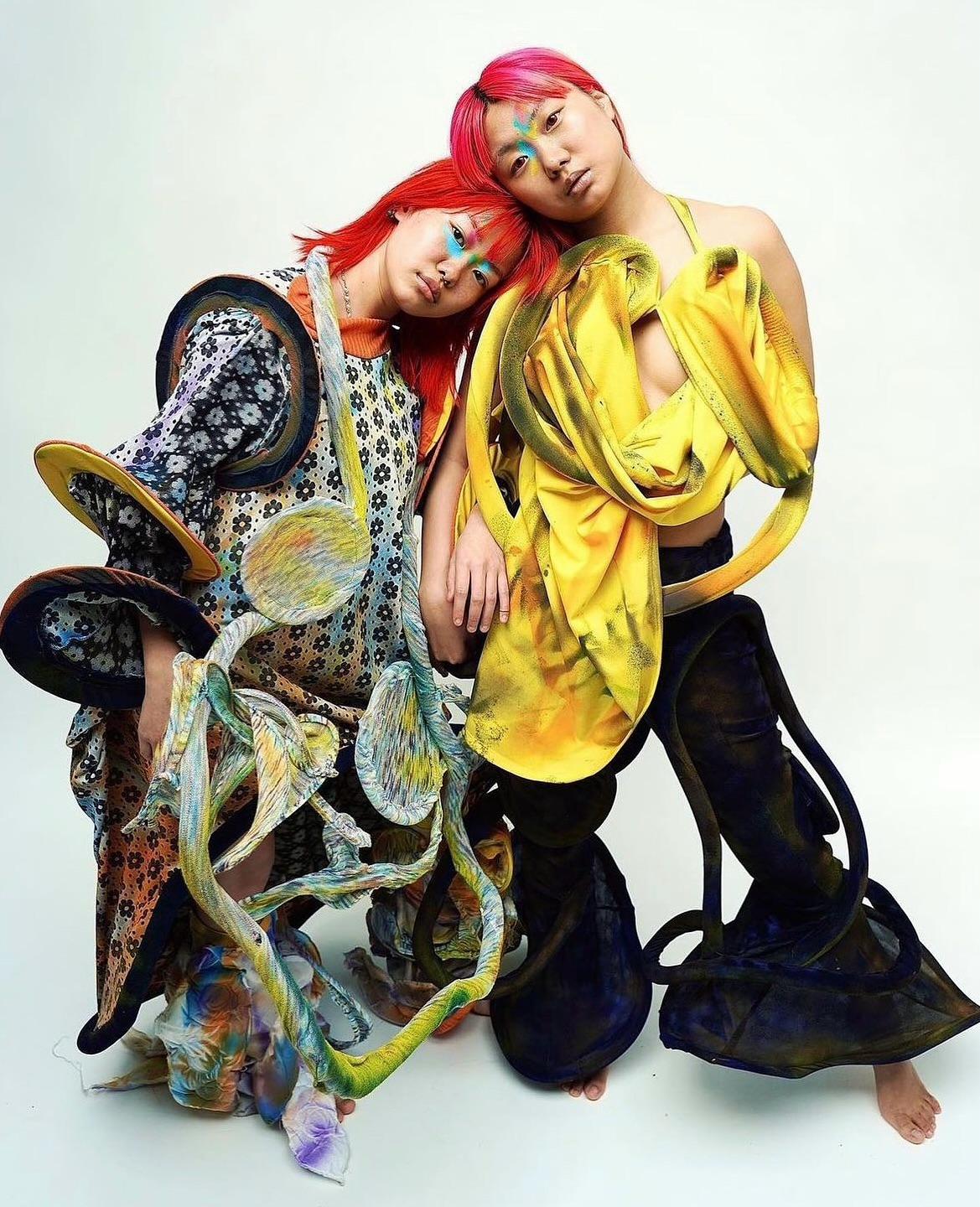
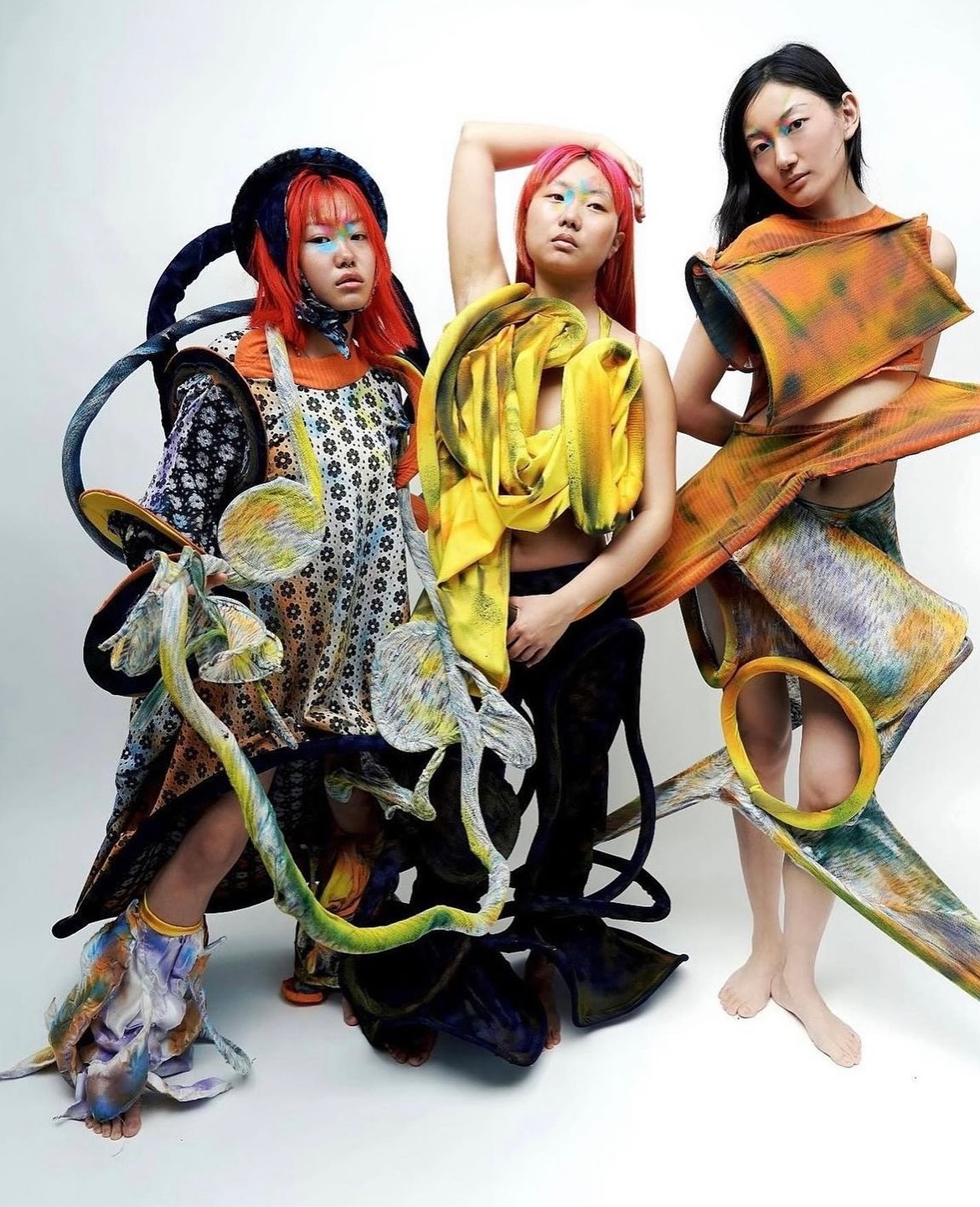
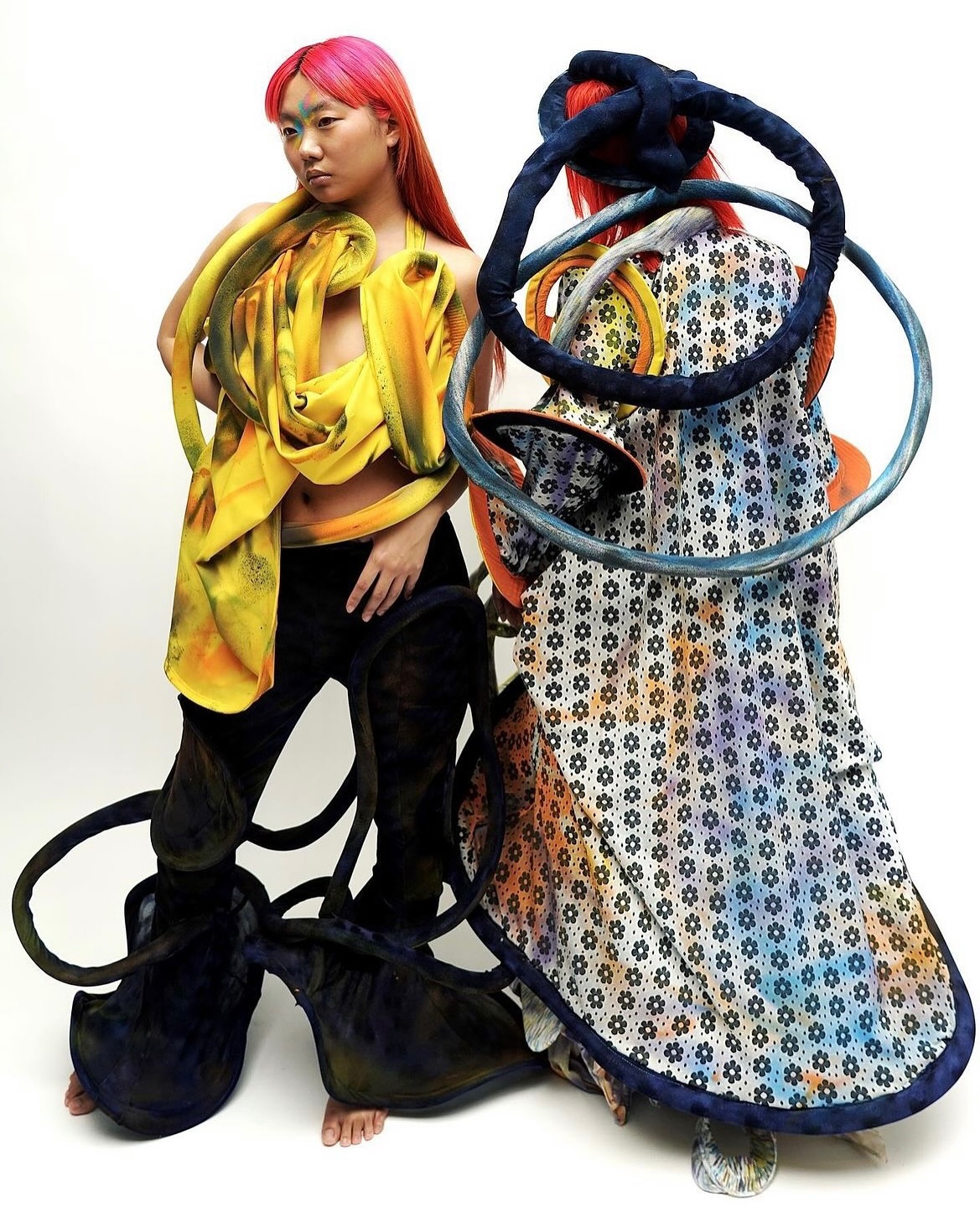
In this striking visual work, Cheng metaphorically positions social media as a modern-day mausoleum, sharply illuminating how our very existence has become an endless performance. The vibrant costumes and sculptural objects symbolically represent the preserved, specimen-like state of humanity in the digital age.
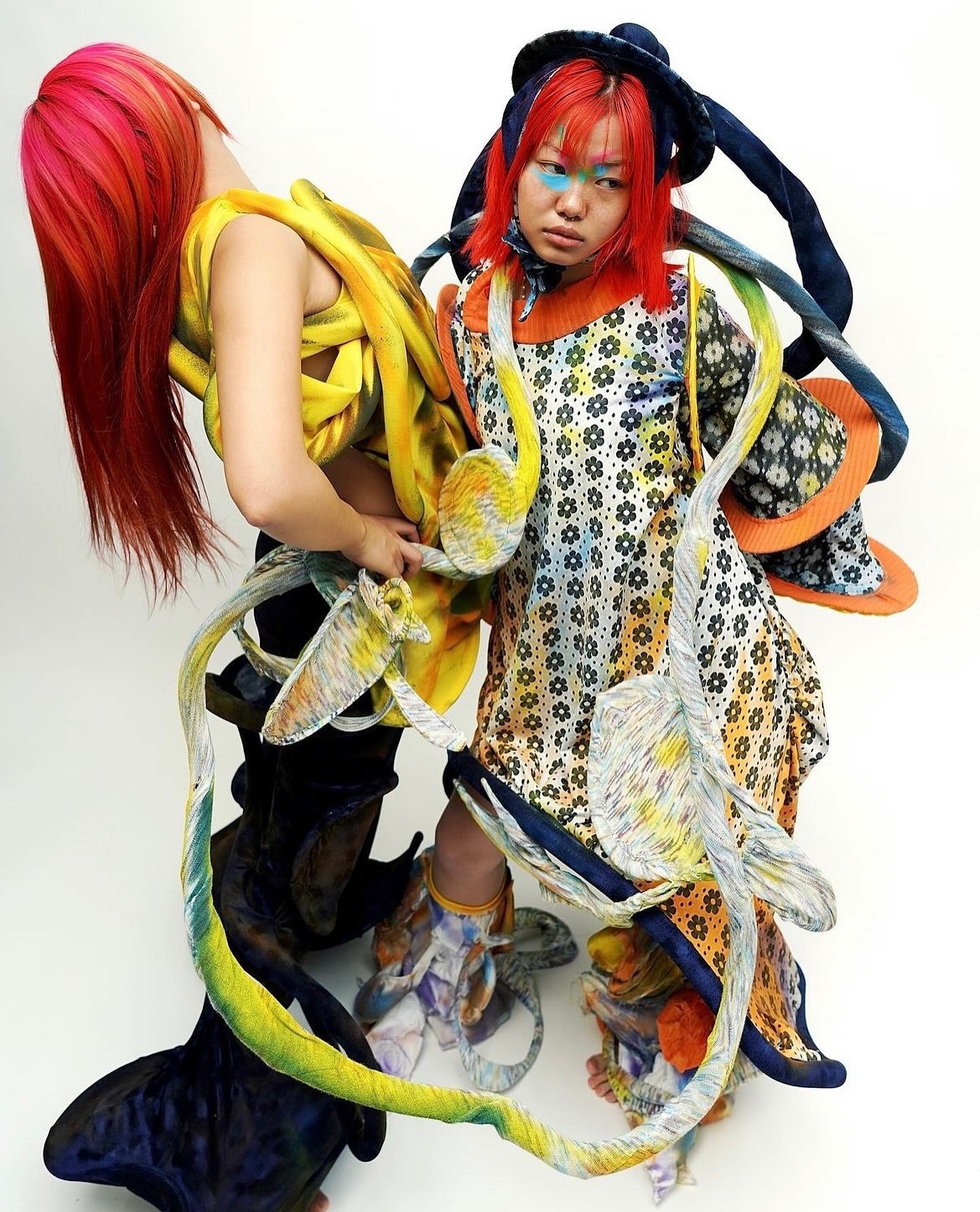
The bold styling, featuring fluorescent orange and red hues paired with black dot patterns, visualizes modern individuals' struggle to assert identity within the digital realm. Snake-like objects coiling around the body serve as metaphors for the invisible digital shackles that bind us.
PAP Magazine continues to showcase creators who keenly capture contemporary social phenomena through fashion. Xijia Cheng's work demands profound reflection on our mode of existence in the digital age, questioning whether we are truly living or merely performing for an endless audience of screens.
FAQ
What did designer Xijiaqing express in this work?
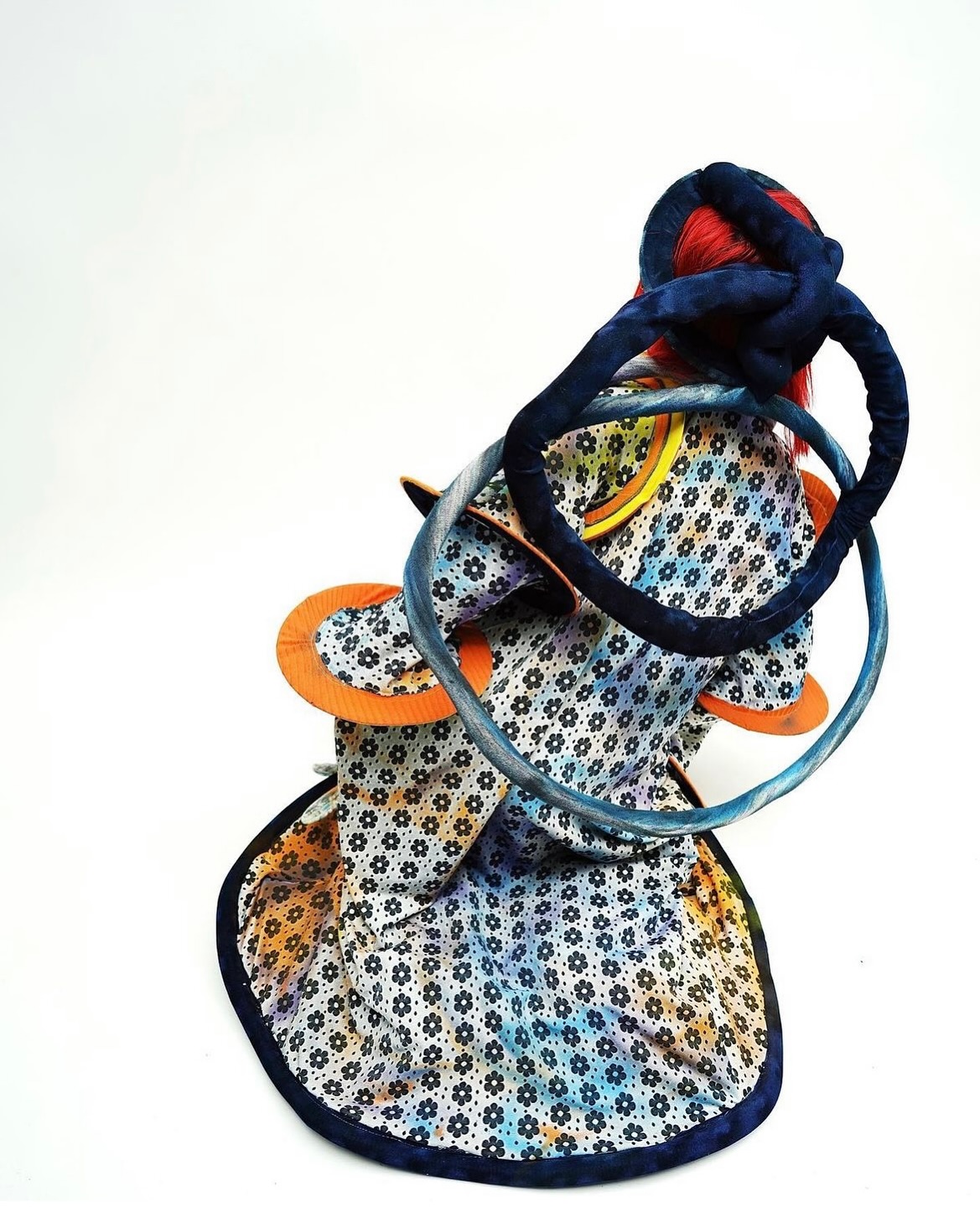
Xijiaqing compares social media to modern mausoleums, conveying the message that our lives exist in an endless cycle of confinement from profile pictures to coffins. The work visualizes through bold colors and sculptural objects how modern people are trapped behind digital frames, observed yet never truly free.
What is the significance of the styling used in this work?
Bold styling combining fluorescent orange, red, and black dot patterns symbolizes modern people's struggle to reveal self within the digital world. Snake-shaped objects enveloping the body metaphorically express the invisible digital shackles that bind us.
Why did PAP magazine feature this work?
PAP magazine consistently introduces creators who keenly capture contemporary social phenomena through fashion. Xijiaqing's work is featured because it presents important cultural discourse demanding deep reflection on ways of existing in the digital age.