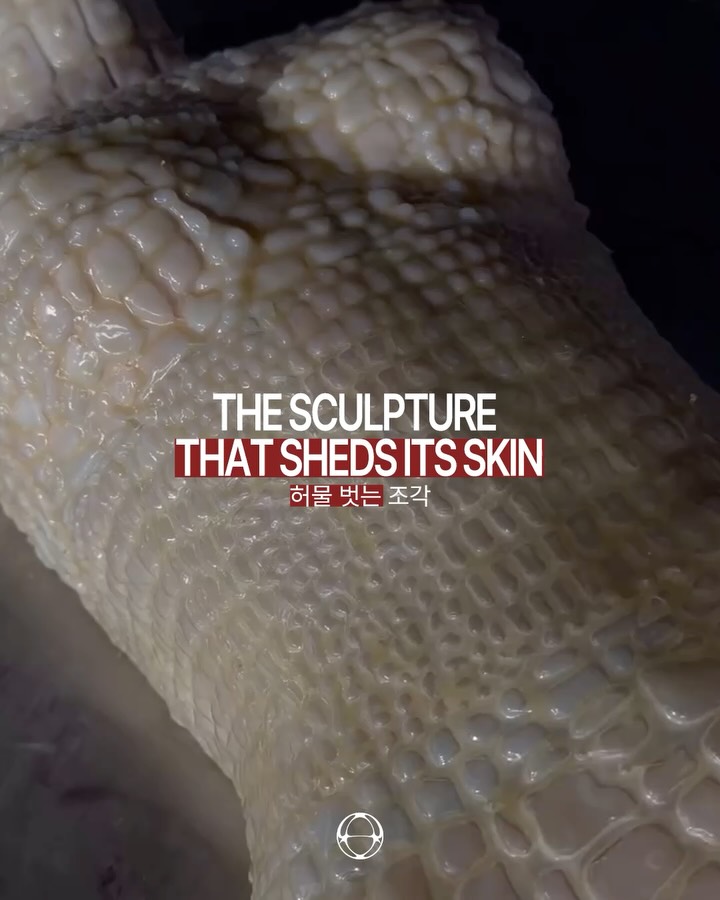
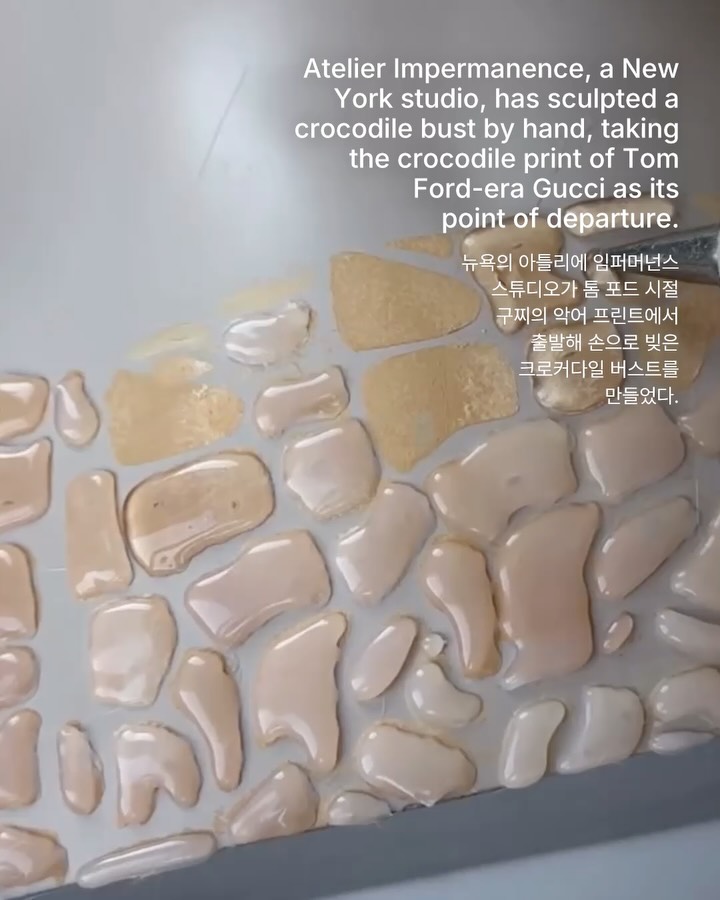
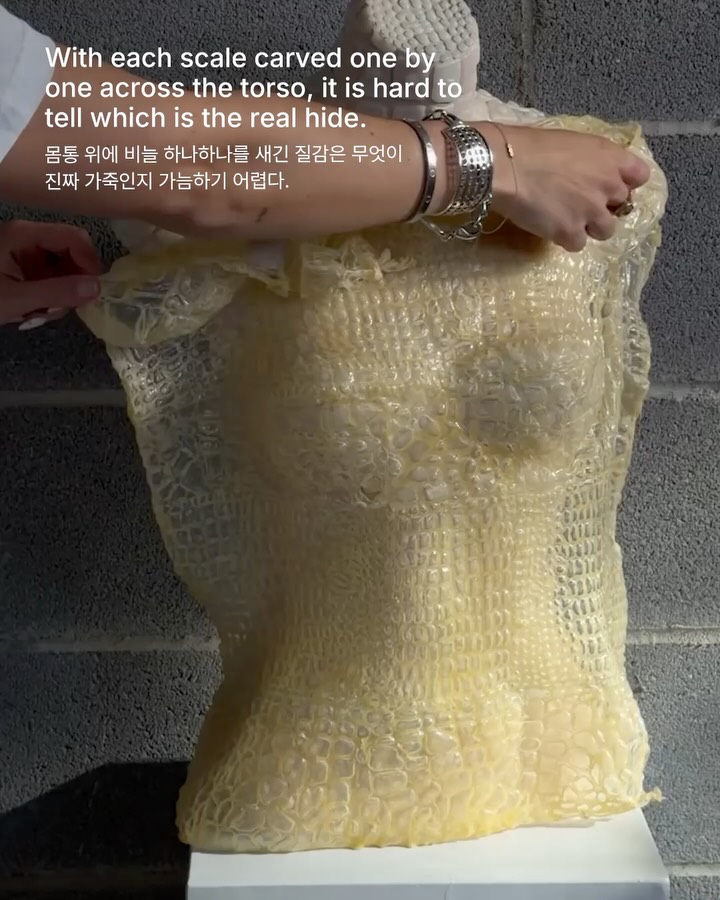
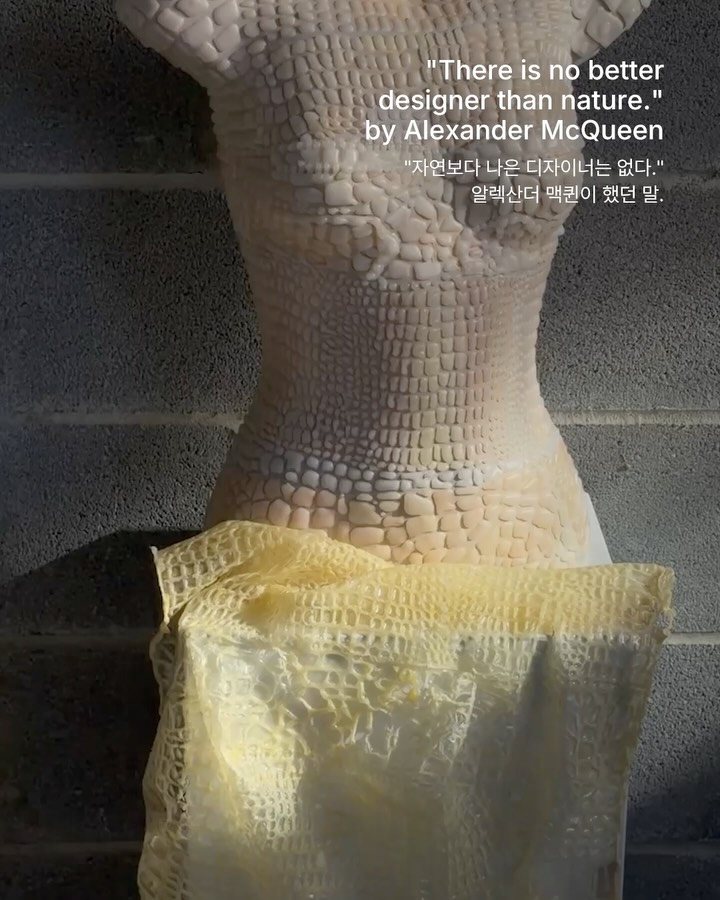
Atelier Impermanence, a New York studio, has unveiled a crocodile bust sculpted by hand, taking the crocodile print of Tom Ford-era Gucci as its point of departure. Mallory Granata, who leads the studio, has long translated the fashion archive into ceramic and resin. This sculpture sits beside a photograph of a white crocodile's foot, captioned with a single line from Alexander McQueen: "There is no better designer than nature." The texture, each scale carved one by one across the torso, makes it hard to tell which is the real hide.
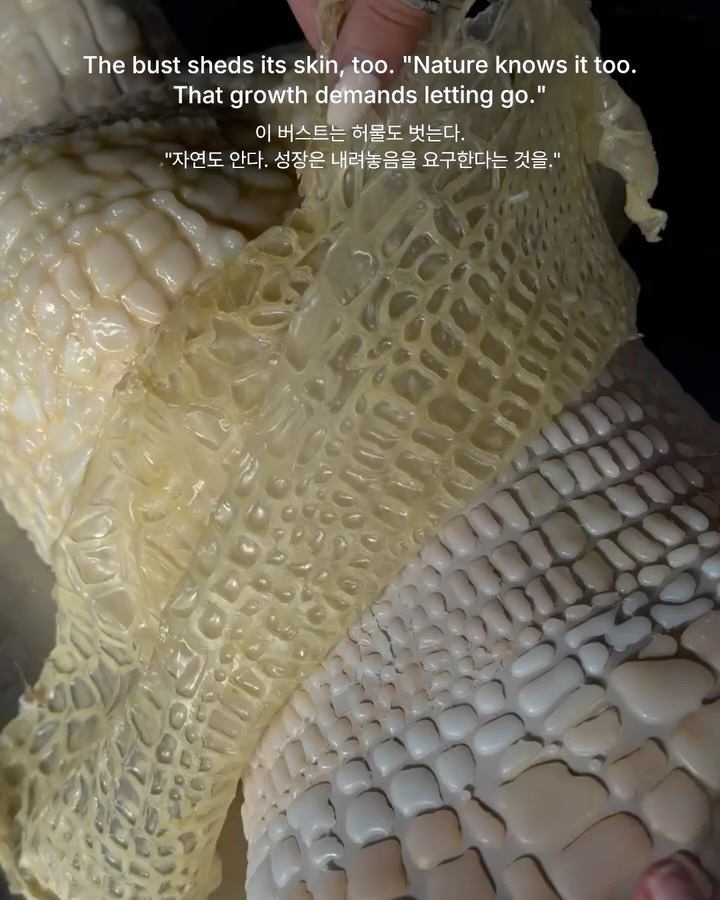
The bust sheds its skin. In an installation unveiled last month, a translucent "second skin" slid slowly down from the sculpture's shoulders. "Nature knows it too. That growth demands letting go," Granata noted. A print fated to dress a single season and disappear remains, in her hands, a skin that cannot be shed.
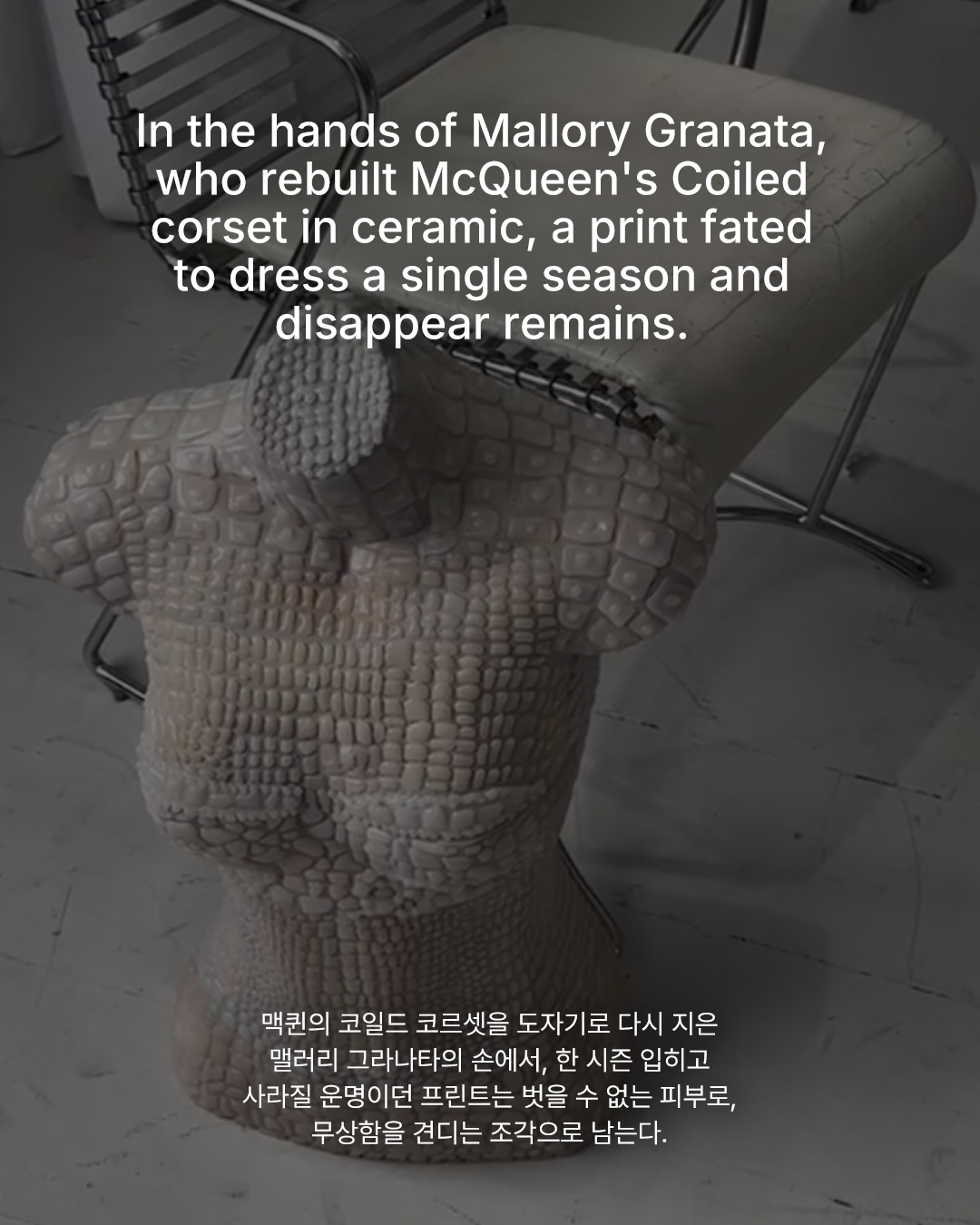
Atelier Impermanence has previously rebuilt McQueen's Coiled corset in ceramic. Granata's consistent practice is to turn fashion's transient nature into permanent sculpture. A print is normally a two-dimensional image laid on fabric, but here it is sculpted as three-dimensional skin. The transformation into a material that endures impermanence is the defining trait.
The photograph of the crocodile's foot placed beside the sculpture points to nature's original. It is both the source of the Gucci print and the archetype of the scales Granata carved by hand. Nature created the texture, fashion borrowed it, and sculpture returns it to matter. The cycle is slow but complete.
Do you believe growth is a process of shedding?
The bust sheds its skin. In an installation unveiled last month, a translucent "second skin" slid slowly down from the sculpture's shoulders. "Nature knows it too. That growth demands letting go," Granata noted. A print fated to dress a single season and disappear remains, in her hands, a skin that cannot be shed.
Atelier Impermanence has previously rebuilt McQueen's Coiled corset in ceramic. Granata's consistent practice is to turn fashion's transient nature into permanent sculpture. A print is normally a two-dimensional image laid on fabric, but here it is sculpted as three-dimensional skin. The transformation into a material that endures impermanence is the defining trait.
The photograph of the crocodile's foot placed beside the sculpture points to nature's original. It is both the source of the Gucci print and the archetype of the scales Granata carved by hand. Nature created the texture, fashion borrowed it, and sculpture returns it to matter. The cycle is slow but complete.
Do you believe growth is a process of shedding?
FAQ
What kind of work does Atelier Impermanence do?
Atelier Impermanence is a New York-based studio that translates fashion archives into permanent materials like ceramics and resin. Led by Mallory Granata, it transforms ephemeral fashion into sculpture, recreating pieces like Alexander McQueen's coiled corsets and Tom Ford-era Gucci crocodile prints.
How does the Crocodile Bust shed its skin?
In last month's installation, a translucent 'second skin' slowly cascades from the sculpture's shoulders. It visualizes nature's principle that growth requires letting go.
Which fashion archive inspired this sculpture?
It originated from Tom Ford-era Gucci's crocodile print. The originally two-dimensional fabric print was reinterpreted as three-dimensional sculpture with hand-carved scales, embodying Alexander McQueen's philosophy that 'there's no better designer than nature.'