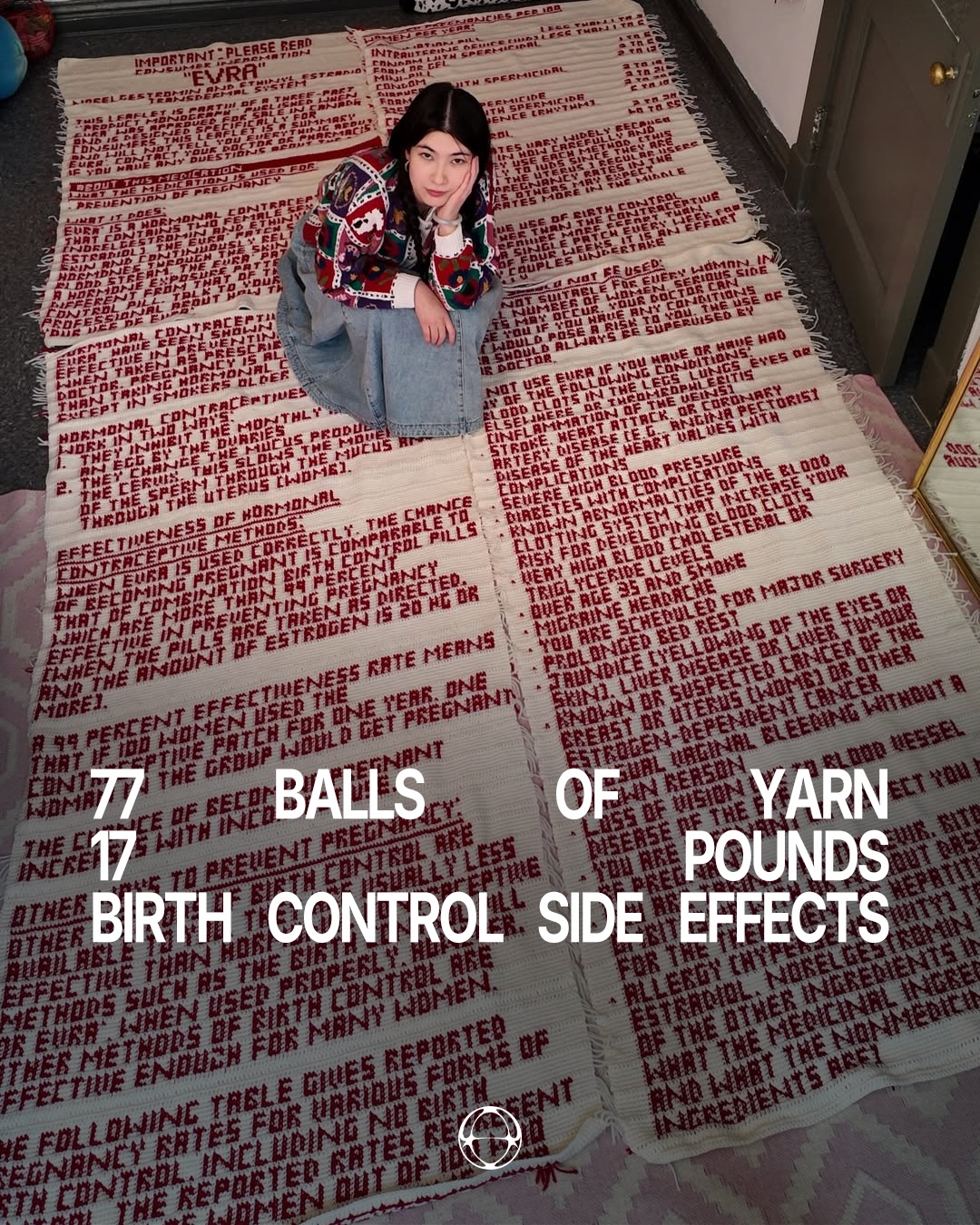
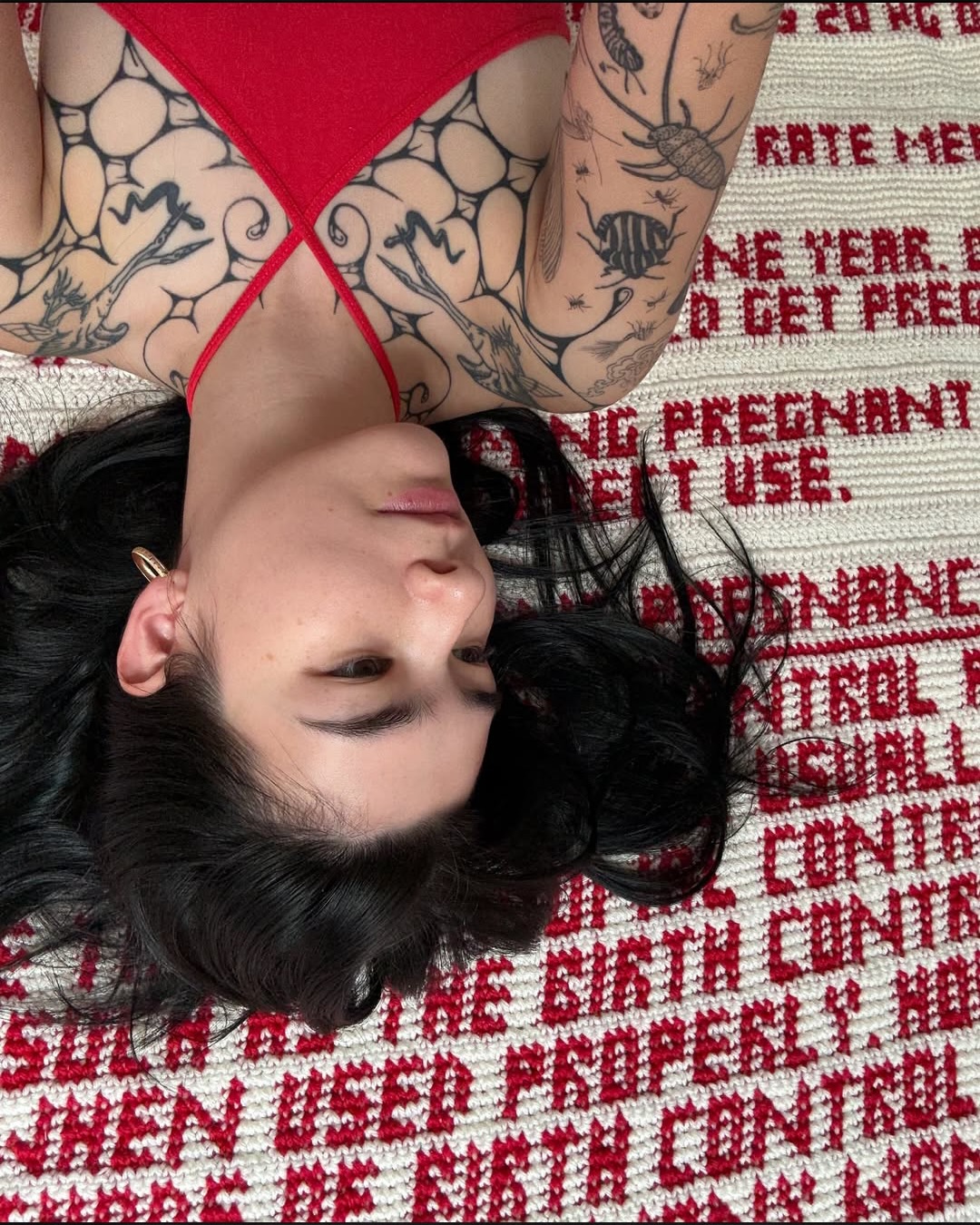
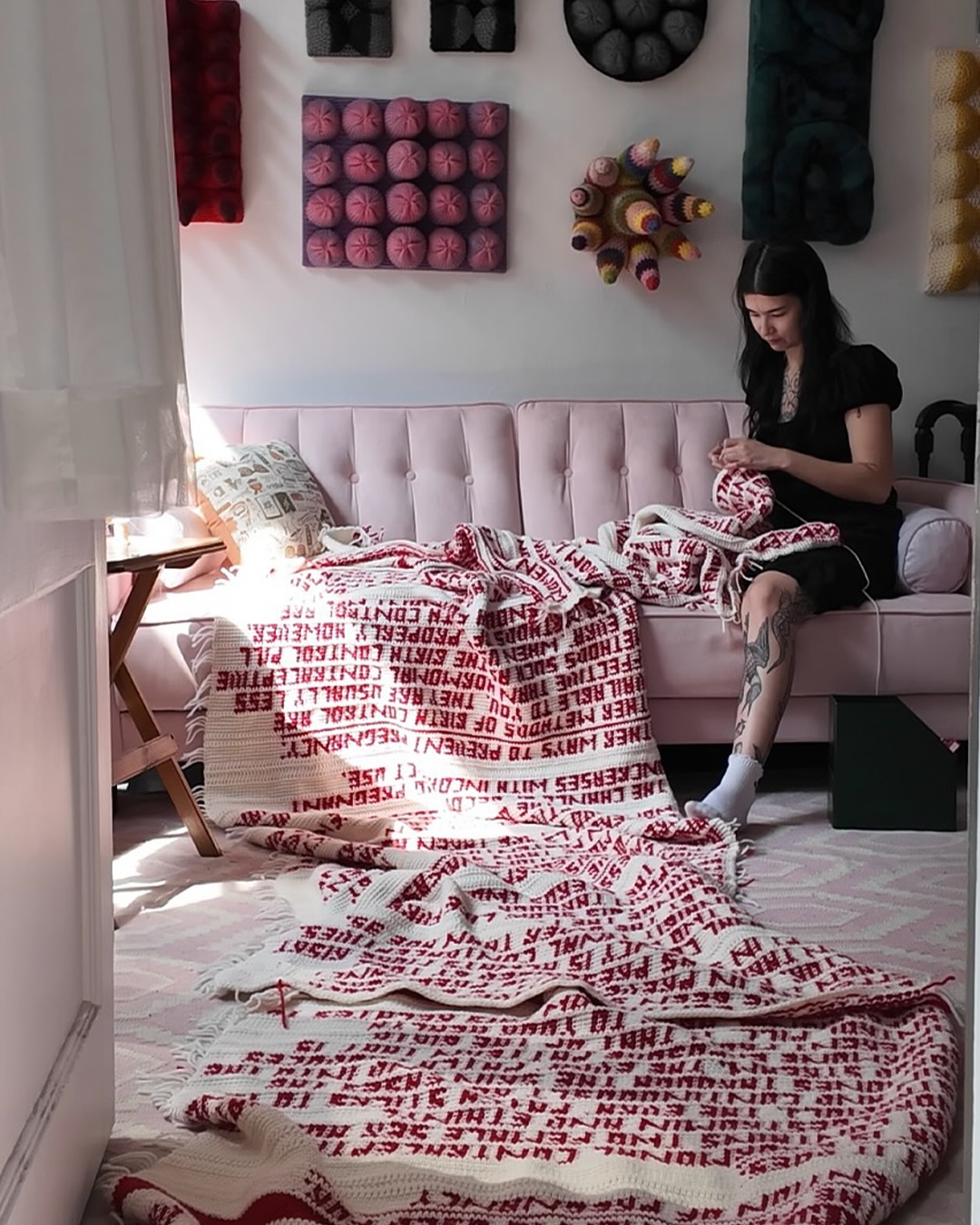
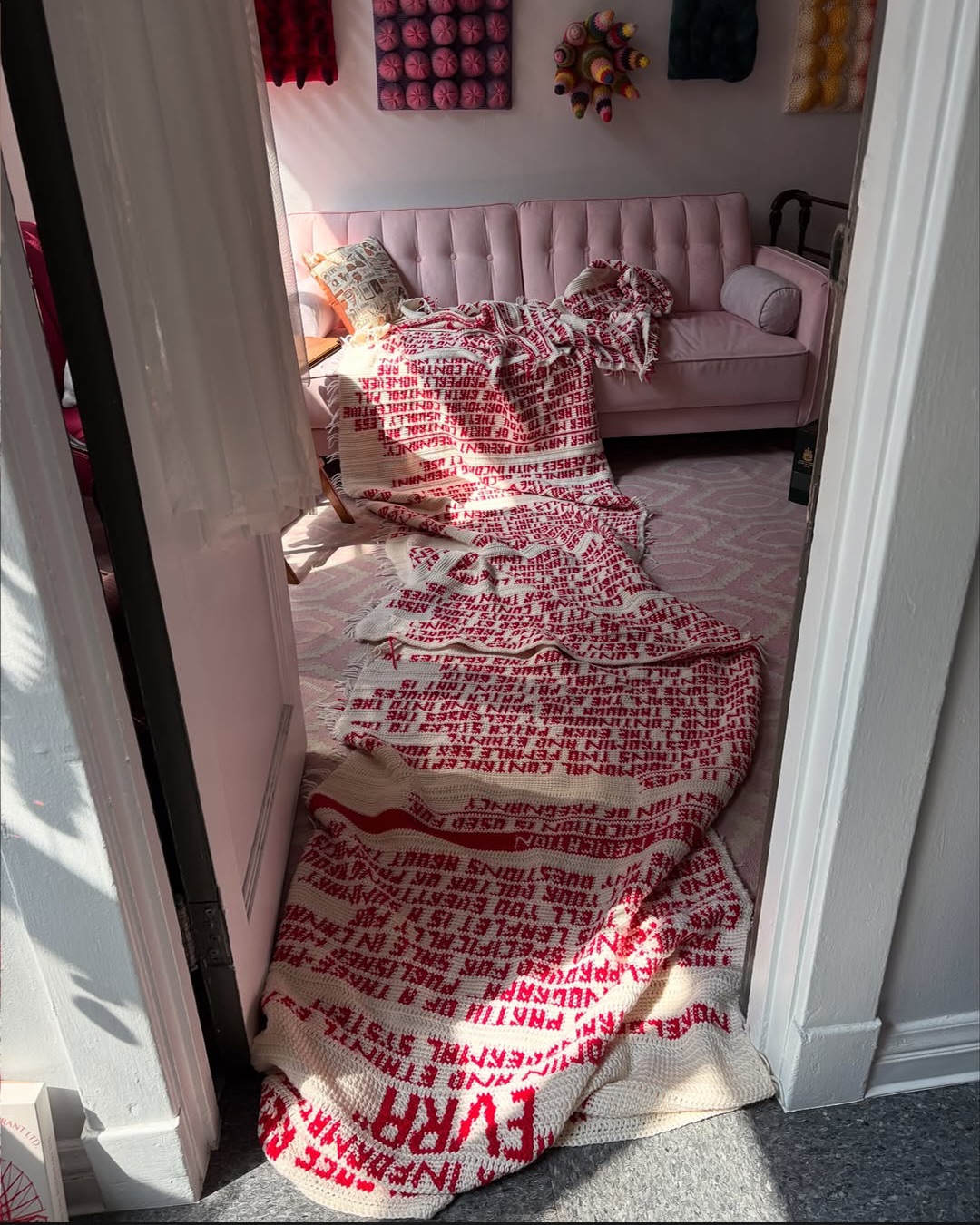
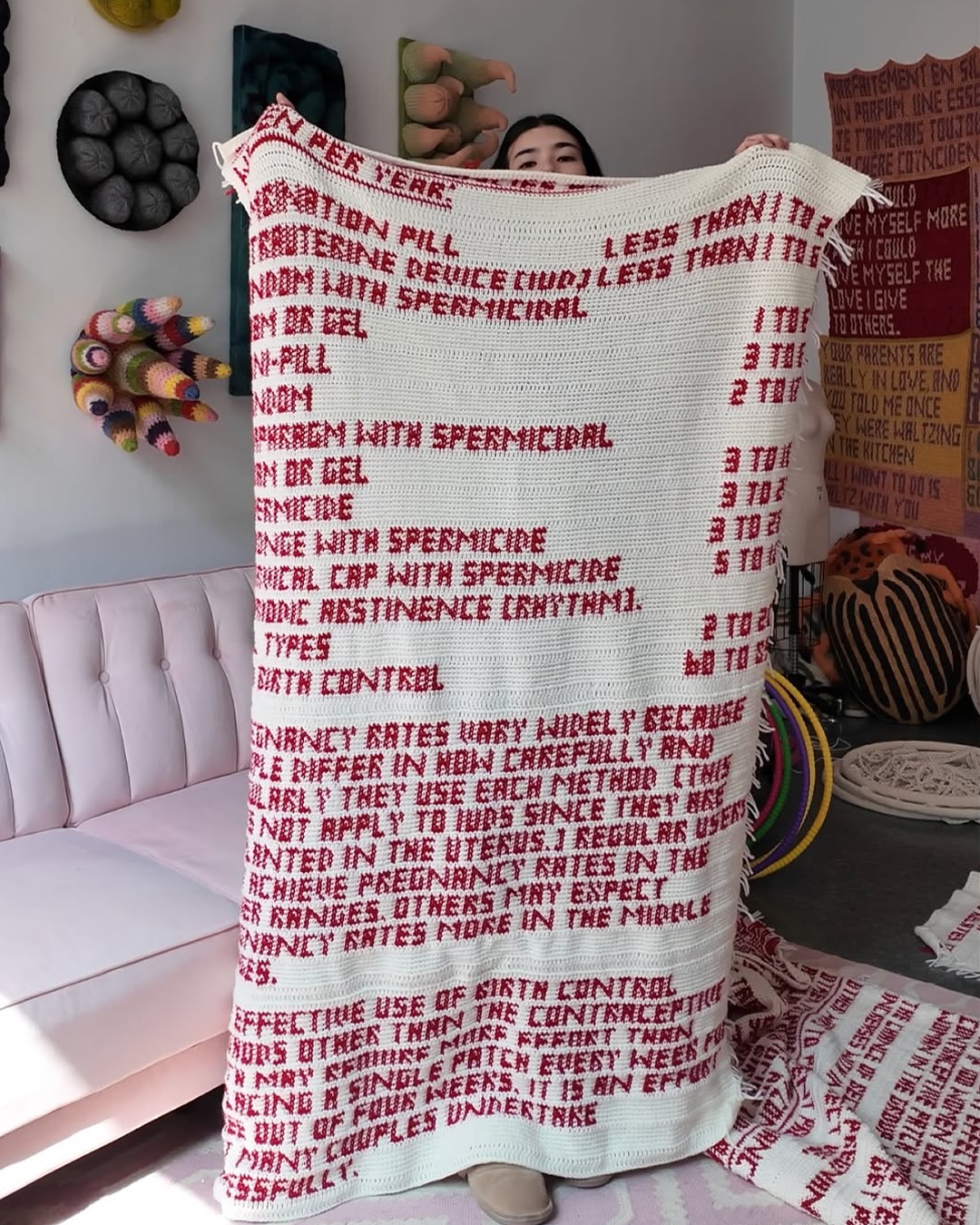
Masse describes the piece as a symbol of the ongoing struggle for bodily autonomy and women's rights. Each dense stitch represents the effort required for women to understand information about their own bodies and protect their right to choose. The red yarn symbolizes life and sacrifice, while the fragile nature of crochet—easily unraveled—metaphorically reflects the vulnerability of rights that are constantly under threat.
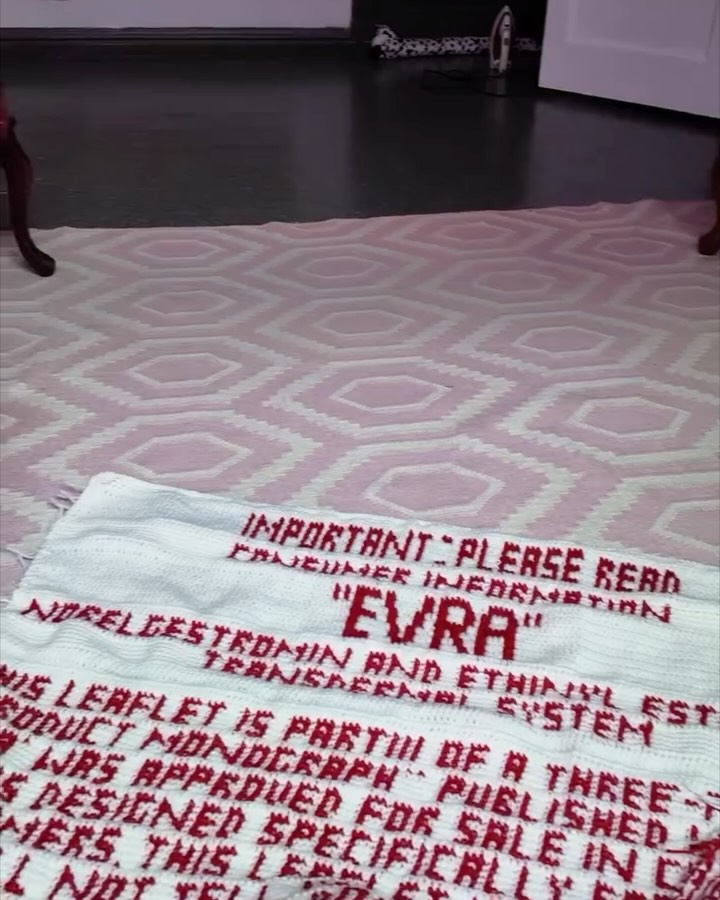
Birth control information sheets, dense with side effects and warnings, are usually glanced at once and discarded. By transforming this ephemeral document into a large-scale textile work, Masse makes visible the significance embedded within it. The artwork reminds us that medical information is not merely text, but knowledge directly connected to women's bodies and lives—a right that must be protected. The choice to use handicraft, a traditionally 'feminine' medium, to address contemporary issues of feminism and bodily autonomy adds layers of meaning to the work.
Masse's work demonstrates that textile art can transcend decoration to become a powerful vehicle for political and social messages. Stitch by stitch, this tapestry bears heavy yet beautiful witness to how precious women's voices and rights must be treated. It stands as both artwork and testimony—a material archive of information that should never be taken for granted.
FAQ
What is Alexandria Masi's Birth Control Tapestry?
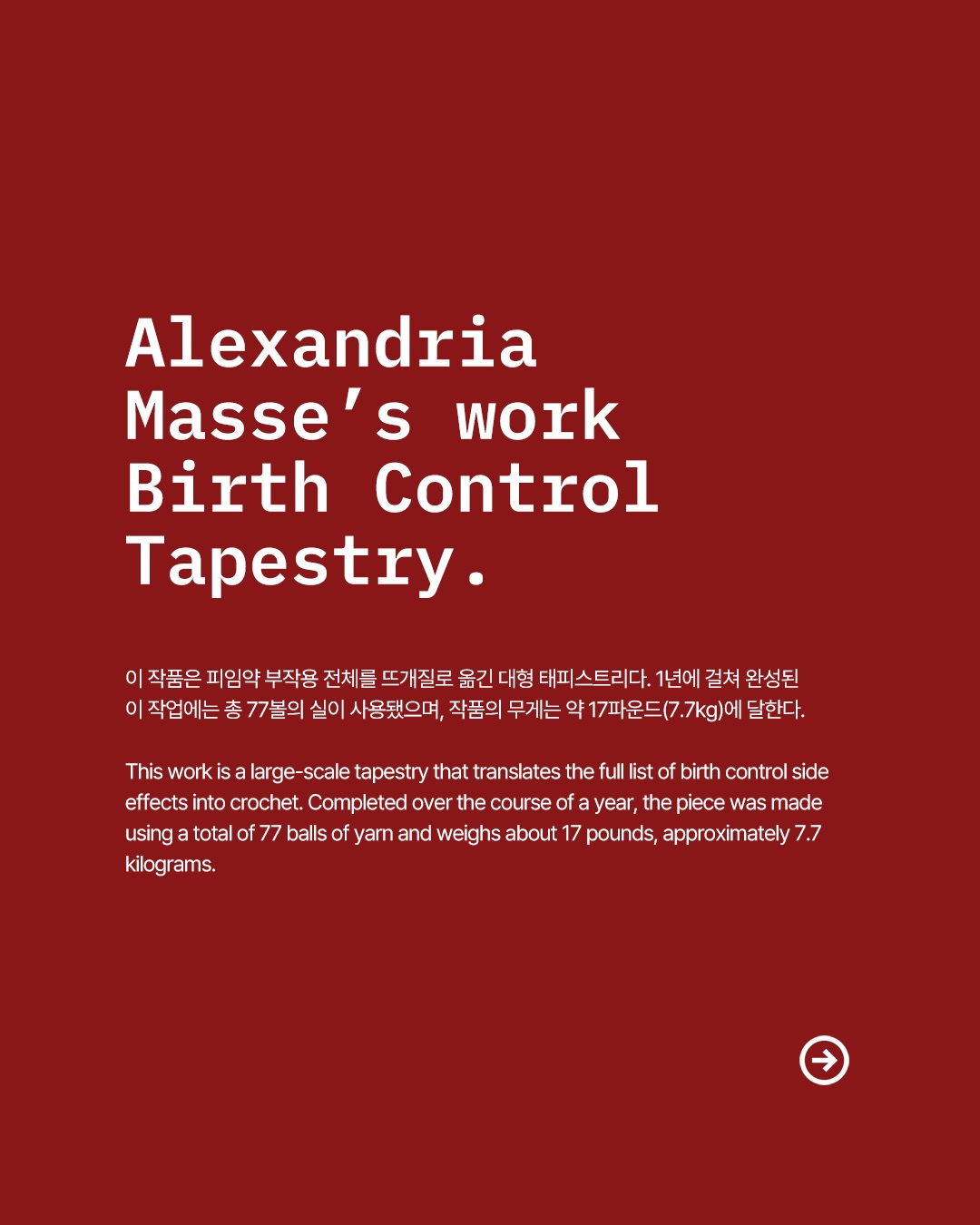
Canadian artist Alexandria Masi's Birth Control Tapestry is a large-scale tapestry that translates the entire content of a birth control information sheet into knit. Completed over one year with 77 balls of red yarn, it weighs approximately 7.7kg. It's a feminist textile artwork symbolizing bodily autonomy and women's rights.
What does the red yarn symbolize in this work?
The red yarn symbolizes life and sacrifice, while the densely woven stitches represent the effort women make to understand information about their bodies and protect their right to choose. The reversible nature of knitting also metaphorically expresses the vulnerability of women's rights, which can be easily threatened.
Why did Alexandria Masi choose birth control information sheets as her subject?
Masi transformed the birth control information sheet—something most people read once and discard—into a monumental textile work to make its significance visible. She aimed to illuminate that medical information isn't just text but knowledge directly connected to women's bodies and lives, and a right that must be protected.