13 more of 15 images
This editorial opens with a PREMIUM membership
STANDARD currently covers editorials published since 2026.04
PREMIUM · the full archive since 2019
See membershipPREMIUM · the full archive since 2019
DOWNLOADS
Cover and logo image downloads are for Standard members.
Contributing creators: the tearsheet and hi-res images of your own editorial are included from Standard (€5.49/mo).
Contributing creators: the tearsheet and hi-res images of your own editorial are included from Standard (€5.49/mo).
Personal, non-commercial use only
Brands in this editorial
FAQ
What is the shooting concept of Stone to flesh?
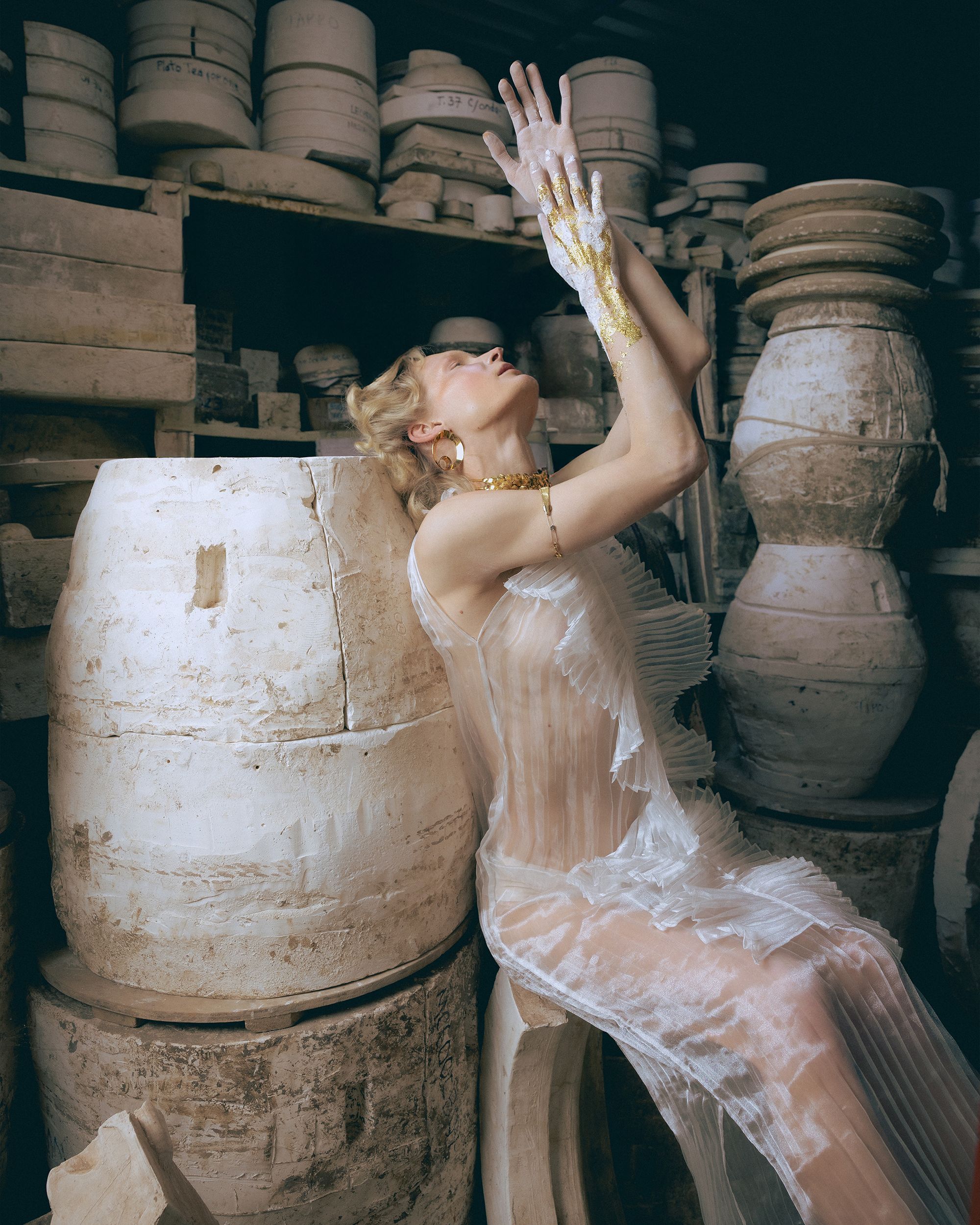
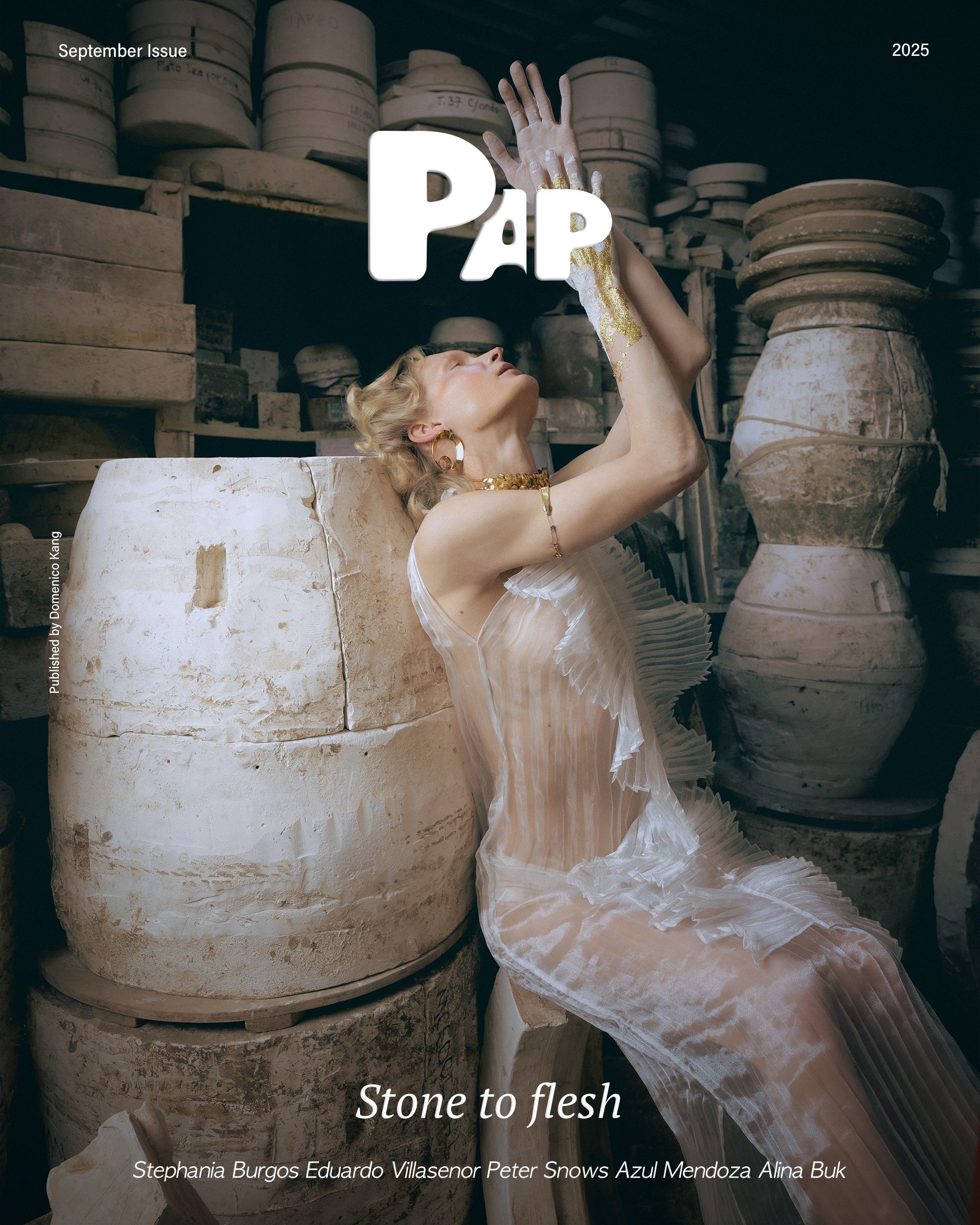
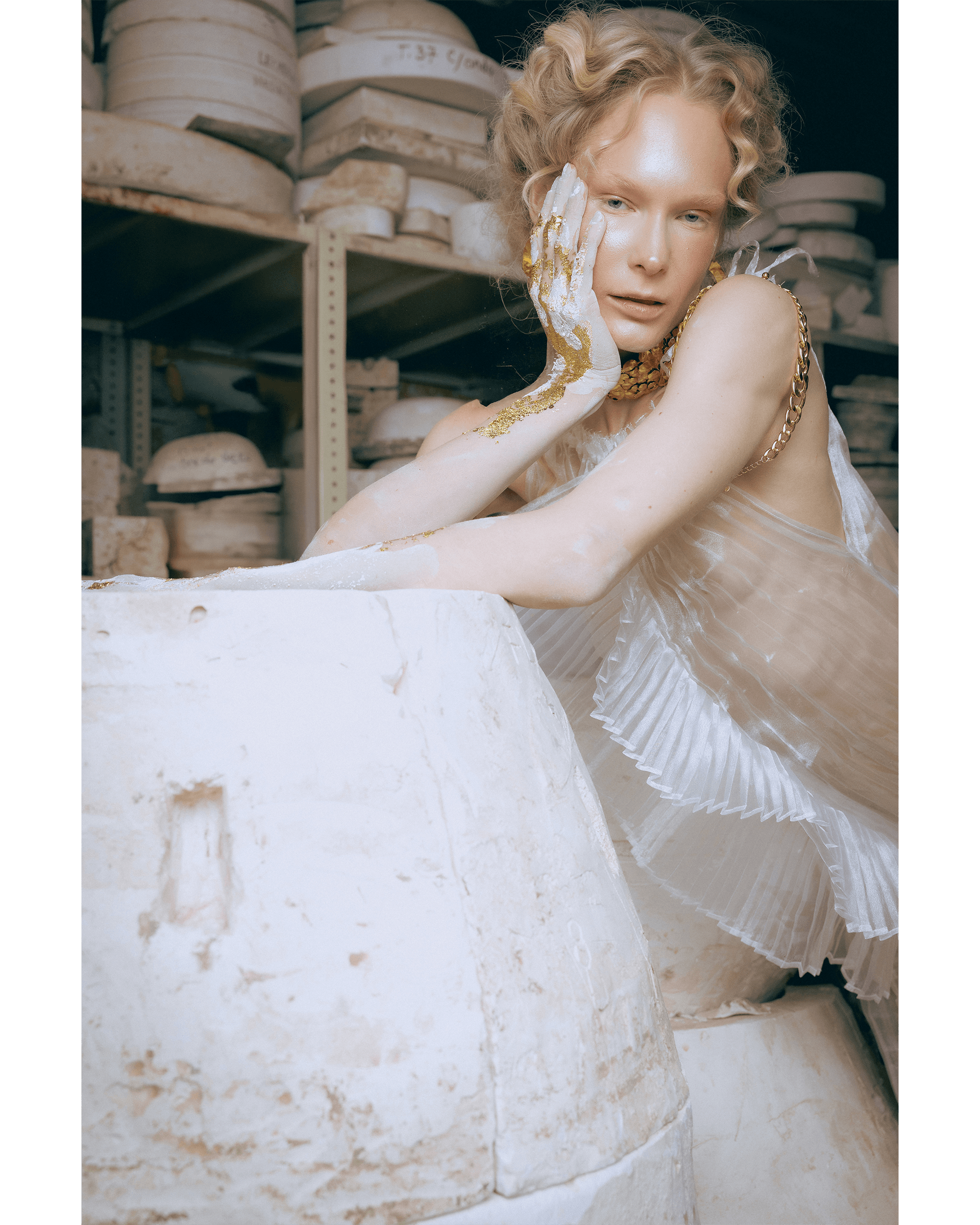
Captured among plaster molds and clay dust in a ceramics workshop, the body awakens like sculpture. Transplanting the myth of Galatea's transformation into a sculptor's studio explores the liminal space between artifice and life through delicate textures.
What garments and materials were used in Stone to flesh?
Cream pleated chiffon wraps limbs while gold leaf clings along wrists and elbows. Chain jewelry around the neck feels heavy like ancient artifacts, and white powder on face and hands erases boundaries between plaster cast and skin.
Where was Stone to flesh photographed?
Shot in a ceramics workshop where cold light enters between vertical lines created by stacked plaster cylinders. Wrinkled translucent fabric gently refracts that light, creating a distinctive atmosphere.