14 more of 16 images
This editorial opens with a PREMIUM membership
STANDARD currently covers editorials published since 2026.04
PREMIUM · the full archive since 2019
See membershipPREMIUM · the full archive since 2019
DOWNLOADS
Cover and logo image downloads are for Standard members.
Contributing creators: the tearsheet and hi-res images of your own editorial are included from Standard (€5.49/mo).
Contributing creators: the tearsheet and hi-res images of your own editorial are included from Standard (€5.49/mo).
Personal, non-commercial use only
FAQ
Where was the Funeralopolis editorial shot?
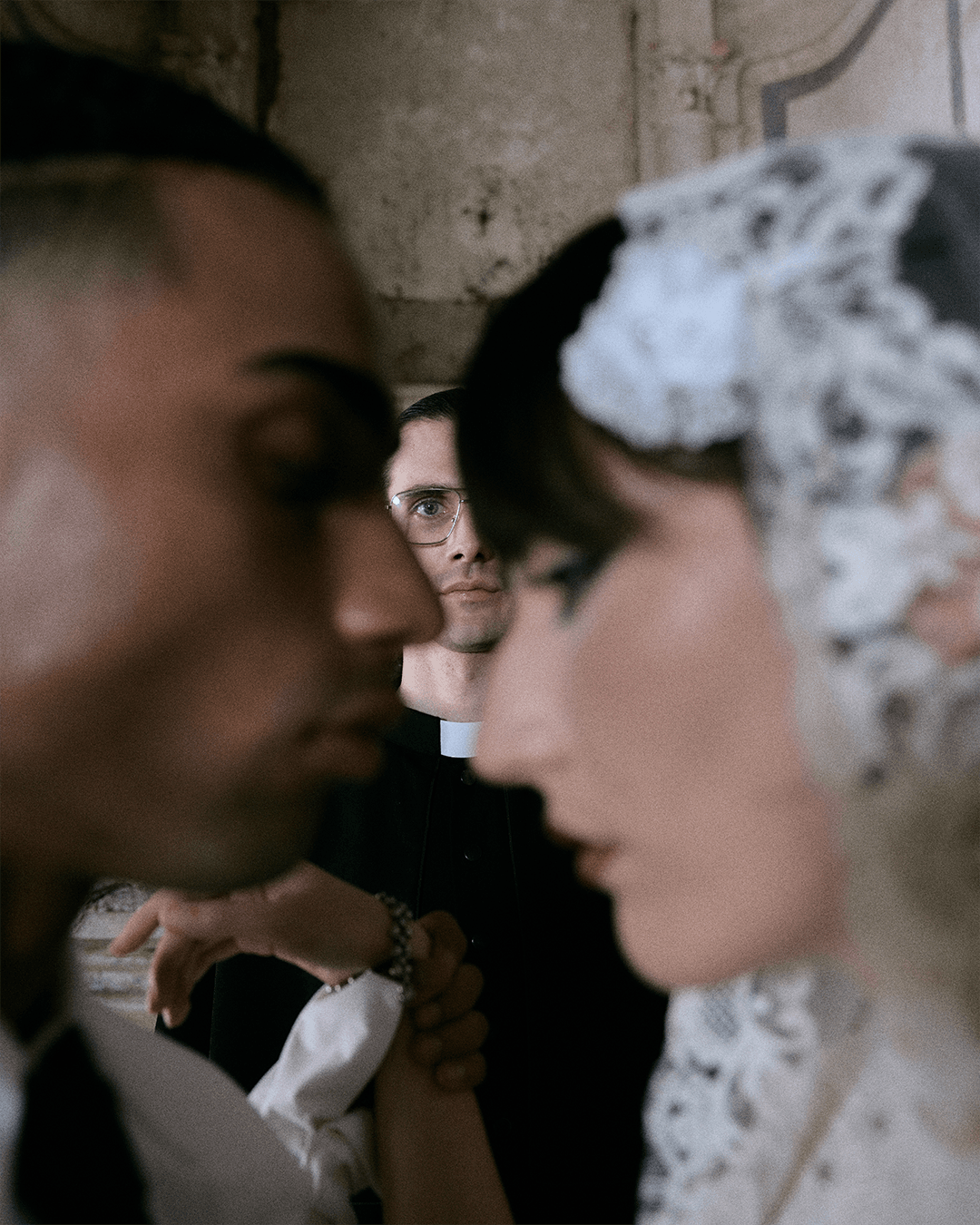
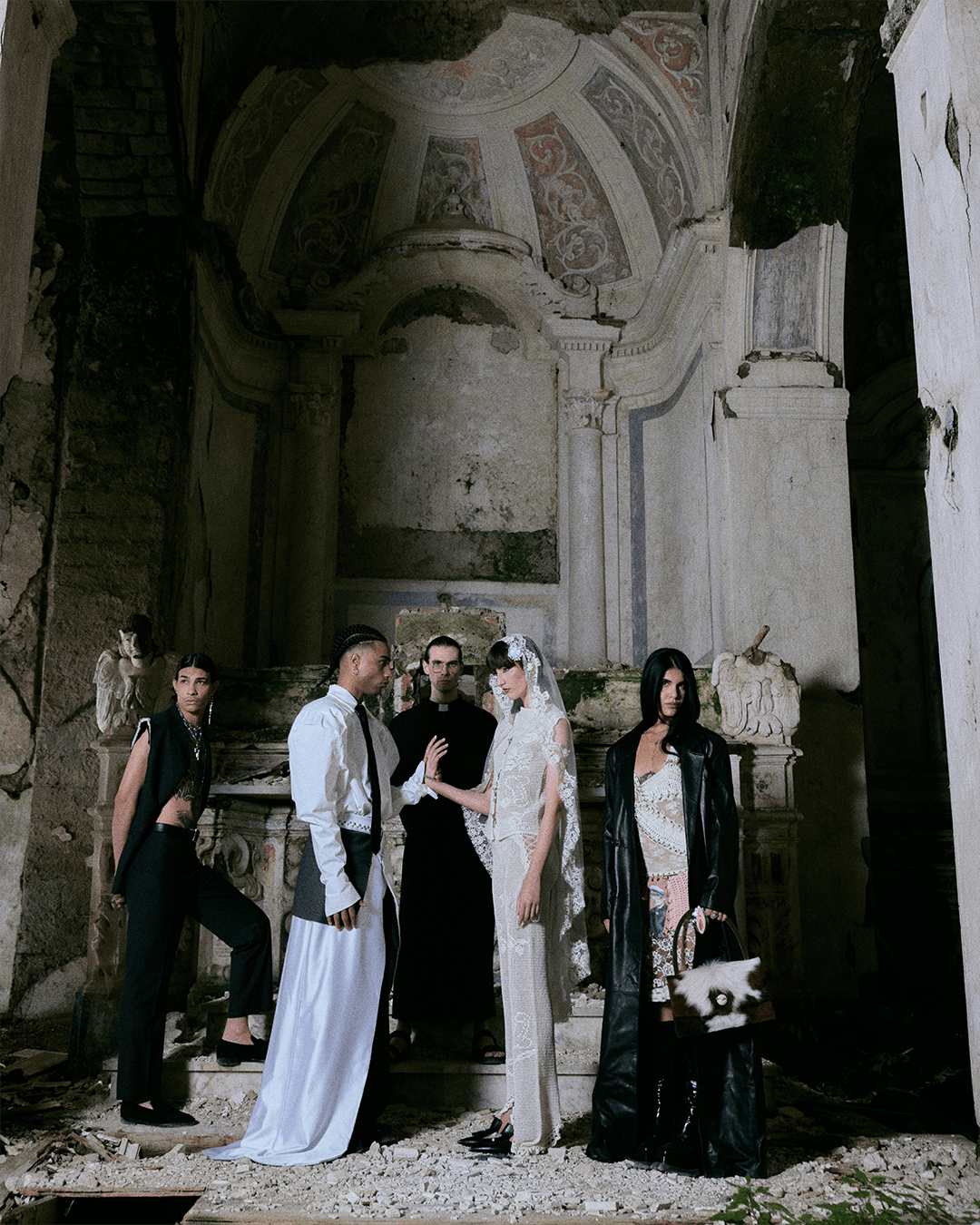
Inside a ruined cathedral with peeling frescoes on a domed ceiling and crumbling walls, with models positioned among stone sarcophagi in a haunting, decayed sacred space.
What are the key garments featured in the Funeralopolis editorial?
White lace veils, black silk, draped black fabrics, and clerical collars appear throughout, reinterpreting Gothic and religious symbolism as a fashion narrative with devotional intensity.
What is the concept behind Funeralopolis?
A ritual within ruins: a funeral and sacred ceremony directed by Alessia Nocera, using stark black-and-white contrast to complete the identity of a city-like necropolis.