16 more of 18 images
This editorial opens with a PREMIUM membership
STANDARD currently covers editorials published since 2026.04
PREMIUM · the full archive since 2019
See membershipPREMIUM · the full archive since 2019
DOWNLOADS
Cover and logo image downloads are for Standard members.
Contributing creators: the tearsheet and hi-res images of your own editorial are included from Standard (€5.49/mo).
Contributing creators: the tearsheet and hi-res images of your own editorial are included from Standard (€5.49/mo).
Personal, non-commercial use only
Brands in this editorial
FAQ
What lighting technique does the Ecce Populus editorial use?
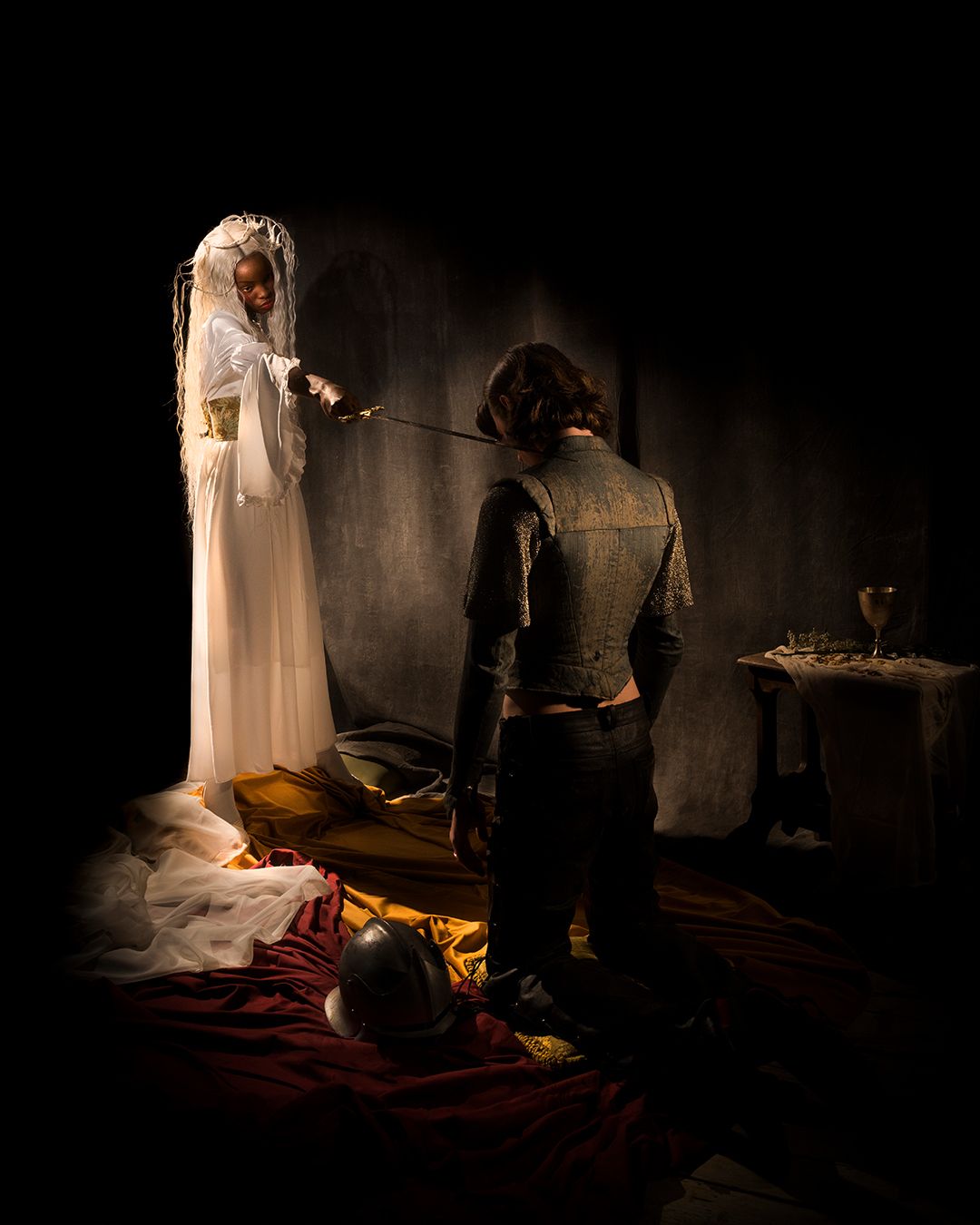
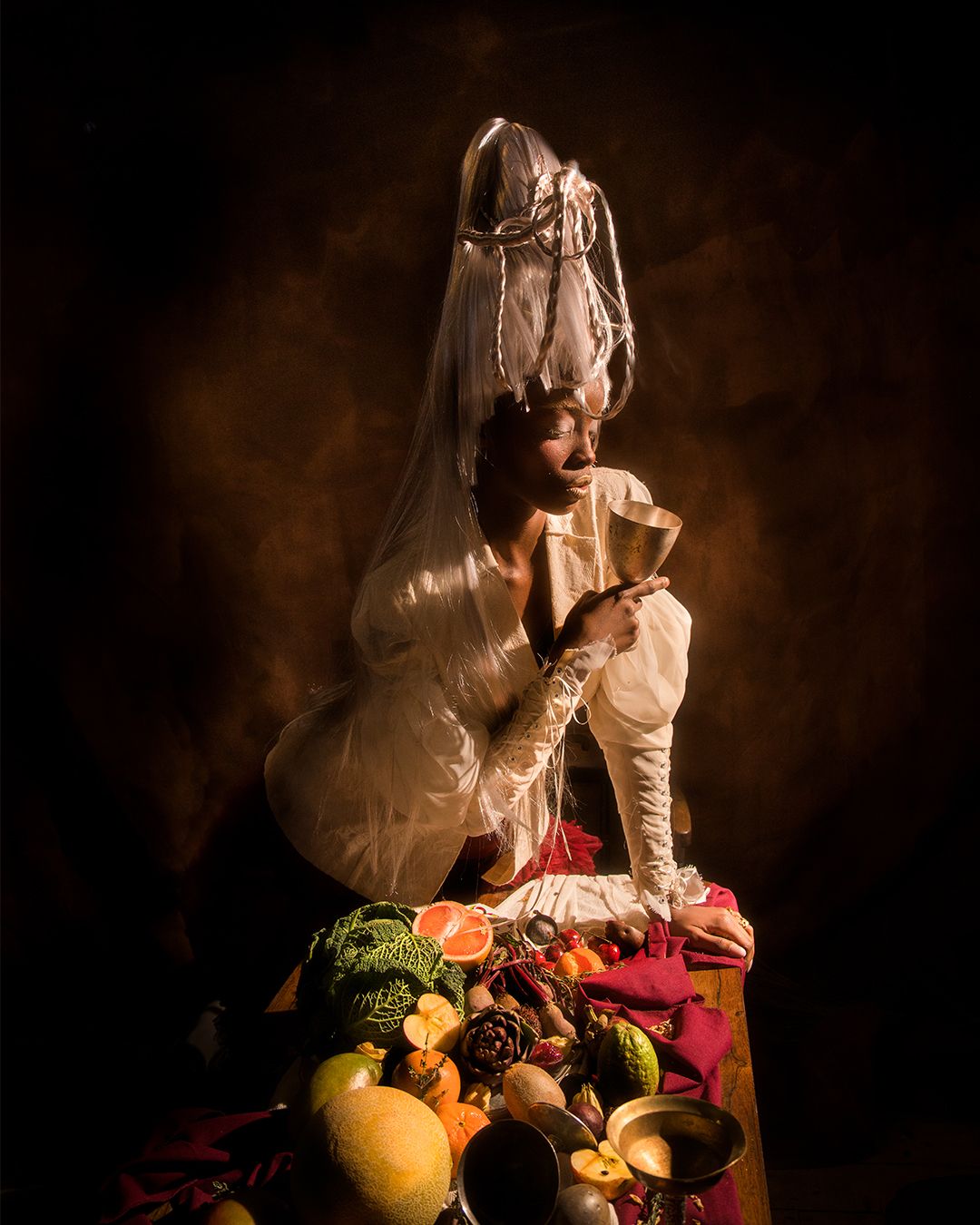
A single light source illuminates figures from pitch darkness, creating dramatic contrast like Caravaggio's chiaroscuro in Renaissance painting. This lighting emphasizes only ceremonial moments, creating a captive gaze effect.
What garments and props appear in this editorial?
White sheer fabric with gold corset draped gowns, olive green vests and black tops appear, while metal helmets, swords, red velvet and golden textiles scatter the floor, with wine glasses and fruit on the table.
What is the concept of Ecce Populus?
It stages a moment of power bestowal or judgment, structured to feel like a declaration toward the audience, echoing the title's classical meaning of 'behold the people.' It evokes a medieval theatrical atmosphere where war and feast coexist.