18 more of 20 images
This editorial opens with a PREMIUM membership
STANDARD currently covers editorials published since 2026.04
PREMIUM · the full archive since 2019
See membershipPREMIUM · the full archive since 2019
DOWNLOADS
Cover and logo image downloads are for Standard members.
Contributing creators: the tearsheet and hi-res images of your own editorial are included from Standard (€5.49/mo).
Contributing creators: the tearsheet and hi-res images of your own editorial are included from Standard (€5.49/mo).
Personal, non-commercial use only
FAQ
What is the concept behind the BIZCOCHITO shoot?
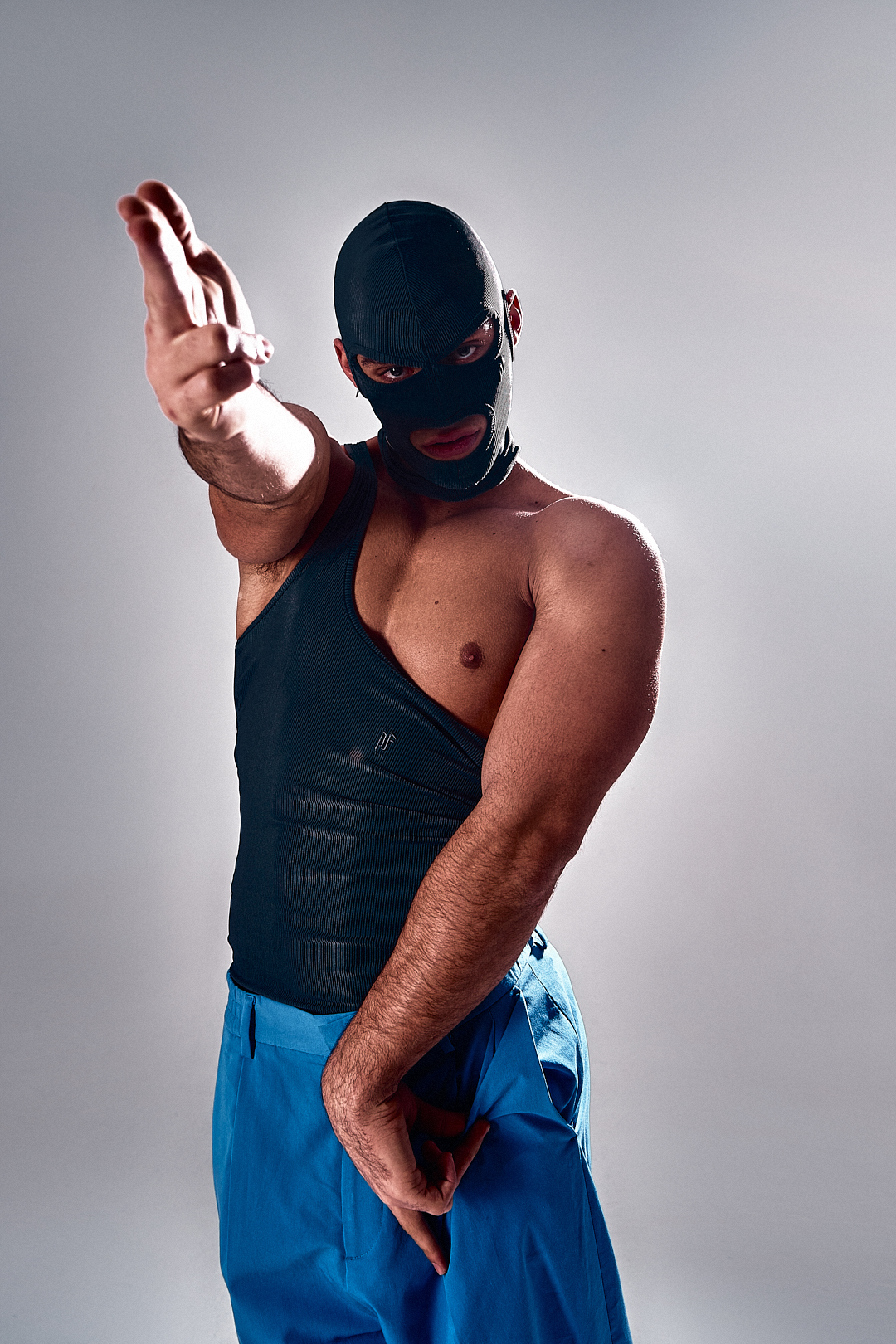
It captures the moment when the body itself becomes a declaration, where stage masks meet studio lighting. The shoot follows a genderless performance aesthetic that intersects lucha libre gestures with street performance energy.
What material and color contrasts were used in the BIZCOCHITO shoot?
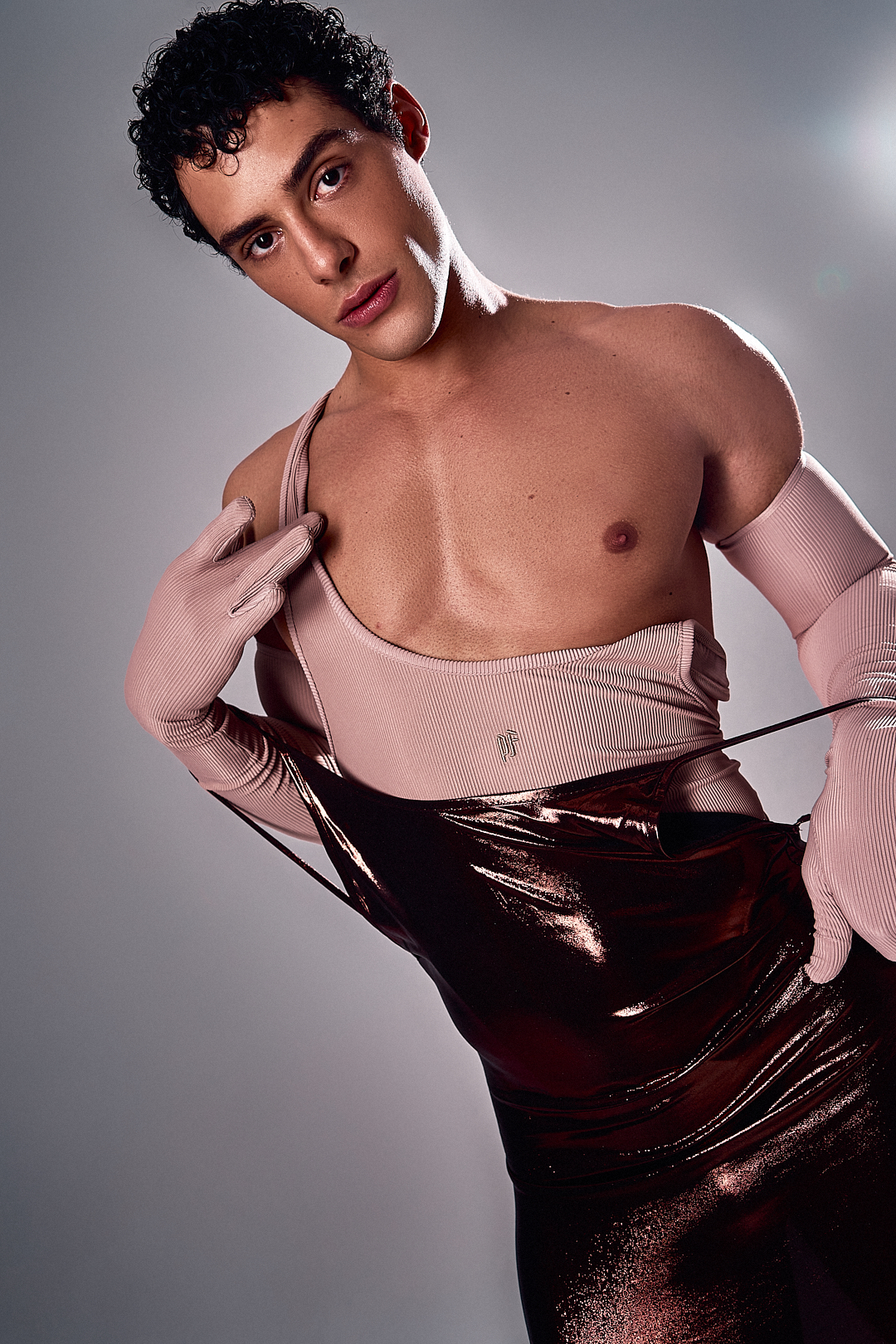
A dusty rose rib-knit off-shoulder top pairs with deep burgundy lacquer pants, maximizing texture contrast between soft knit and hard vinyl. Navy and cobalt blue pants also make an appearance throughout.
How are the lighting and background arranged in the BIZCOCHITO shoot?
Side lighting emphasizes both skin and fabric texture simultaneously, while a gray gradient backdrop provides a neutral stage that allows the colors to stand out vividly.