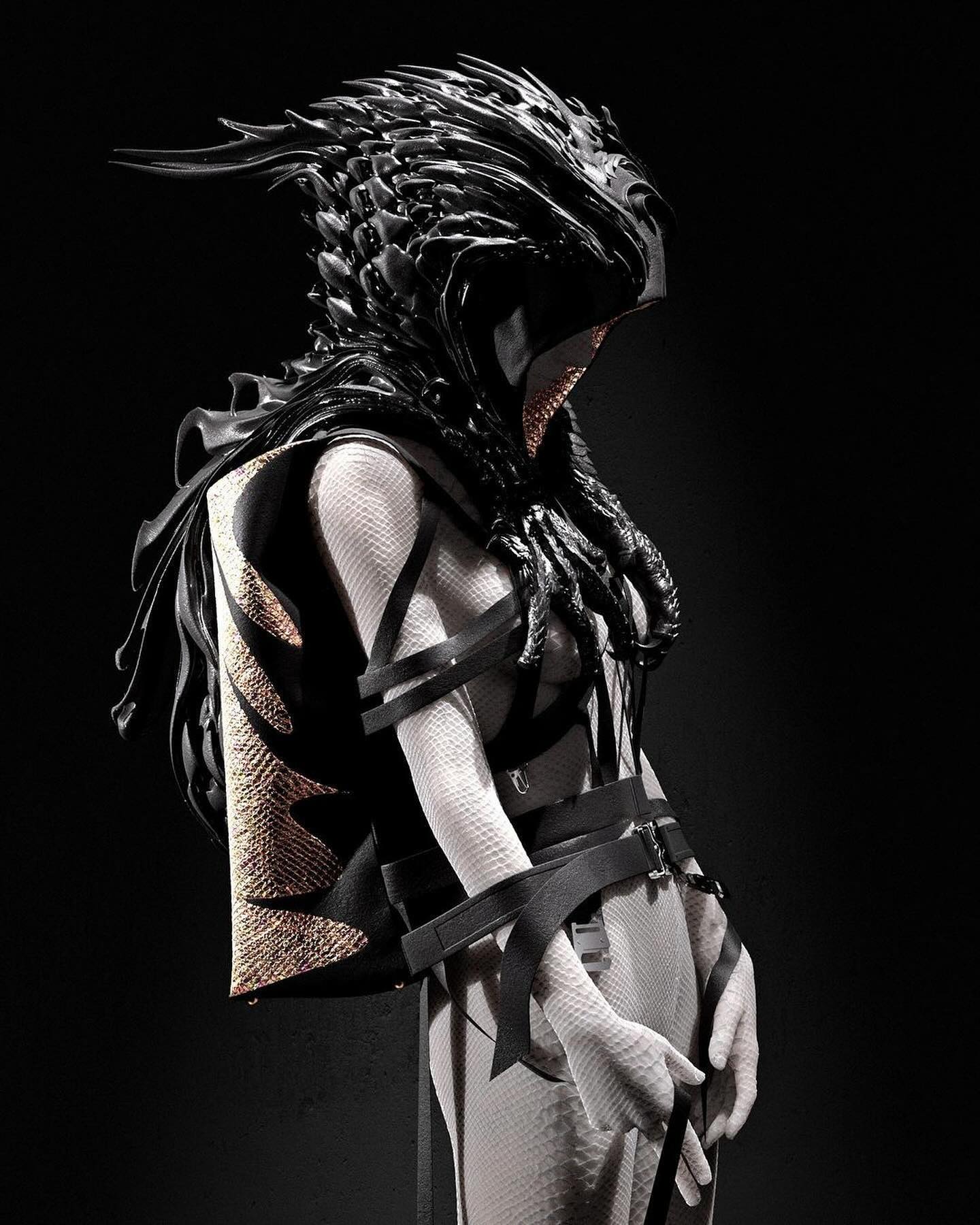
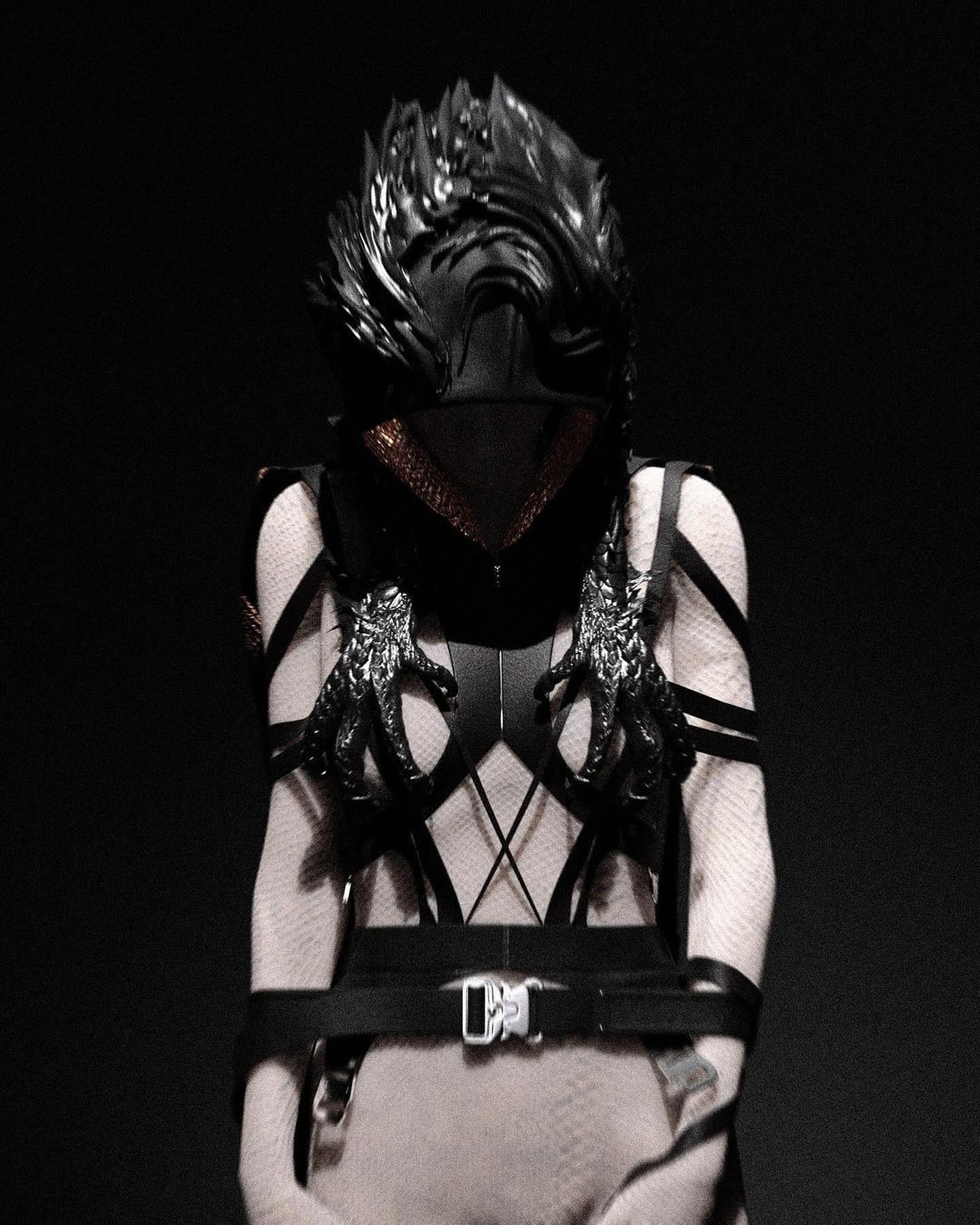
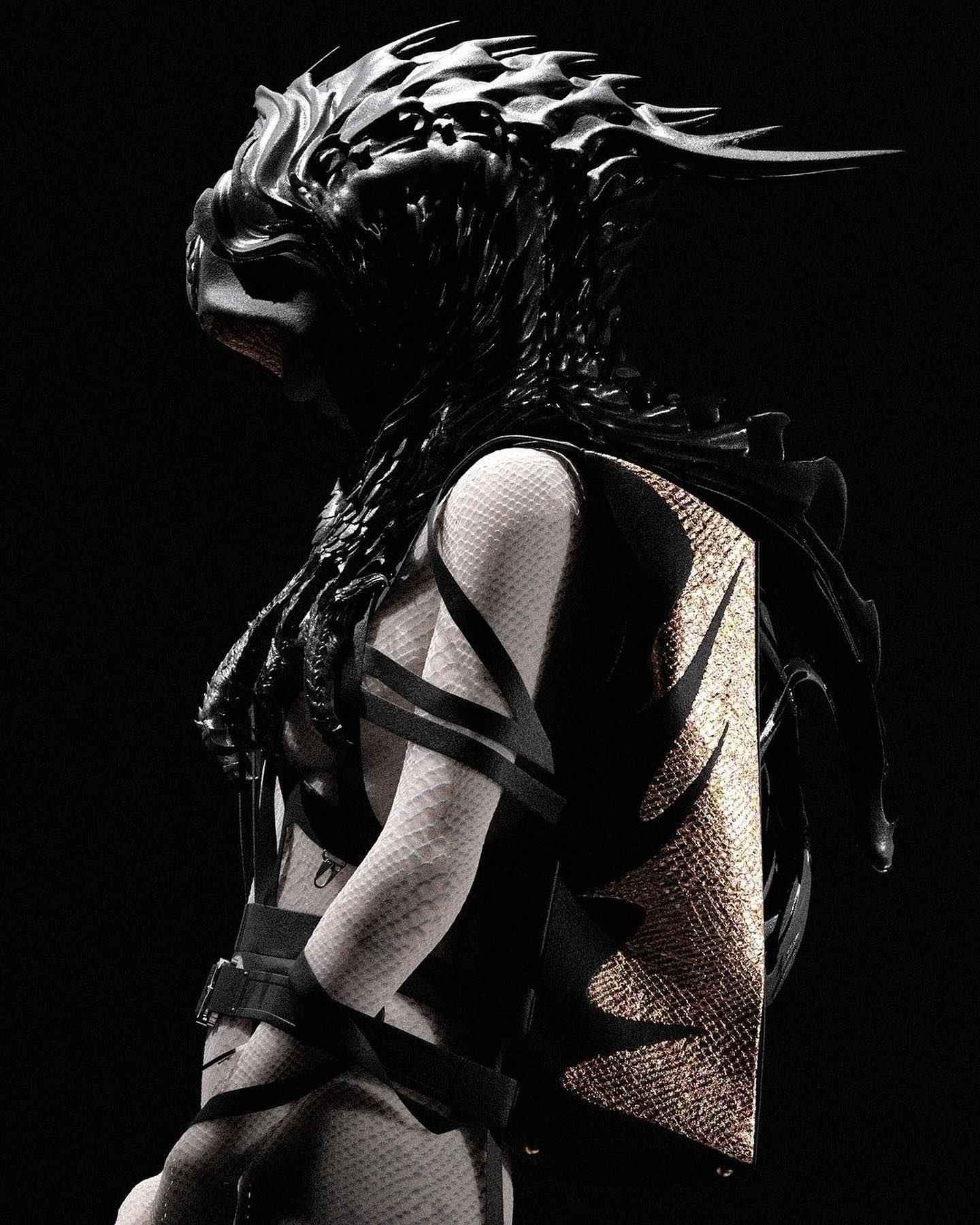
The body piece is also designed as a sculptural structure inspired by dragon claws, wrapping around the wearer's shoulders and back to create a powerful silhouette. Particularly striking is the bag, constructed by weaving together 3D-printed pieces that precisely replicate dragon scales, allowing organic movement through their interconnected structure. Each individual scale catches the light and shimmers, translating the traditional image of the dragon into futuristic materials.
This work is recognized as an experimental endeavor that transcends mere fashion items to recreate cultural symbols through contemporary technology. The advancement of 3D printing grants designers unprecedented formal freedom, and Zemengze has successfully transformed an Eastern mythological being into wearable sculpture. Such work, dissolving boundaries between tradition and innovation, craft and technology, suggests new directions for fashion's future.
FAQ
What technology was used to create Zemengze's dragon headpiece?
It was created using 3D printing technology. Pieces modeled on dragon heads, claws, and scales were precisely printed and assembled into wearable art comprising headpieces, body pieces, and bags, with interconnected scale pieces enabling organic movement.
What cultural meaning does this design convey?
Created to commemorate the Year of the Dragon, this work reinterprets the dragon symbol from Eastern mythology through contemporary technology. It translates traditional cultural icons using futuristic materials and digital fabrication, earning recognition as experimental work dissolving tradition-innovation boundaries.
What are the advantages of 3D-printed fashion?
It provides designers unprecedented formal freedom. Complex sculptural structures impossible through traditional cutting and sewing become achievable, enabling precise reproduction of intricate details like dragon scales and organic connection of individual pieces, as demonstrated in Zemengze's work.