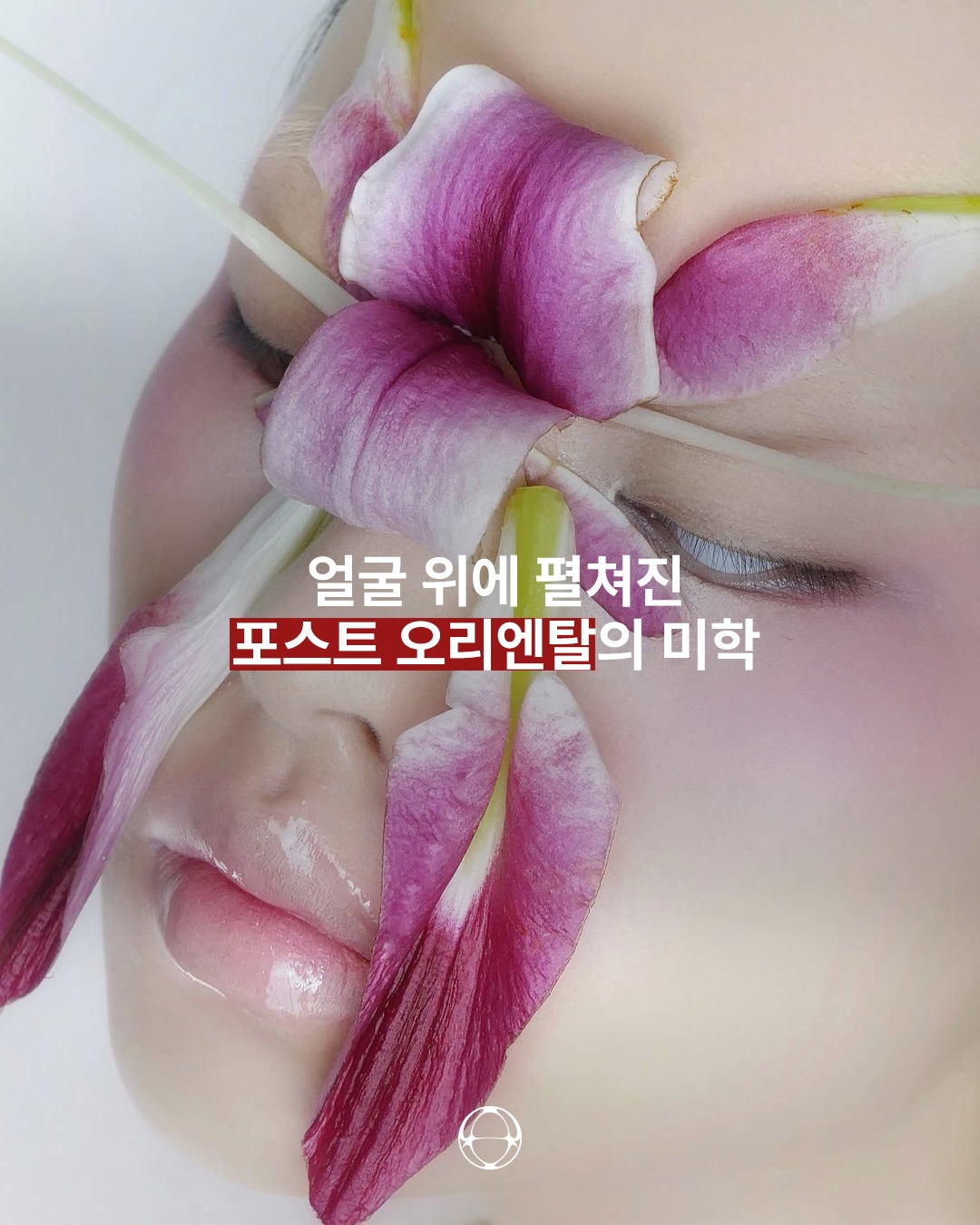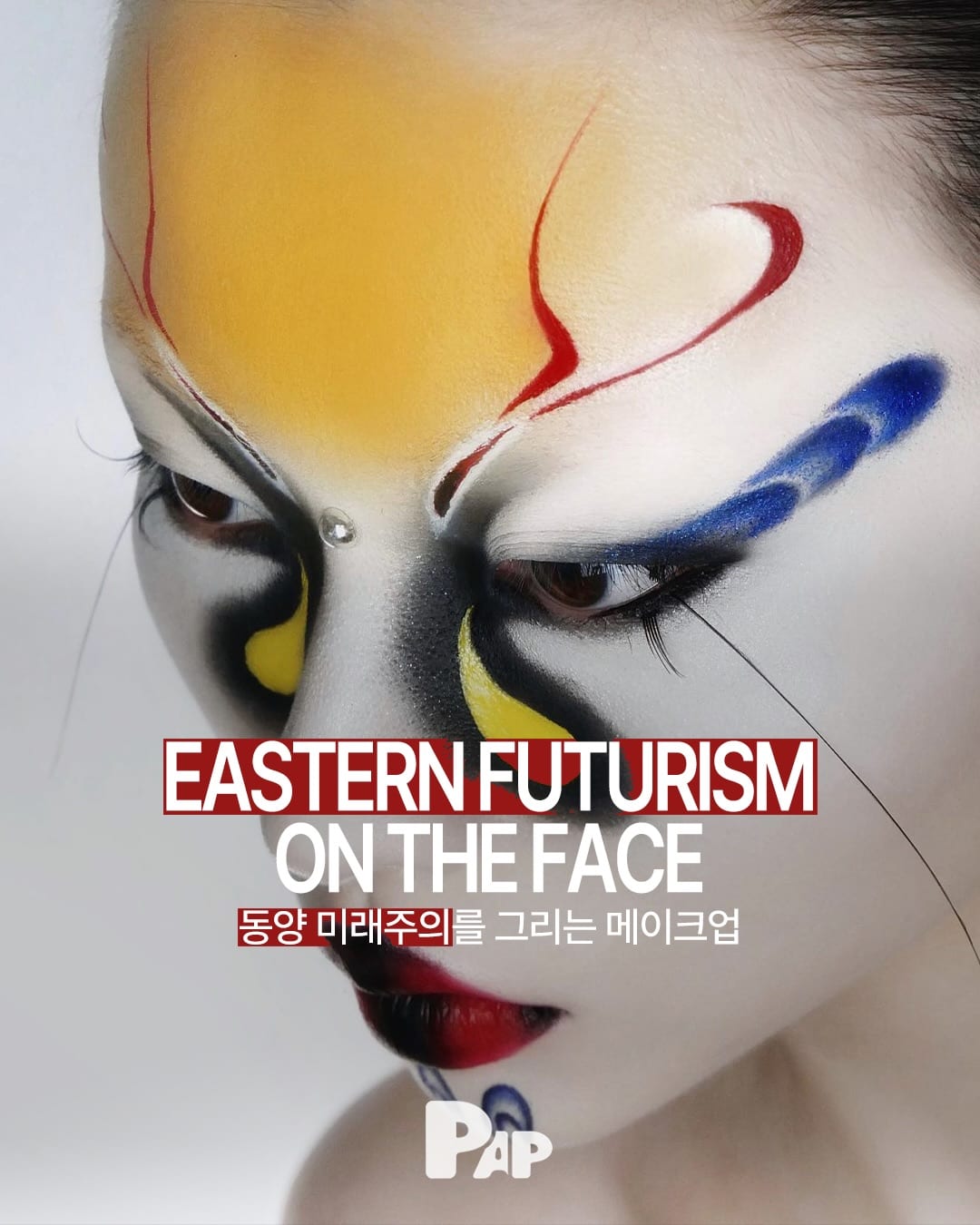
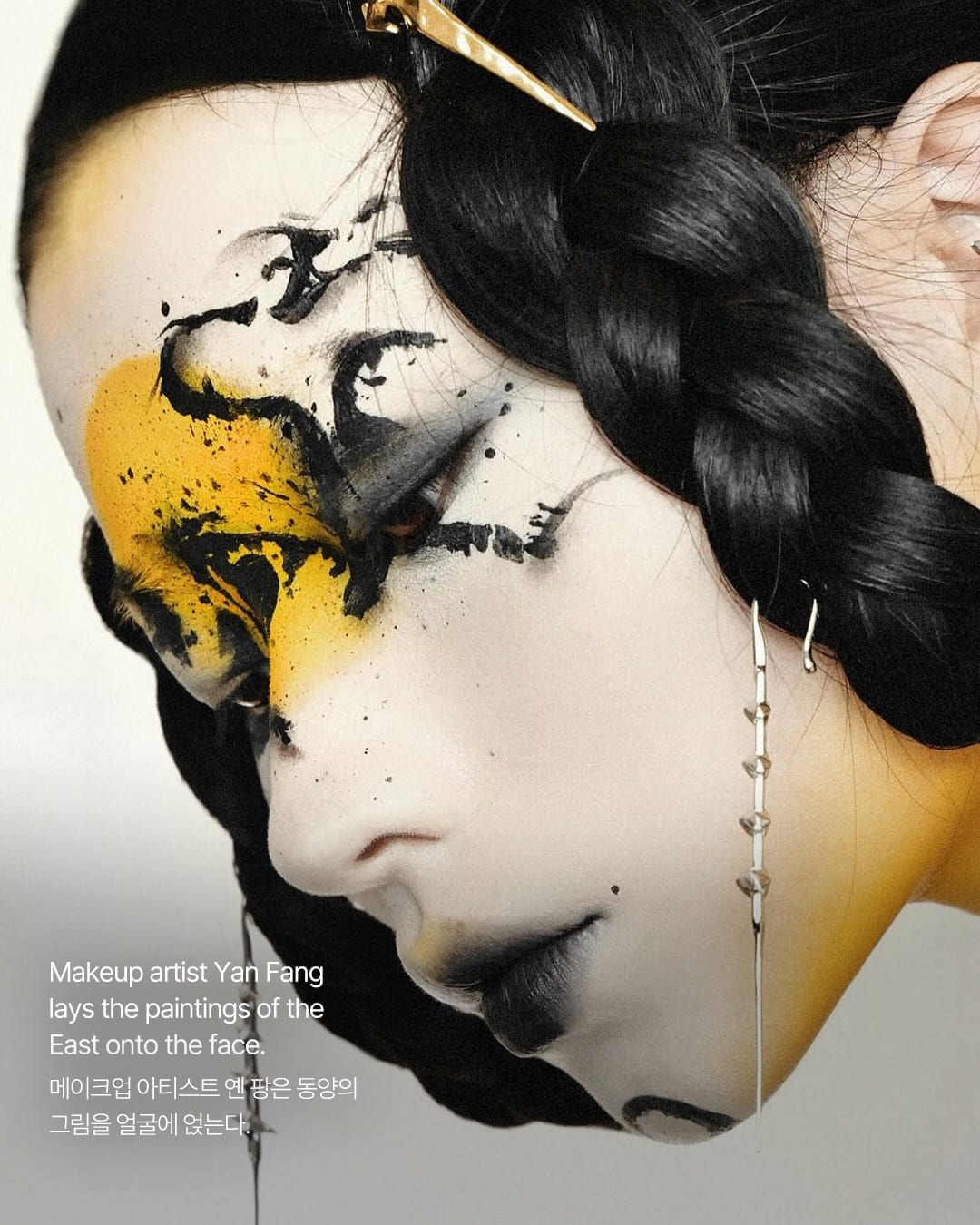
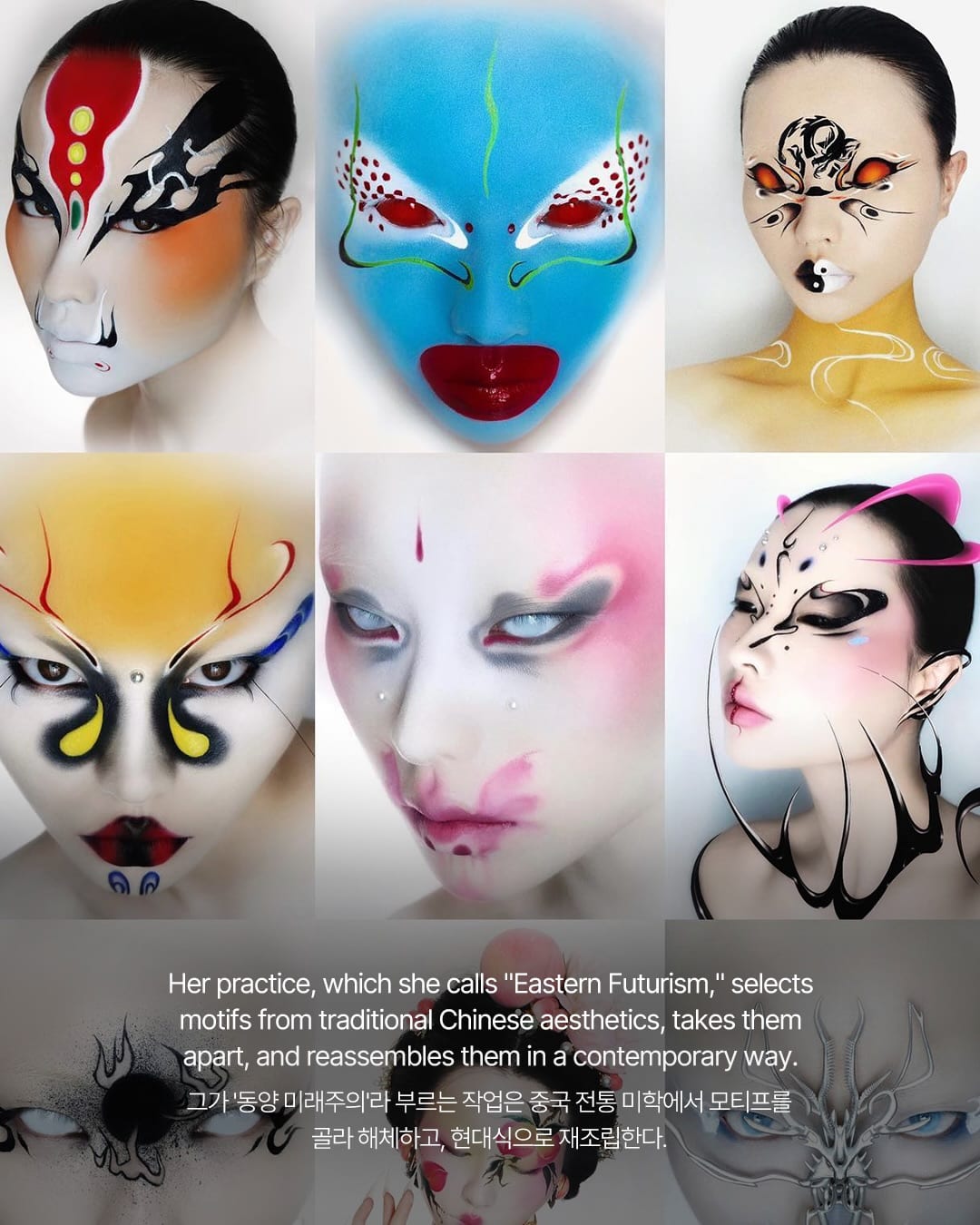
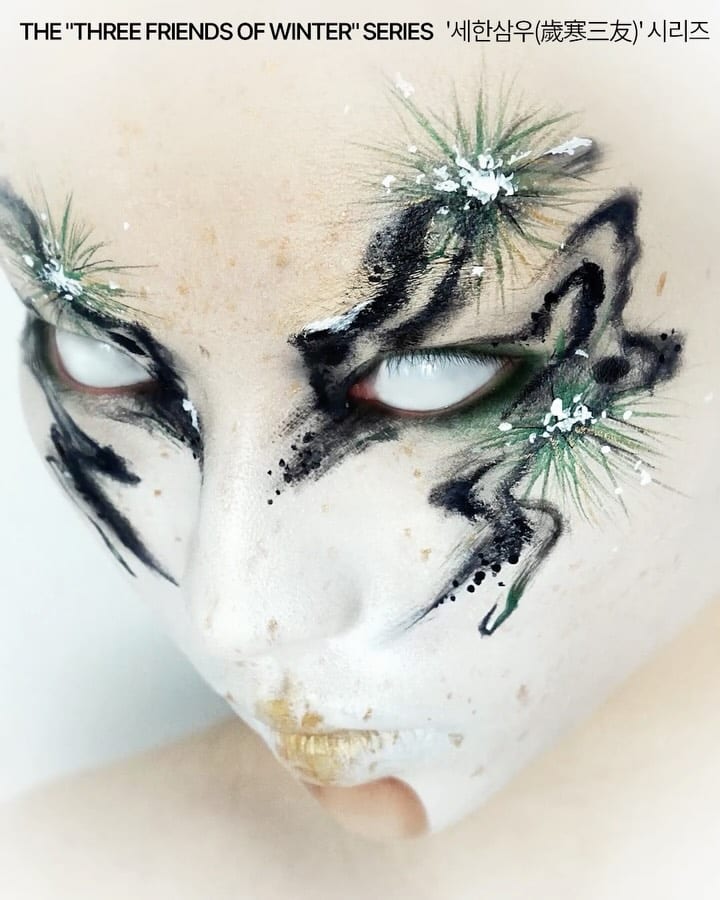
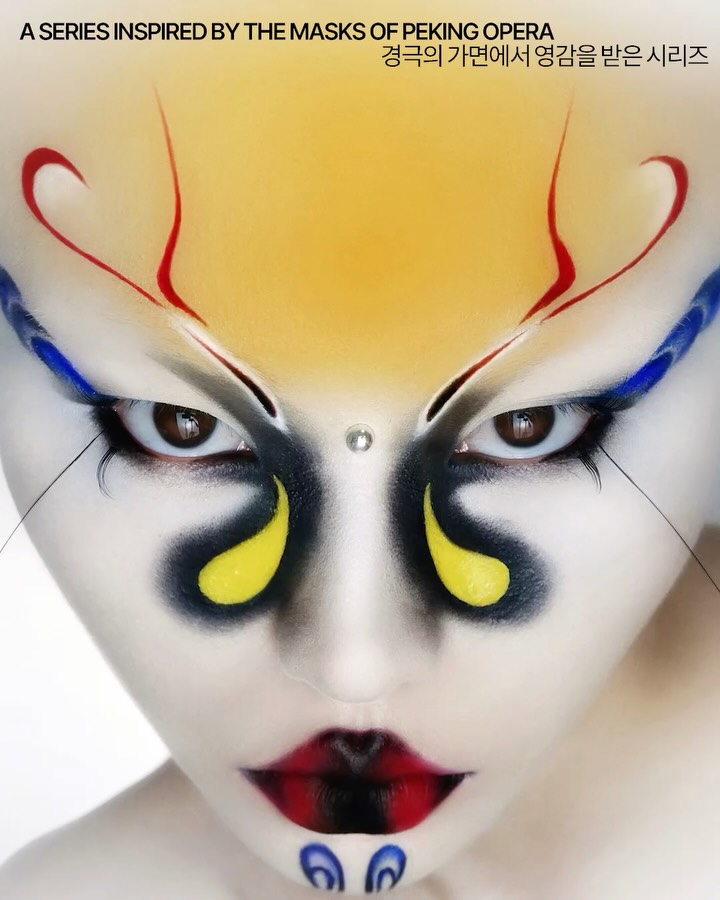
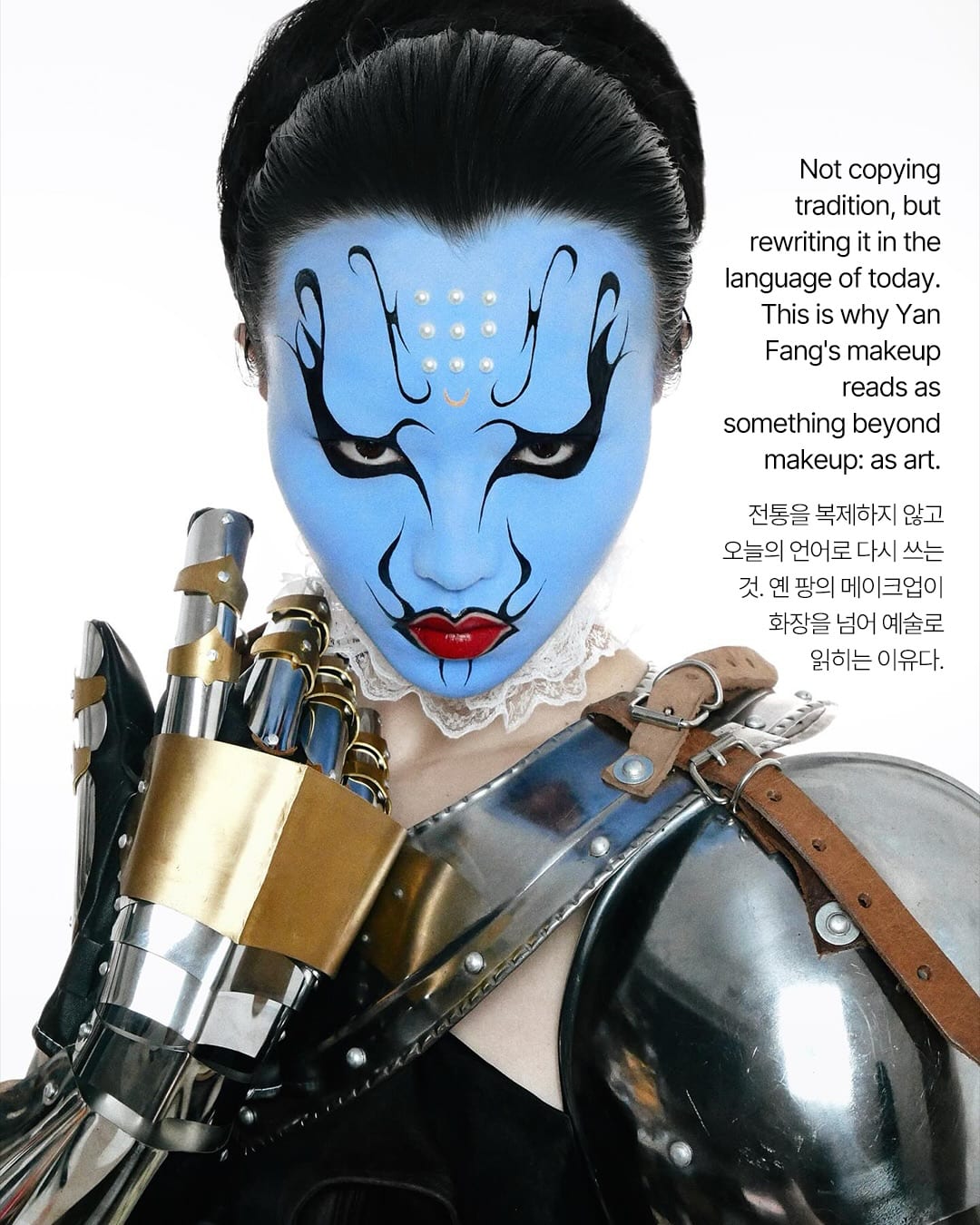
Yan Fang's makeup is instantly recognizable. Yellow, red and blue sweep across the skin, while black strokes cut through the face. The color palette of Peking opera meets the lines of landscape painting within a single visage. Curves borrowed from traditional patterns flow along cheeks and foreheads. The momentum of calligraphy lingers around brows and jawlines. The materials are traditional, but the arrangement is resolutely contemporary.
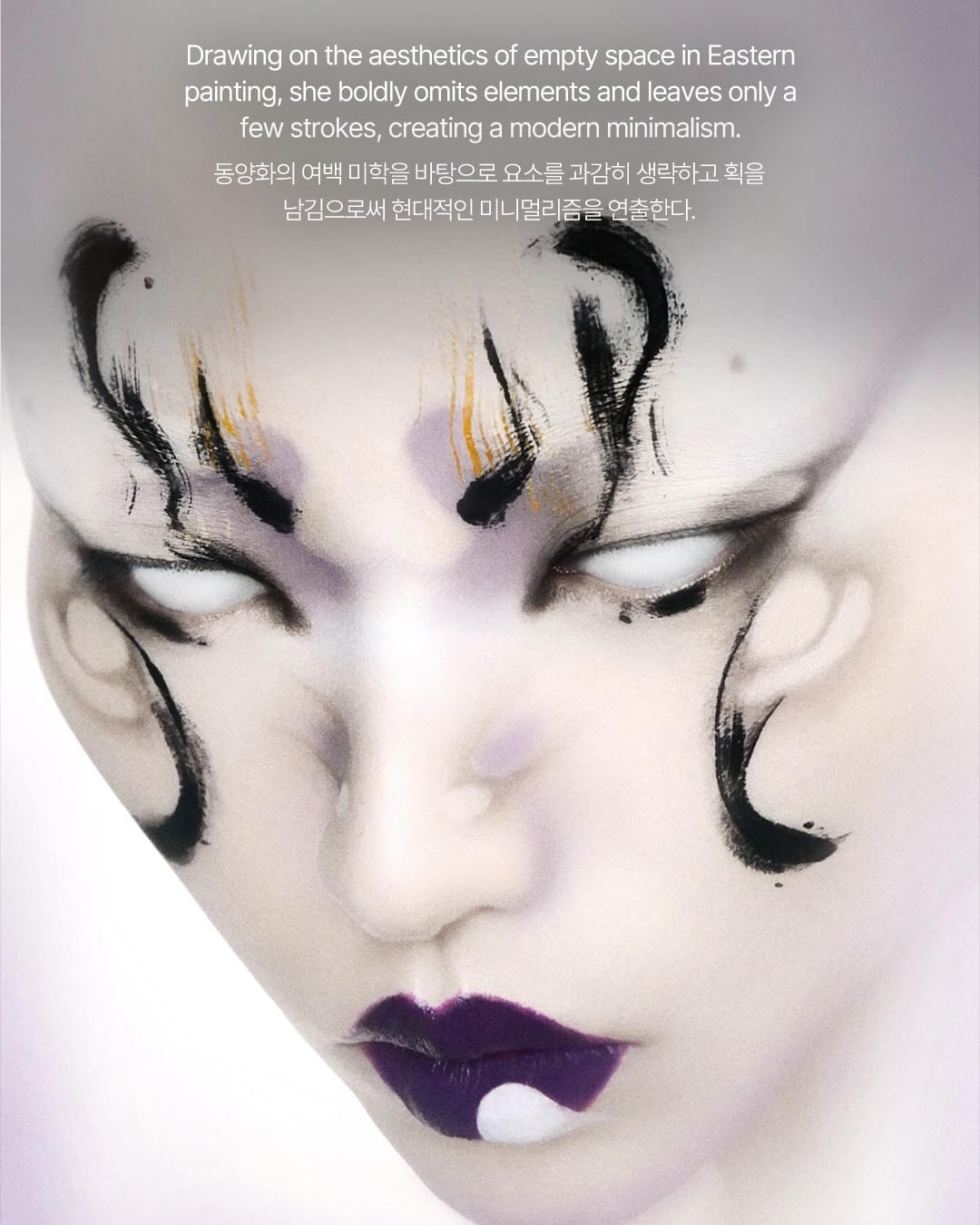
The concept running through all of it is liubai, the empty space of Eastern painting. She boldly strips elements away to leave a void, and hands that space over to the viewer's imagination. A face left largely bare, marked by only a few sharp strokes, also reads as contemporary minimalism. Not filling but emptying. The practice of subtraction, not addition, shines here.
Not copying tradition but rewriting it in the language of today is Yan Fang's method. She touches the archetypes of Eastern aesthetics but does not transfer them intact. Familiar symbols are reassembled in unfamiliar ways. As a result, makeup functions not as mere decoration but as cultural translation. A moment when the language of the past breathes again on the face of the present.
How do you want to bring tradition into today?
FAQ
What is Yen Pang's 'Oriental Futurism' makeup?
Yen Pang's 'Oriental Futurism' draws motifs from traditional Chinese aesthetics and reinterprets them in a contemporary way. She deconstructs Peking opera, landscape painting, calligraphy, and traditional patterns, reassembling them according to facial structure and transforming figuration into abstraction to create results closer to graphic design and digital art.
How does Yen Pang use the concept of 'liubai' (negative space) in her makeup?
Yen Pang applies the concept of 'liubai' from Eastern painting to makeup, boldly removing certain elements and leaving empty space. Faces with large blank areas and only a few sharp strokes read as contemporary minimalism while functioning as a space that invites the viewer's imagination.
What traditional aesthetic elements does Yen Pang's makeup utilize?
Yen Pang utilizes the colors of Peking opera makeup, the lines of landscape painting, the curves of traditional patterns, and the sense of speed from calligraphy as key elements. She deconstructs these and reassembles them according to facial structure, rewriting tradition in today's language rather than replicating it.