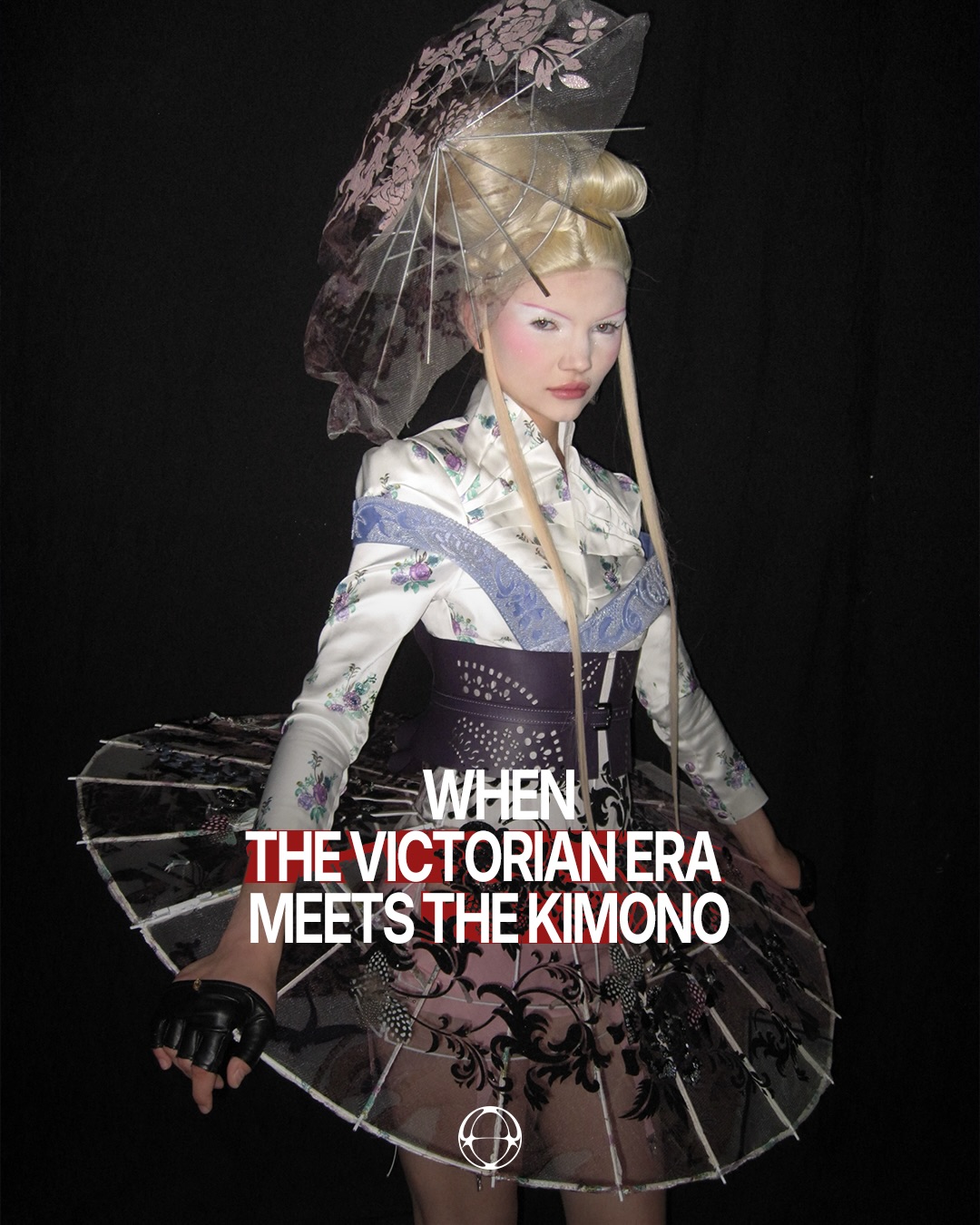
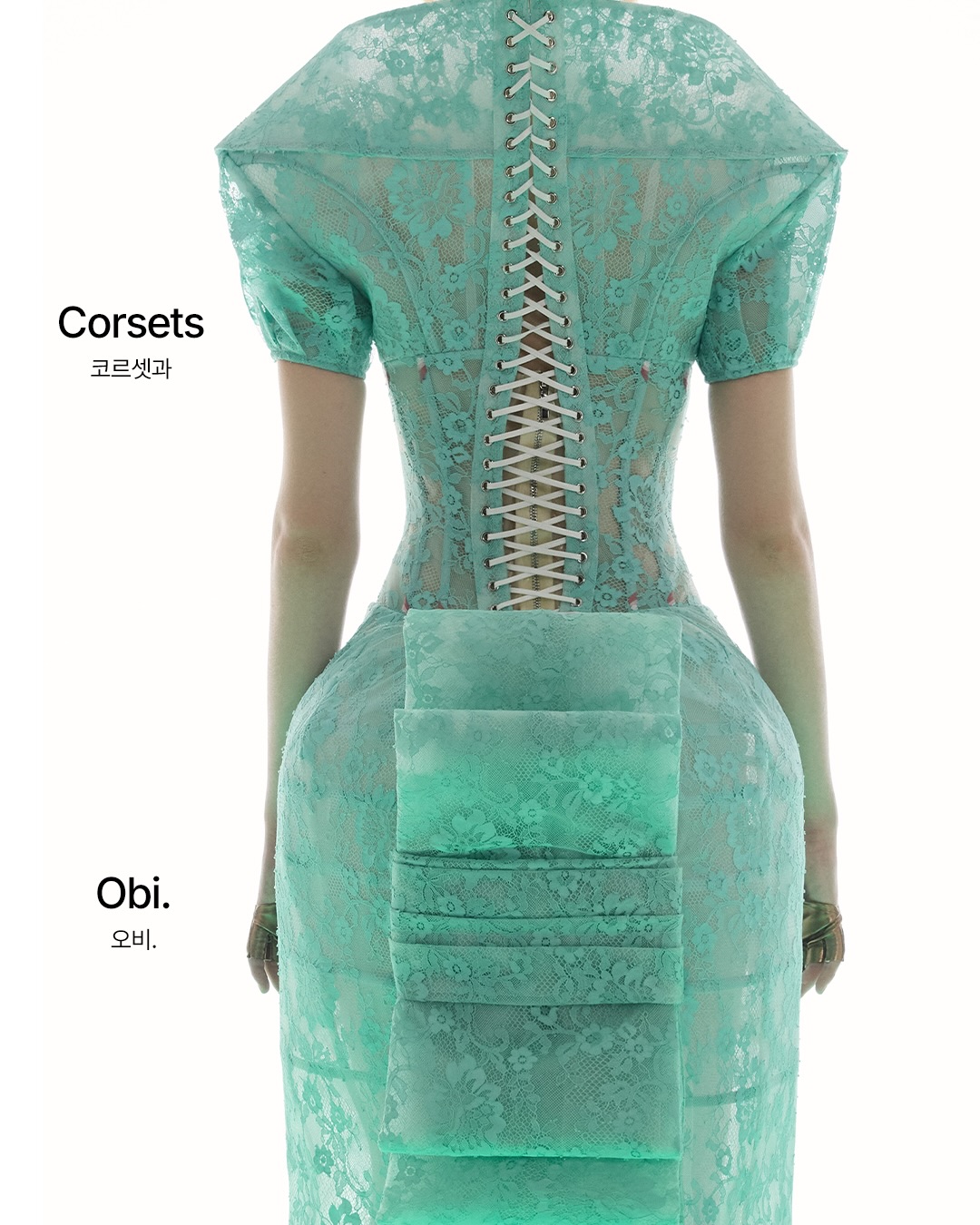
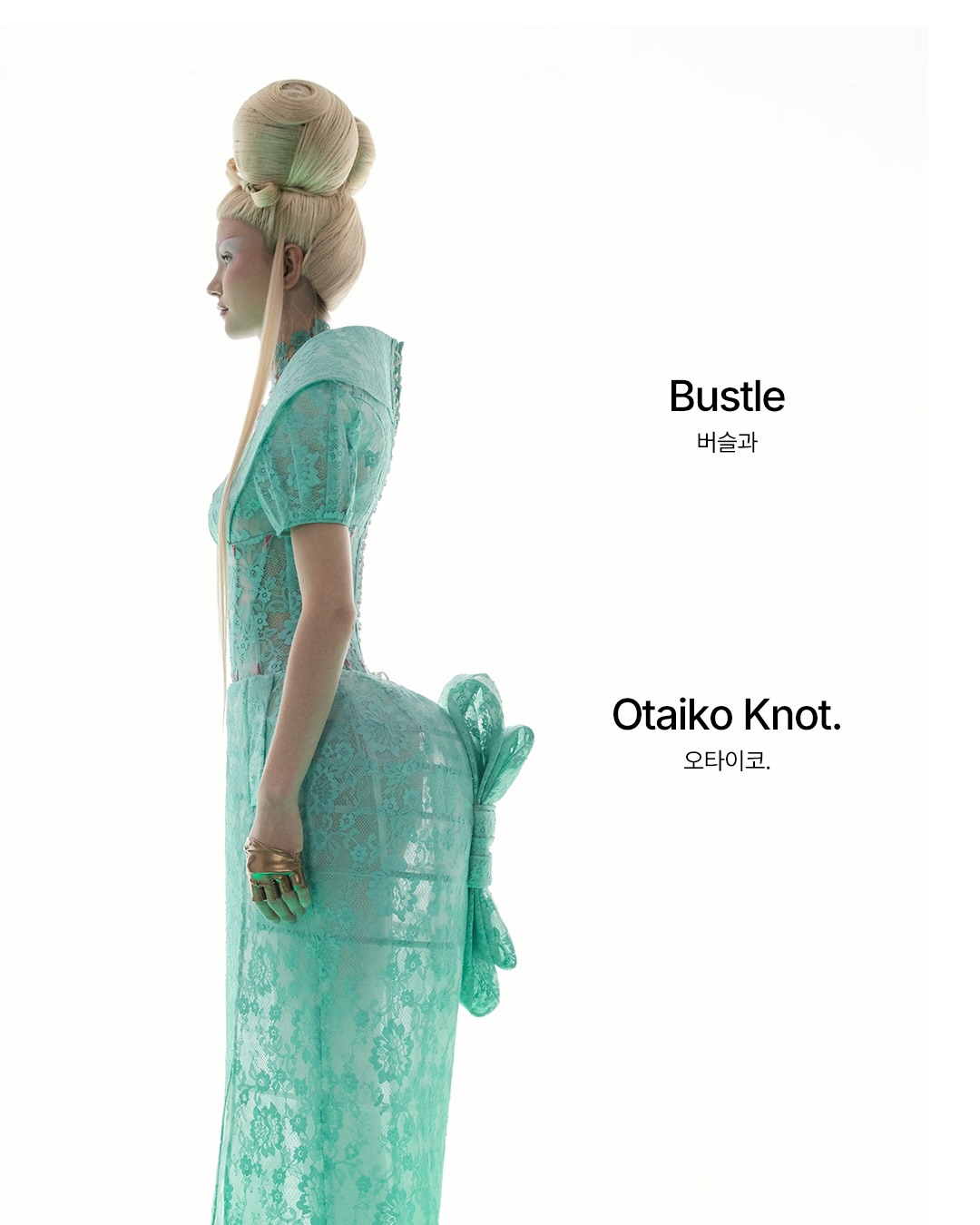
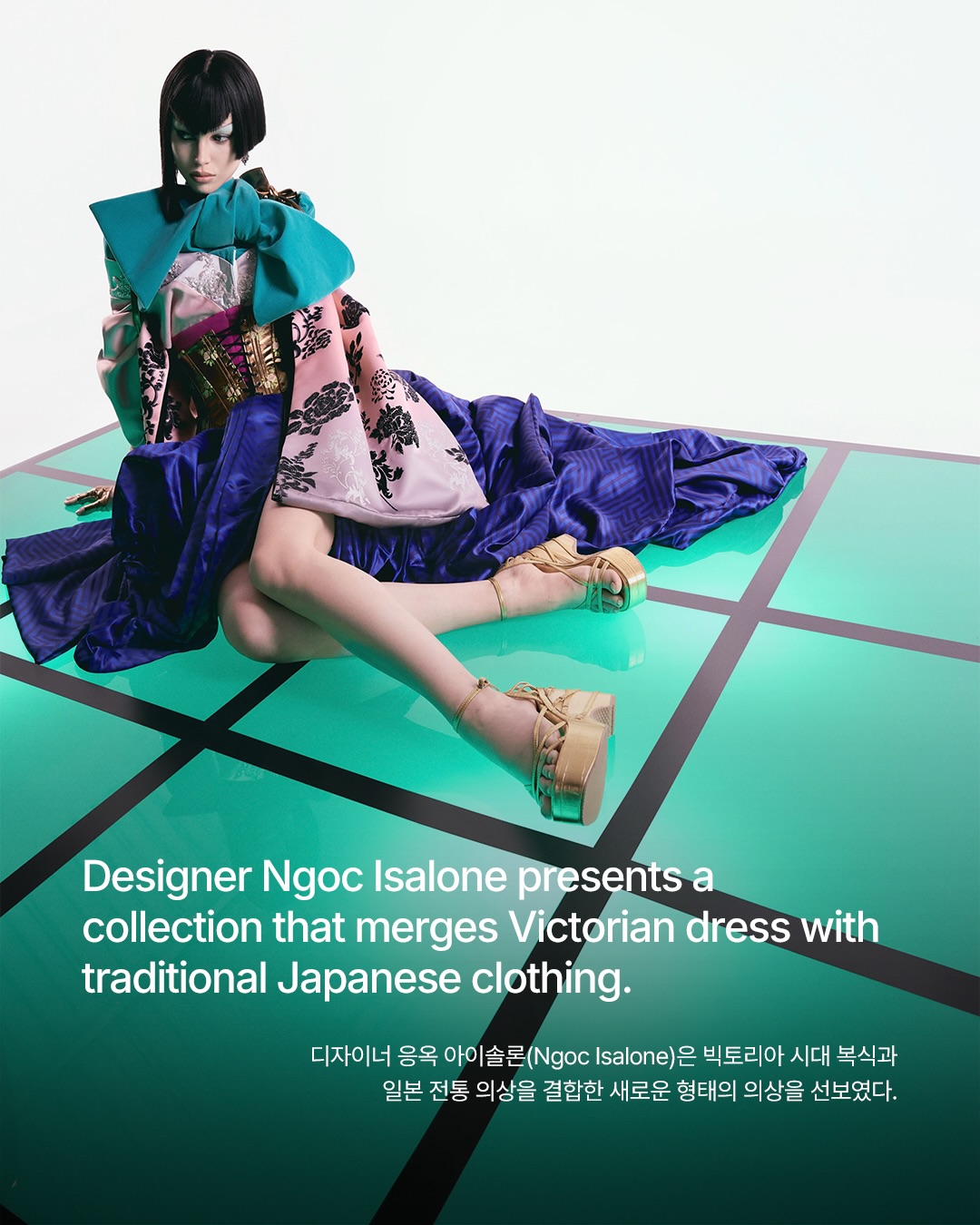
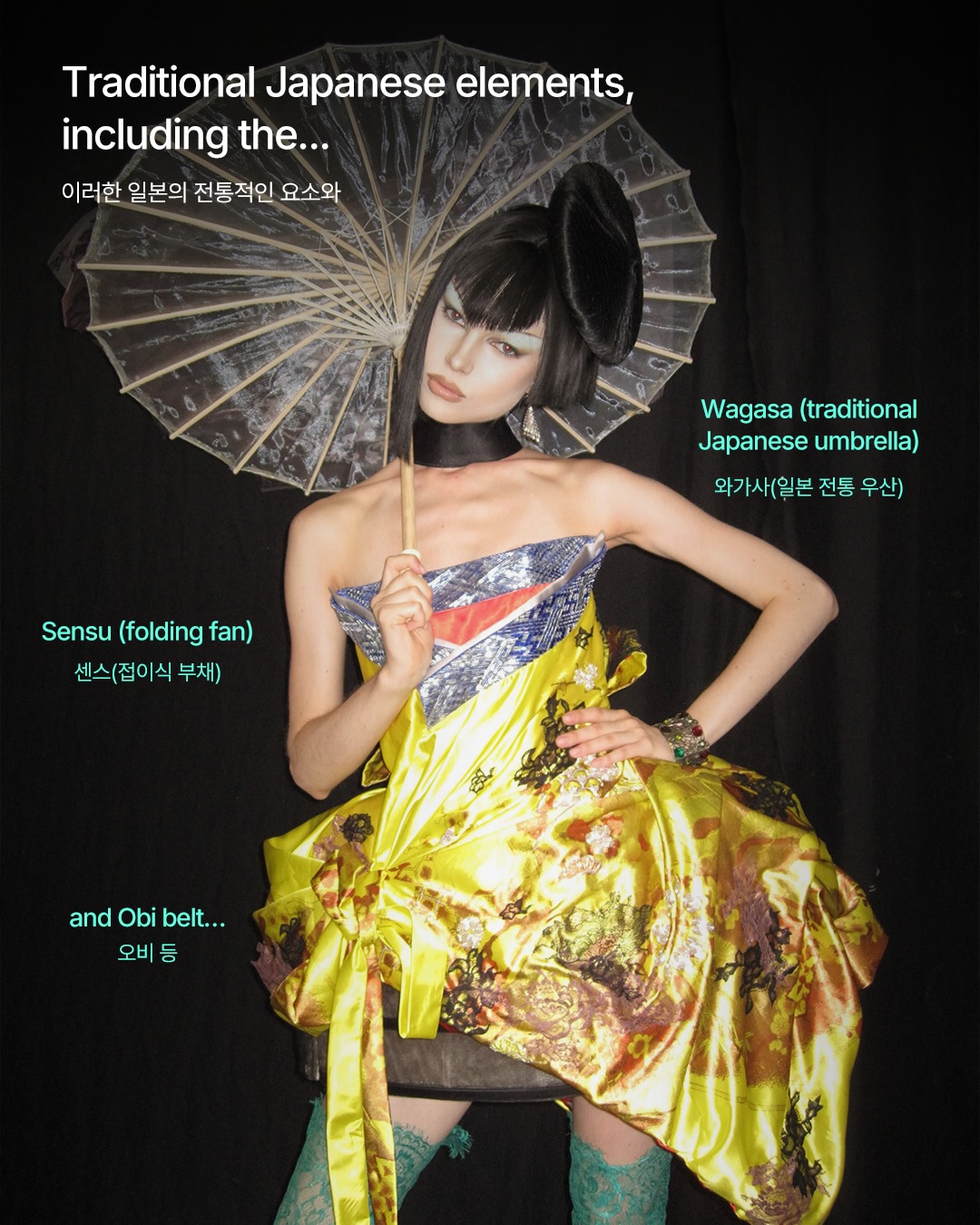
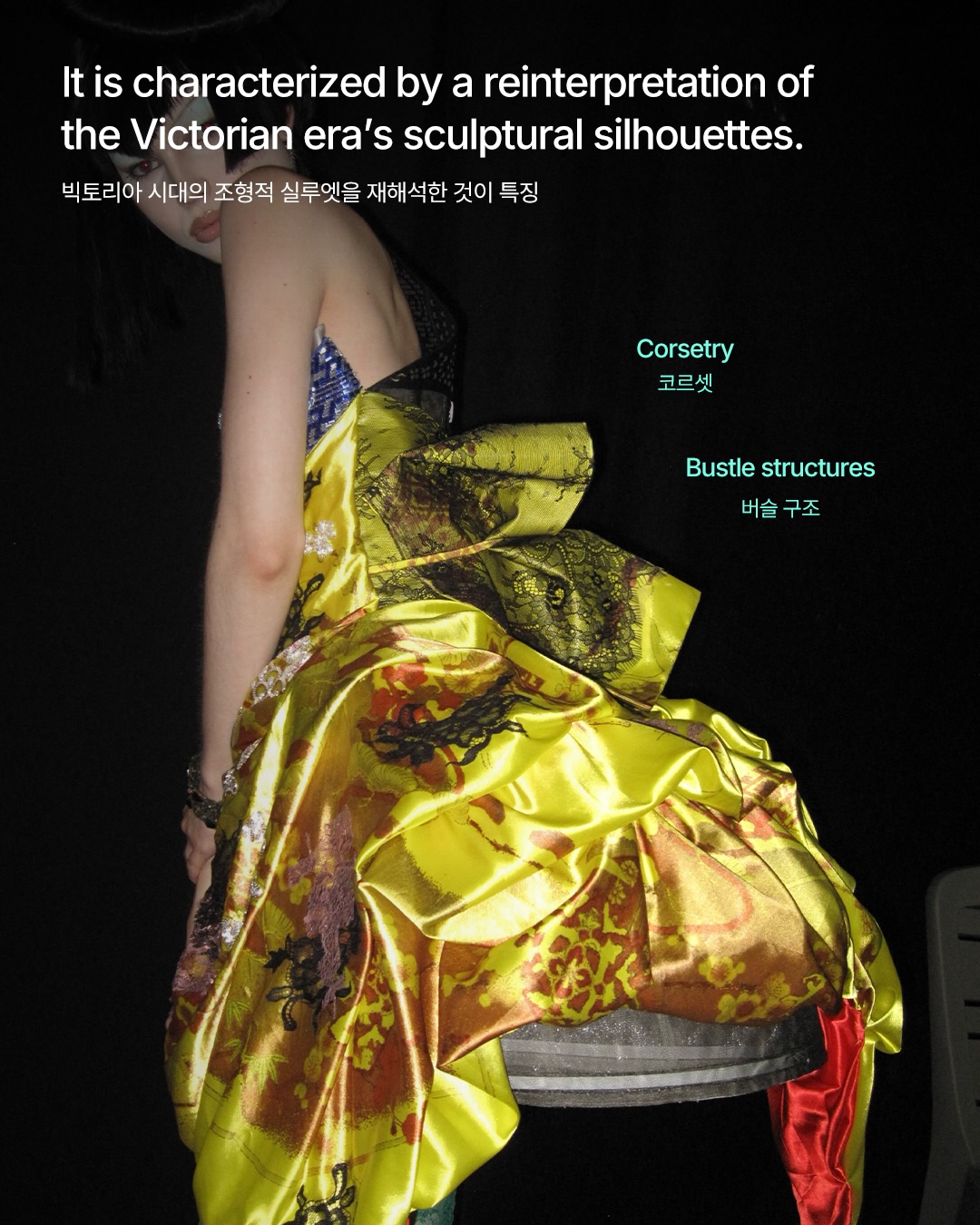
Corsets and bustles meet kimonos and obi belts in a striking fusion of East and West. Designer Ngoc Isalone presents a collection that merges Victorian dress codes with traditional Japanese clothing, creating entirely new silhouettes that transcend temporal and cultural boundaries. The designs feature traditional Japanese elements such as the wagasa (traditional umbrella), sensu (folding fan), and obi, reinterpreted alongside Victorian corsetry and bustle structures into sculptural forms.
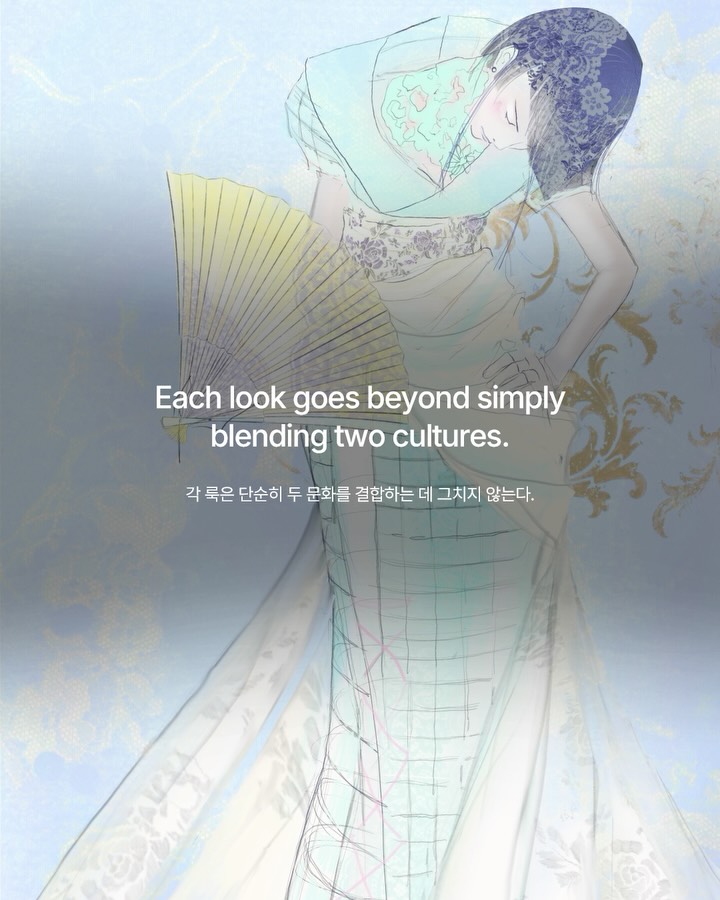
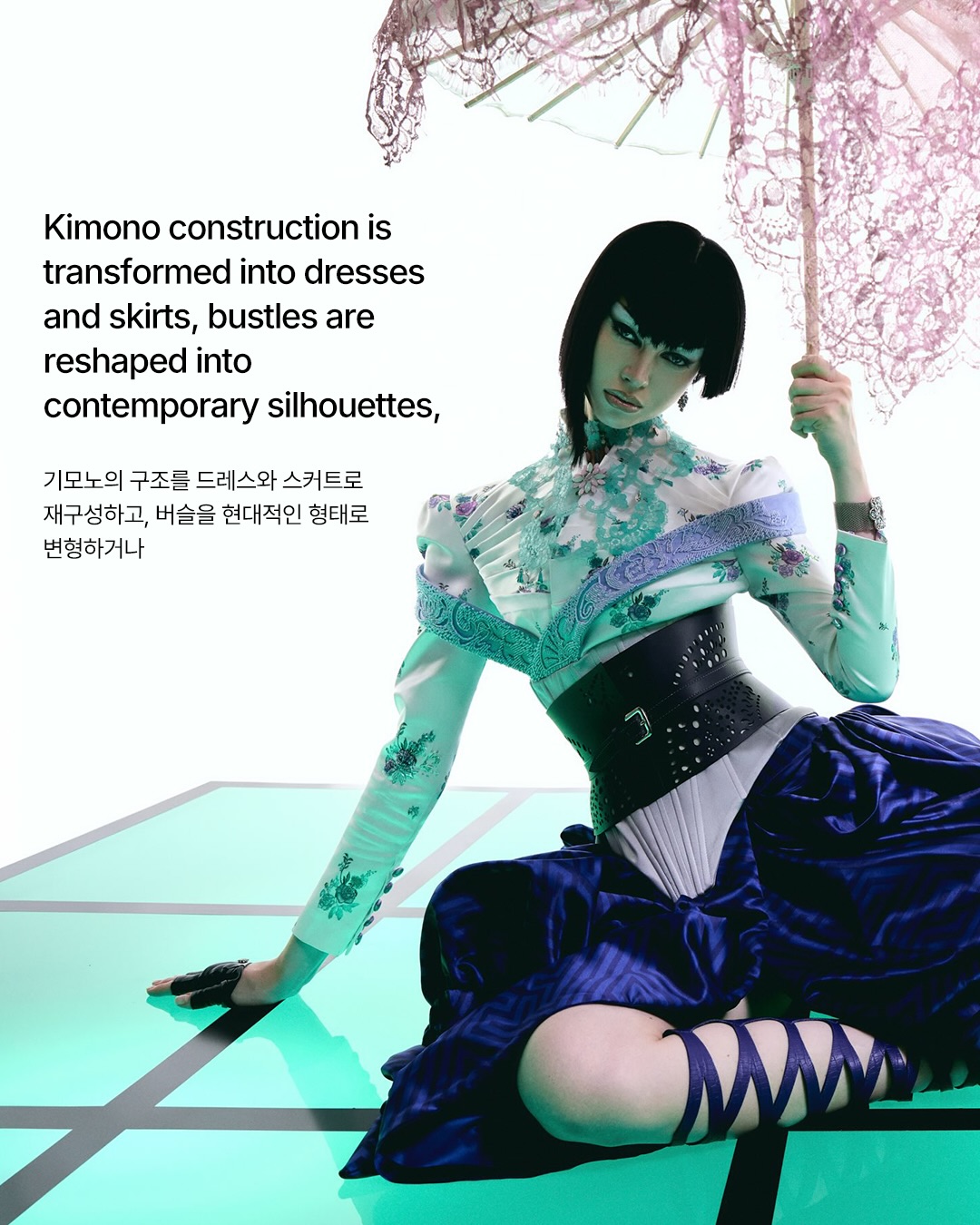
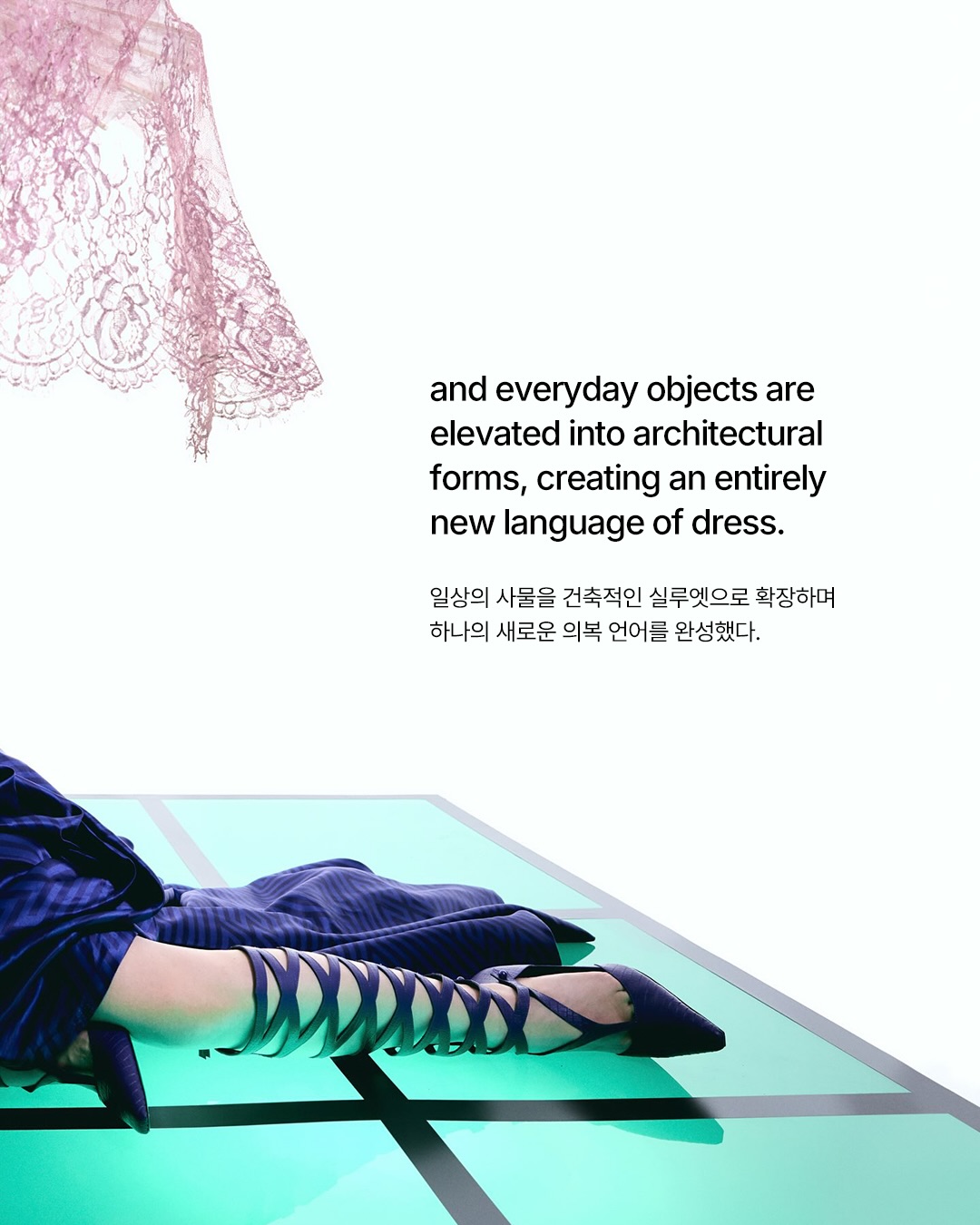
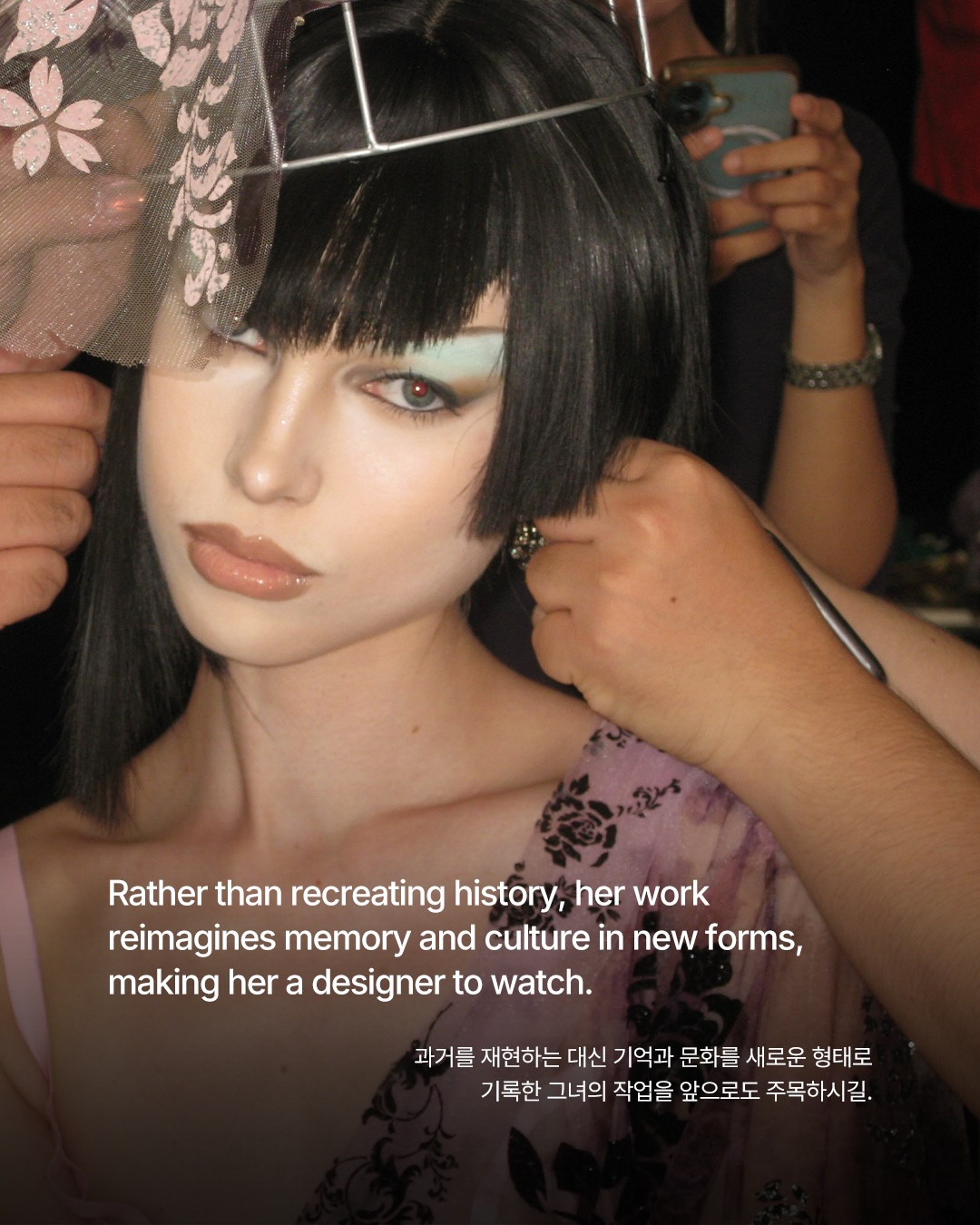
Each look goes far beyond simply blending two cultures. Kimono construction is transformed into dresses and skirts, bustles are reshaped into contemporary silhouettes, and everyday objects are elevated into architectural forms, establishing a wholly original language of dress. Particularly notable are details like the transparent wagasa used as a veil-like element and the exaggerated obi reinterpreted as dramatic waistlines, showcasing the designer's experimental approach.
Rather than recreating history, this collection reimagines memory and culture through fashion. By interpreting the structural beauty inherent in traditional Eastern and Western garments from a contemporary perspective, Ngoc Isalone demonstrates fashion's potential to transcend cultural boundaries. Her work succeeds not merely as fusion, but as a respectful engagement with the historical and cultural contexts of clothing while creating an entirely new sculptural vocabulary.
Each look goes far beyond simply blending two cultures. Kimono construction is transformed into dresses and skirts, bustles are reshaped into contemporary silhouettes, and everyday objects are elevated into architectural forms, establishing a wholly original language of dress. Particularly notable are details like the transparent wagasa used as a veil-like element and the exaggerated obi reinterpreted as dramatic waistlines, showcasing the designer's experimental approach.
Rather than recreating history, this collection reimagines memory and culture through fashion. By interpreting the structural beauty inherent in traditional Eastern and Western garments from a contemporary perspective, Ngoc Isalone demonstrates fashion's potential to transcend cultural boundaries. Her work succeeds not merely as fusion, but as a respectful engagement with the historical and cultural contexts of clothing while creating an entirely new sculptural vocabulary.
FAQ
Who is designer Ngoc Aisolon?
Designer Ngoc Aisolon presents a new form of clothing combining Victorian-era dress with traditional Japanese garments, reinterpreting elements like wagasa, sensu, and obi alongside Victorian corsets and bustle structures into unified sculptural silhouettes.
What are the distinctive details of the Ngoc Aisolon collection?
The Ngoc Aisolon collection features details like transparent wagasa used as veils and obi reinterpreted as exaggerated waistlines, reconstructing kimono structures into dresses and skirts while transforming bustles into contemporary forms.