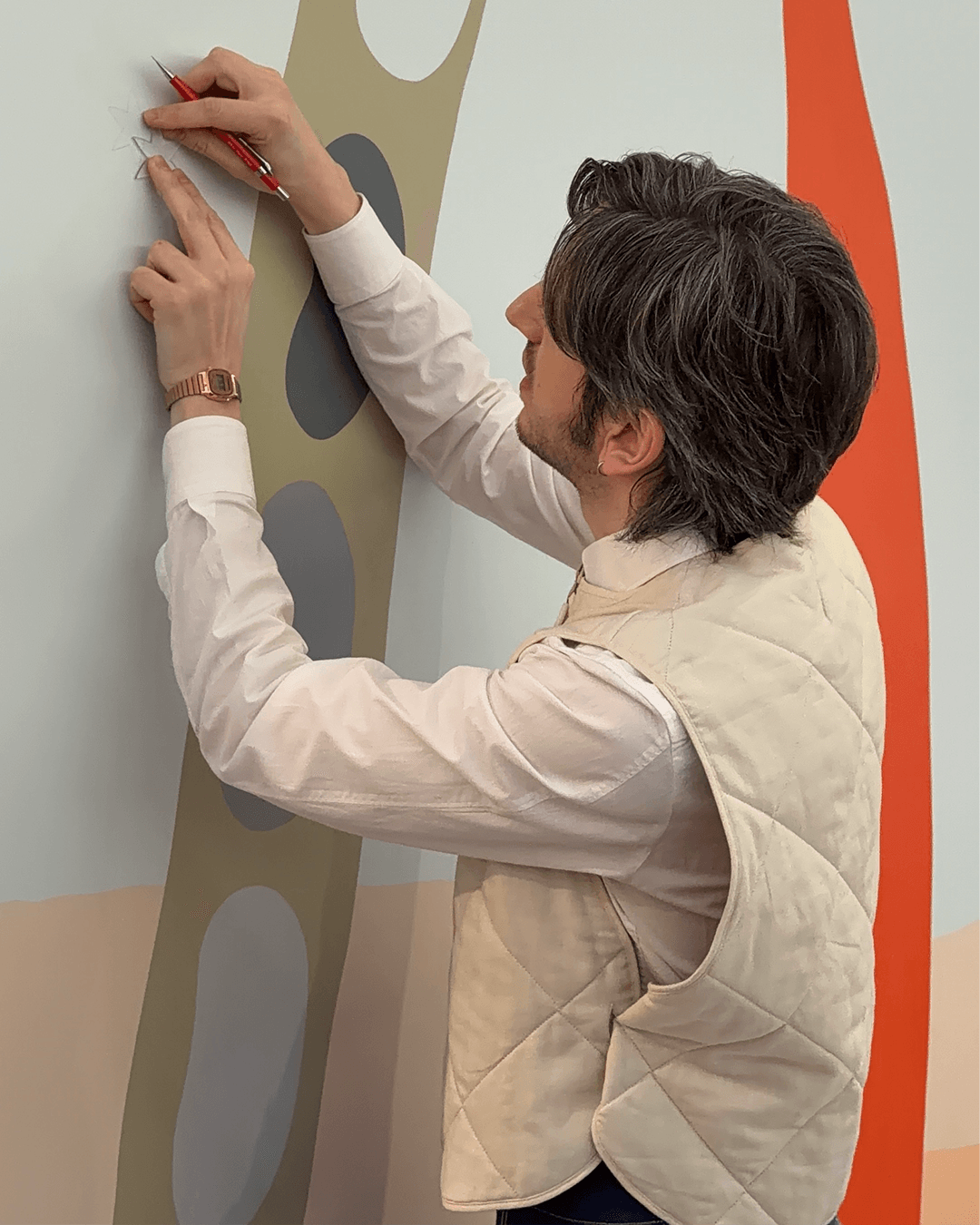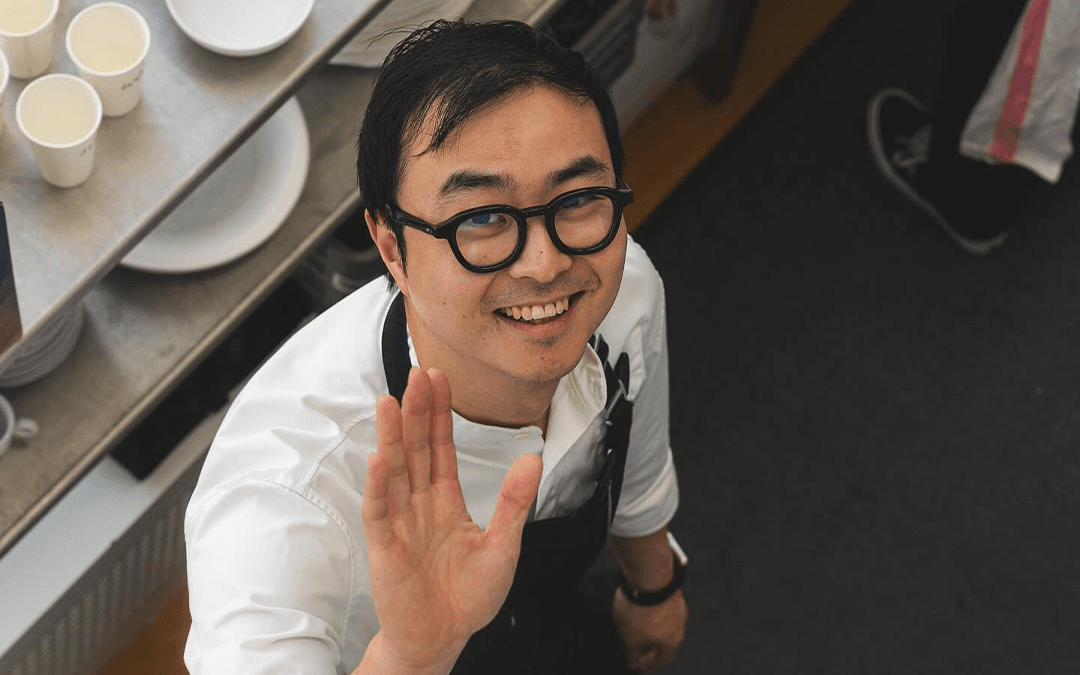
Balbosté, the most sensuous creative culinary studio in Paris. PAP visited its kitchen atelier to meet Yeo Sung-jun, the Korean head chef leading the kitchen, in person!
With more than a decade of experience in French Michelin-starred restaurants, he is building a new kind of gastronomic experience that goes beyond cooking and joins hands with art. He has collaborated with Prada, Miu Miu, Louis Vuitton and many other fashion brands, expressing each brand's identity through creative cuisine.
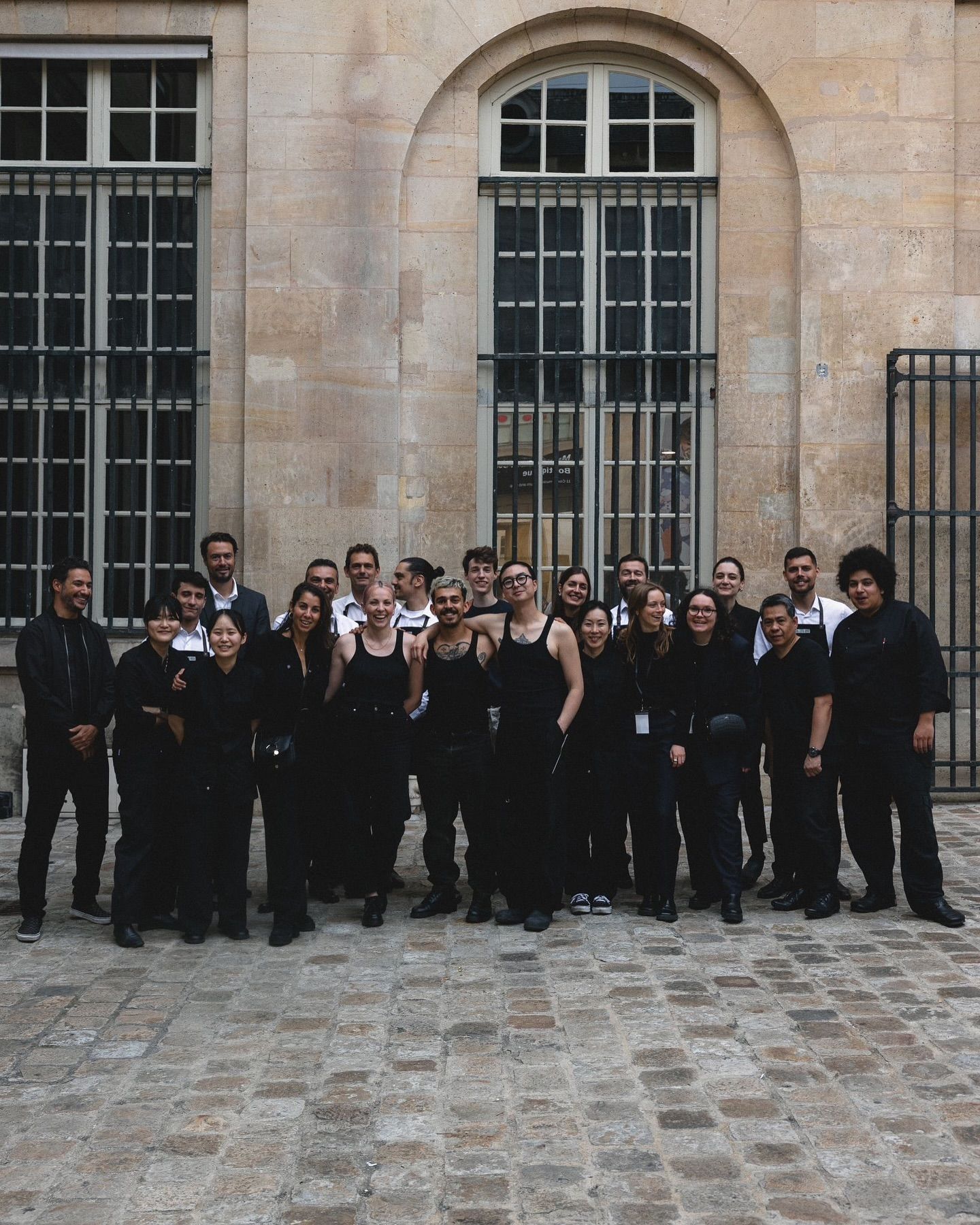
Like the branches of a great tree stretching out in every direction, the Balbosté team gathers chefs of different nationalities who trade ideas freely, completing a single artistic scene that considers not only the food but the space, the arrangement and the colors. To them, cooking is 'the process of building a story', and the chef is the 'storyteller' who unfolds it.
The philosophy of chef Yeo Sung-jun, filled with passion and love for cooking, and the beautiful works born at his fingertips. Discover his special story.
How did your connection with Balbosté begin?
At the time there was a restaurant in the 6th arrondissement of Paris that I was consulting for. That is when Charlotte first reached out on Instagram. She said Balbosté wanted to host dinners on a larger scale, and that if the timing was right she would love for us to work together. Just then, Charlotte's mother happened to come dine at our restaurant, and she recommended me as a chef once more. After more than ten years in Michelin restaurant kitchens, I wanted to go beyond that, and I realized that to cross that line I had to step outside the restaurant. I wanted a wider view of the restaurant industry, one with more creativity in it. Meeting Balbosté by chance grew into a very good relationship.
The timing lined up perfectly!
Yes, we met each other at the right moment. Charlotte needed a head chef to build her kitchen team, and I had already worked in restaurants for a long time and wanted to attempt another dimension of creation, a step above gastronomic Michelin dining. Thinking about it now, maybe this is what fate looks like. (laughs)
Your first project at Balbosté was 'Kenzo', right? You must have been incredibly nervous.
The pressure was no joke. Failing was not an option. Kenzo's creative director Nigo, the designers, the CEOs and the VIPs were all in the room, so from where I stood the responsibility was enormous. Above all, when the invited guests received the food, it had to be food they could dream through.
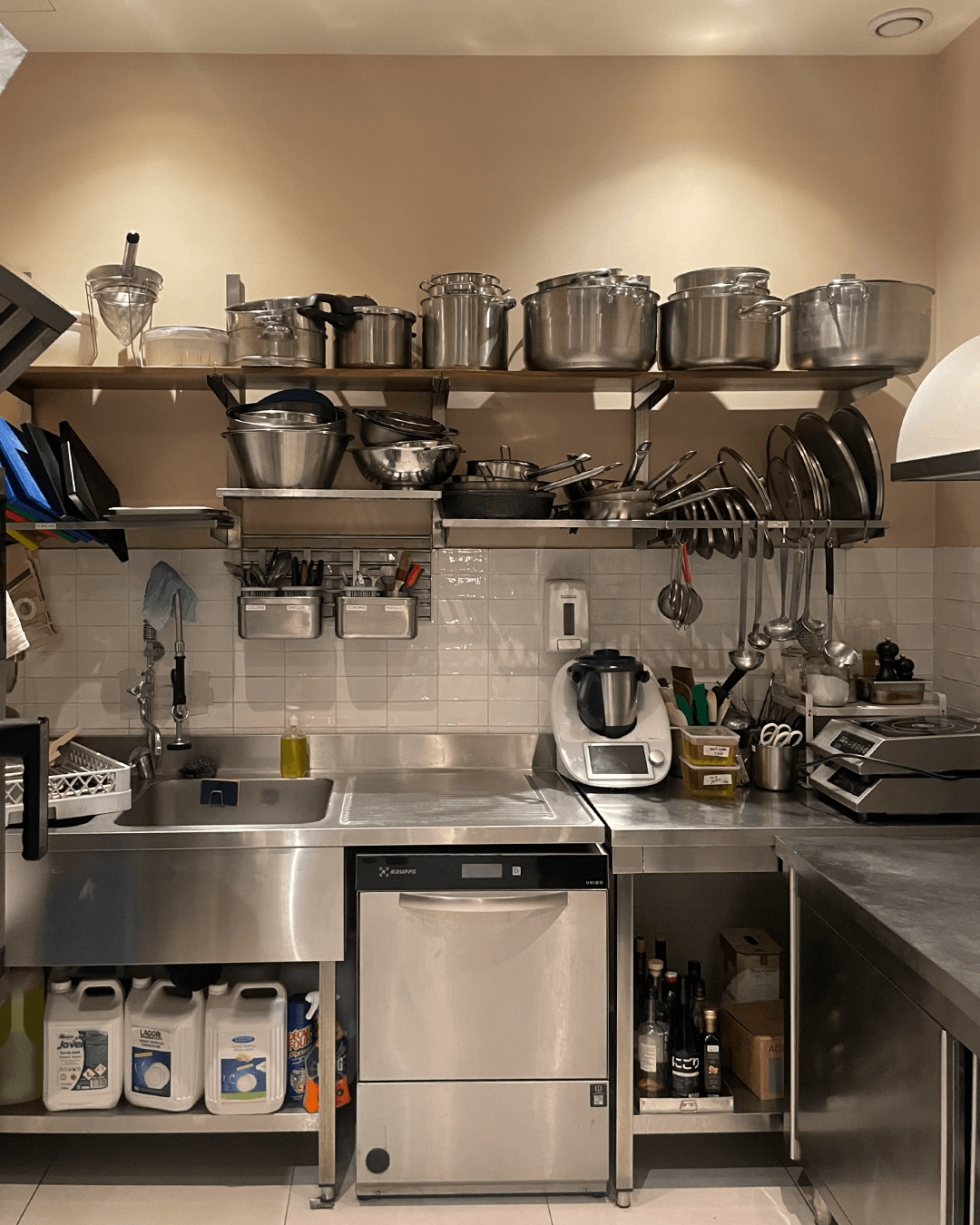
Contrary to what you might expect, Paris kitchens are quite limited. They are not shiny and sprawling like American or English kitchens. But if I have one strength, it is that whatever the situation, I flow with it. I do not snap at people or make excuses. So even though the event took place in an outdoor tent, I carried it out as if on familiar ground. The pressure to deliver was immense, but at the same time I was thrilled, because I had a team who could build the work I had drawn in my head.
It has already been more than two years since you and Balbosté joined forces. Of all the projects at Balbosté, is there one you poured the most passion into, or a menu?
Hmm, the project I poured the most passion into was with 'Louis XIII', the luxury cognac brand. It is one of the oldest houses there is, and this old house contacted us because it wanted to transform into something current. We were asked to create a culinary guideline for the brand and to build the finest dining experience on earth. Through food, we had to show 'this is the newly reborn Louis XIII of 2024'.
There were two difficulties for me. The first was to preserve the history of a storied brand while transforming it into something current. The second was to build the food on the process by which cognac is made. So our team traveled to Cognac itself, experienced first-hand how cognac is produced, spoke with the artisans, tasted and studied, and stayed there for about a week. I think I spent the most energy on the process of renewing that old identity while weaving Balbosté's creation into it.
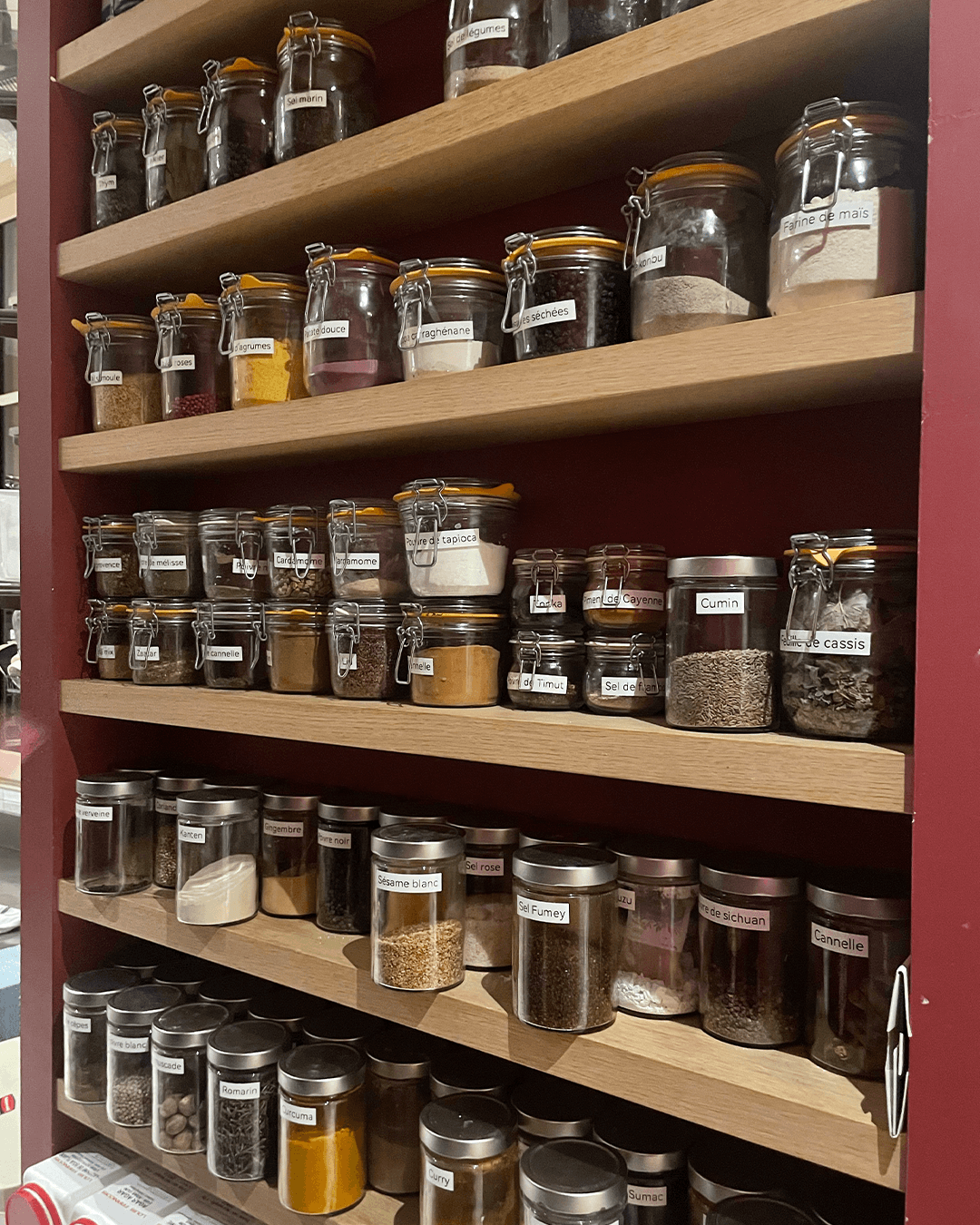
Balbosté's treasure chest, where spices from around the world gather
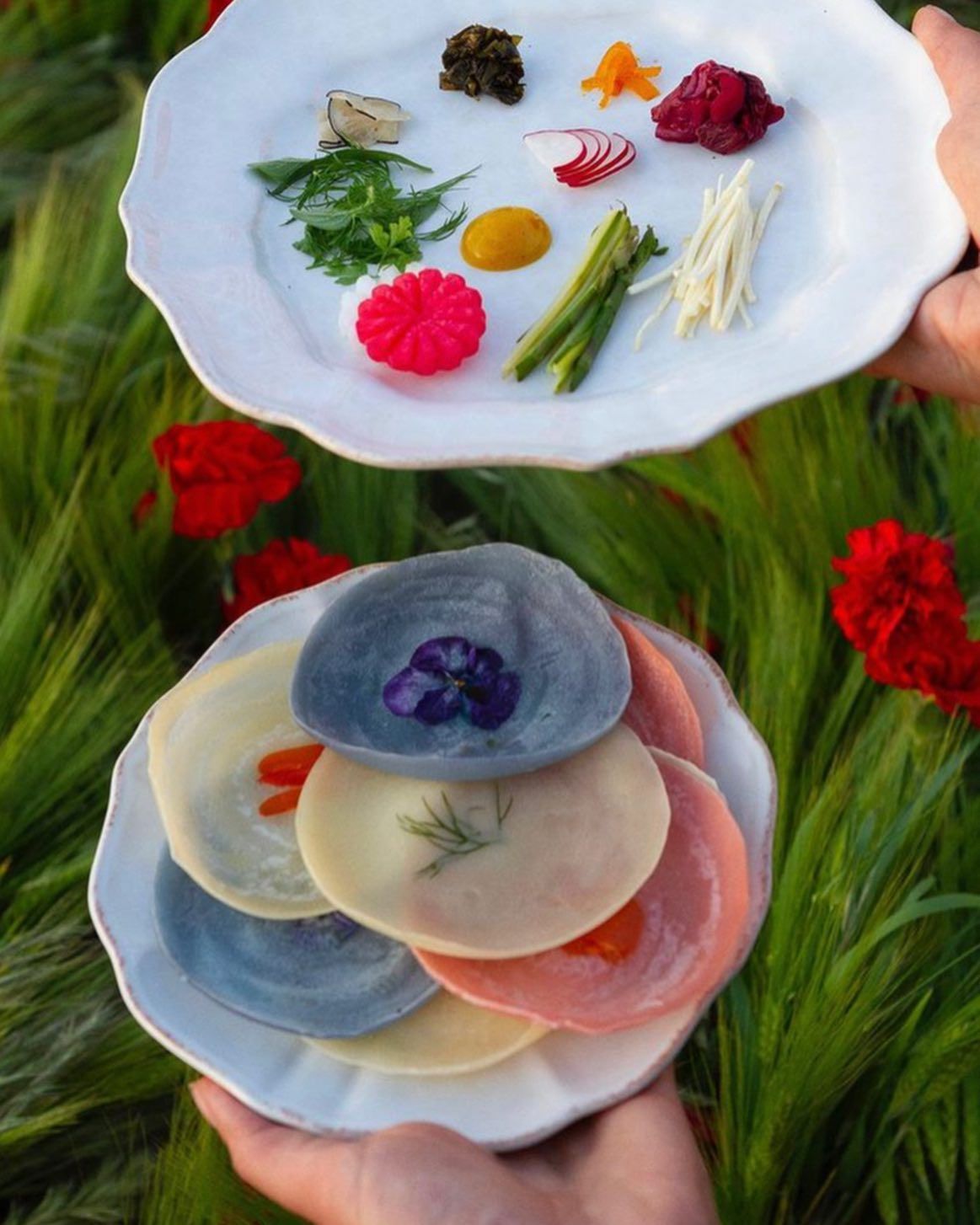
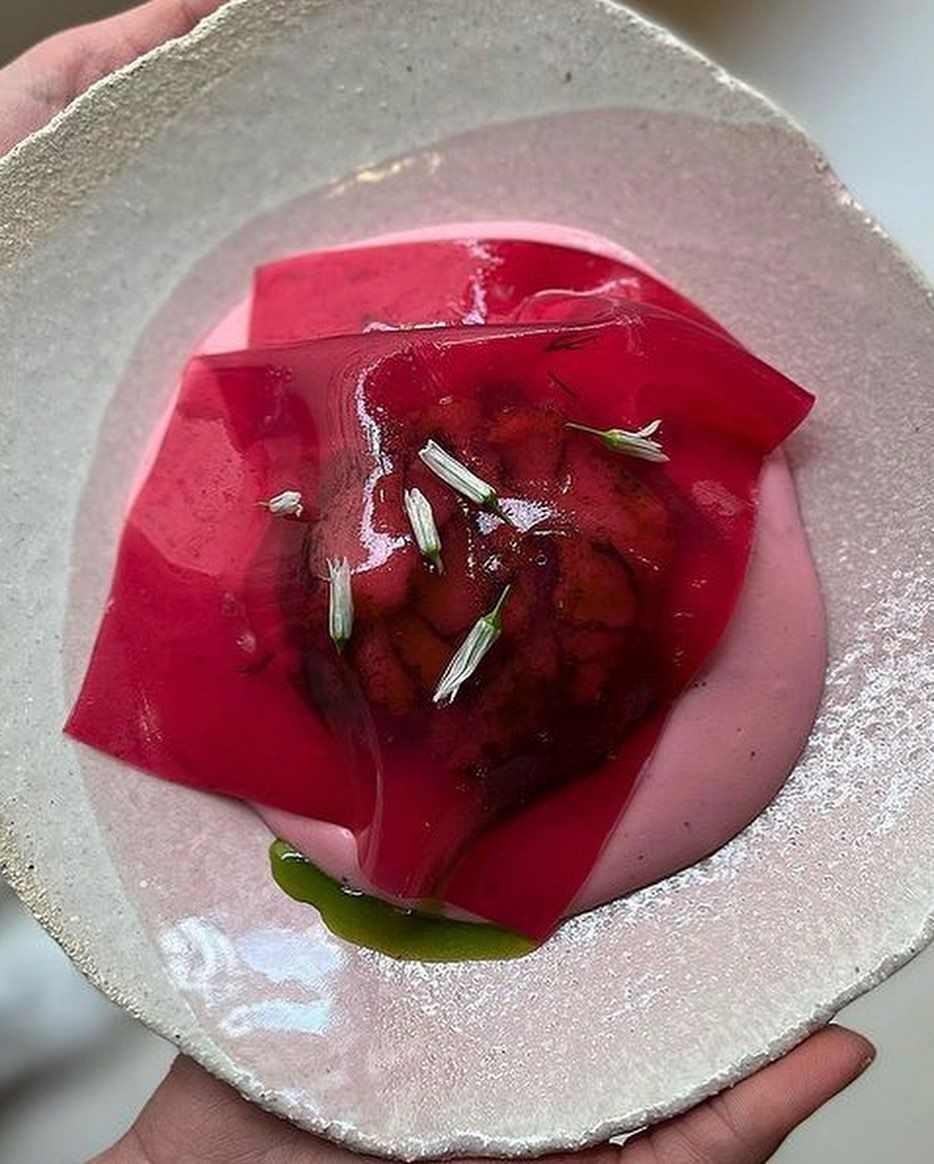
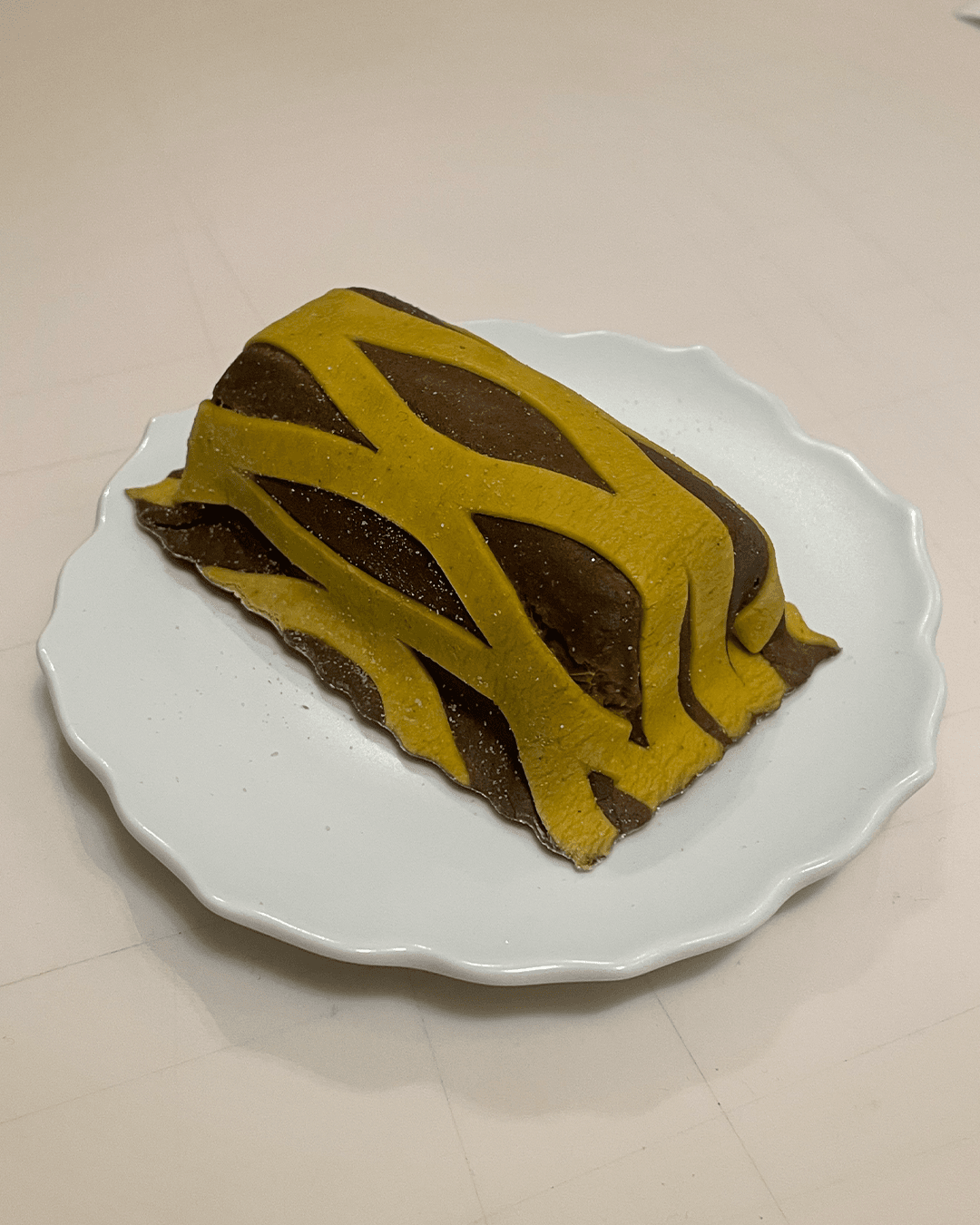
Beef Wellington Ravioli
(Top) Beef ragù
(Middle) Truffle and girolle mushrooms
(Bottom) Beef tenderloin with truffle
(Outside) Pickled grape vine leaves
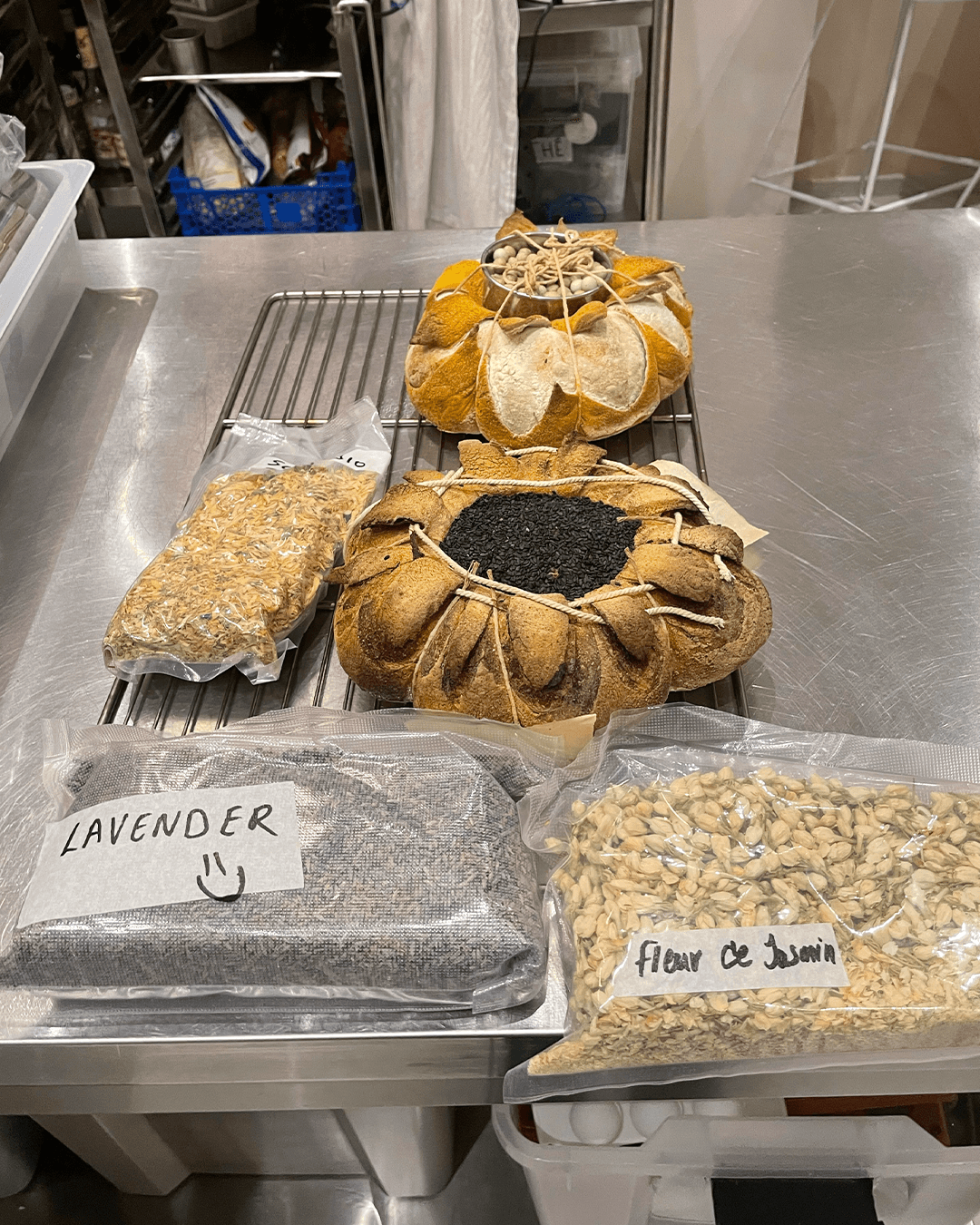
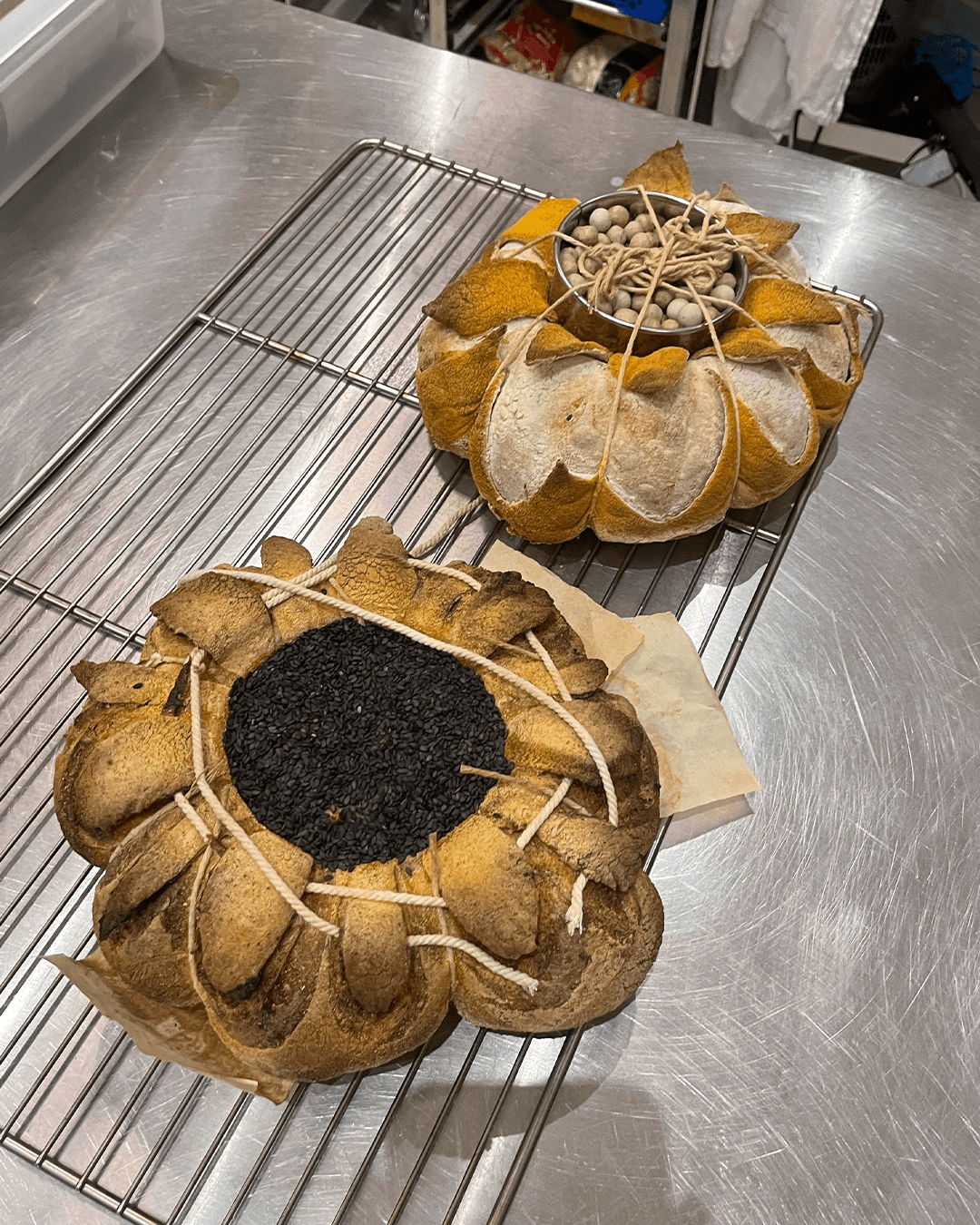
Sunflower sourdough
Balbosté is a French creative culinary studio, but its head chef is Korean. There must have been difficulties born of cultural difference.
I thought so too, but not at all. There is one amusing point here. From the moment I started cooking, I have only ever done French. I graduated from a French culinary school, and the places I have worked have all been the French embassy, French gastronomy or French Michelin restaurants. Ironically, the cuisine I prefer is French, and the cuisine I do best is French. If anything, the French members of my team learn French cooking from me. (laughs)
One of Balbosté's strengths is that while we are based in France, our team of twenty holds more than ten nationalities. Belgium, Switzerland, Germany, the United States, Korea, Japan, Cyprus, China, Israel... So international projects are a joy. Wherever we go, we can work. Which means the head chef being Korean hardly matters at all!
What our team wants is a great tree. A tree must have different branches, each reaching in its own direction. It cannot grow in only one direction. I think that is the most ideal direction we could hope for.
Then what, to you, is the difference between French cuisine and Korean cuisine?
The way you look at food! In French cooking, they say elegance reveals itself in displaying beauty. There is even a saying that "elegance and delicate small details meet to create the height of French cuisine." Korean food, on the other hand, is a modest cuisine. You must not show how hard you worked. The head chef of 'Onjium', my mentor in Korean cooking, emphasizes above all 'geomi-bullu hwai-bulchi': frugal but never shabby, splendid but never extravagant.
There must have been a moment you decided to become a chef. We are curious about the story.
Hmm... to be honest, there was no defining moment. I opened my eyes one day and found myself still cooking. (laughs) At first I actually wanted to work in a photo lab. Shooting film and developing photos in the darkroom, I loved that process so much. Producing a finished thing with my own hands.
Cooking is the same. I go to the dawn market to find ingredients rich with the season, and with those ingredients I make food with my own hands. And whoever eats it goes home carrying a good memory. In the end, I think it is exactly like developing photographs. When I was young, I watched a documentary on EBS about Alain Passard, the chef of the restaurant 'Arpège'. The process of French cooking looked as graceful as an orchestra performance. So after working at a French restaurant in Itaewon run by a French chef, I came to France at 23, just like that.
Looking back, I am simply someone who loves cooking, deeply. Cooking at home, talking about food, even working, I was happy and never tired. Cooking for someone else, that is what I love. The fact that I can write a story through cooking is what makes me certain I will keep cooking, now and always.
Always having to create something new. It is the great task and the fate of every artist. Where do you usually find inspiration? We are curious about the journey from the 'beautiful thing' that existed only in your head to its visual realization.
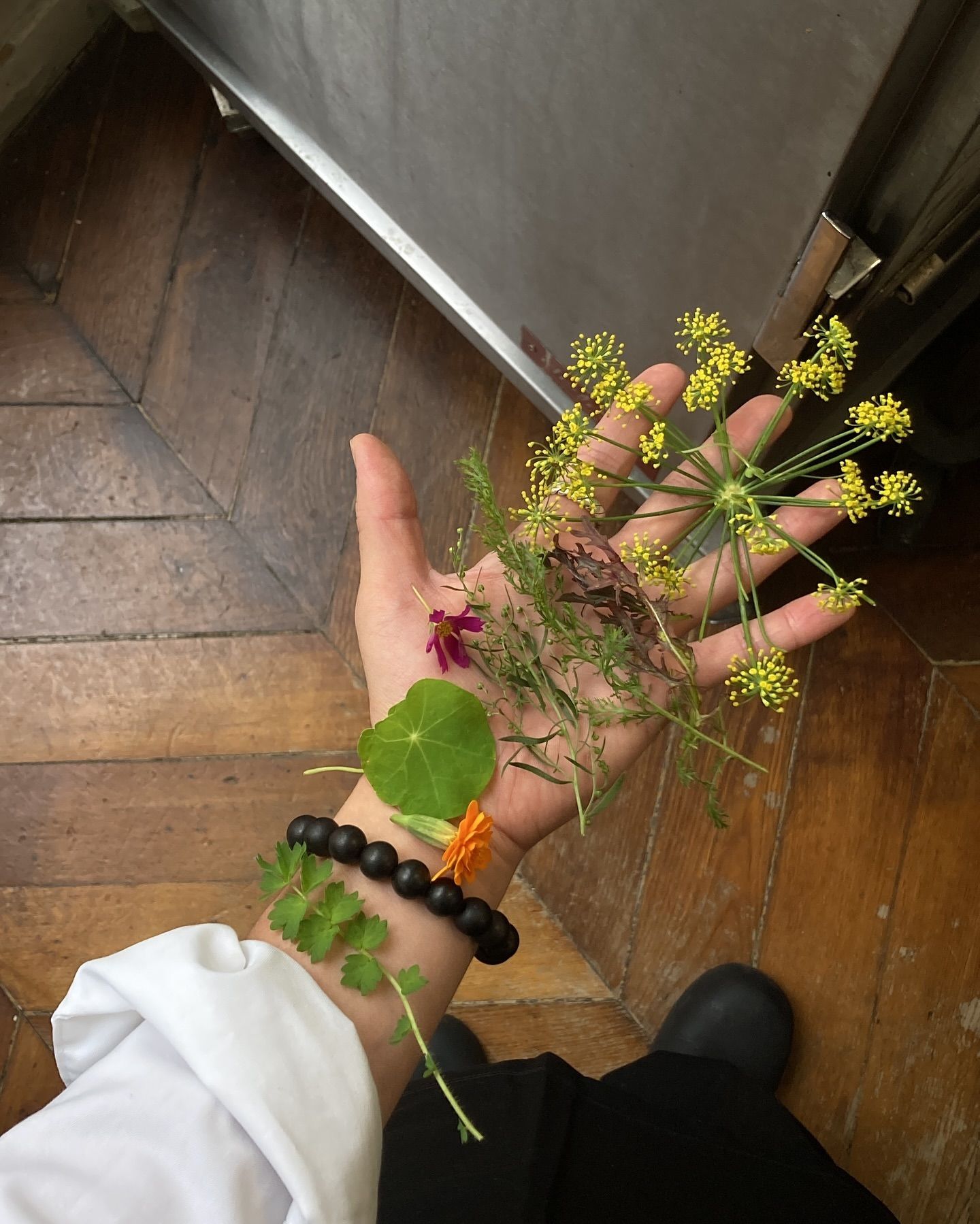
It is a very painful process. You have to create something from nothing, and with cooking, the only way to bring what does not exist into being is to try it yourself. When I am truly stuck, I go to galleries and museums and study the compositions. When the plate lands on the table, what will suit my food, how much empty space to leave, how to compose the colors. Or I go to the market. Looking at the ingredients, there are shapes that emerge from within their naturalness. You can find organic shapes without needing to cut or mix anything.
As head chef of Balbosté, when were you happiest?
Every moment is happy, but the happiest is when a menu the whole team built together is finally realized, beautifully. That is the happiest moment.
There must be things you once vowed, "this I will achieve through cooking." What is your proudest achievement so far?
Ah, there is one! There is a chef I have admired since long ago, René Redzepi, the chef of 'Noma'. A chef's chef. Receiving a shout-out from him, having him repost my story and follow me, that in itself was a great joy of my career. I was so proud. Having it confirmed that "the road you are walking is not wrong" is the most rewarding thing there is!
Balbosté and chef Yeo Sung-jun ran through 2024 without rest. So, resolutions for the new year 2025! Goals you want to reach or projects you want to attempt. One as head chef of Balbosté, and one as the person Yeo Sung-jun.
As head chef, I hope Balbosté grows into an environment where cooks can treat it as their playground. I want us to become a crew recognized by everyone, in every field, so that the chefs who pass through Balbosté can feel proud.
And as the person Yeo Sung-jun, my goal is to become a leader worth looking up to, one who steps forward for the work others avoid, and a leader who can carry his family's happiness as well. I want to be someone who looks after everything without losing the balance between work and family.
Editor. KIM LEE YEON
Credit. PAP
FAQ
How did Chef Yeo Sung-joon join Balbosté?
Charlotte reached out via Instagram first, and Charlotte's mother visited a restaurant where Yeo was consulting and recommended him as chef. Their timing aligned perfectly, launching this serendipitous collaboration between culinary and creative worlds.
Why did Chef Yeo choose Balbosté?
After over a decade in Michelin restaurants, Yeo wanted to expand his perspective beyond restaurant walls with more creative freedom. Balbosté offered that opportunity to blend culinary craft with broader creative vision.
What was Chef Yeo's first project at Balbosté?
Chef Yeo's debut project was for Kenzo, attended by creative director Nigo, designers, the CEO, and VIPs. The high-profile nature made it a particularly pressure-filled yet defining first assignment.