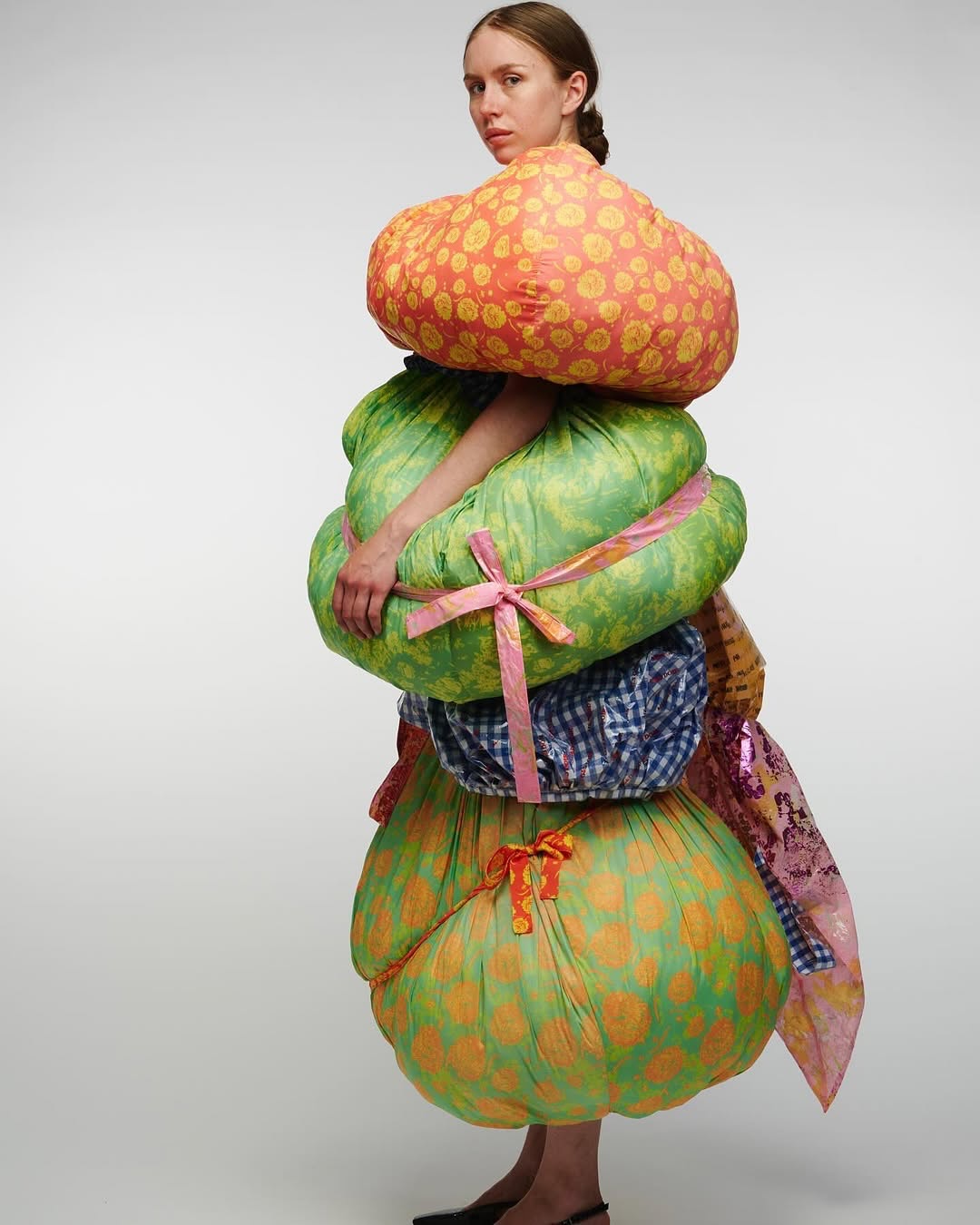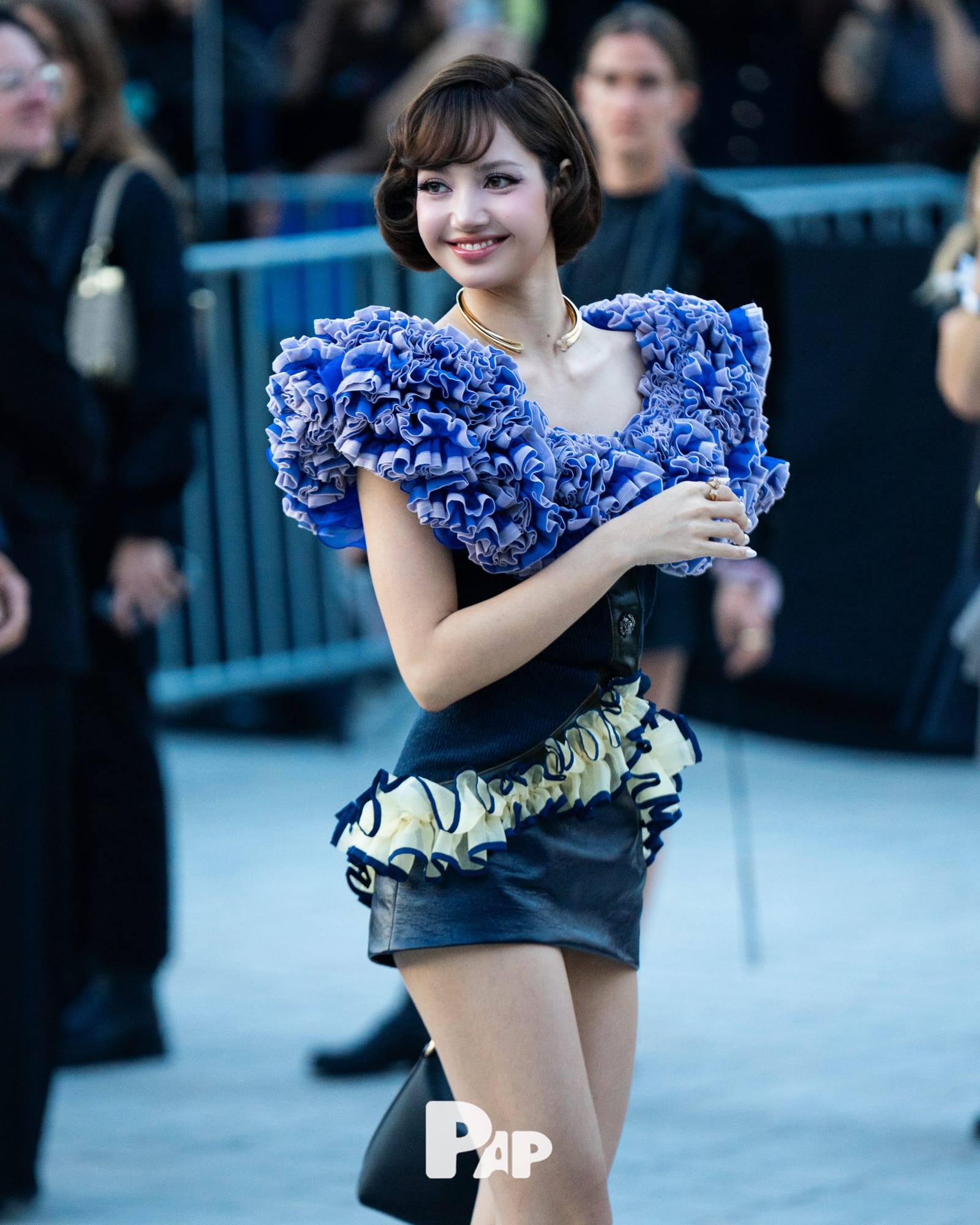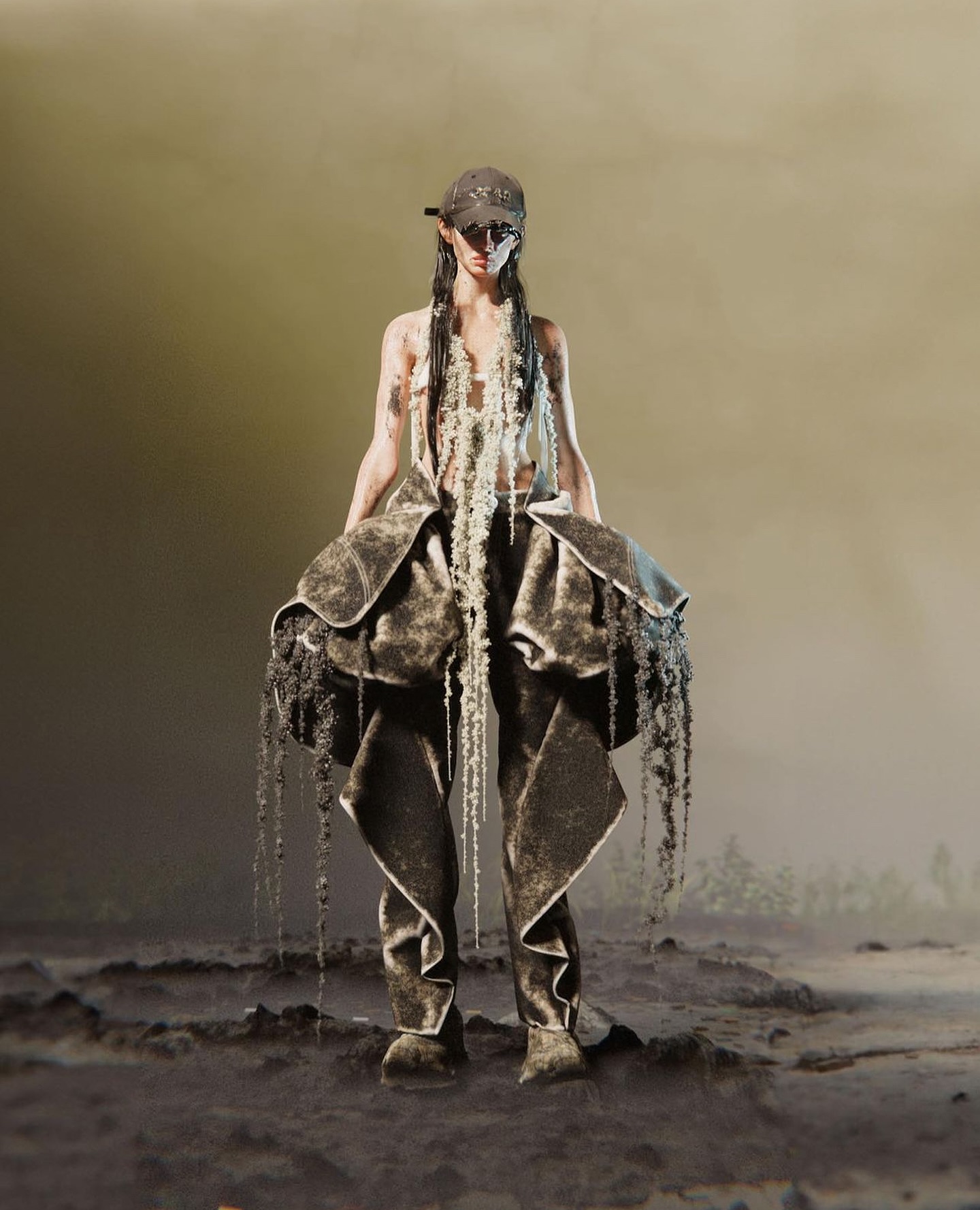
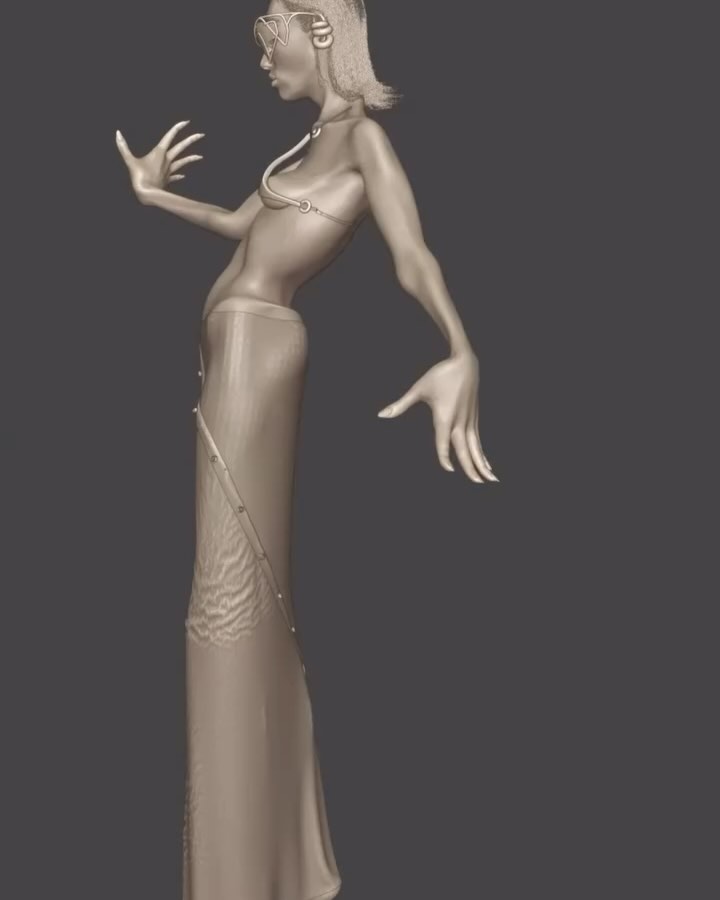
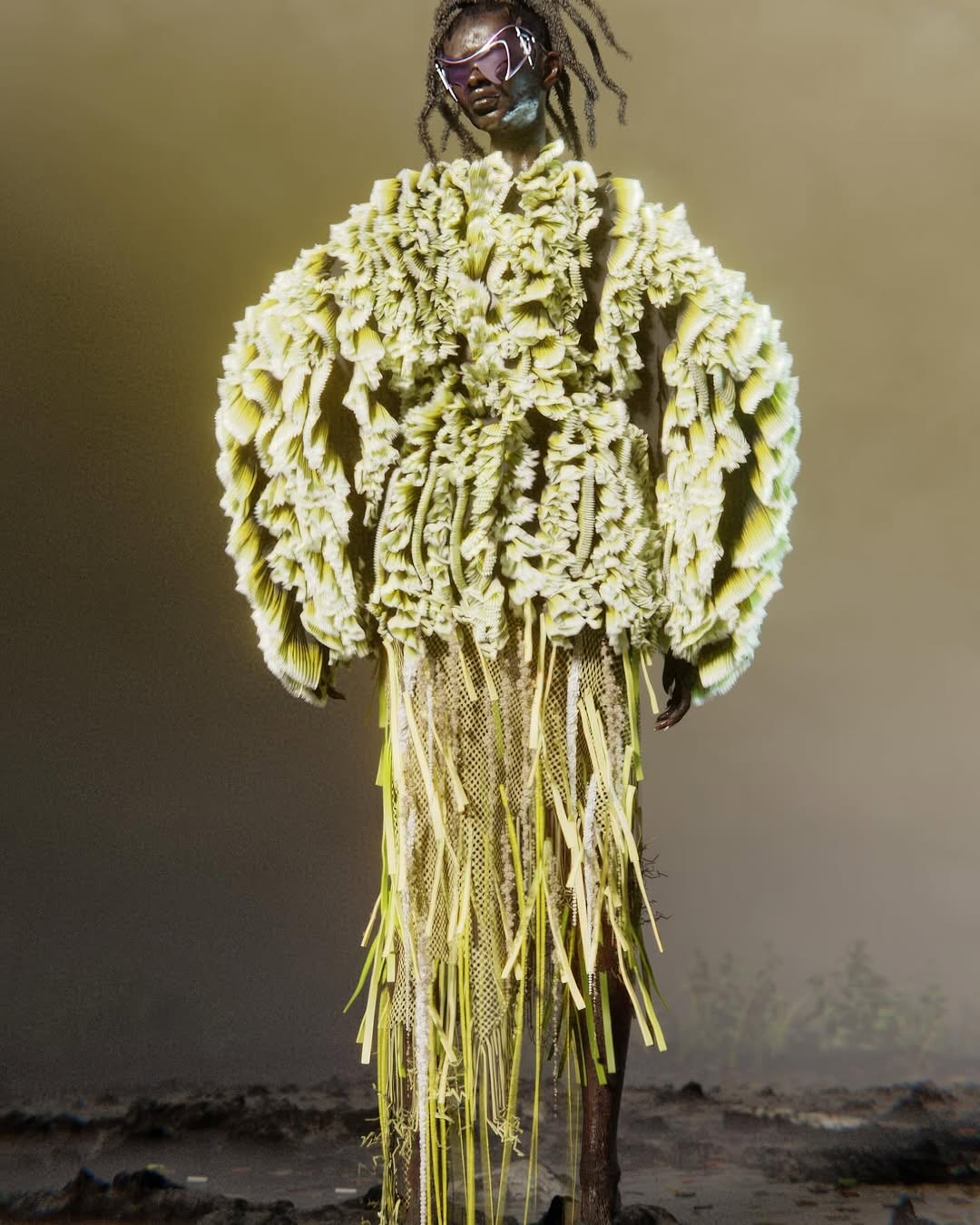
What makes Taskin's work especially intriguing is his use of digital avatars as models. He dresses virtually generated figures in his designs, directing them to present the garments through movements that deviate from typical human gestures. The avatars' uncanny yet captivating presence amplifies the surreal quality of the clothing, offering viewers an intensely visual experience that challenges conventional fashion presentation.
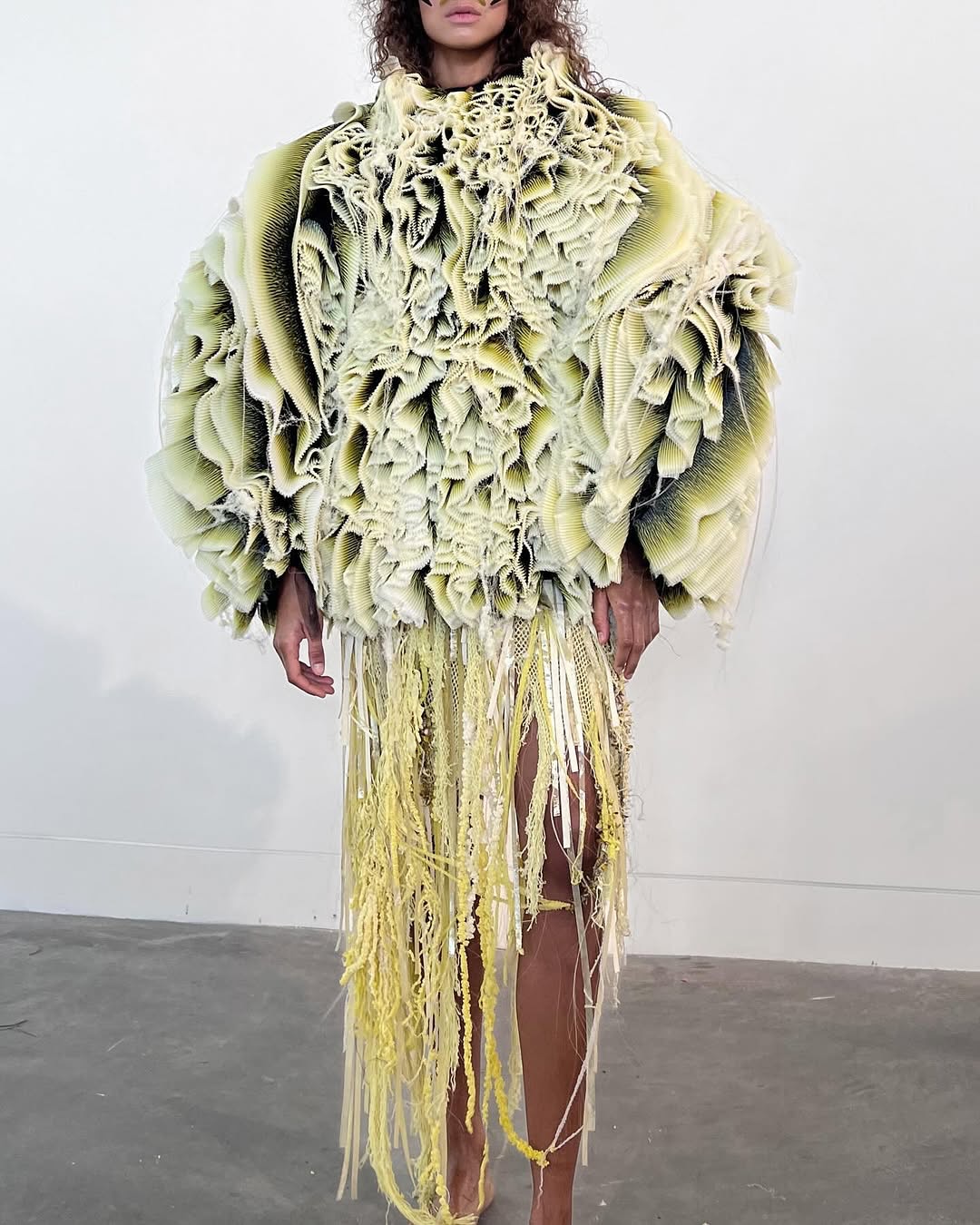
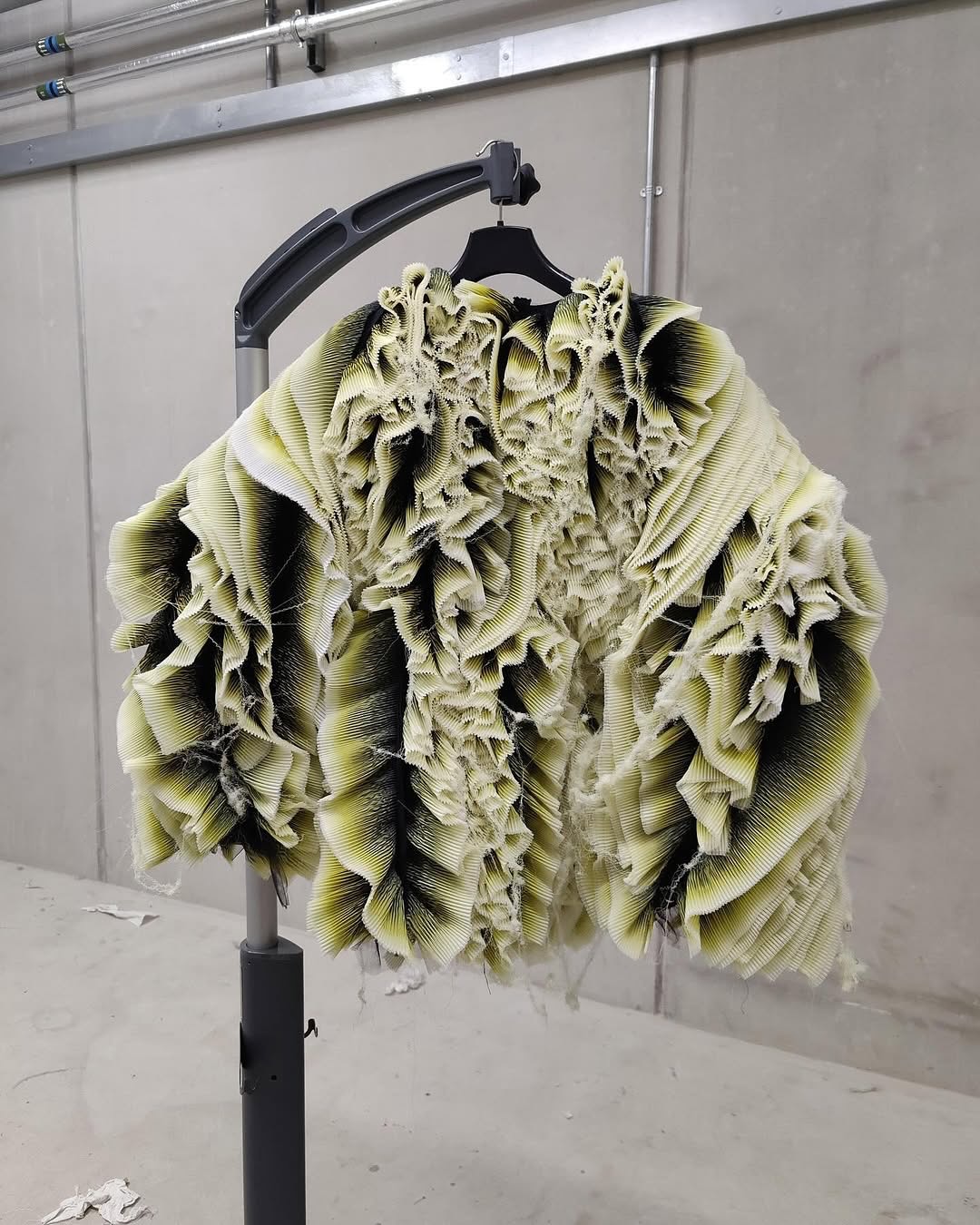
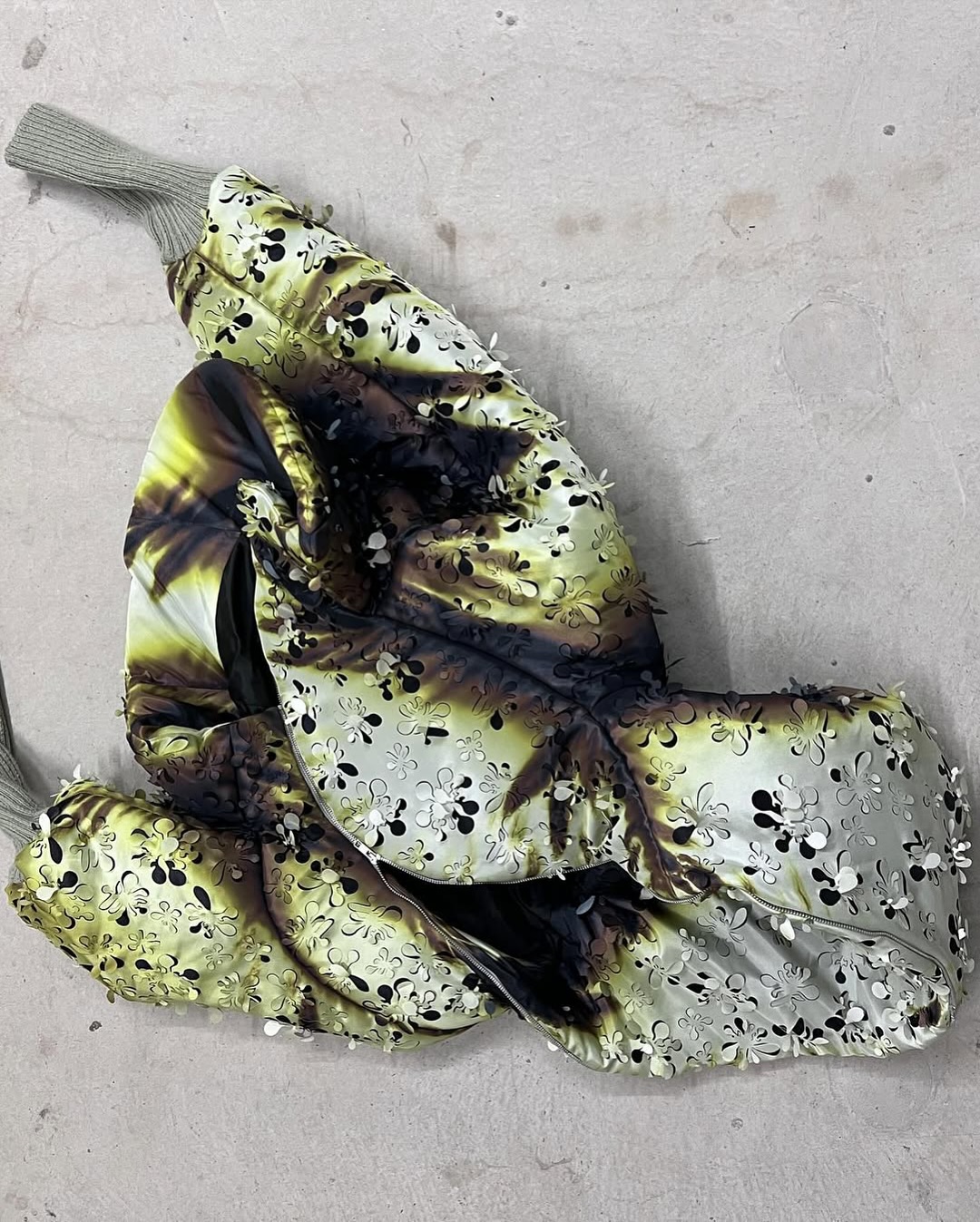
The paradox here is striking: these garments that appear impossibly surreal in the digital realm actually exist as tangible, real-world pieces. Taskin masterfully bridges the virtual and physical worlds, proposing an innovative vision where online and offline coexist harmoniously. He demonstrates that fashion can transcend mere wearability to become a space for visual narrative and technological experimentation.
For digital-native generations, the distinction between virtual and real continues to fade, and Taskin Goec's work captures precisely this zeitgeist. His designs suggest that fashion's future may exist somewhere between physical form and digital expression, resonating with the aesthetic sensibilities of a new generation that refuses to be confined by traditional boundaries.

FAQ
Who is Taskin Goec?
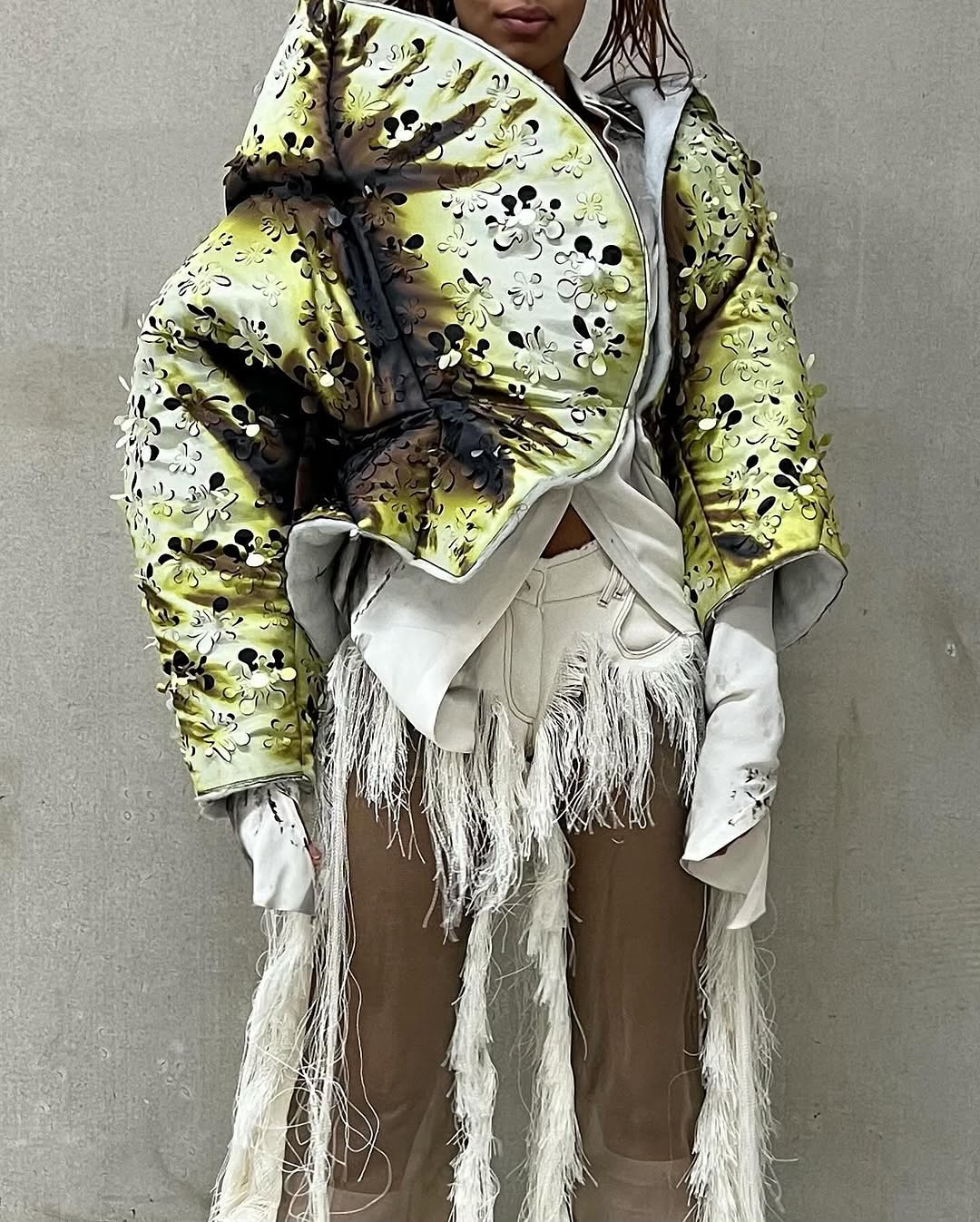
Taskin Goec is an emerging Turkish designer known for surreal designs centered on ruffles and fringe. He uses digital avatars as models while creating actually wearable garments, pioneering innovative work that dissolves boundaries between virtual and physical realms.
Why does Taskin Goec use digital avatars?
Taskin employs digital avatars to create movements beyond typical human motion, maximizing the surreal qualities of his garments. The avatars' uncanny yet captivating presence amplifies the clothing's otherworldly beauty, presenting a futuristic vision where virtual and real coexist harmoniously.
Are Taskin Goec's garments actually wearable?
Yes, despite appearing impossible in digital spaces, Taskin's garments are all physically constructed real-world pieces. This paradoxical approach is central to his work, proving online and offline worlds can freely intersect and coexist seamlessly.