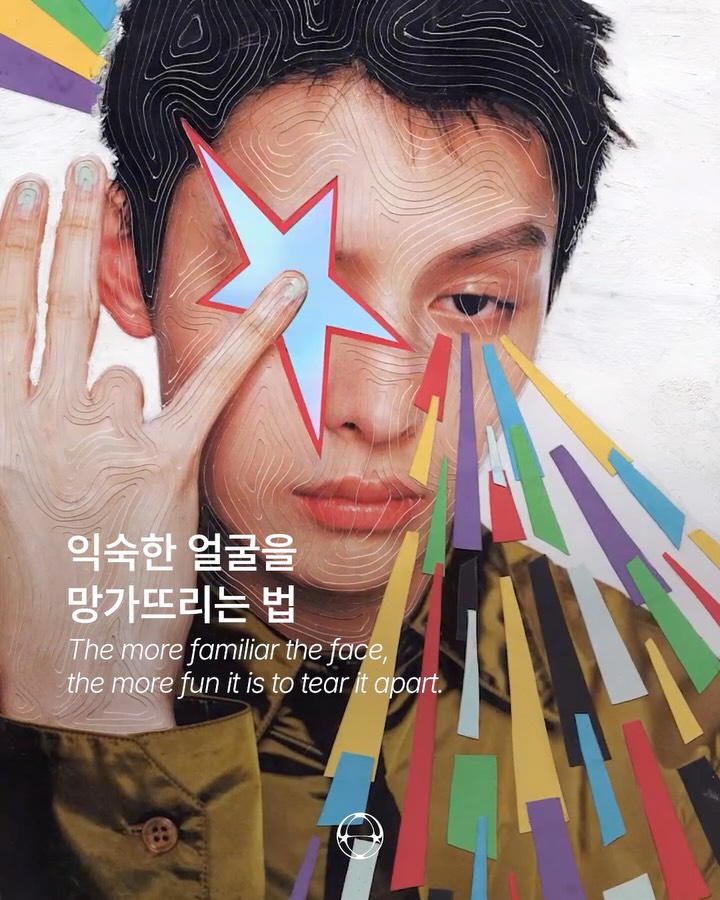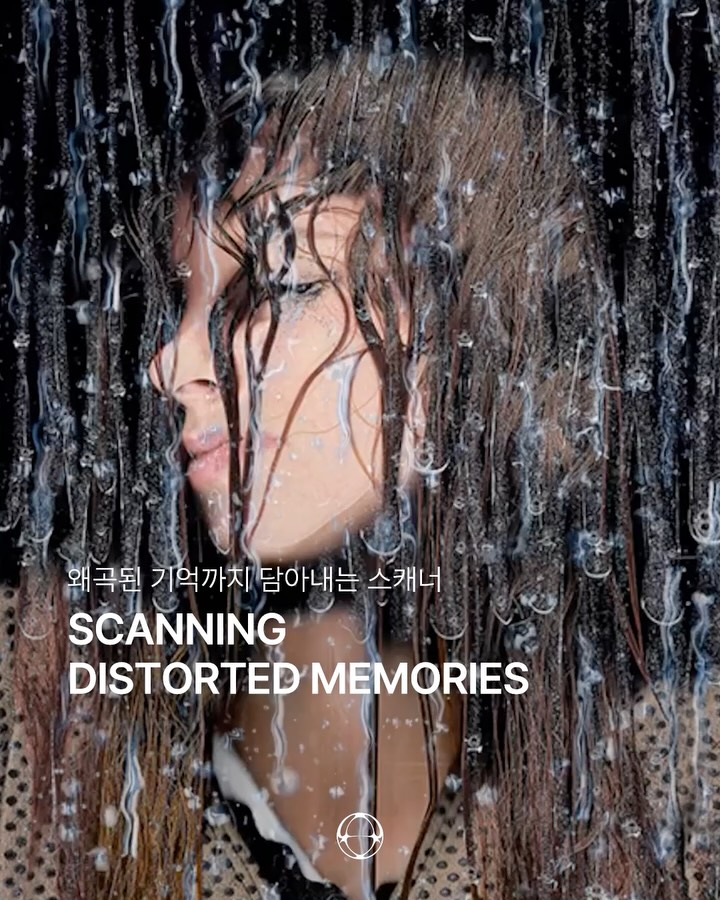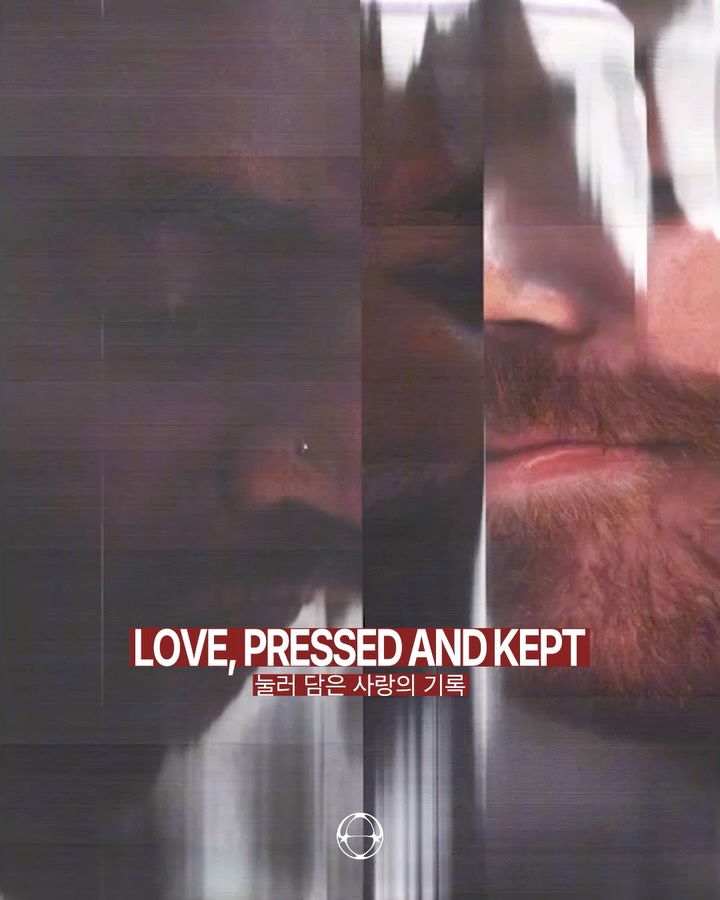
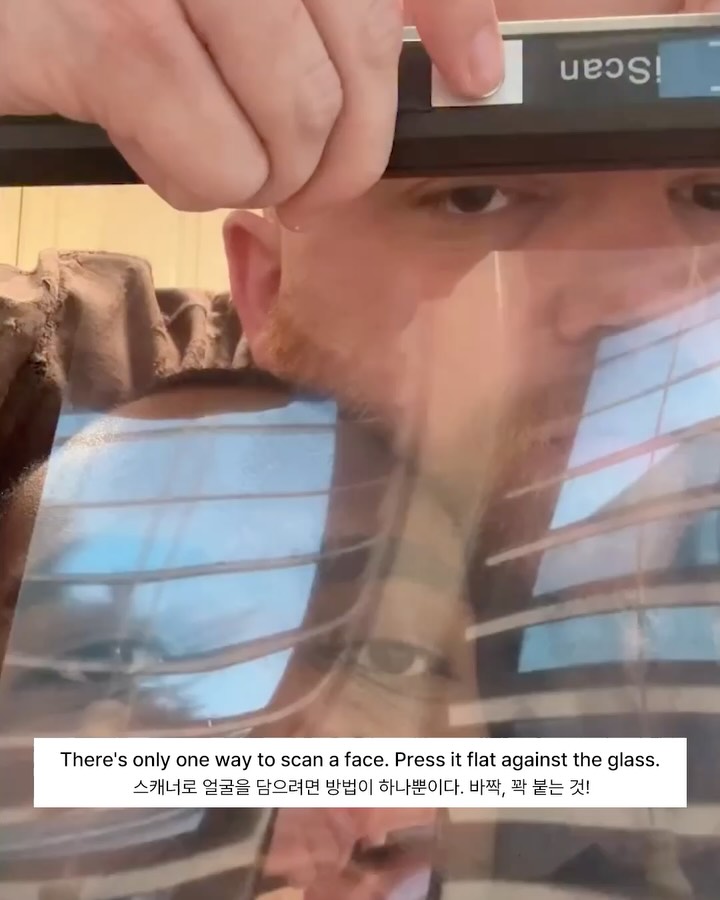
A face, pressed and broken. Tanner Frost Bowen scans his closest people these days, not photographs them. There's only one way to capture a face on a scanner: press it flat against the glass. For two people, that means foreheads touching, pressing closer with every second.
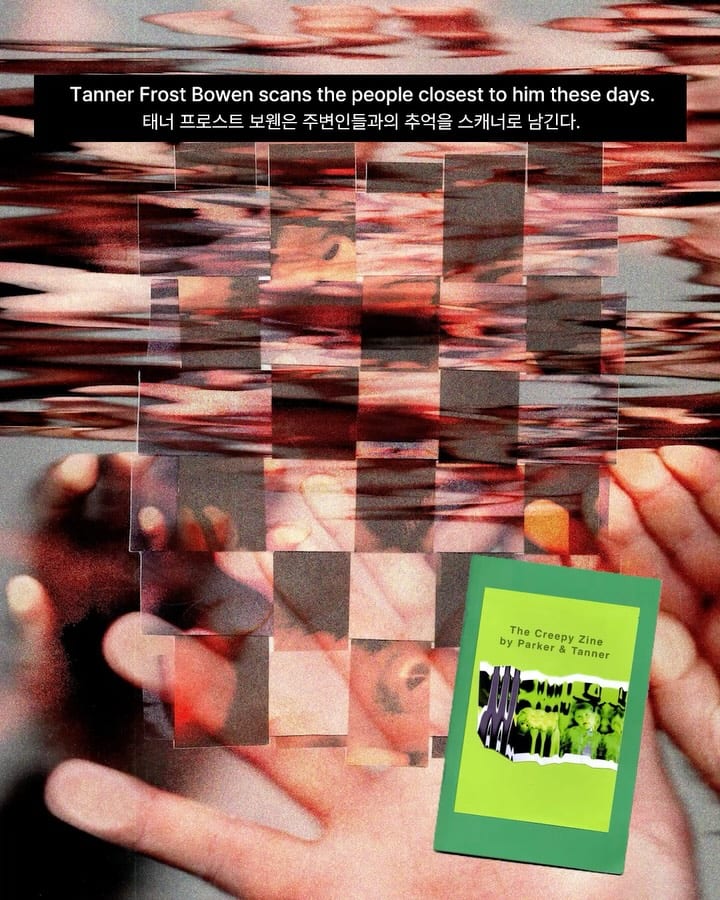
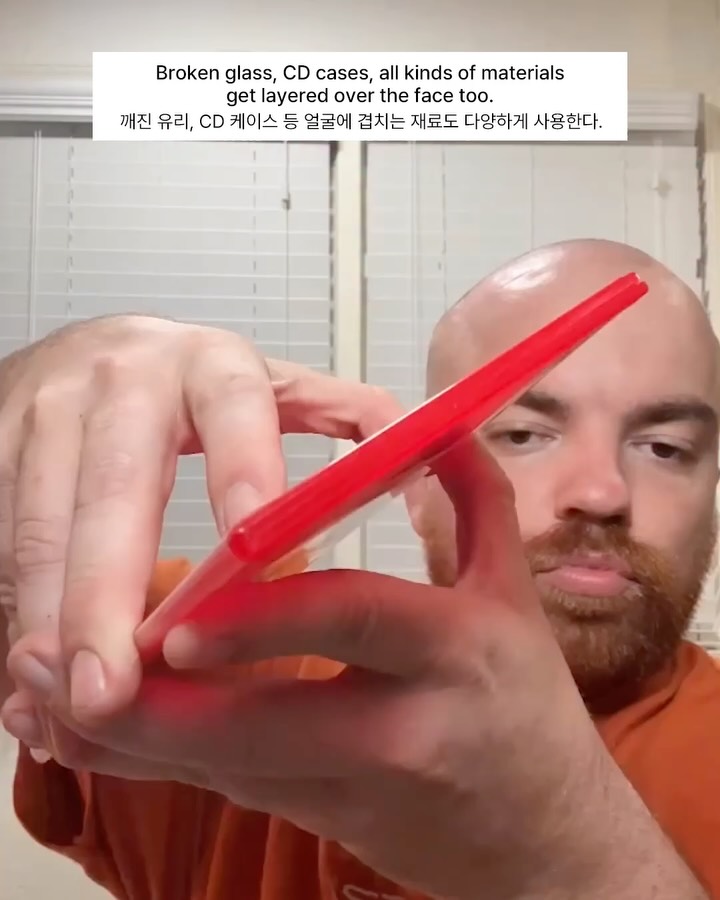
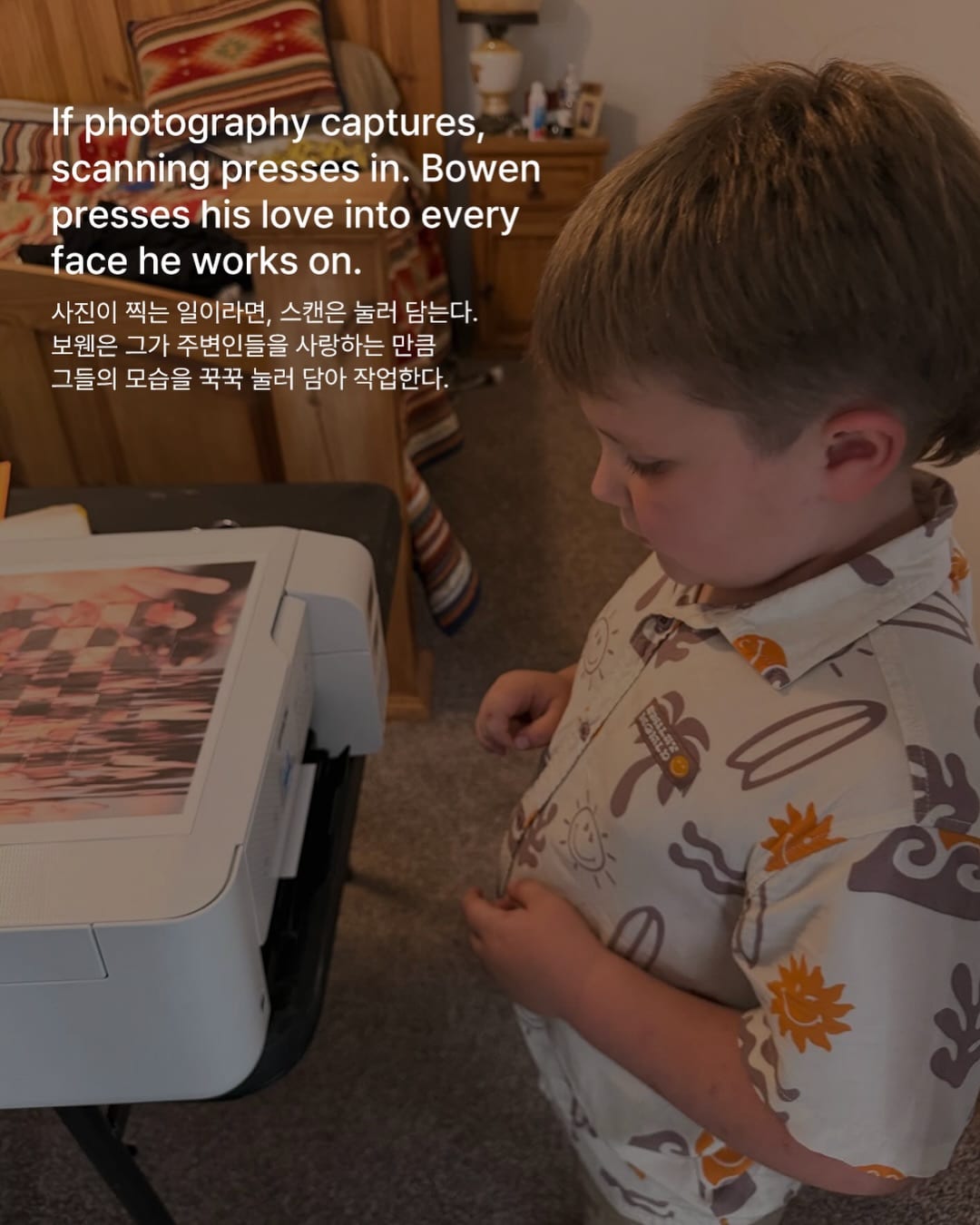
Last August, a small zine with his nephew, hands and faces scanned, cut and pasted together, started it all. Title: 'Creepy Zine.' Bowen is a craftsman at heart, a sewer and quilter. This time his hands moved from fabric to the digital scanner bed. Broken glass, CD cases, all kinds of materials get layered over the face too.
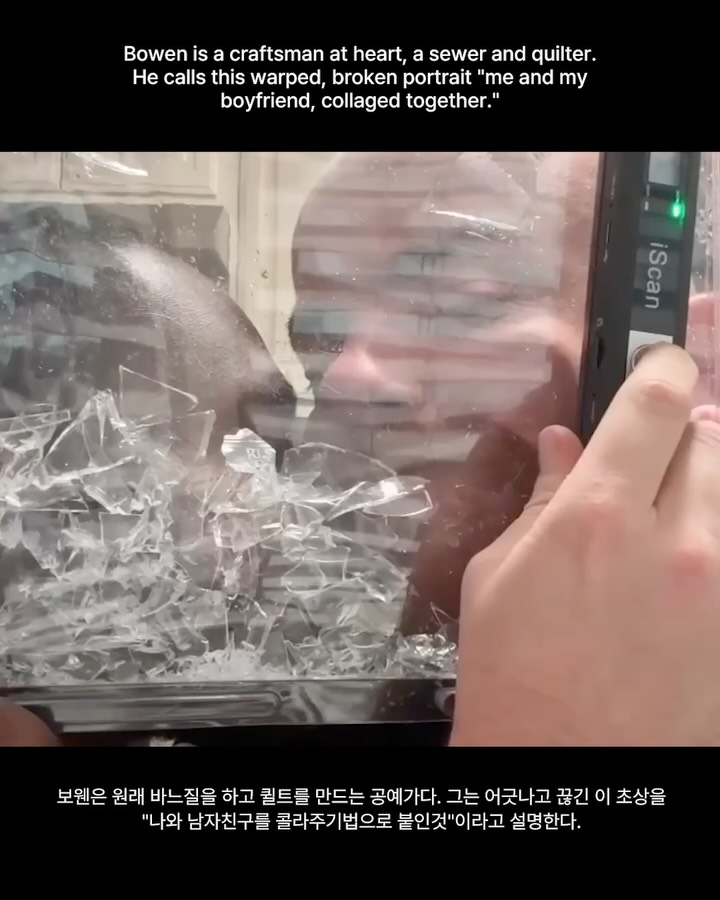
If photography captures a moment, scanning presses it in. Bowen calls this warped, broken portrait work "me and my boyfriend, collaged together." Skin and gaze distort between layered surfaces. The picture pulls them in as it's made.
Quilts are built by layering fabric, stitching pieces together. His scanned portraits work the same way. Layer stacked on layer, materials pressed down, moments pressed in. The record is completed by the pressure of affection.
How do you keep your most precious records?
Last August, a small zine with his nephew, hands and faces scanned, cut and pasted together, started it all. Title: 'Creepy Zine.' Bowen is a craftsman at heart, a sewer and quilter. This time his hands moved from fabric to the digital scanner bed. Broken glass, CD cases, all kinds of materials get layered over the face too.
If photography captures a moment, scanning presses it in. Bowen calls this warped, broken portrait work "me and my boyfriend, collaged together." Skin and gaze distort between layered surfaces. The picture pulls them in as it's made.
Quilts are built by layering fabric, stitching pieces together. His scanned portraits work the same way. Layer stacked on layer, materials pressed down, moments pressed in. The record is completed by the pressure of affection.
How do you keep your most precious records?
FAQ
Who is Tanner Frost Bowen?
Tanner Frost Bowen is a craft artist who primarily works with sewing and quilting. Recently, he has been creating collaged portraits by scanning the faces of his nephew and boyfriend.
How did Bowen's scanned portrait work begin?
It started last August when he scanned hands and faces with his nephew, cutting and pasting them to create a small zine titled 'Creepy Zine.' He now makes distorted portraits by pressing broken glass and CD cases against faces.
How are the scanned portraits made?
Two people press their foreheads together against the scanner glass. Materials like broken glass or CD cases are layered and pressed onto their faces, creating distorted and fragmented images.