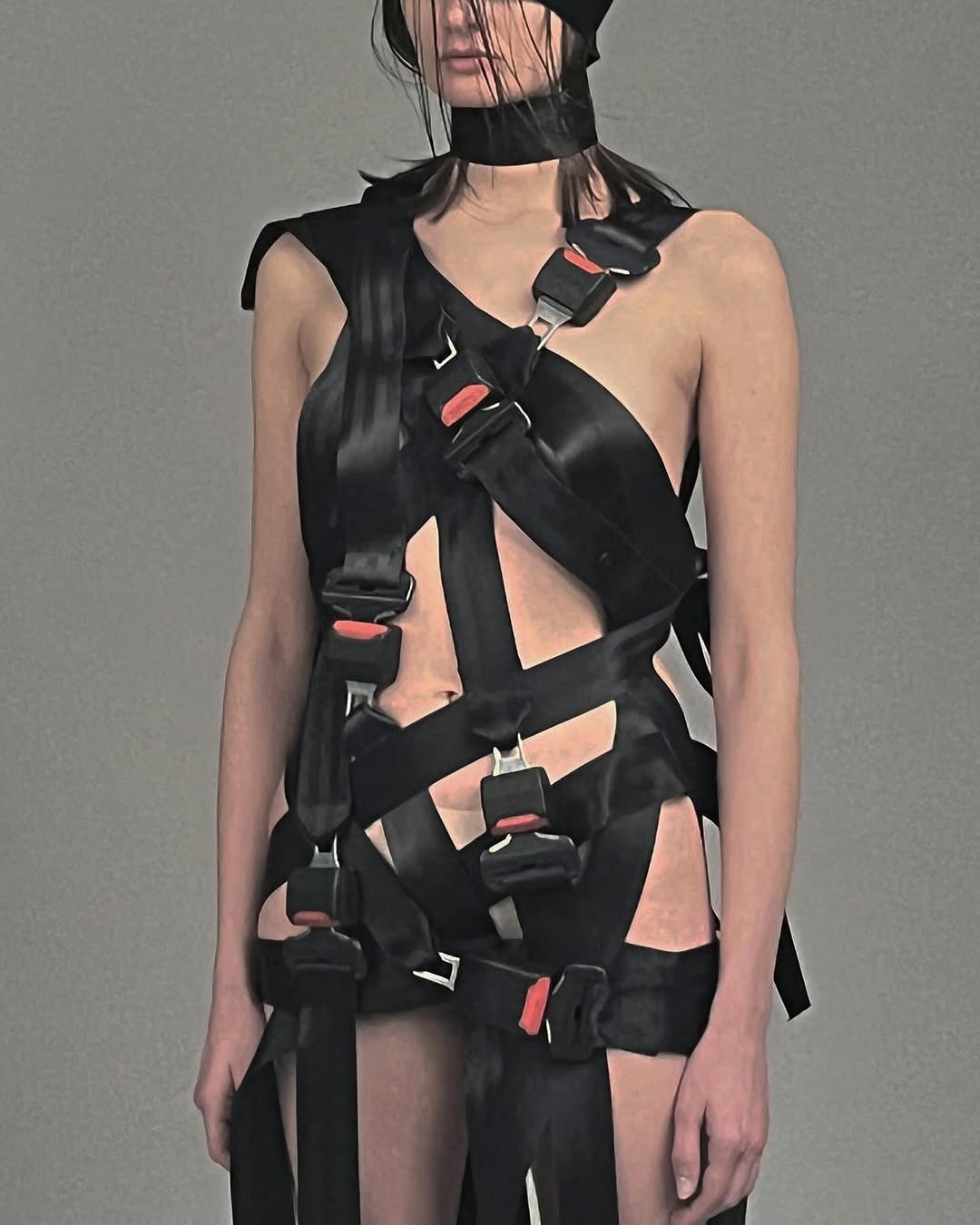
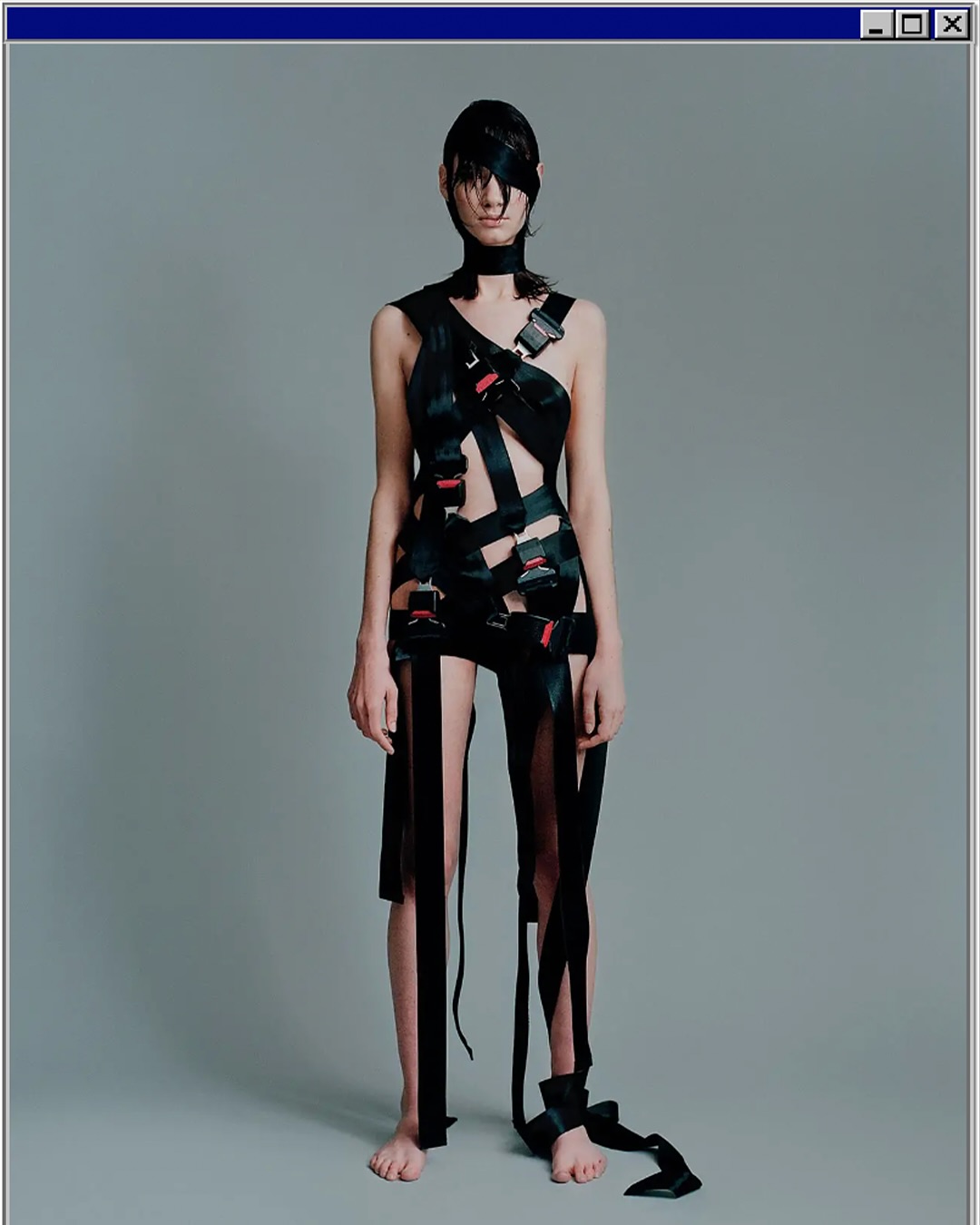
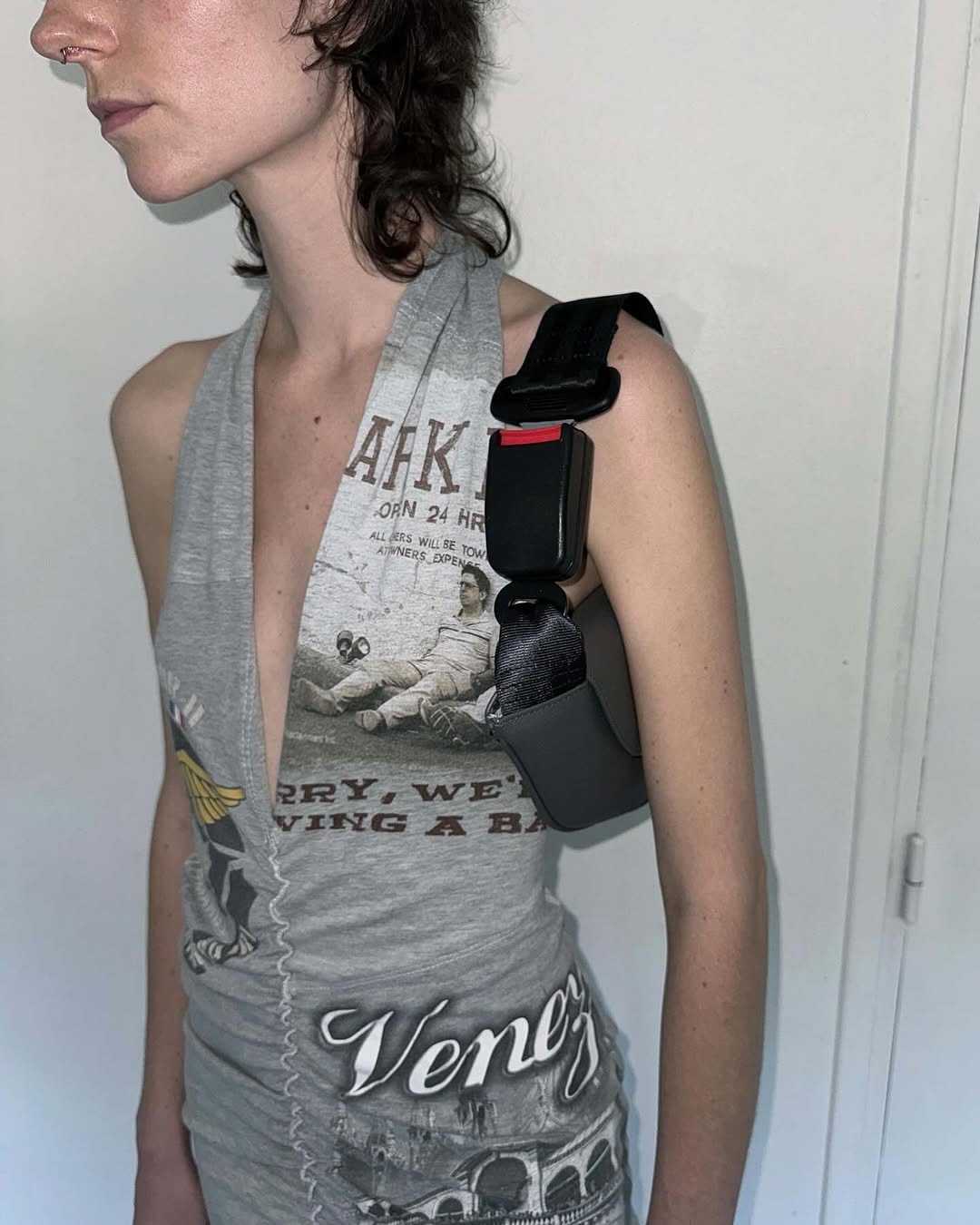
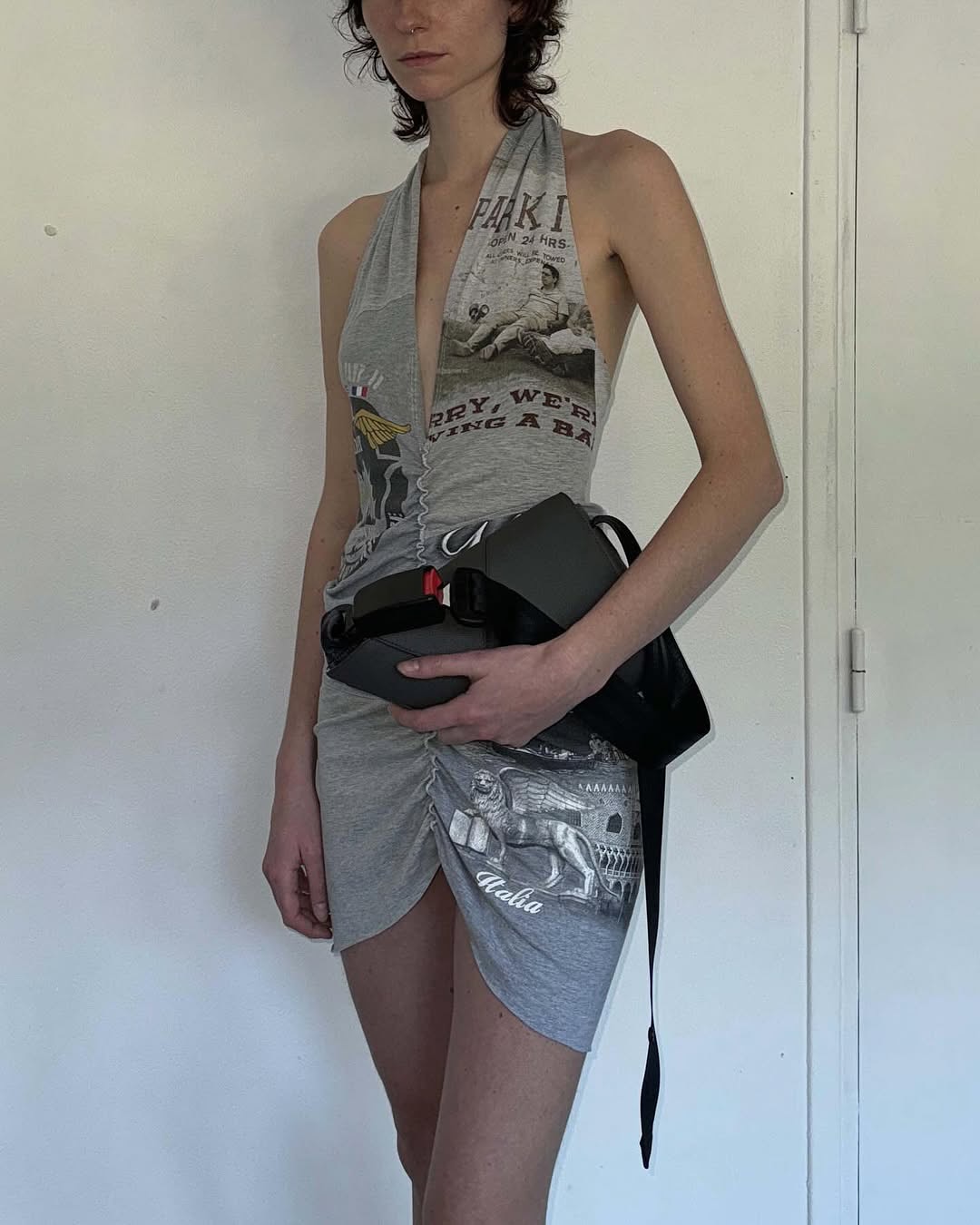
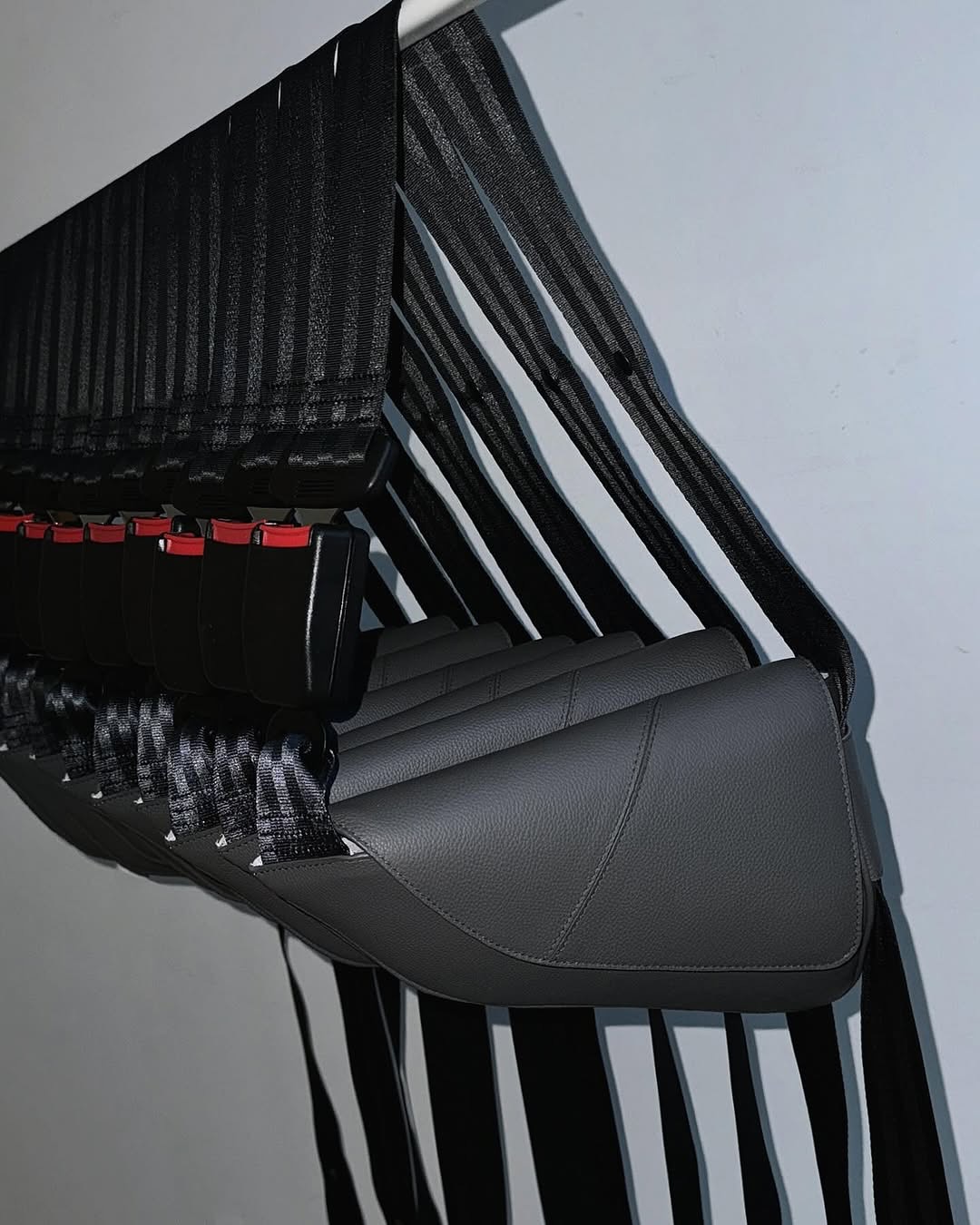
The dress's composition of black seatbelt straps and buckles transcends mere recycled material, evolving into structural design elements in their own right. The belts crisscrossing the body create geometric patterns that boldly reveal the wearer's silhouette, while red buckle details convey both industrial aesthetics and avant-garde sensibility simultaneously.
Sevali's work proves that upcycling can transcend environmental activism to become a medium of artistic expression. By placing objects designed for the functional purpose of "safety" into the new context of fashion, the designer questions the essence of materials while expanding the aesthetic possibilities of sustainable design.
As the fashion industry faces growing responsibility for climate crisis and overproduction, experimental endeavors from emerging designers like Sevali take on heightened significance. In the moment when industrial waste materials destined for disposal become declarations on the runway, fashion evolves beyond mere consumer goods into a medium carrying social messages.
FAQ
What material is Sevali's seatbelt dress made from?
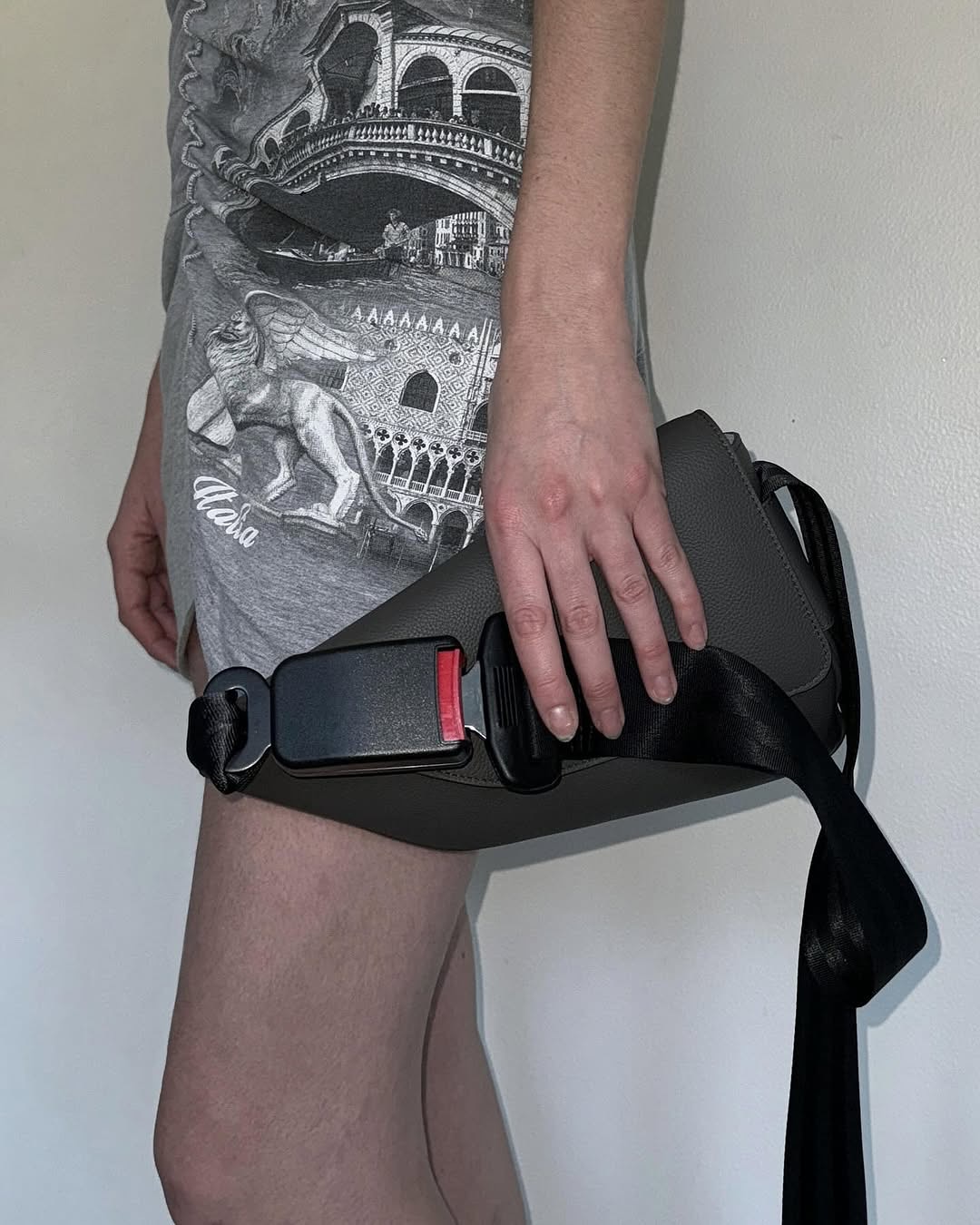
Sevali's dress is made entirely from automotive seatbelts. Black seatbelt straps and red buckles serve as design elements, upcycling industrial waste into high fashion and reinterpreting safety-functional materials as artistic expression.
What is upcycled fashion?
Upcycled fashion goes beyond simple recycling of discarded materials or products, using creative design to transform them into higher-value fashion items. Like Sevali's seatbelt dress, it utilizes industrial waste as structural design elements, pursuing both sustainability and artistry.
Who is Sevali?
Sevali (@sevali_) is an emerging designer recognized for upcycled fashion and sustainable design. Through experimental work transforming industrial materials like automotive seatbelts into high fashion, she presents an original design language merging environmental responsibility with avant-garde aesthetics.