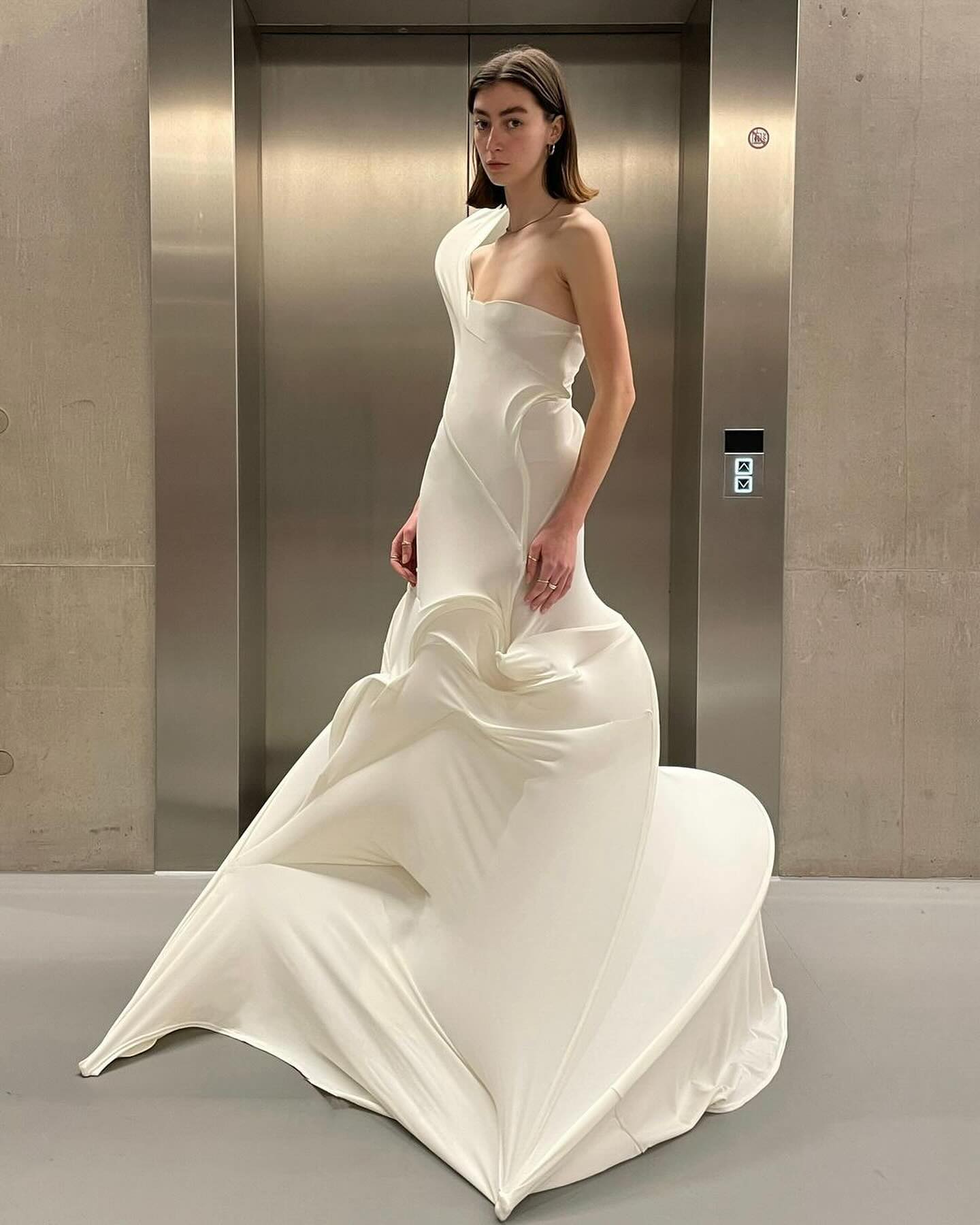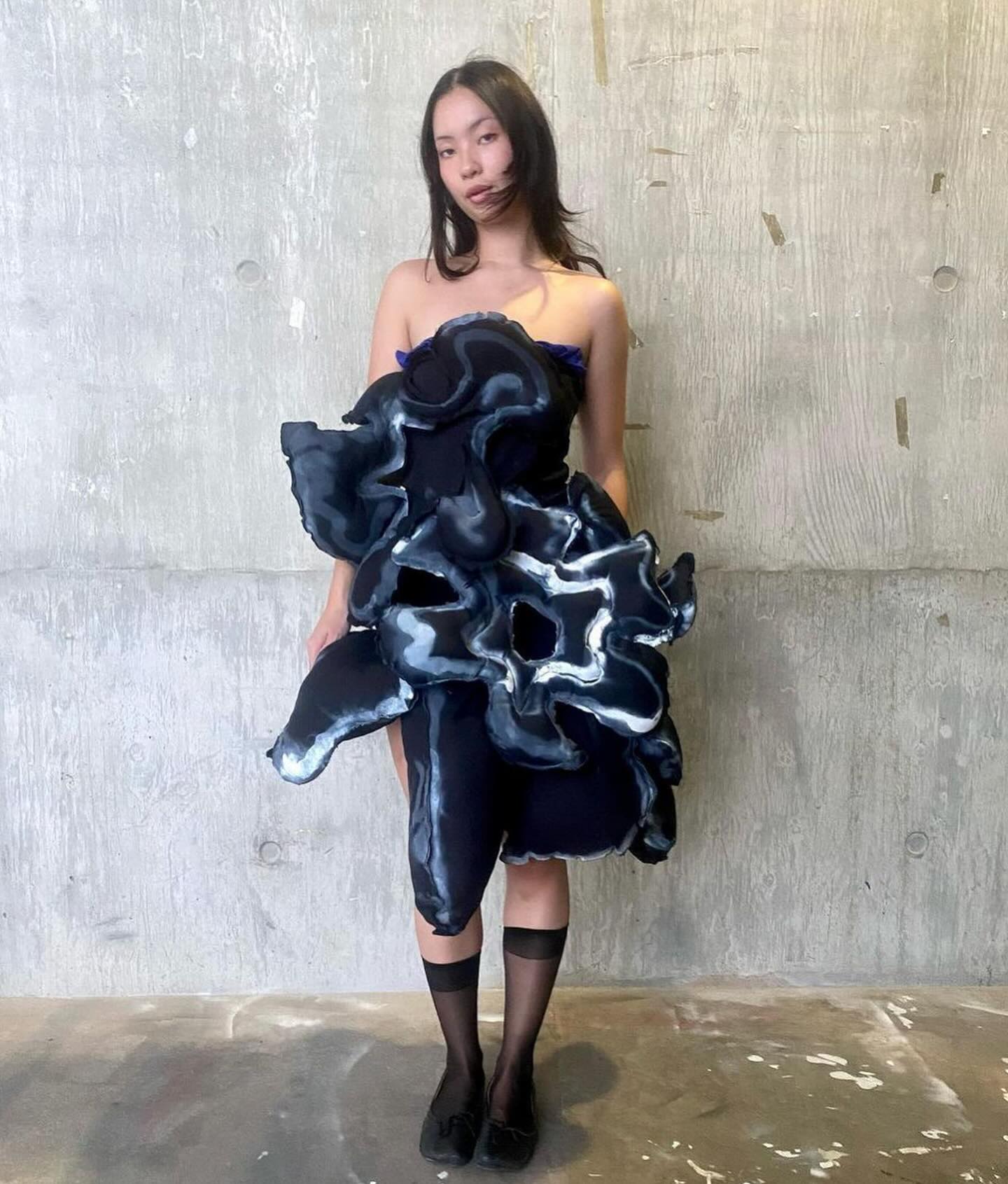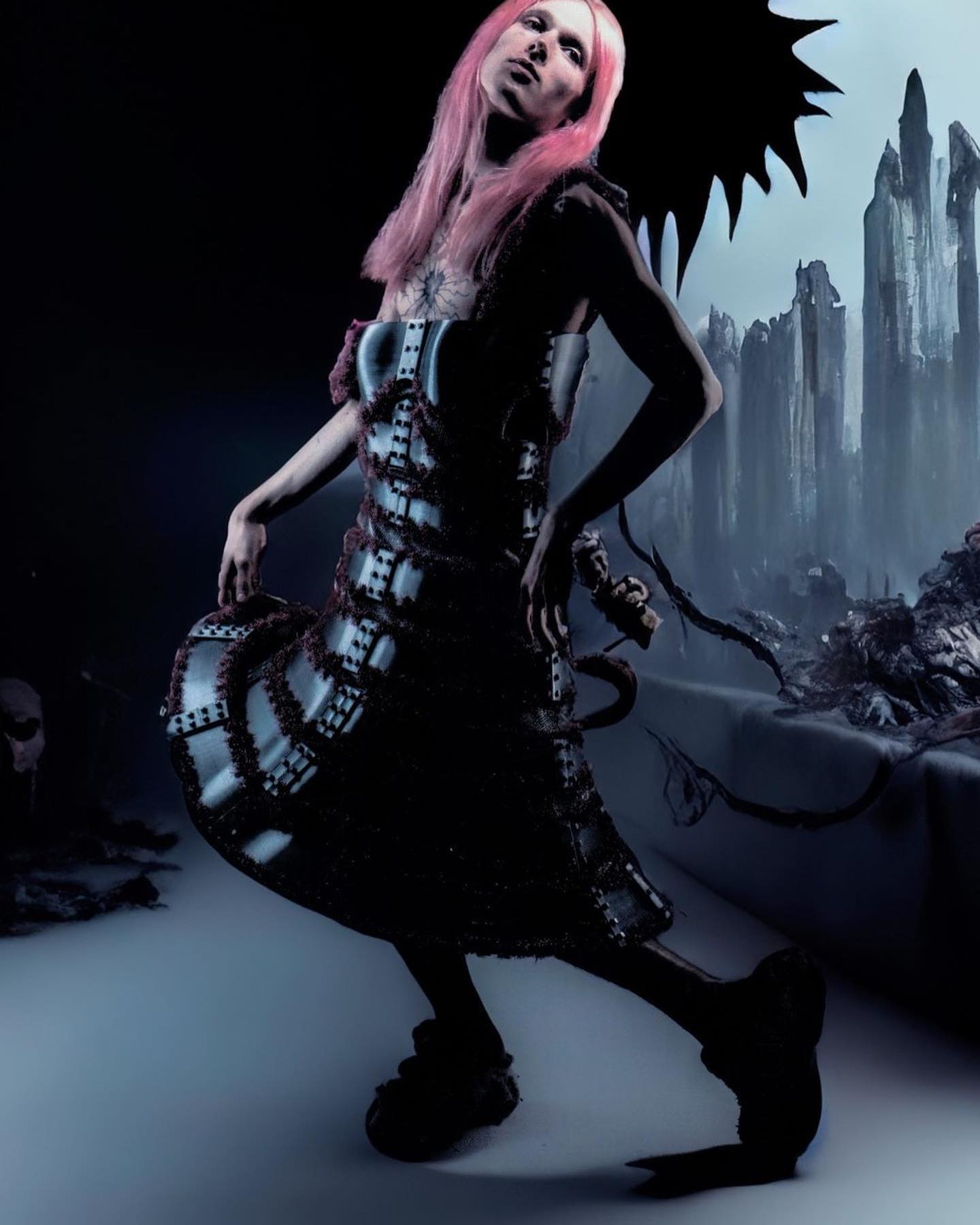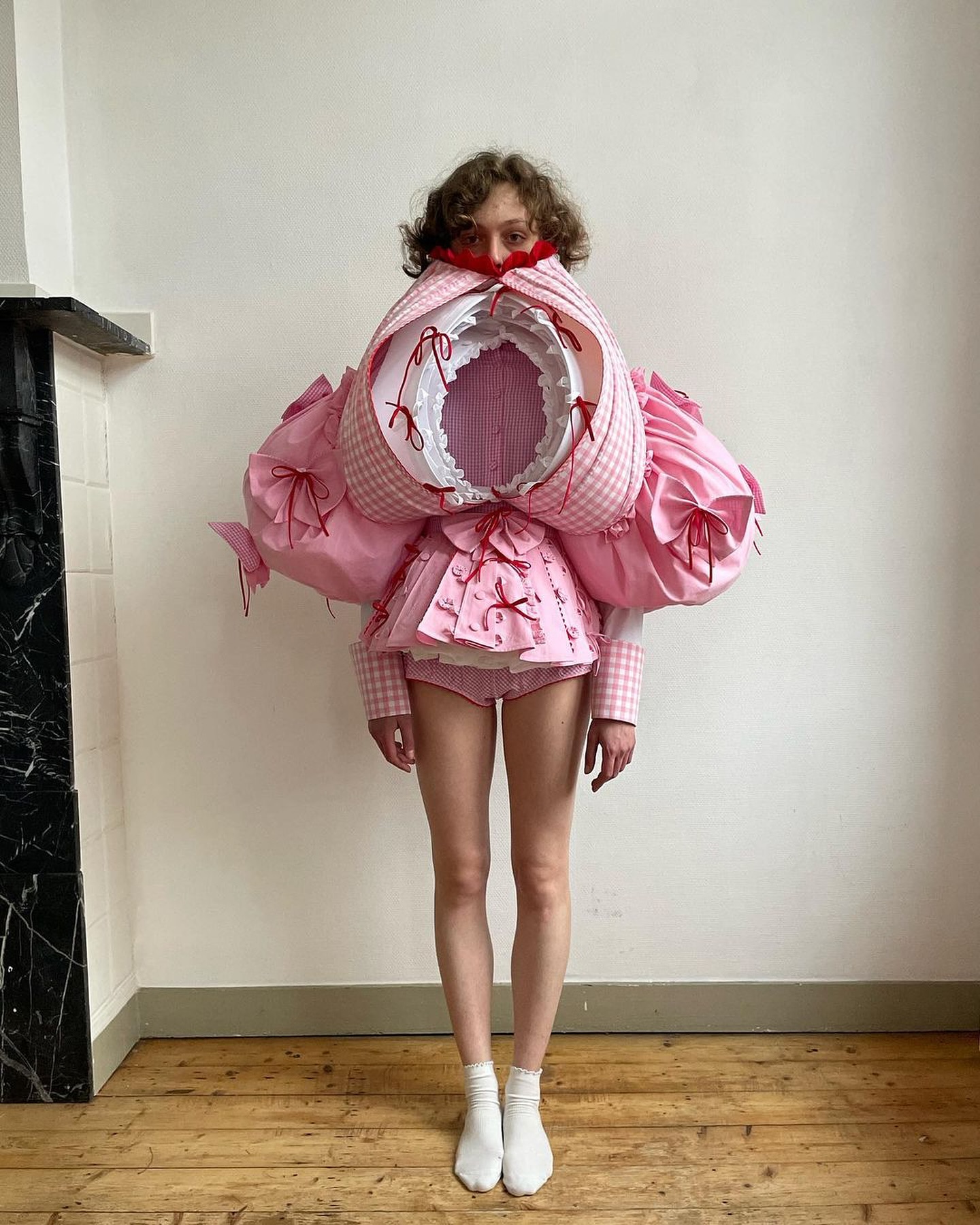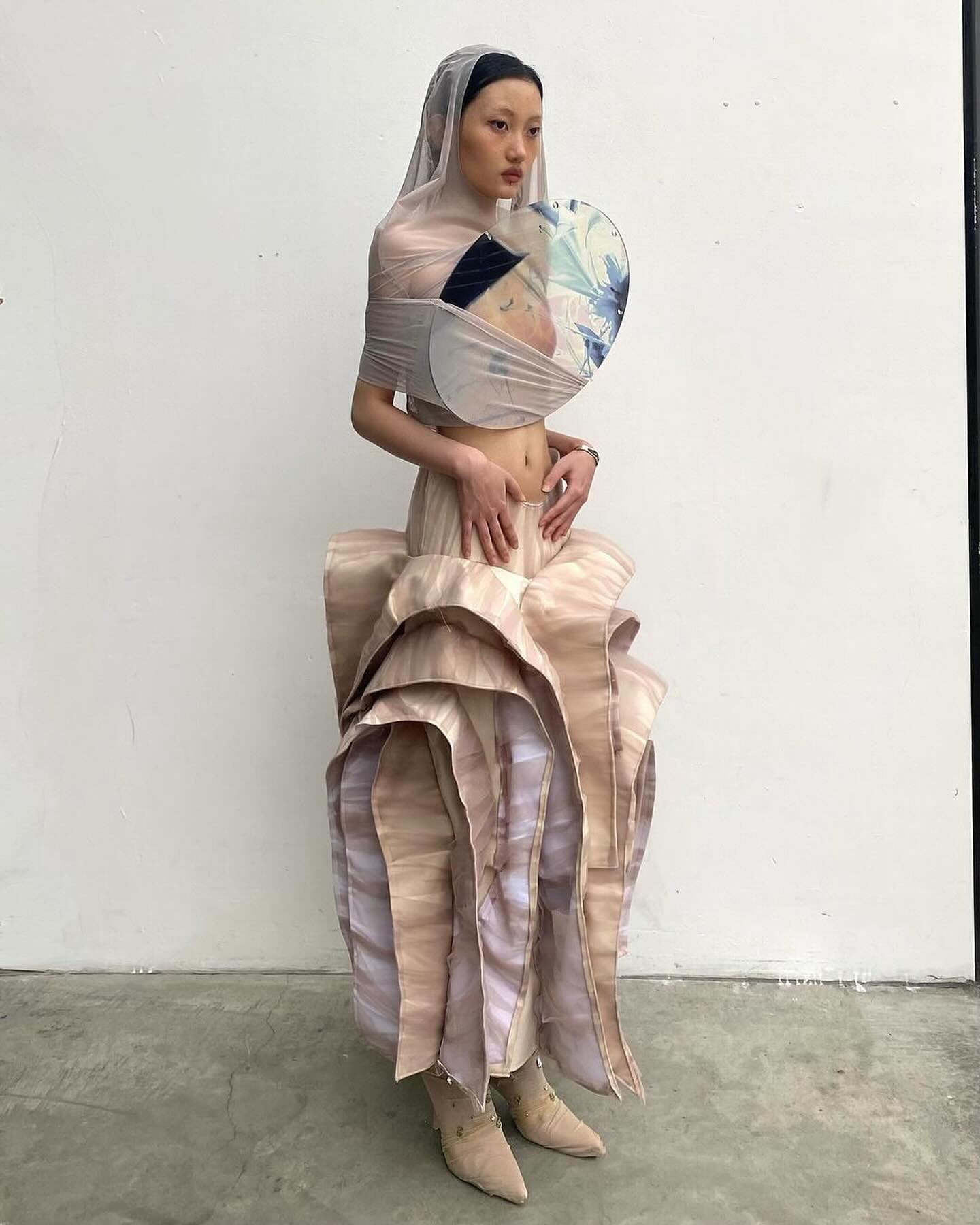
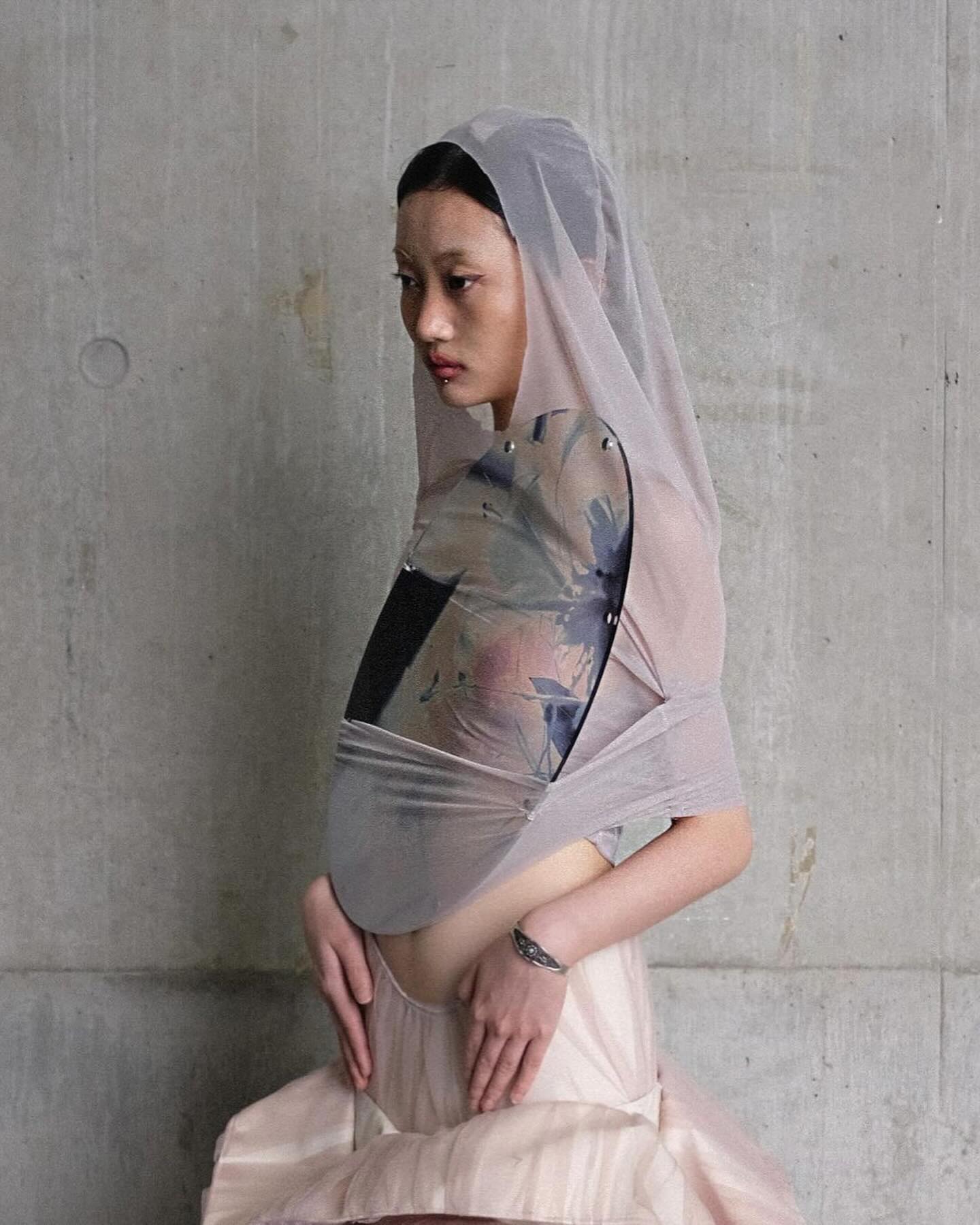
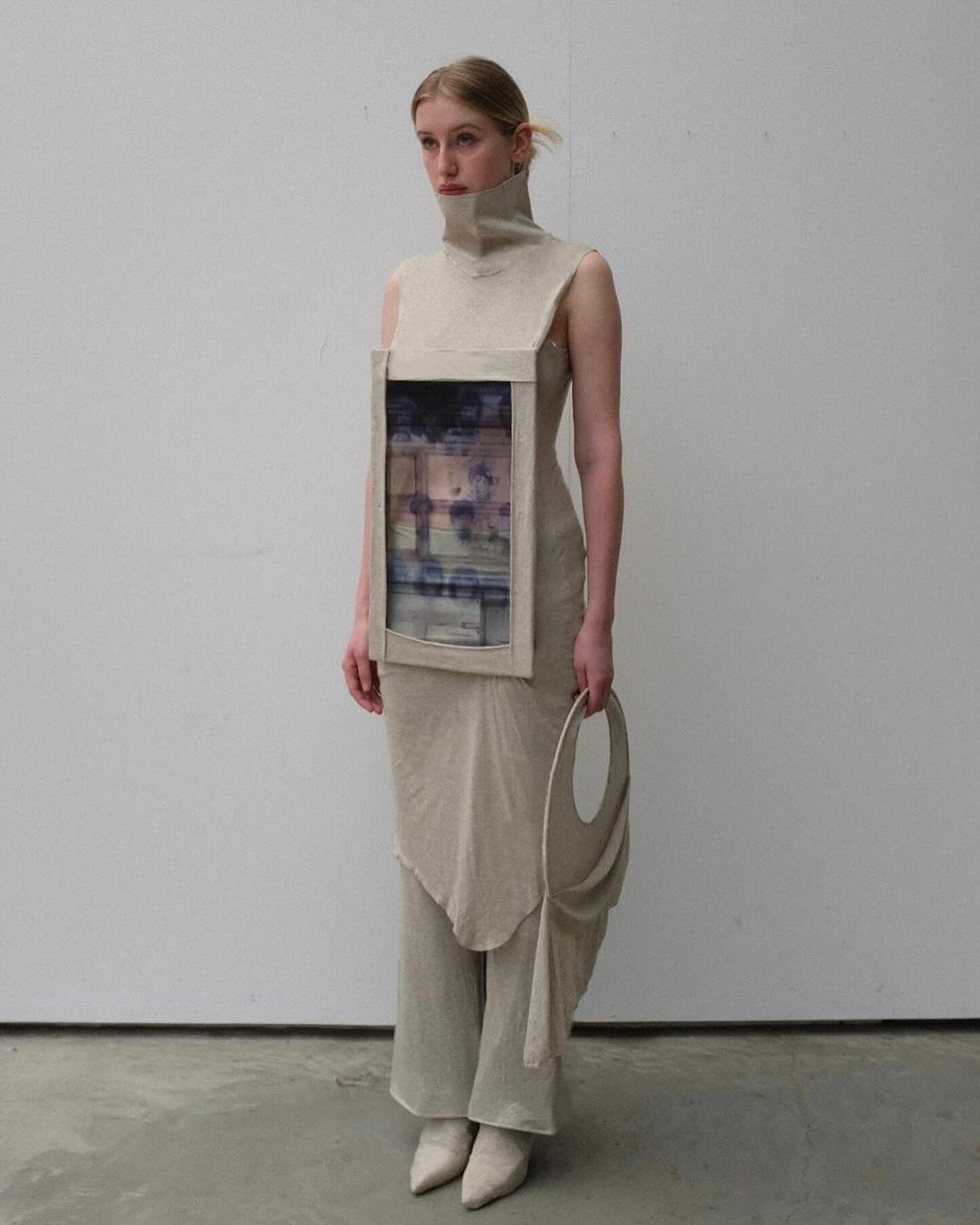
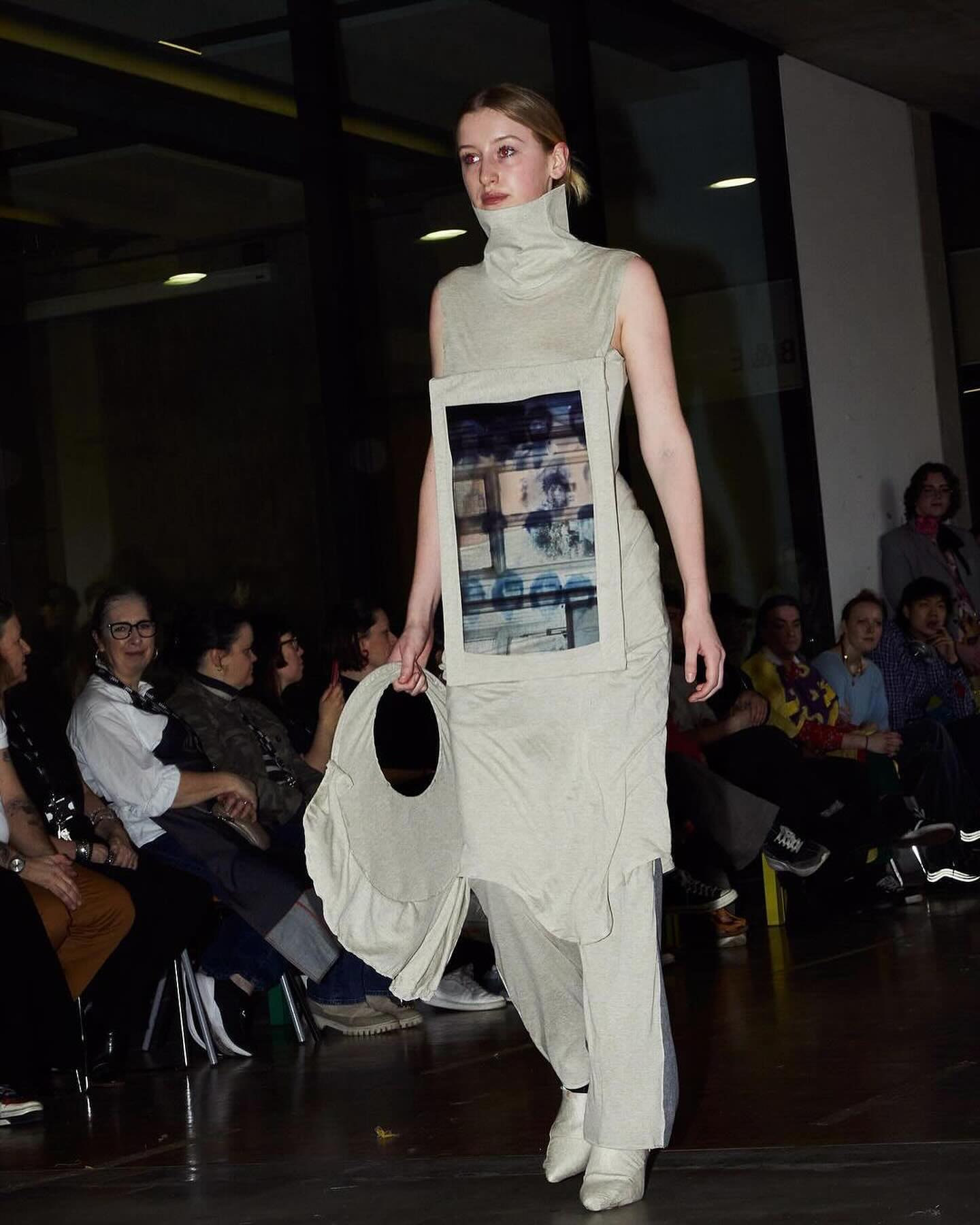
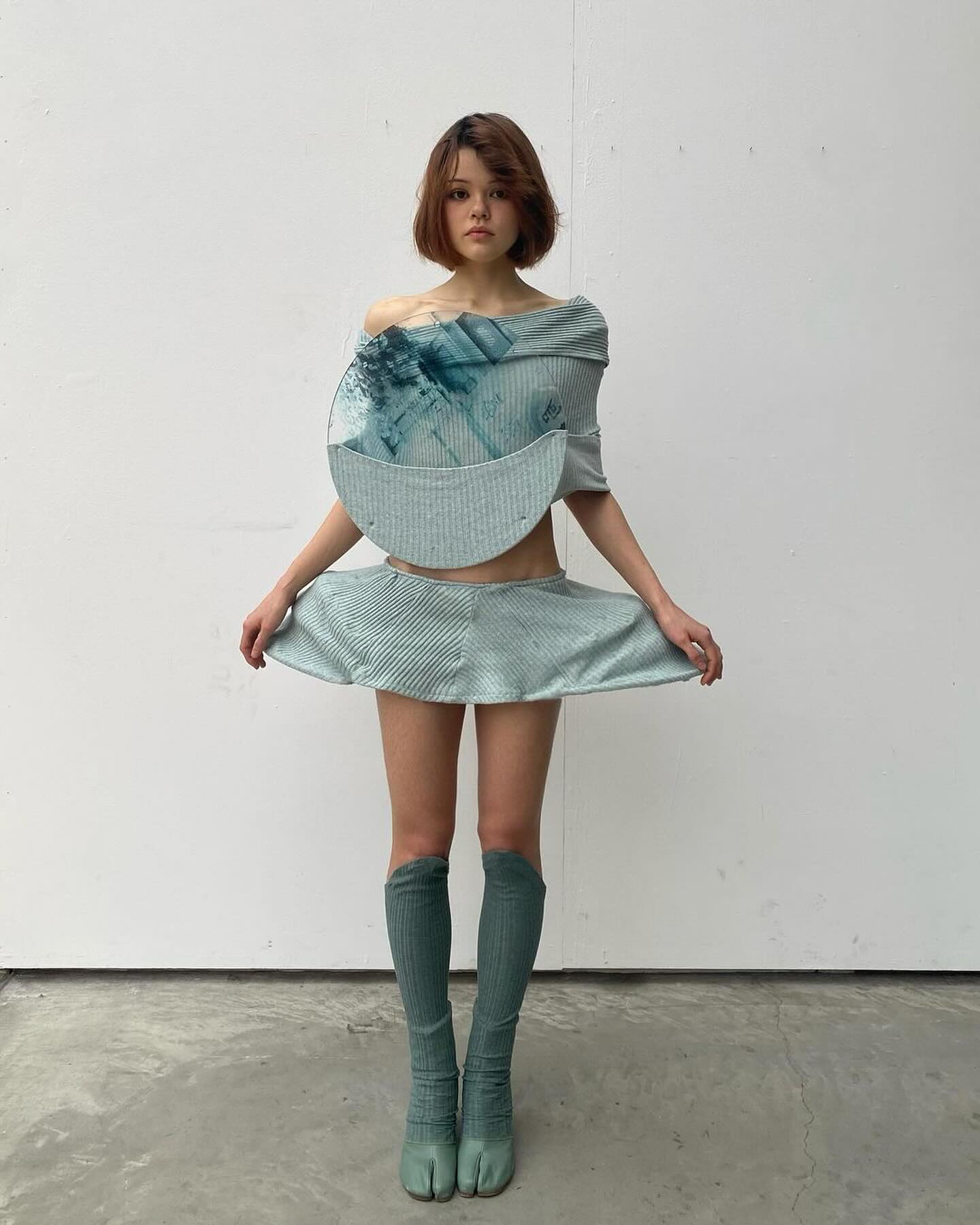
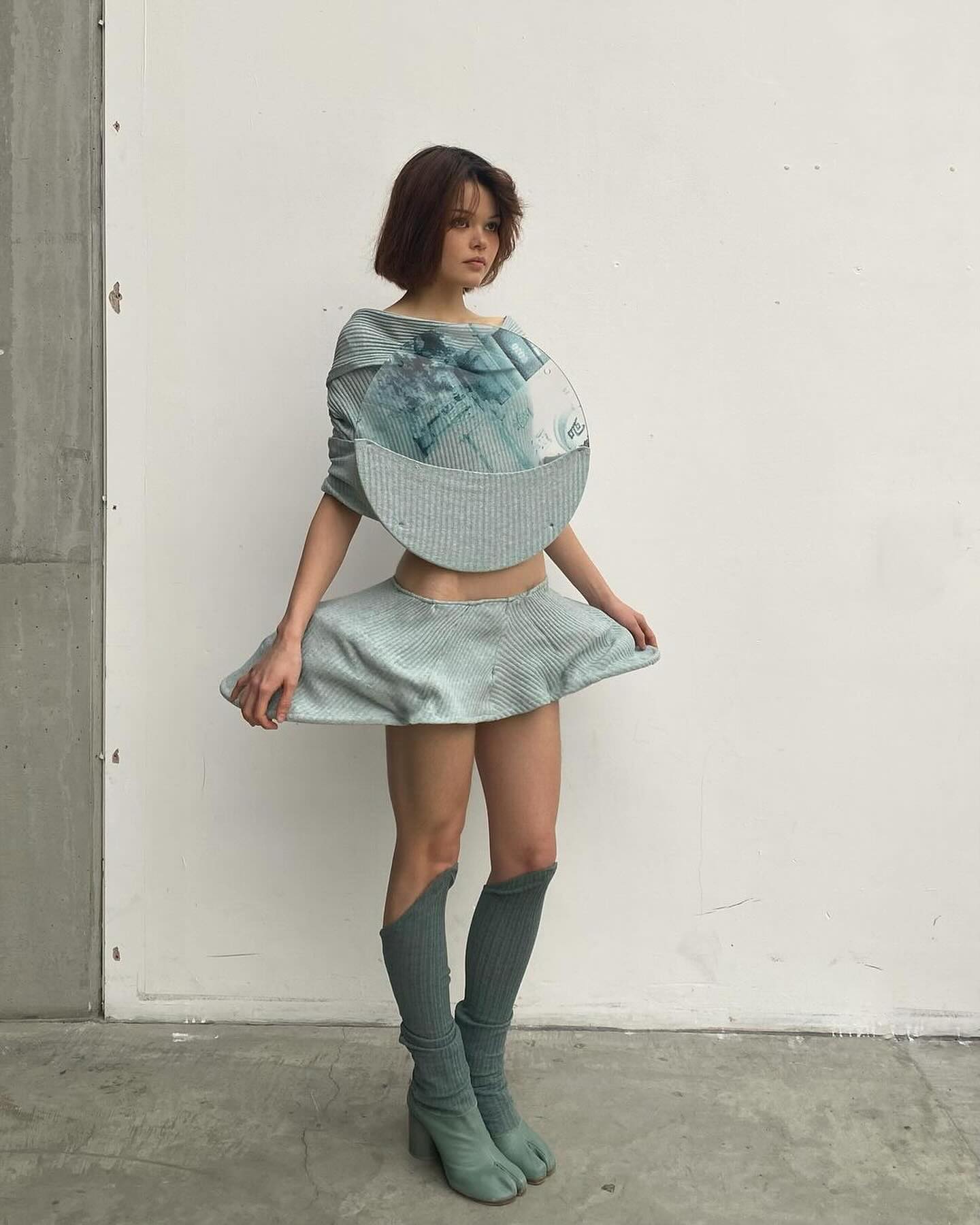
The most striking element is the use of acrylic boards printed with the designer's own photography. Three-dimensional panels in square and circular shapes accentuate the chest area, creating architectural silhouettes. The transparent acrylic material blurs the boundary between body and garment, adding a contemporary edge to the traditional concept of clothing construction.
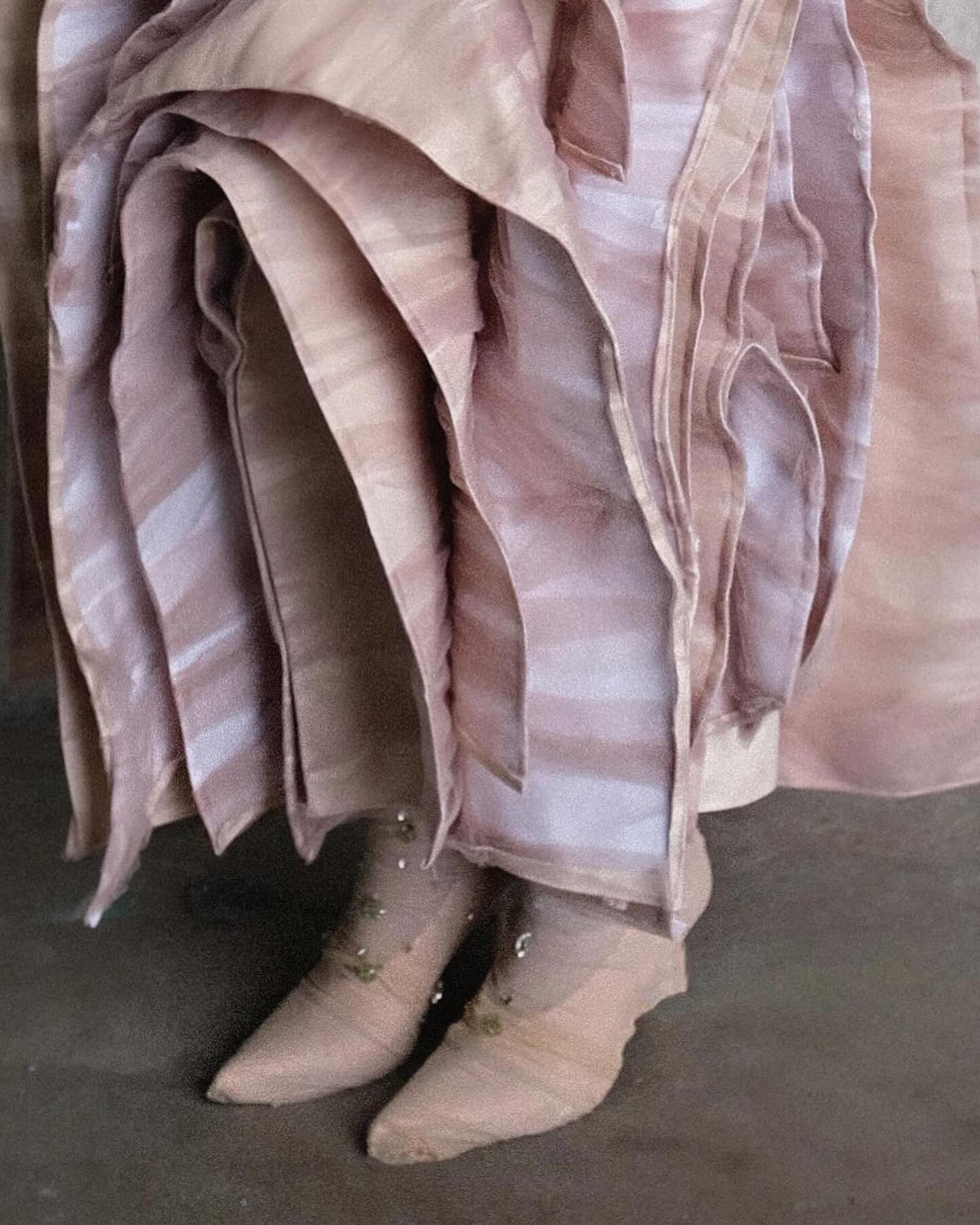
The skirt visible in the first look demonstrates the collection's deconstructive ethos through its layered construction. Multiple pieces of sheer fabric in soft beige tones are stacked to create organic forms, with the interplay between flowing textiles and rigid structure generating unique volumetric effects. The cascading layers evoke both movement and sculpture, challenging conventional notions of how garments should drape and hold space.
By merging her photographic practice with fashion design, Sally presents a project where personal narrative meets artistic experimentation. This collection successfully translates cinematic inspiration into contemporary fashion vocabulary, showcasing the designer's independent vision and establishing her voice within the emerging fashion landscape.
FAQ
Which film inspired Sully's Detention Project?
Sully's Detention Project was inspired by the film 'The Scent of Green Papaya.' This personally beloved film by the designer influenced the collection's overall sculptural language and color palette with its lyrical atmosphere.
How were acrylic boards utilized in the Detention Project collection?
Acrylic boards were used as material with the designer's own photographs printed on them. Crafted into square and circular three-dimensional panels, they emphasize the chest area creating structural silhouette, while the transparent material's properties blur boundaries between body and garment for contemporary effect.
What characterizes designer Sully's skirt designs?
They feature multi-layered construction with multiple fabric layers. Soft beige-toned translucent fabrics stacked in layers create organic forms and distinctive volume, visually embodying the collection's core theme of deconstructivism.