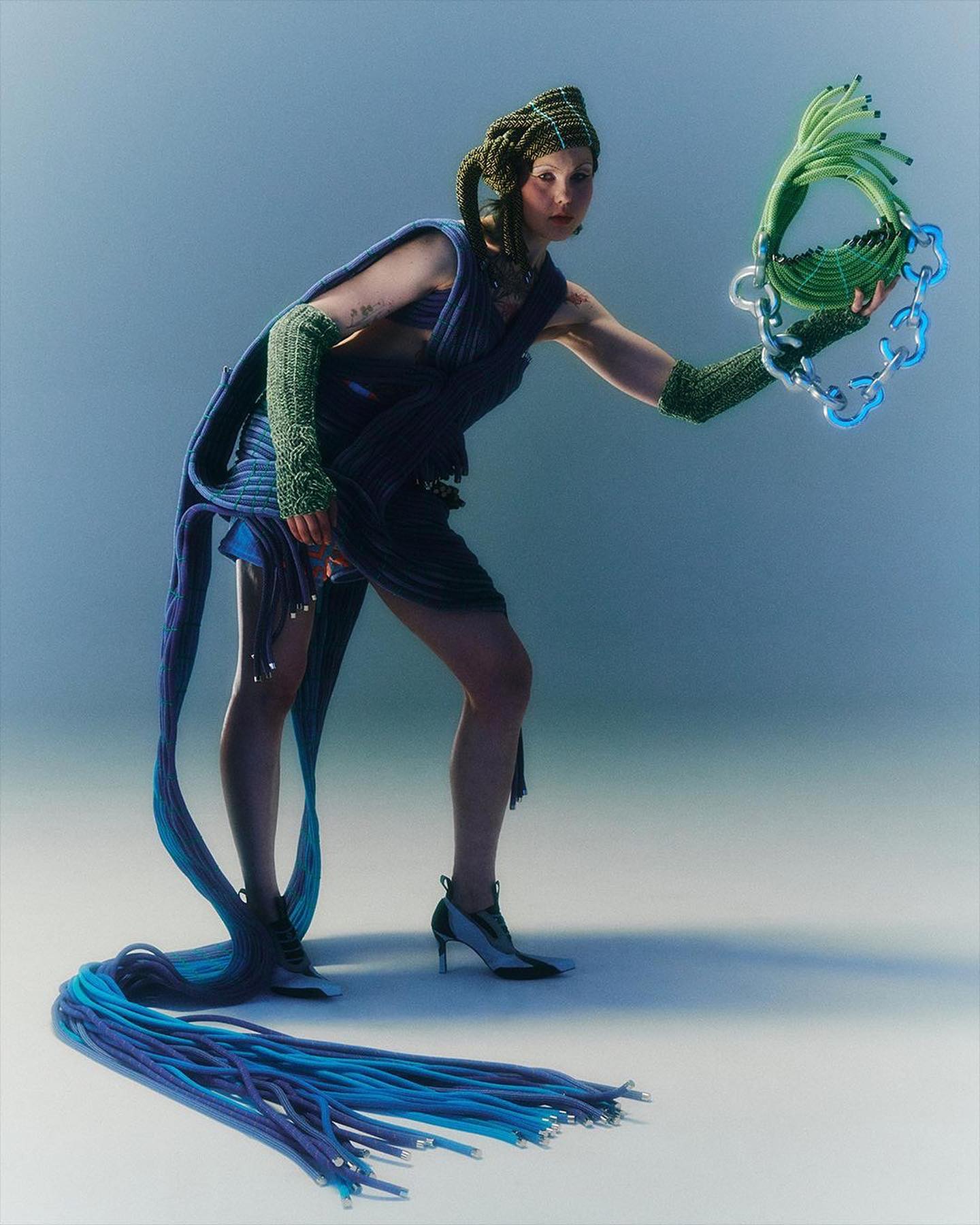
What stands out is the design approach that preserves the rope's inherent texture and form. Bold rope embellishments on the shoulders and sleeves create voluminous silhouettes, while the mix of chains and knitwear bridges industrial rawness with fashion elegance. The accompanying bag, crafted from the same rope material, completes the cohesive aesthetic. The entire ensemble challenges conventional notions of luxury materials.
This upcycling design transcends mere environmental messaging, demanding a fundamental shift in how we perceive waste. True to its title 'Rope of Life,' Greenwood's work breathes new life into materials once condemned to disposal, charting a course for the fashion industry's future. As sustainability transitions from option to imperative, such creative and experimental endeavors provide crucial inspiration across the industry. The piece proves that conscious design and avant-garde aesthetics are not mutually exclusive but powerfully complementary.


FAQ
What materials were used in Gina Greenwood's rope fashion?
Designer Gina Greenwood upcycled discarded industrial rope into original fashion pieces. She layered and structurally stacked green rope to create voluminous shoulders and sleeves, mixing chain and knitwear to express both industrial roughness and elegance simultaneously.
What is upcycling fashion?
Upcycling fashion is a sustainable design practice that transforms waste or discarded materials into new fashion items with renewed value. Beyond simple recycling, it creates higher artistic and commercial worth than the original materials through creative design.
What's the significance of fashion design using industrial waste?
Fashion design using industrial waste goes beyond environmental protection to demand a shift in material perception. Like Gina Greenwood's 'Rope of Life,' it gives new life to materials destined for disposal, presenting an important direction for fashion's future where sustainability has become essential.