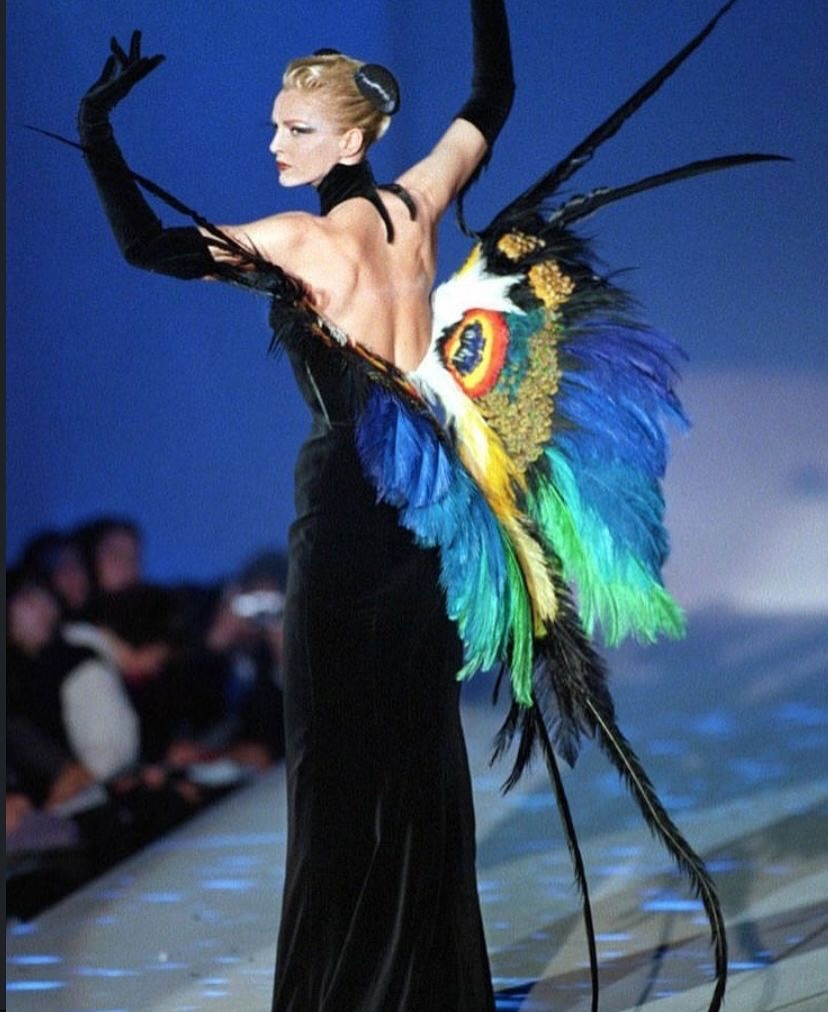
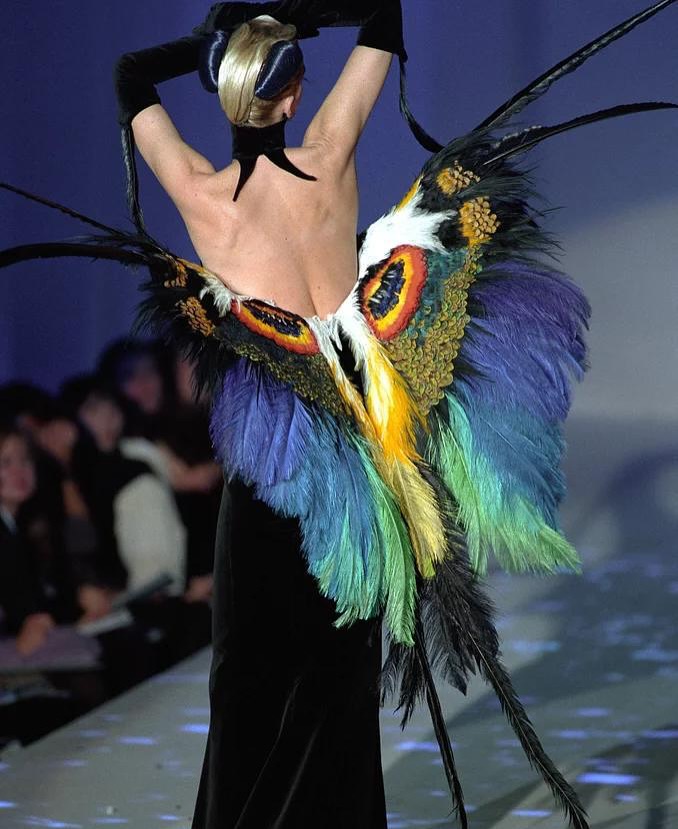
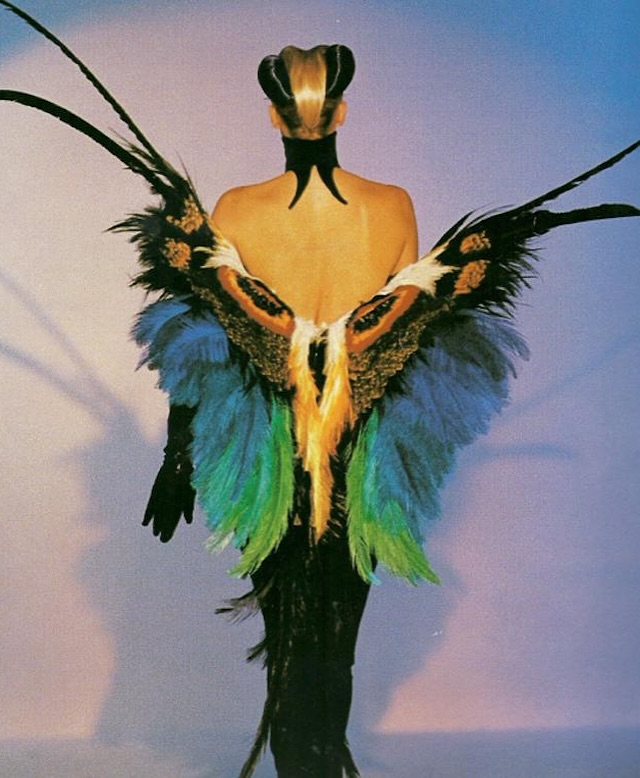
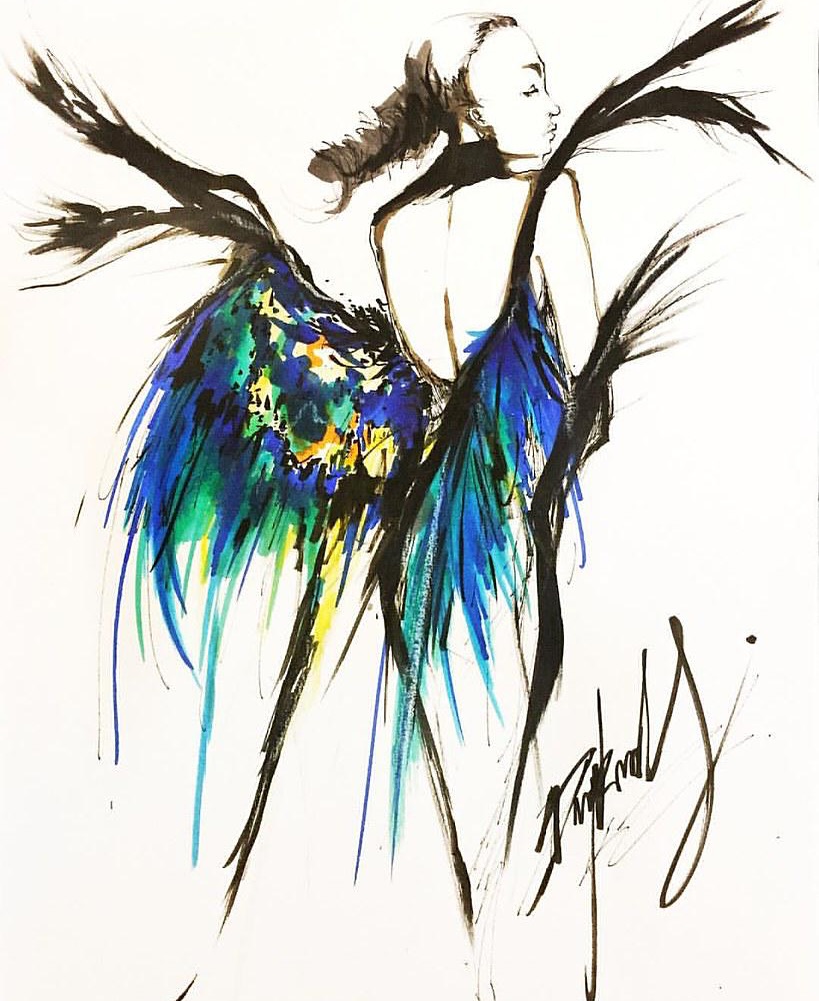
The dress's wings extend dramatically outward, adorned with vibrant hues—blue, green, and yellow—that echo the intricate veining of a monarch butterfly's wings. The feathered embellishments represent nature's wonder elevated through haute couture craftsmanship. The contrast between the black velvet bodice and the colorful wings demonstrates a perfect balance of elegance and audacity.
This creation embodies metamorphosis and rebirth, recurring themes in Mugler's creative philosophy. Founder Thierry Mugler proved how fashion could evolve beyond clothing into pure art. The dress showcased that fashion can push boundaries and become a universal language of beauty and innovation, blending theatricality, natural inspiration, and femininity into one cohesive vision.
Nearly three decades later, the Butterfly Dress remains an essential reference in fashion archives. It perfectly encapsulates the essence of haute couture: dramatic presentation, nature-inspired design, and the maximization of femininity. This timeless icon continues to inspire designers and fashion enthusiasts, demonstrating that true artistry in fashion knows no expiration date.
FAQ
When was the Mugler Butterfly Dress unveiled?
The Mugler Butterfly Dress debuted in the Spring 1997 Haute Couture collection. Inspired by butterflies, this wearable sculpture with corset structure and extravagant feathered wings is Thierry Mugler's masterpiece, proving fashion can evolve into art.
What are the design features of the Mugler Butterfly Dress?
The Butterfly Dress features a black velvet corset recreating a butterfly's body, exposing the back to reveal blue, green, and yellow feathered wings. The wings evoke monarch butterfly veins, embodying Mugler's philosophy of metamorphosis and rebirth.
Why is the Mugler Butterfly Dress significant in fashion history?
This dress proved fashion can transcend mere clothing to become art. Through dramatic presentation, nature-inspired vision, and meticulous craftsmanship, it perfectly embodies haute couture's essence, remaining an essential archive reference twenty-seven years later.