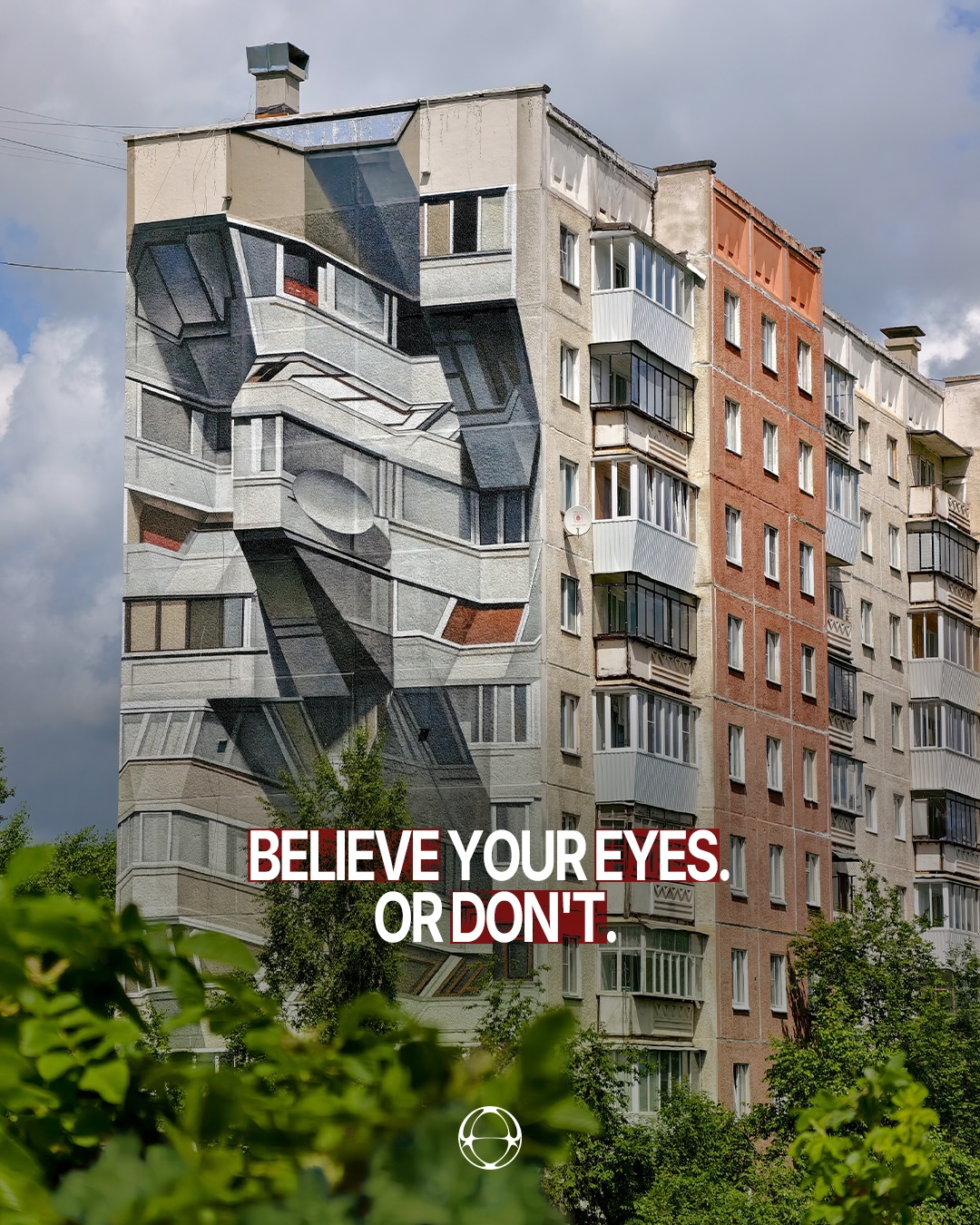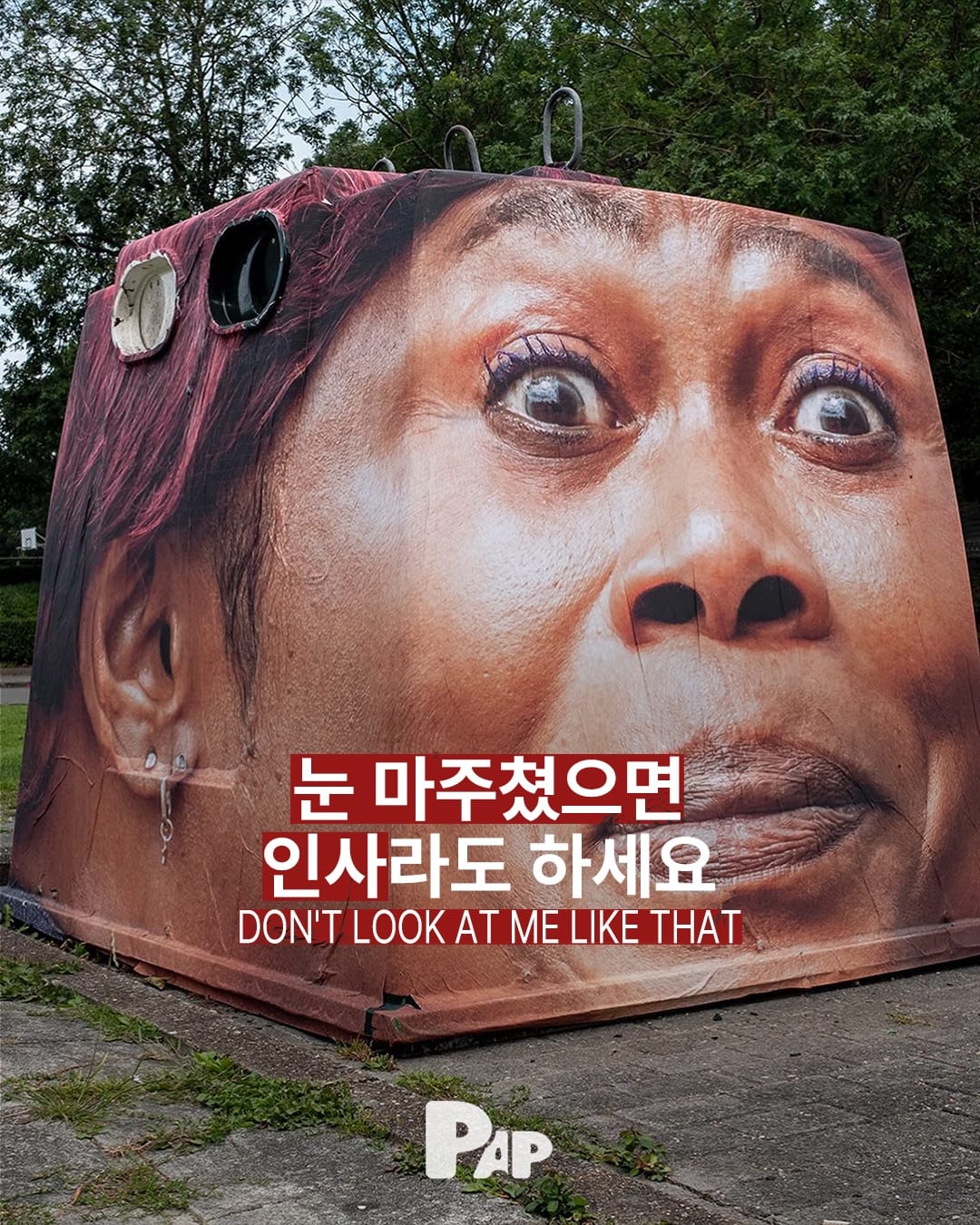
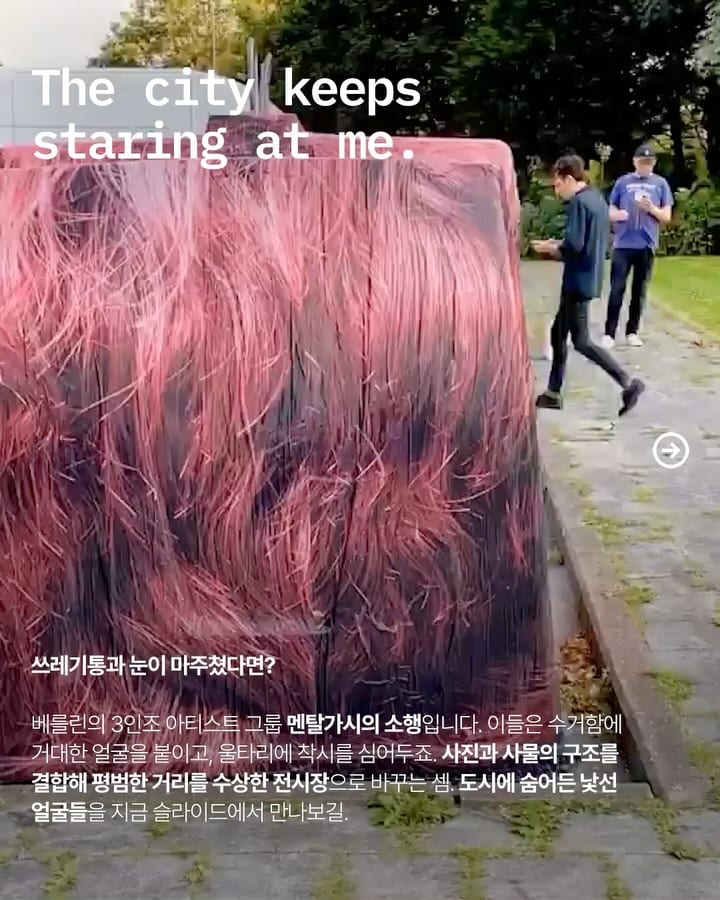
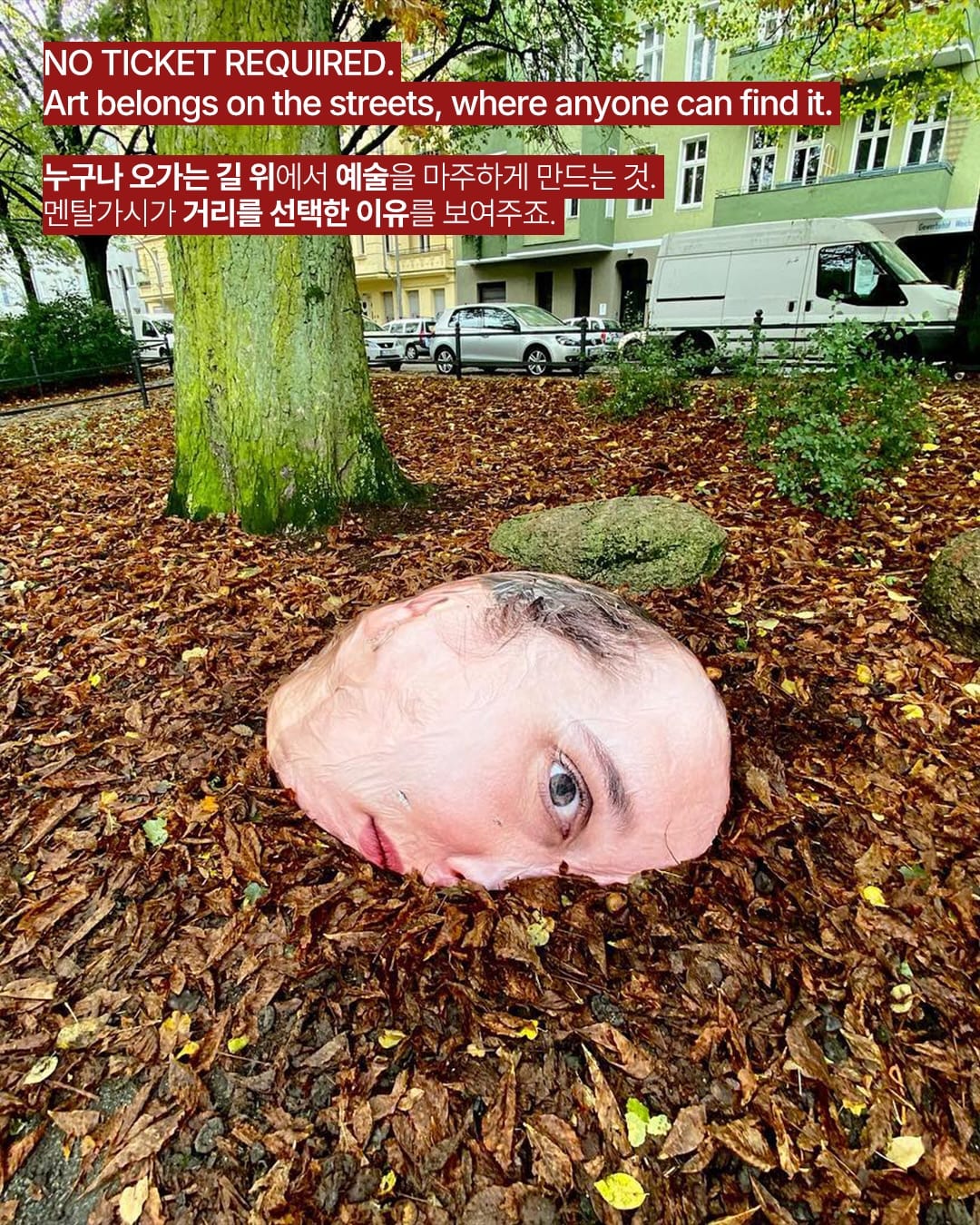
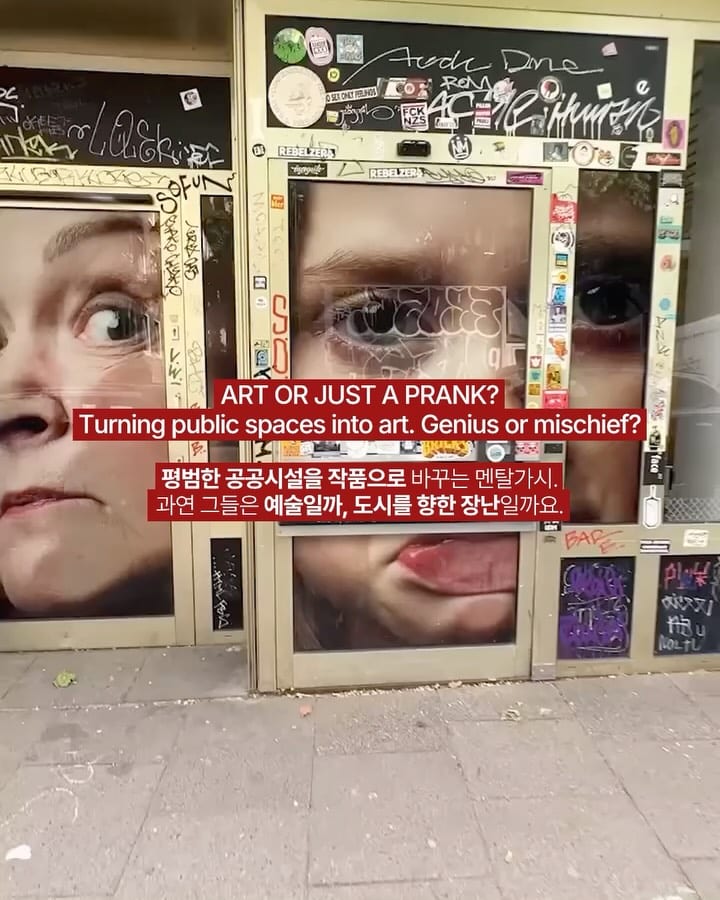
Berlin-based art trio Mentalgassi turns everyday trash bins into life-size portraits. They paste giant faces onto street containers and plant mysterious gazes on fences and building walls. The moment you lock eyes with a bin on a familiar block, your daily route transforms into a suspicious stage.
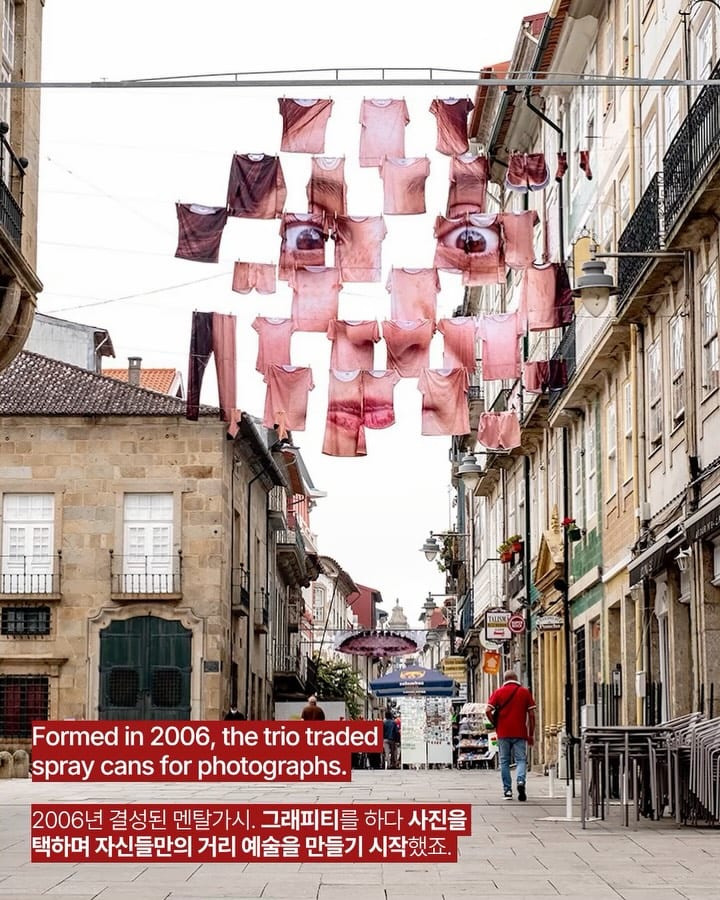
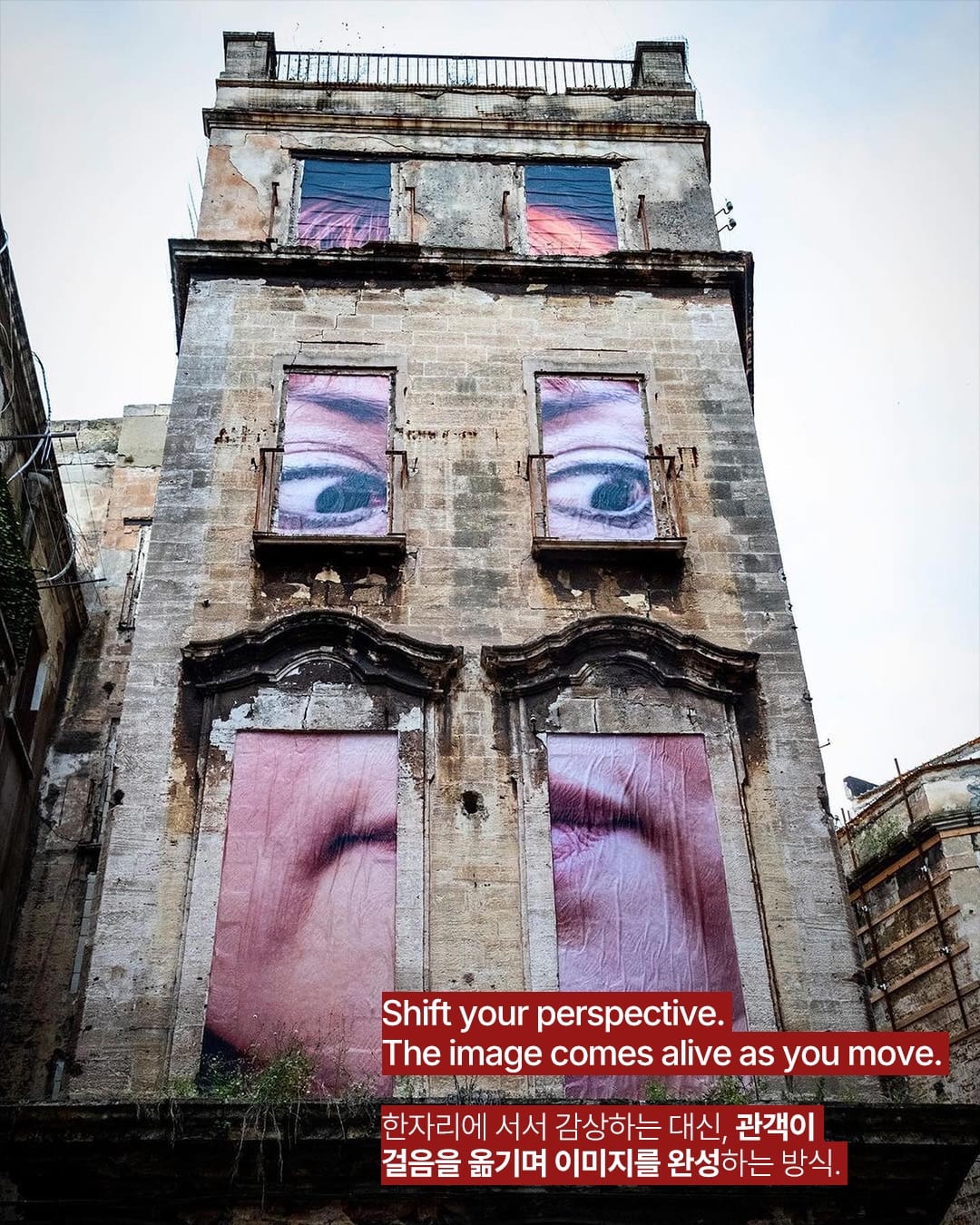
Their signature series "Metalheads" reimagines entire bins as oversized human heads. Formed in 2006, the trio traded spray cans for photographs. Instead of canvas, they use urban infrastructure, pulling art directly onto the streets. Pieces installed on fences shift expression as you walk past, creating optical illusions triggered by changing angles.
The name "Mentalgassi" riffs on the German word for walking, "Spaziergang." The concept: even ideas roam the streets. In practice, Mentalgassi's faces wander the city in pursuit of photographs. From alley corners to plaza edges, the eyes watching you are their work.
Street art doesn't have to be graffiti. Mentalgassi mounts large-format photo prints on bins, fences, and facades, turning public space into a temporary gallery. T-shirts hung on clotheslines become floating body parts printed across fabric. By collapsing the boundary between photograph and structure, they don't just display art—they make you walk inside it.
That bin you pass today might be someone's face. Mentalgassi's pieces appear without warning and vanish just as quickly. That ephemerality is what keeps the streets on edge. Swipe through now to meet the faces hiding in plain sight.

FAQ
What kind of artist group is Mentalgassi?
Mentalgassi is a three-member artist collective active in Berlin. Since forming in 2006, they have used photography instead of spray cans, installing life-size portraits on trash bins, fences, and building facades to transform urban space into temporary galleries.
What is Mentalgassi's signature work, Metalheads?
Metalheads is a series in which Mentalgassi reconfigures entire urban collection bins into giant human heads. By wrapping bins with life-size facial photographs, they turn everyday objects into portraits and plant unfamiliar gazes in the middle of the street.
What is the origin of the name Mentalgassi?
The name Mentalgassi derives from *Spaziergang*, the German word for 'walk,' embodying the concept of making even thoughts stroll the streets—reflecting the group's philosophy of letting art roam freely through urban space.