
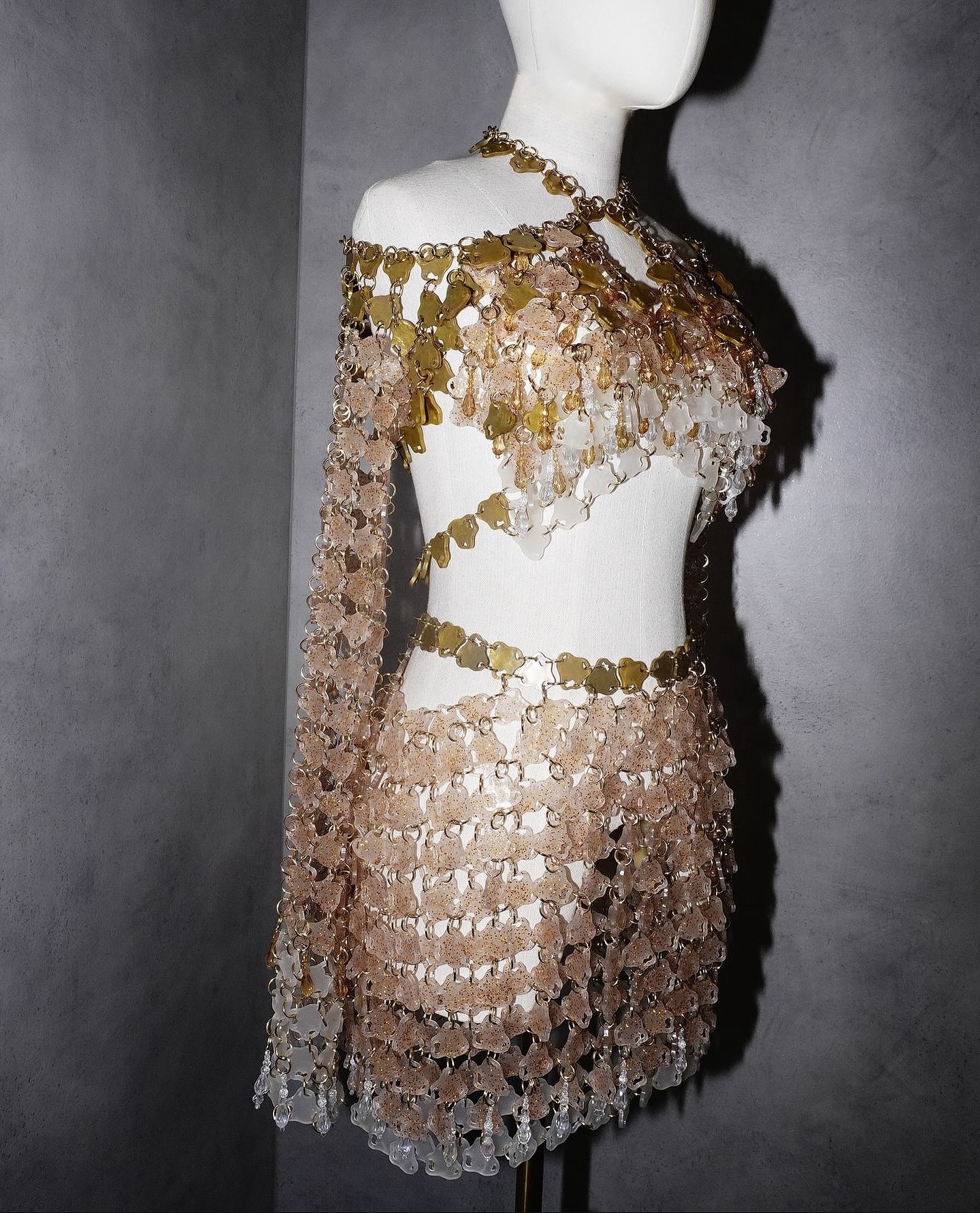
The brand experienced a surge in visibility after BLACKPINK's Lisa wore a PIPATCHARA gold-toned set to a TAG Heuer event. The outfit Lisa wore was constructed from over 1,800 pieces of recycled plastic waste—80% sourced from gold water bottle caps and 20% from clear plastic food containers. Notably, the brand emphasizes that all colors are natural to the plastic materials themselves, with no added dyes or chemical treatments, showcasing their commitment to pure, transparent sustainability.
PIPATCHARA goes beyond simple upcycling by collaborating with local communities to collect plastic waste and transform it into high-value fashion items, creating a circular economy system. Following Lisa's appearance, international interest in the brand has skyrocketed, proving that sustainable fashion can be an aesthetic innovation rather than merely an ethical choice. This synergy between a small Thai-based brand and a global superstar represents a significant case study for the future of the fashion industry, demonstrating how environmental responsibility and cutting-edge design can coexist beautifully.




FAQ
How many recycled plastic pieces were used in Lisa's PIPATCHARA outfit?
Lisa's PIPATCHARA outfit worn at the TAG Heuer event was made from over 1,800 recycled plastic pieces. Eighty percent of the material came from gold bottle caps and twenty percent from transparent plastic food containers, using only plastic's natural colors without dyes or chemical additives.
What is PIPATCHARA and what collection is it famous for?
PIPATCHARA is a Thai sustainable fashion brand famous for its 'Infinitude' collection made from recycled bottle caps and discarded plastic waste. It establishes a virtuous cycle system collaborating with local communities to collect plastic waste and transform it into high-value fashion items.
What changes happened to PIPATCHARA after Lisa wore it?
After BLACKPINK's Lisa wore PIPATCHARA's recycled plastic outfit at a TAG Heuer event, the brand experienced explosive recognition growth and surging international attention. This proved sustainable fashion can be an aesthetic innovation and demonstrated the global expansion potential of Thai-based brands.