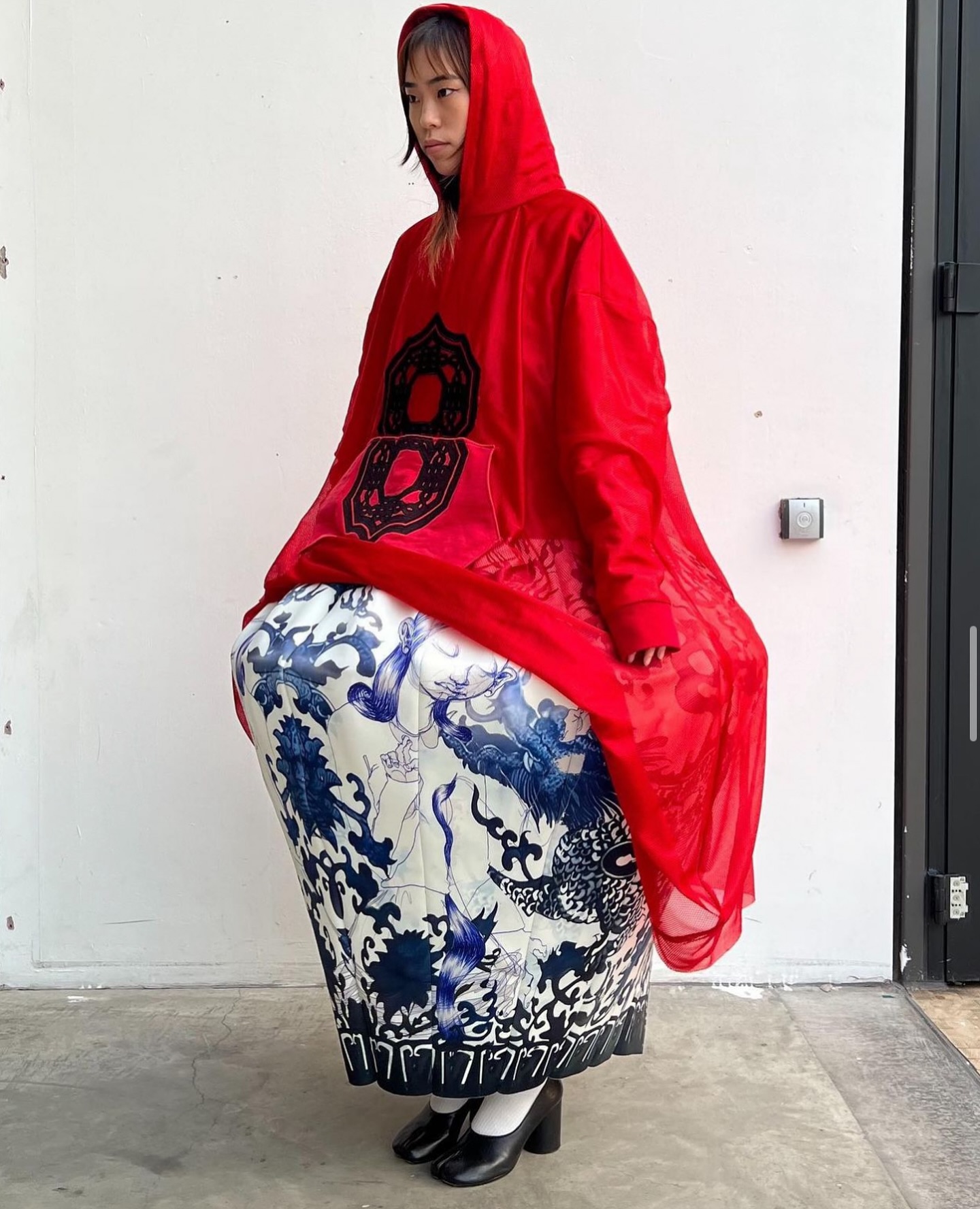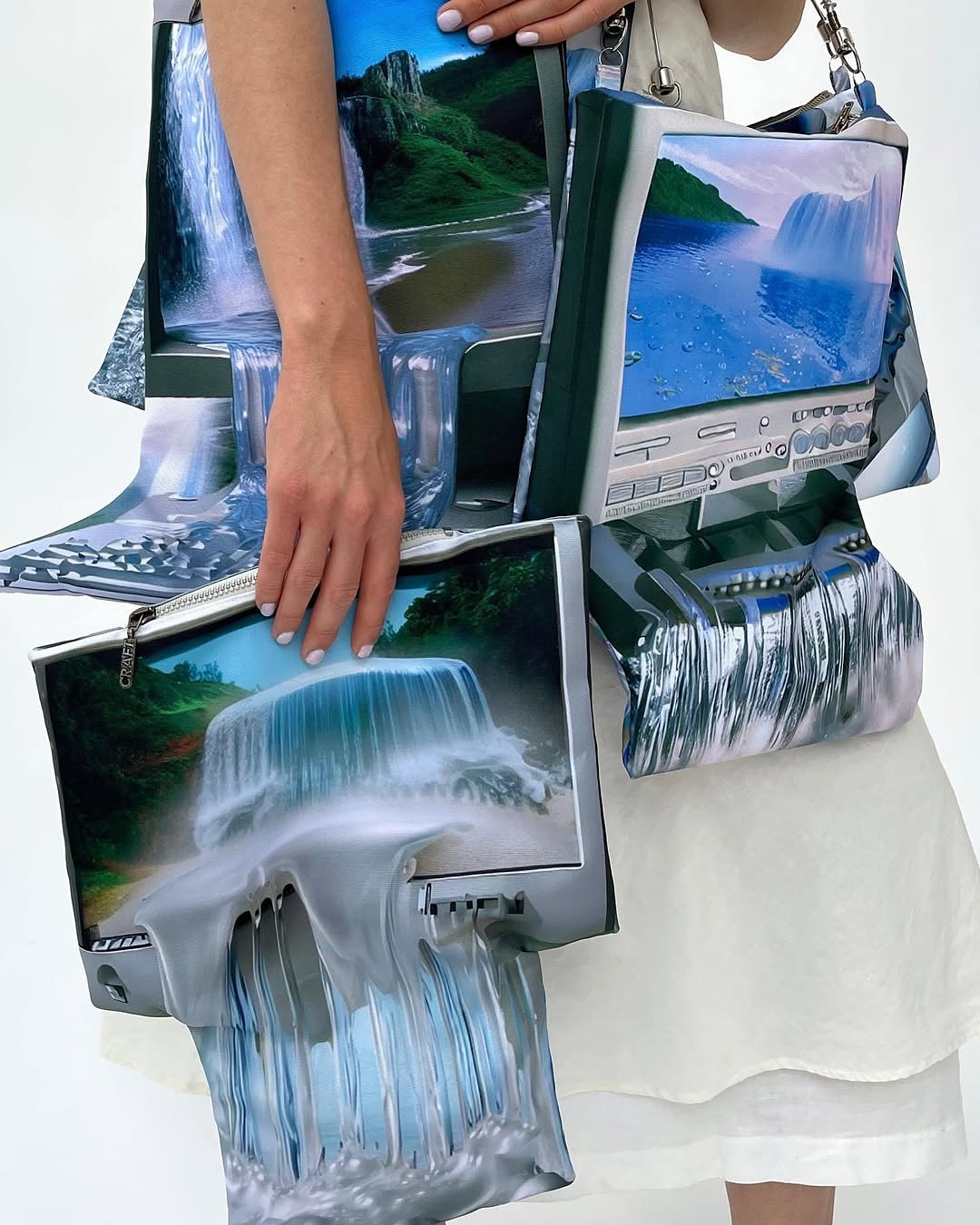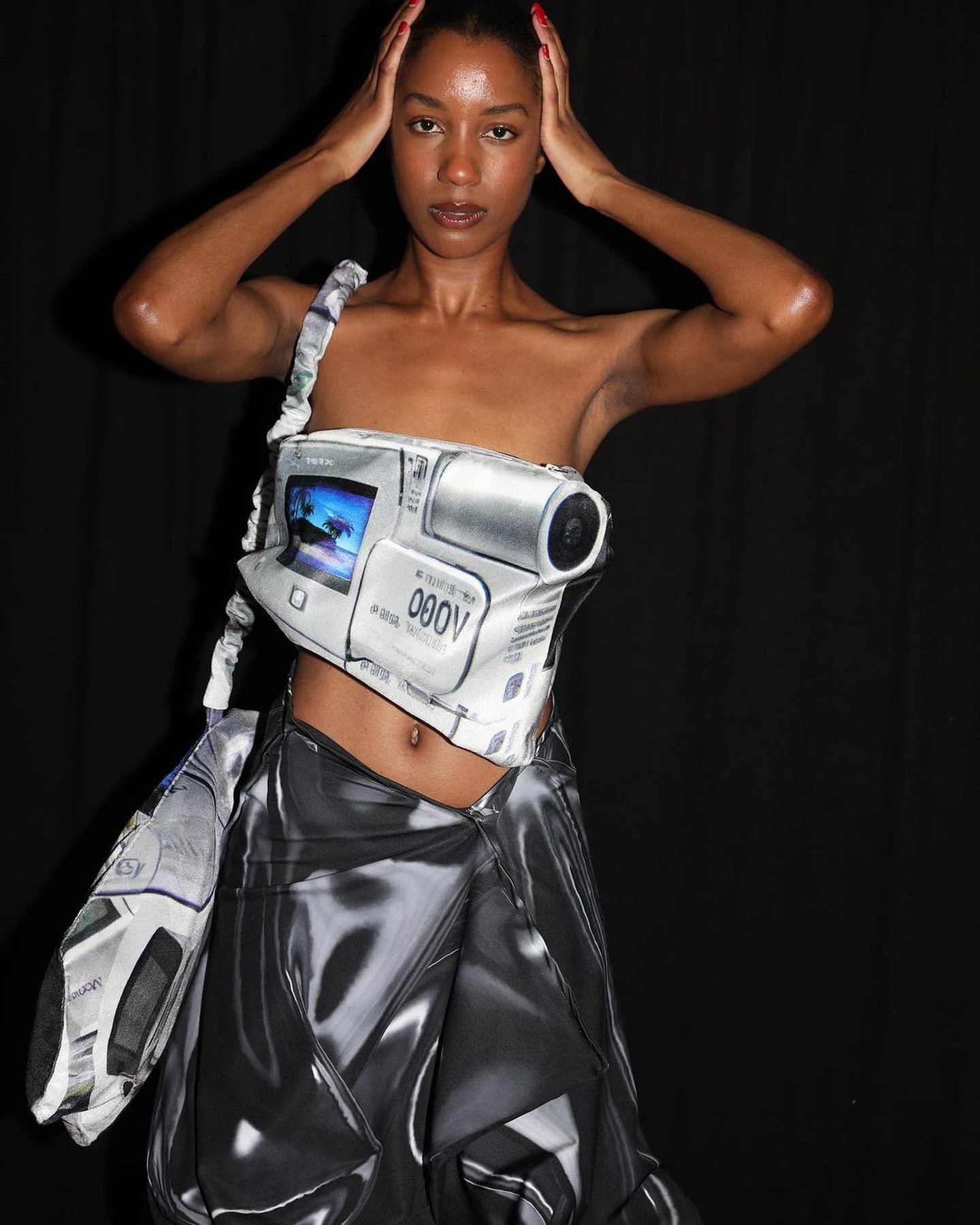
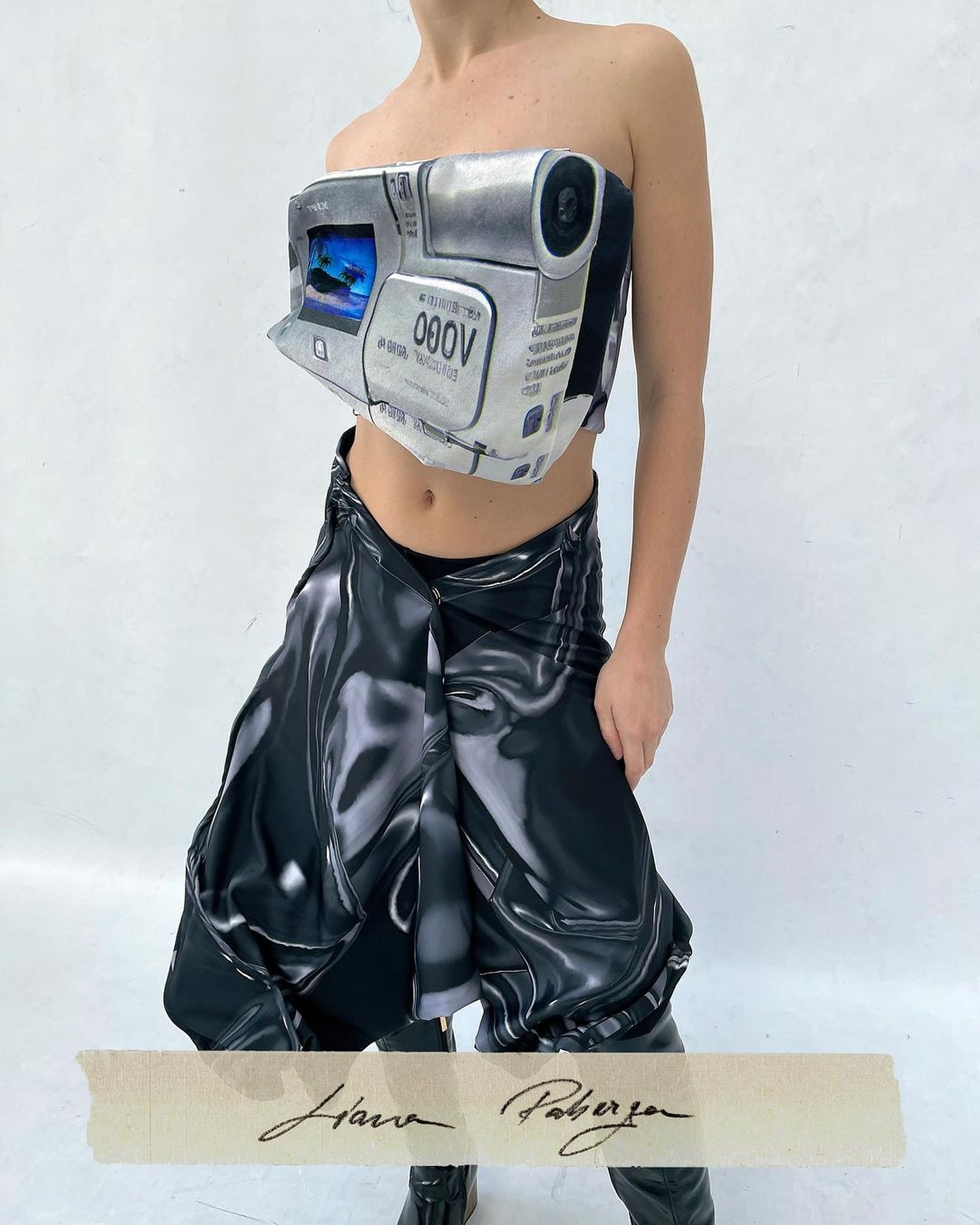
One standout piece is a crop top printed with a camcorder image—an actual video camera rendered on fabric, then cut and constructed three-dimensionally into a wearable garment. This transcends conventional graphic tees, manifesting the very process of converting 2D imagery into 3D objects as a fashion statement itself.
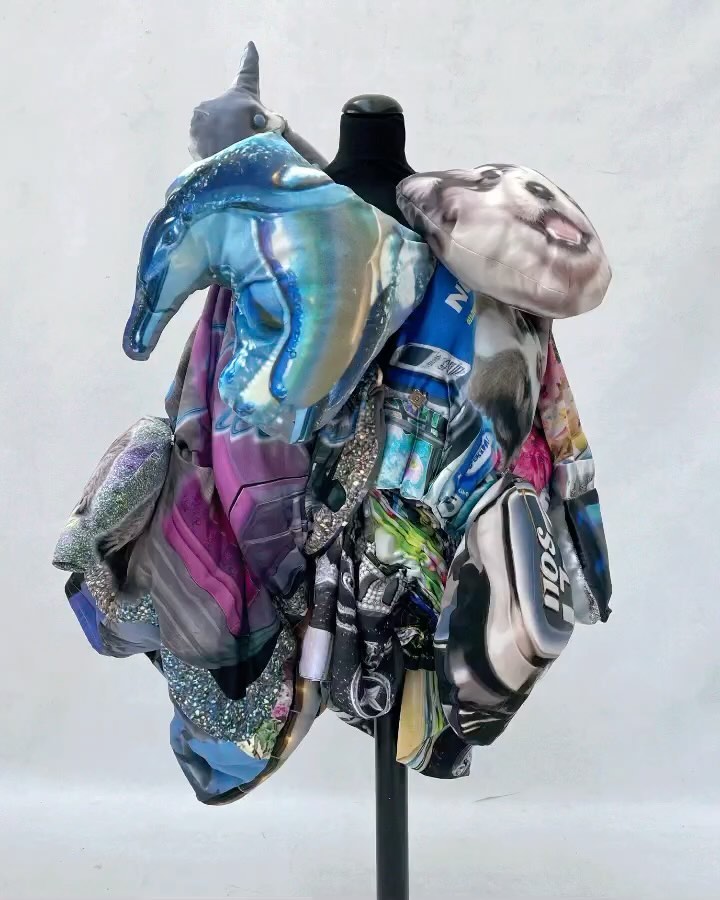
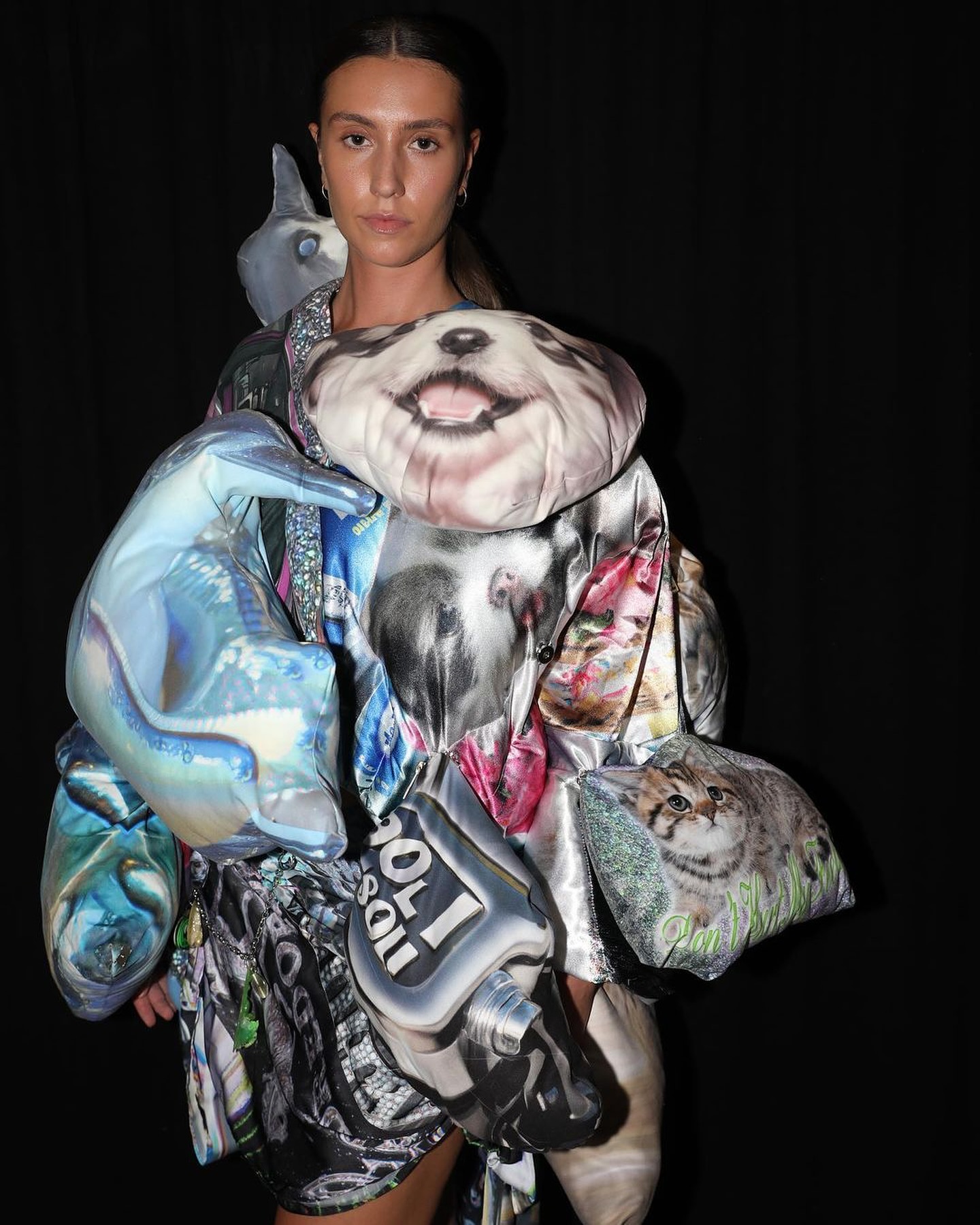
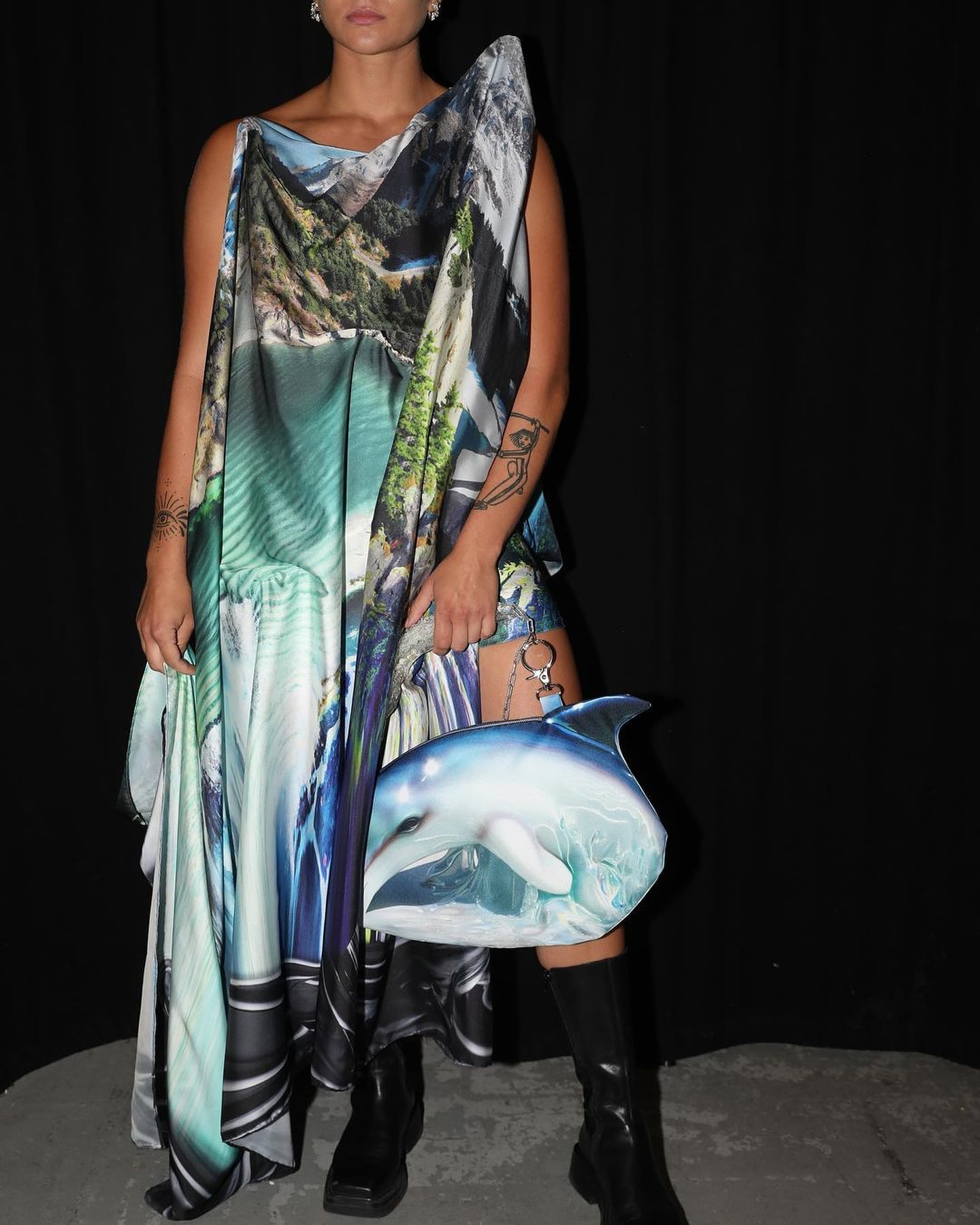
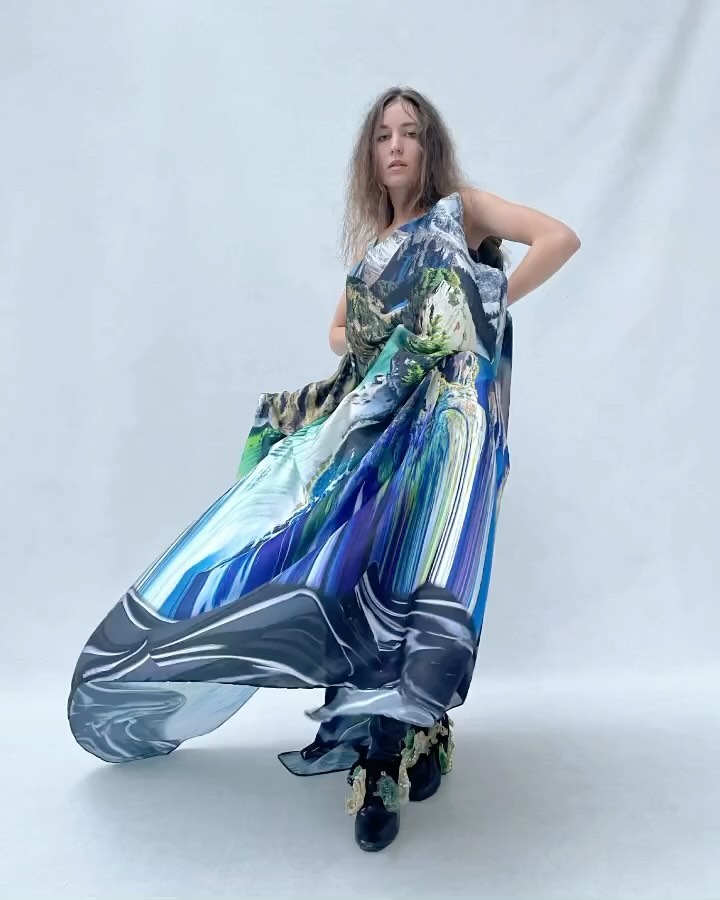
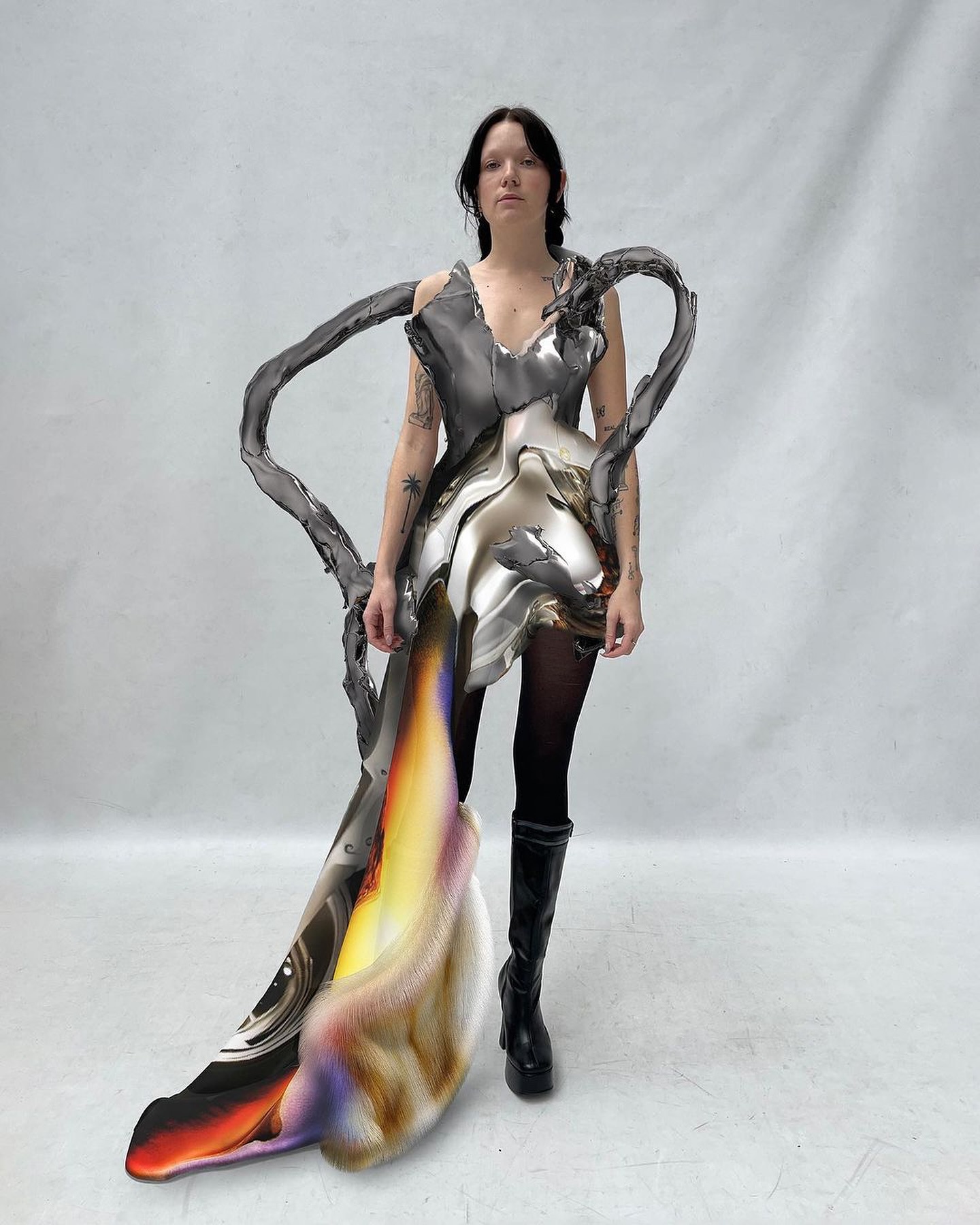
Liana's practice originates from a childhood memory: playing "The Sea" in a school play while holding nothing but a drawing. This haunting experience left her with profound questions about the materiality of representation, eventually leading to the creation of the Mount Wulf Dress series. Her conceptual vision—wearing natural elements like mountains or oceans—is realized through actual garments that those who embody such forces can wear with style. Liana Paberza continues to expand the convergence of technology and fashion in captivating, boundary-pushing ways.
FAQ
How does Liana Faberja use AI in fashion design?
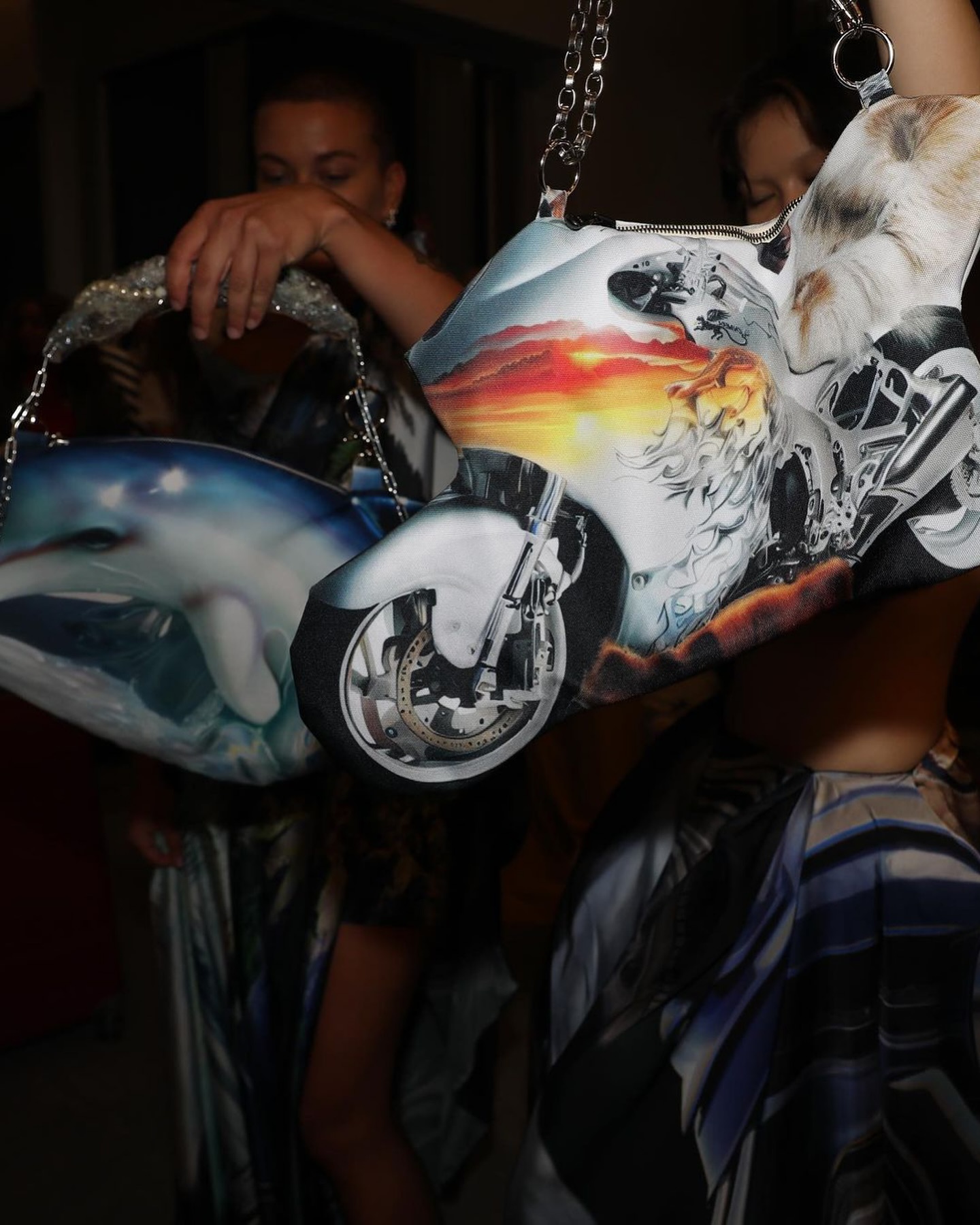
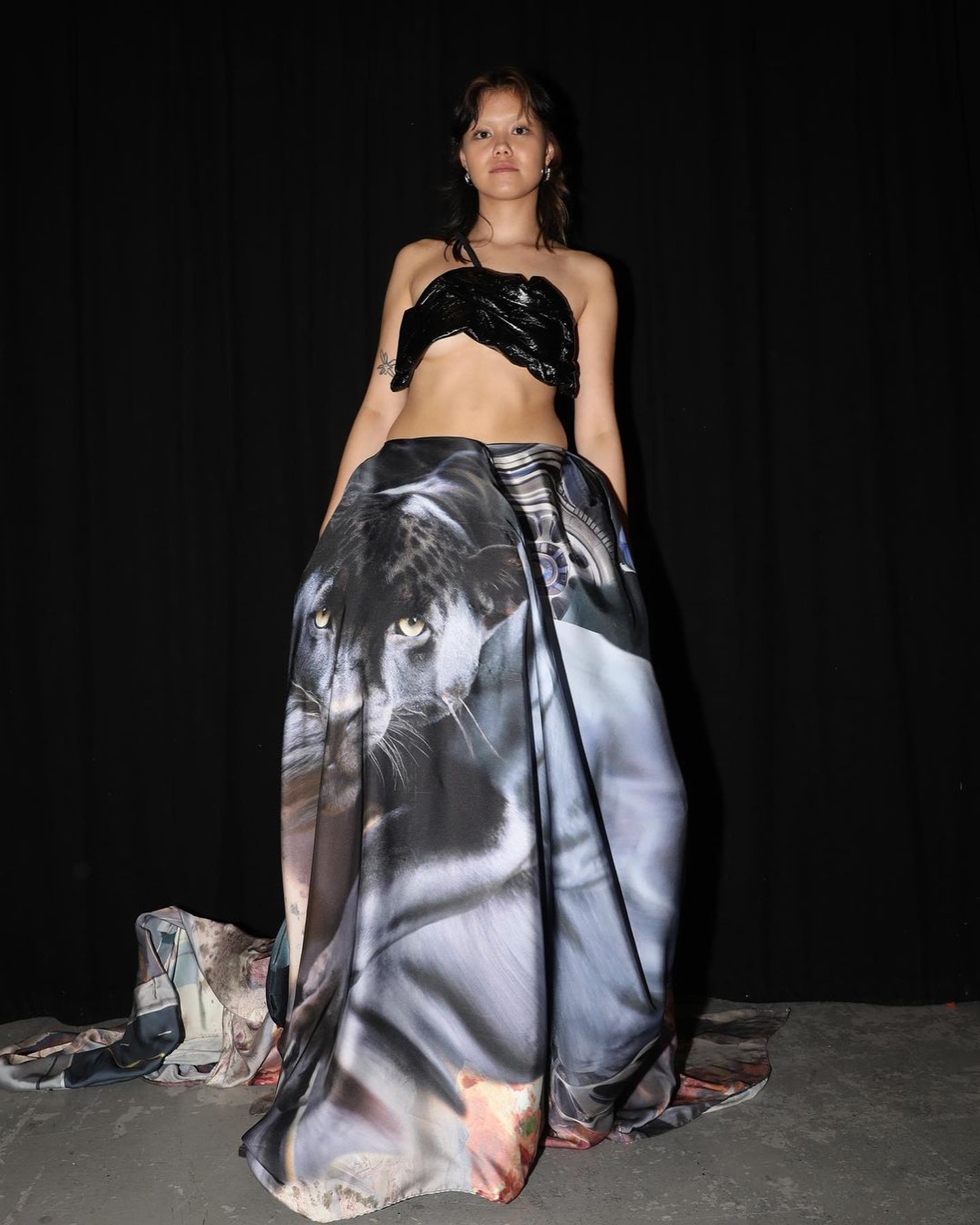
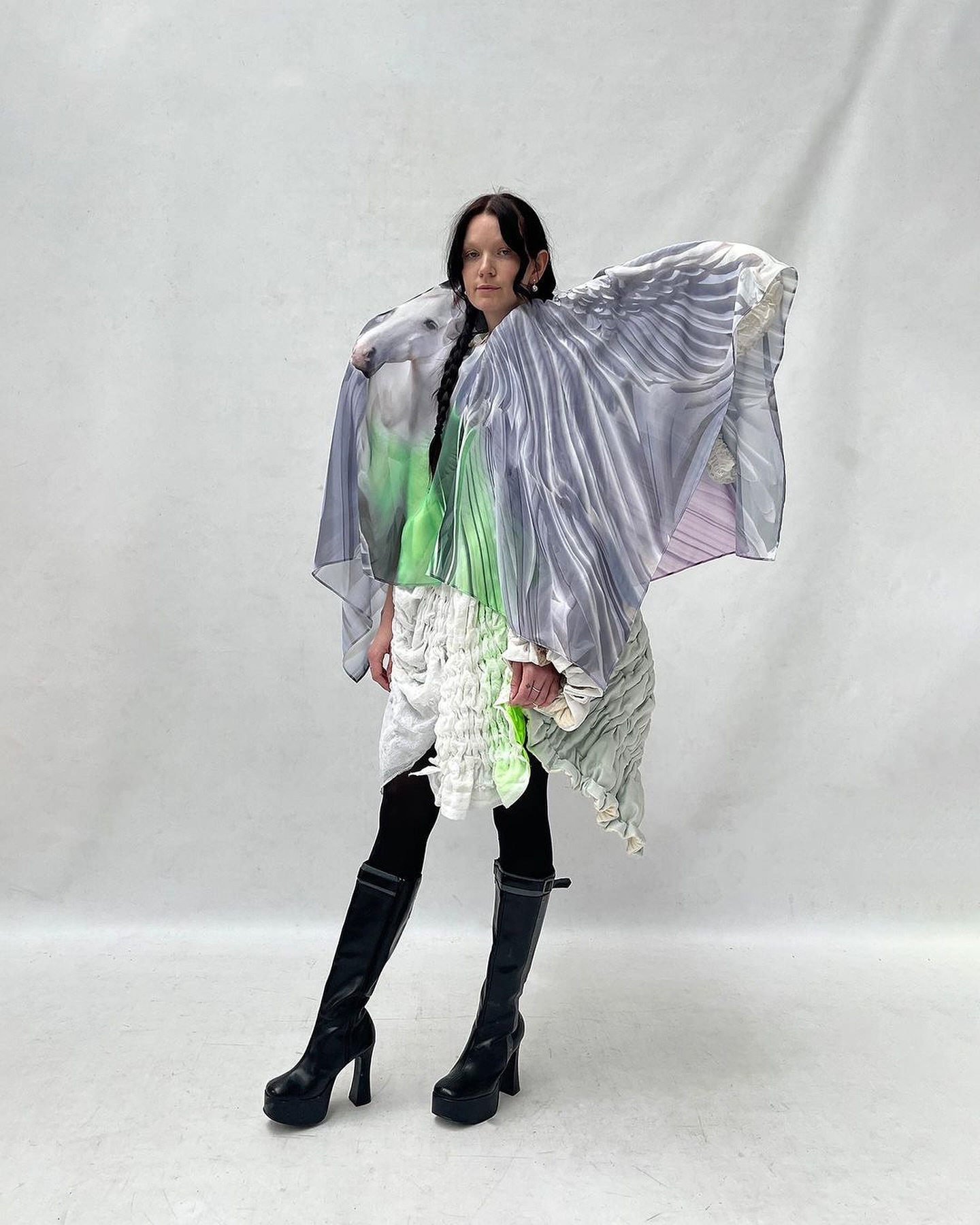
Liana Faberja generates image elements with AI text-to-image tools, then creates complex prints through collage technique, reconstructing them from 2D into 3D garments. Her signature approach bridges digital illusion and physical reality by adding distortion and glitch effects.
What meaning does the Mount Wulf Dress carry?
The Mount Wulf Dress originates from Liana's childhood experience representing 'the sea' in a school play with just one drawing. The series embodies the conceptual imagination of literally wearing natural elements like mountains or oceans as actual garments.
How is Liana Faberja's camcorder crop top made?
The camcorder crop top is created by generating or sourcing actual video camera images via AI, printing them onto fabric, then cutting and sewing three-dimensionally into wearable garments. The transformation process from 2D image to 3D object is itself the design's essence.