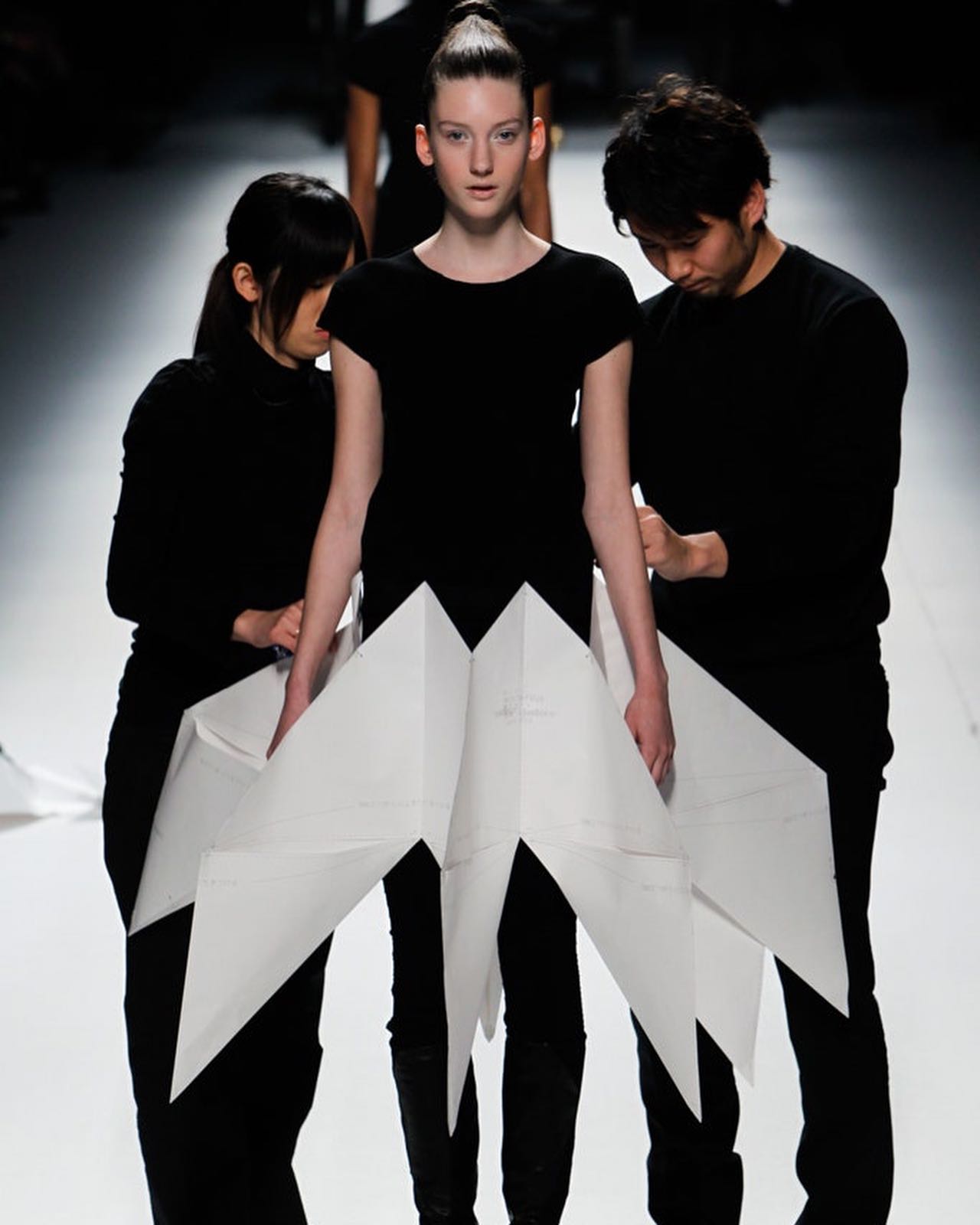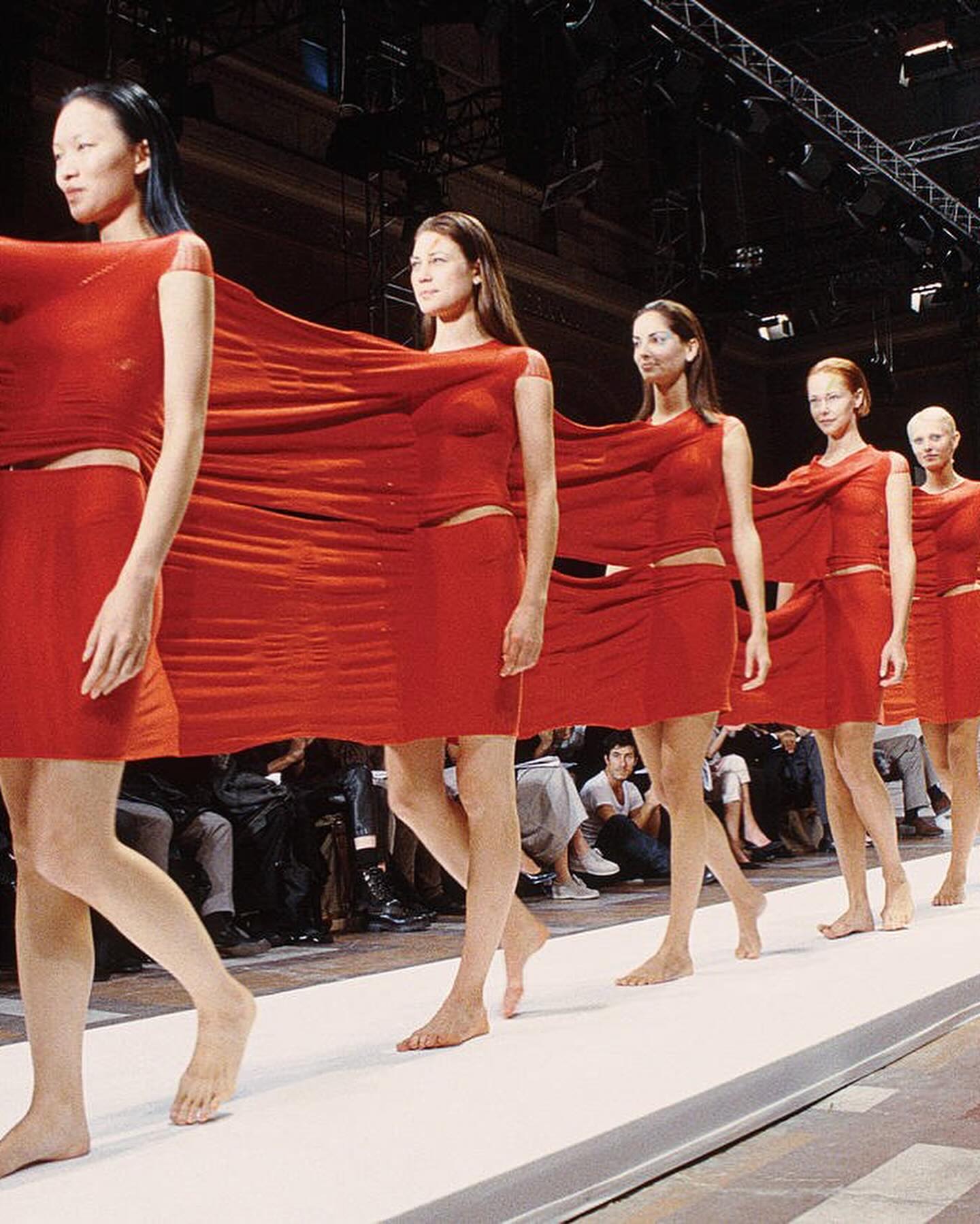
Many analyze this look purely from a technical standpoint: the structure that eliminates the need for tailoring, the form achieved with minimal stitching. Indeed, Miyake's innovative pattern-making is awe-inspiring in itself. Yet we believe this work demands a question beyond 'how it was made' to 'why it was made.'
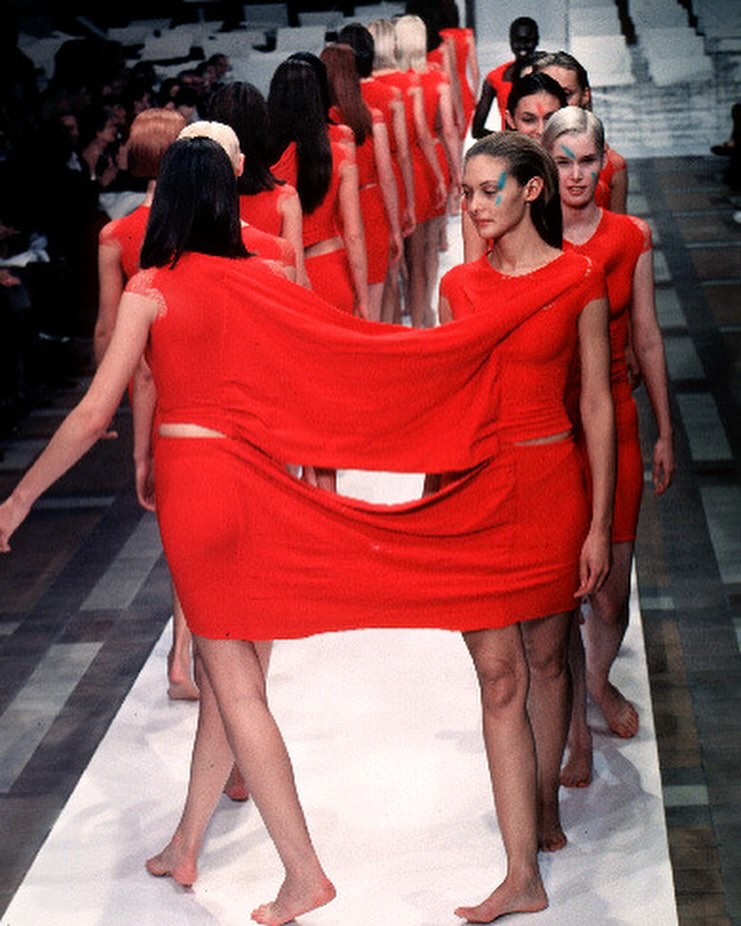
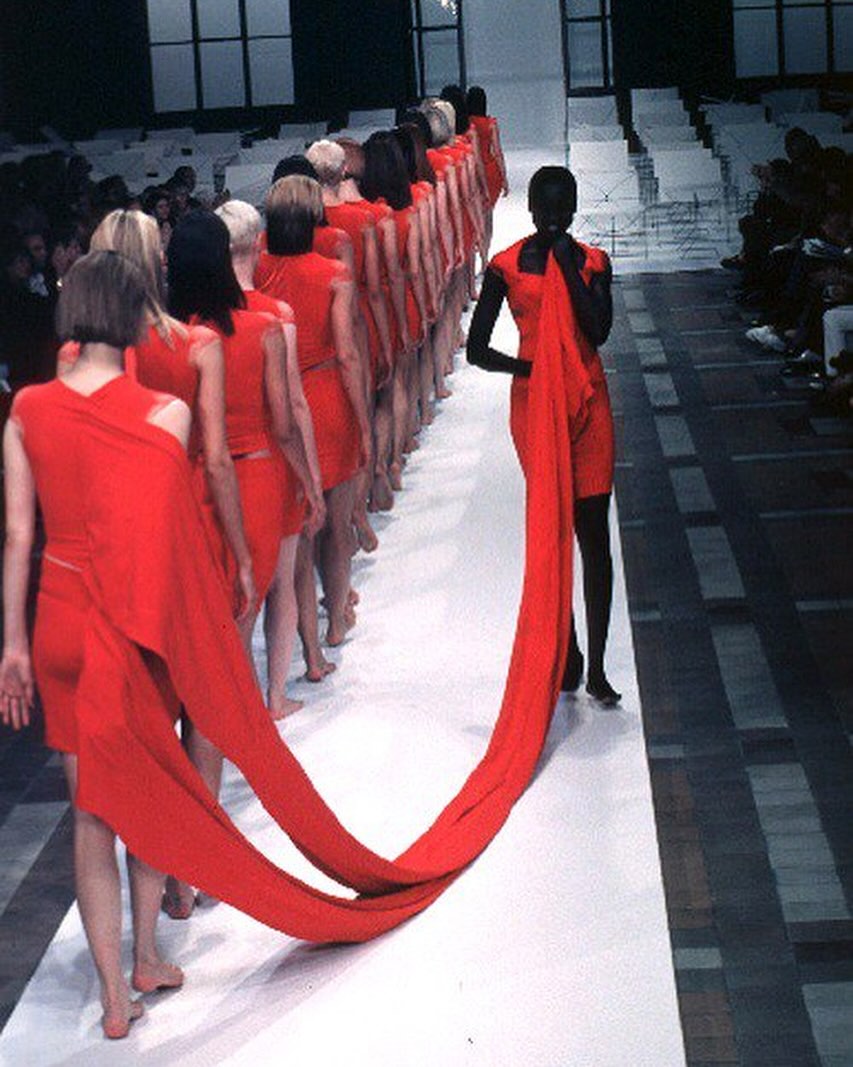
The five models connected by red fabric are independent yet interdependent. When one moves, others are affected. This is a metaphor for our society. Through clothing, Issey Miyake spoke of human solidarity and coexistence — a message that remains profoundly relevant twenty-five years later.
Fashion sometimes speaks beyond garments. Miyake's 1999SS collection was a moment where technique and philosophy, form and meaning, achieved perfect harmony. Standing before this work, we ask once more: What is the deepest question fashion can pose to us?
FAQ
What meaning does Issey Miyake's 1999 S/S Red Thread collection convey?
Red Thread represents the Eastern philosophy that all people are connected by invisible red strings. Issey Miyake visualized the message of human solidarity and coexistence by connecting five models with a single red fabric, questioning the essence of social relationships through fashion beyond technical innovation.
What technique was used to create Issey Miyake's 1999 S/S red fabric runway?
This piece demonstrates innovative pattern-making that eliminates traditional cutting and uses minimal stitching. A single continuous red fabric wrapped around five models, creating a structure both independent and interdependent, proving Miyake's technical excellence and philosophical depth simultaneously.
What is Red Thread?
Red Thread is a concept from Korean and Eastern cultures, representing the belief that all people are connected by invisible red strings. It symbolizes fateful connections and the inevitability of human relationships, which Issey Miyake reinterpreted through fashion language in his 1999 S/S collection.