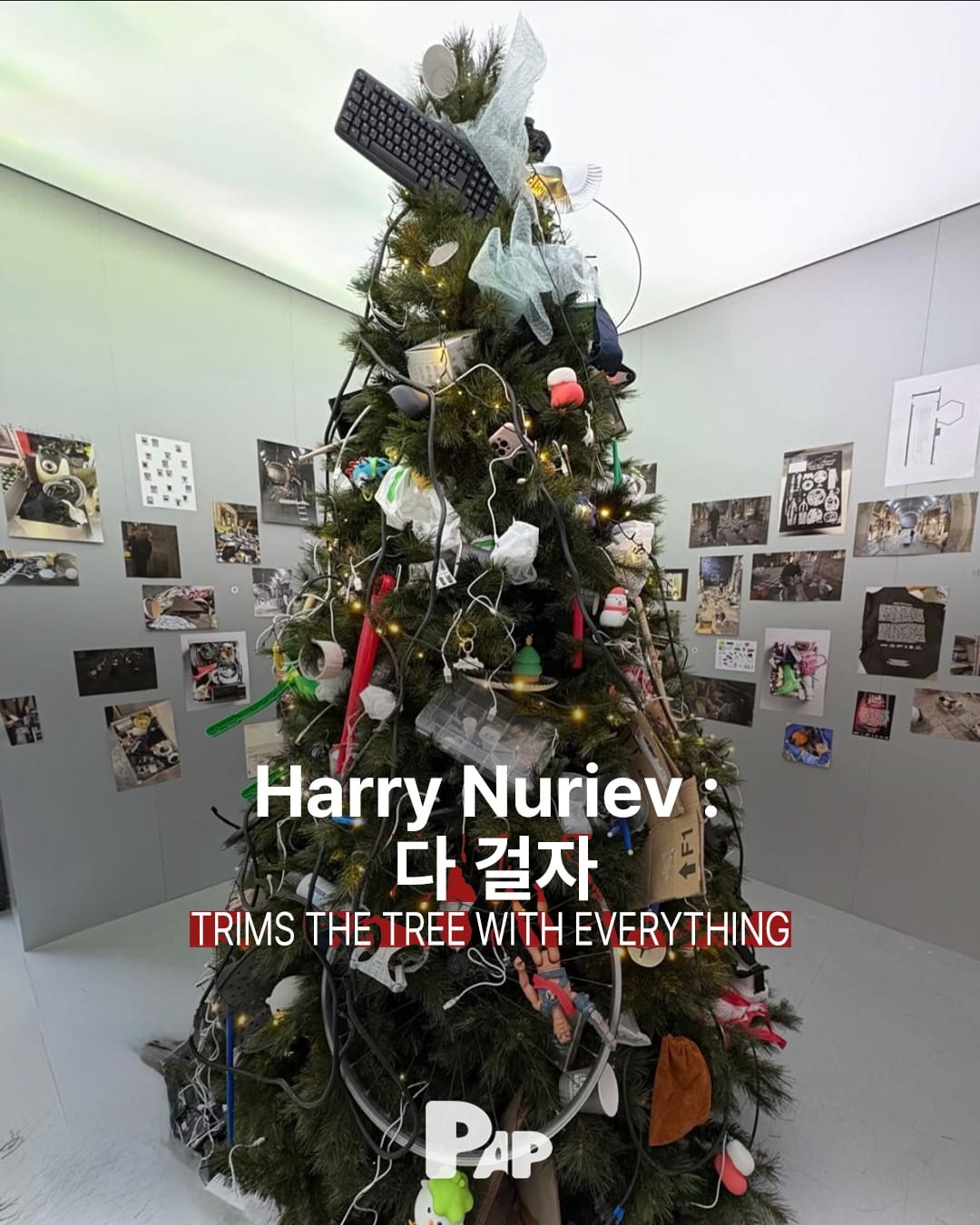
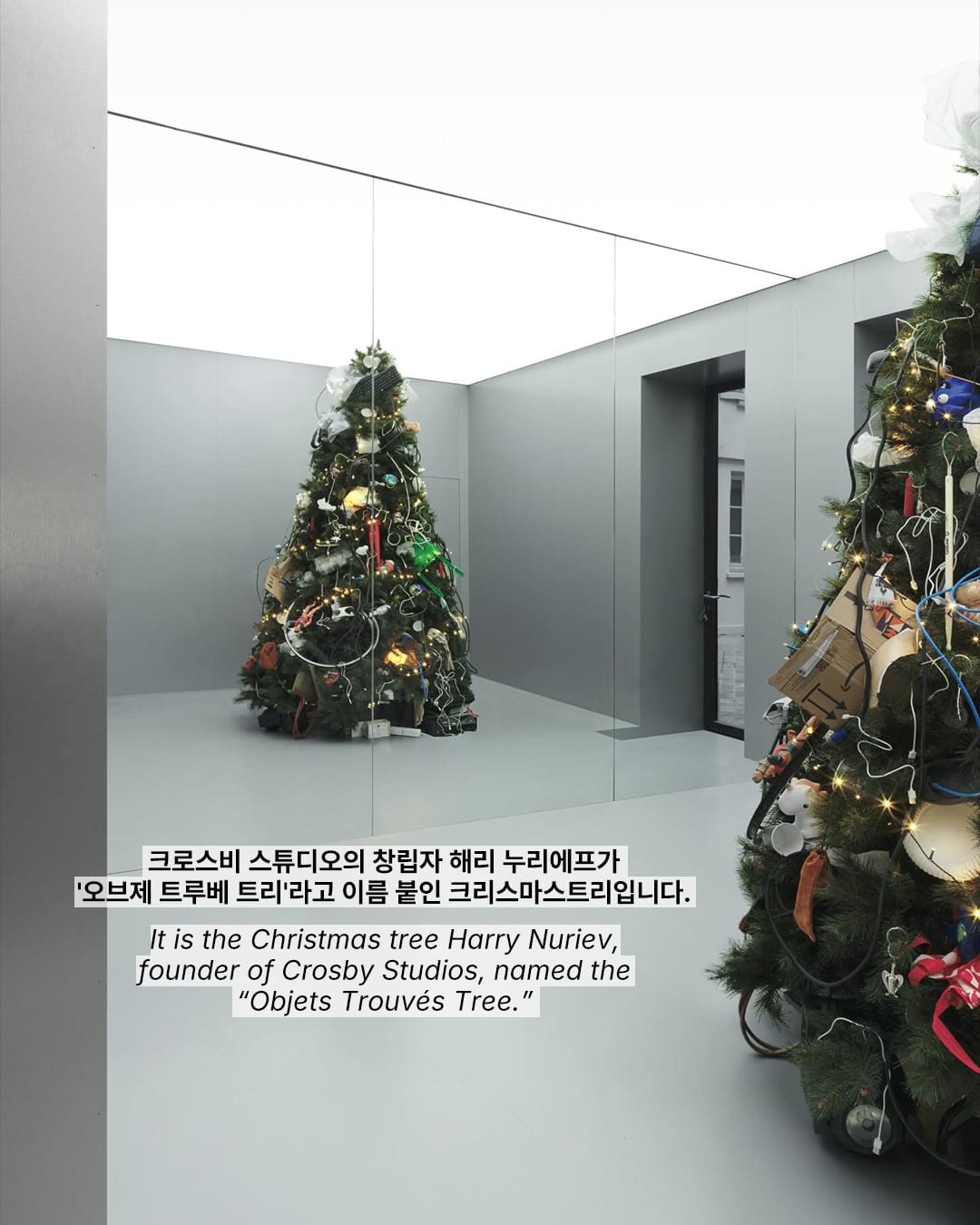
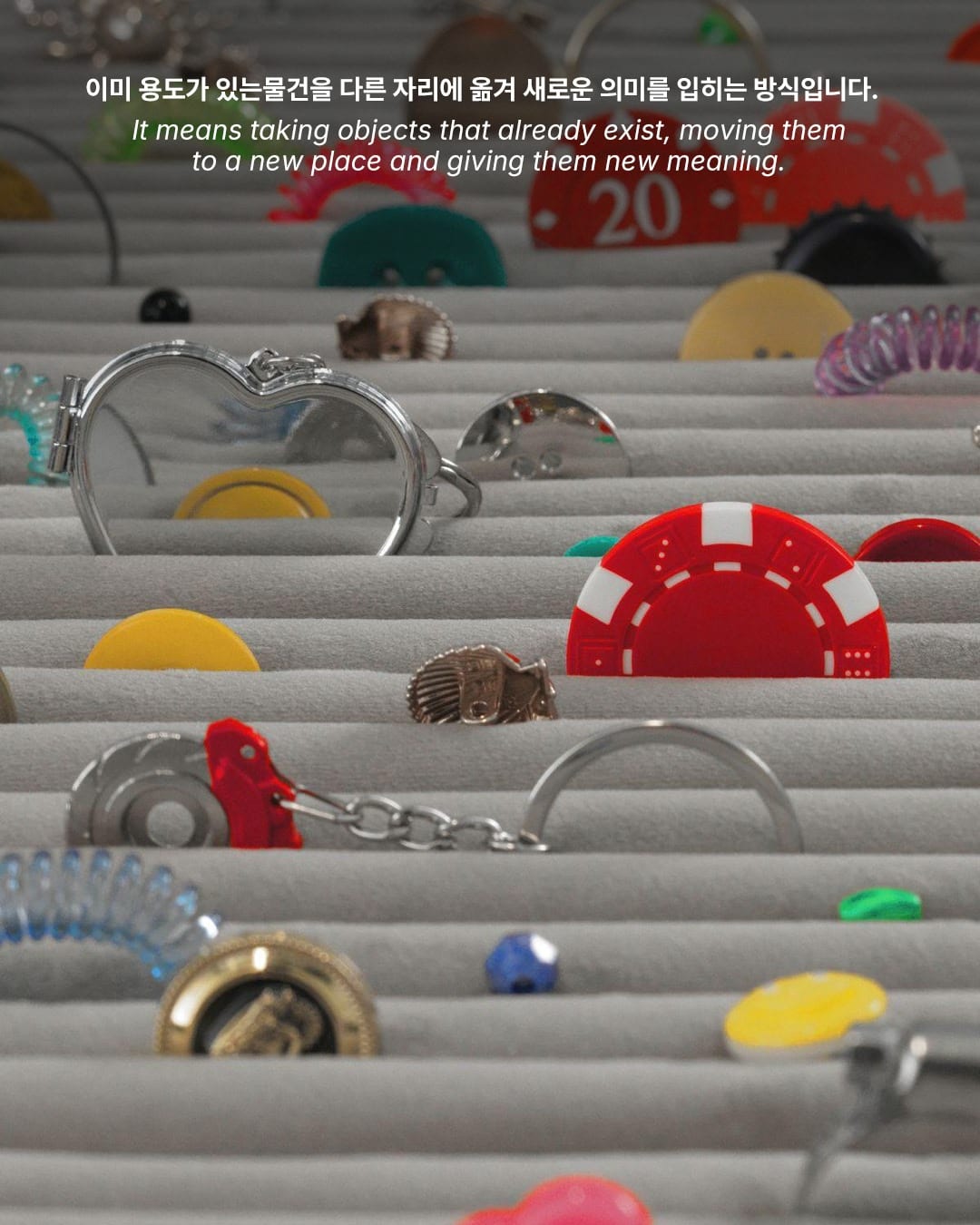
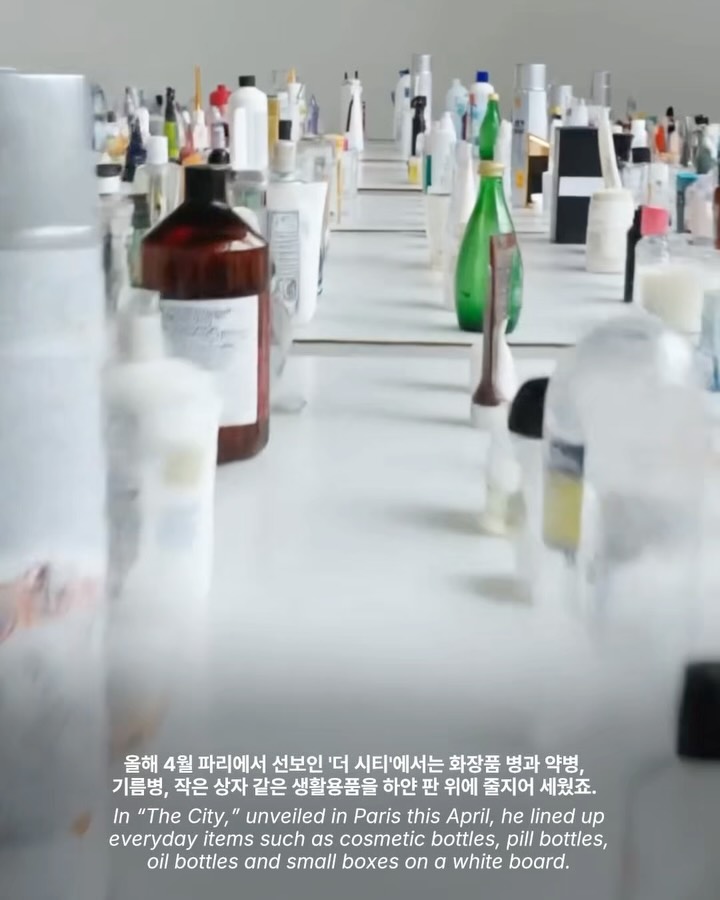
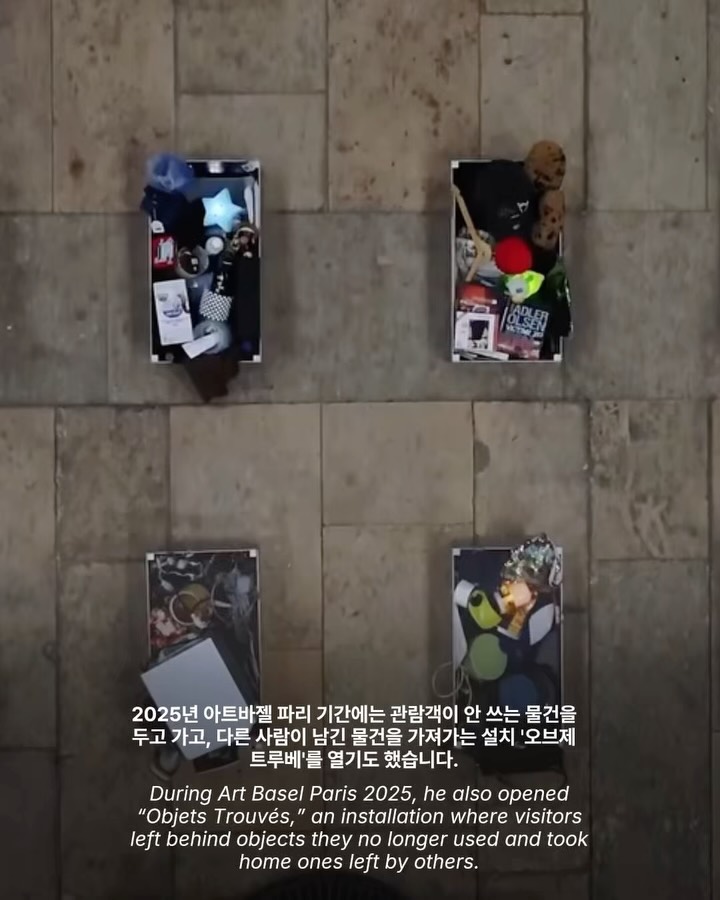
Crosby Studios is an interior and design studio that opened in Moscow in 2014. Nuriev calls his way of working "Transformism." He lines up everyday products, lays out odds and ends in neat grids, and gives ordinary things a new place. The tree was just one of those places.
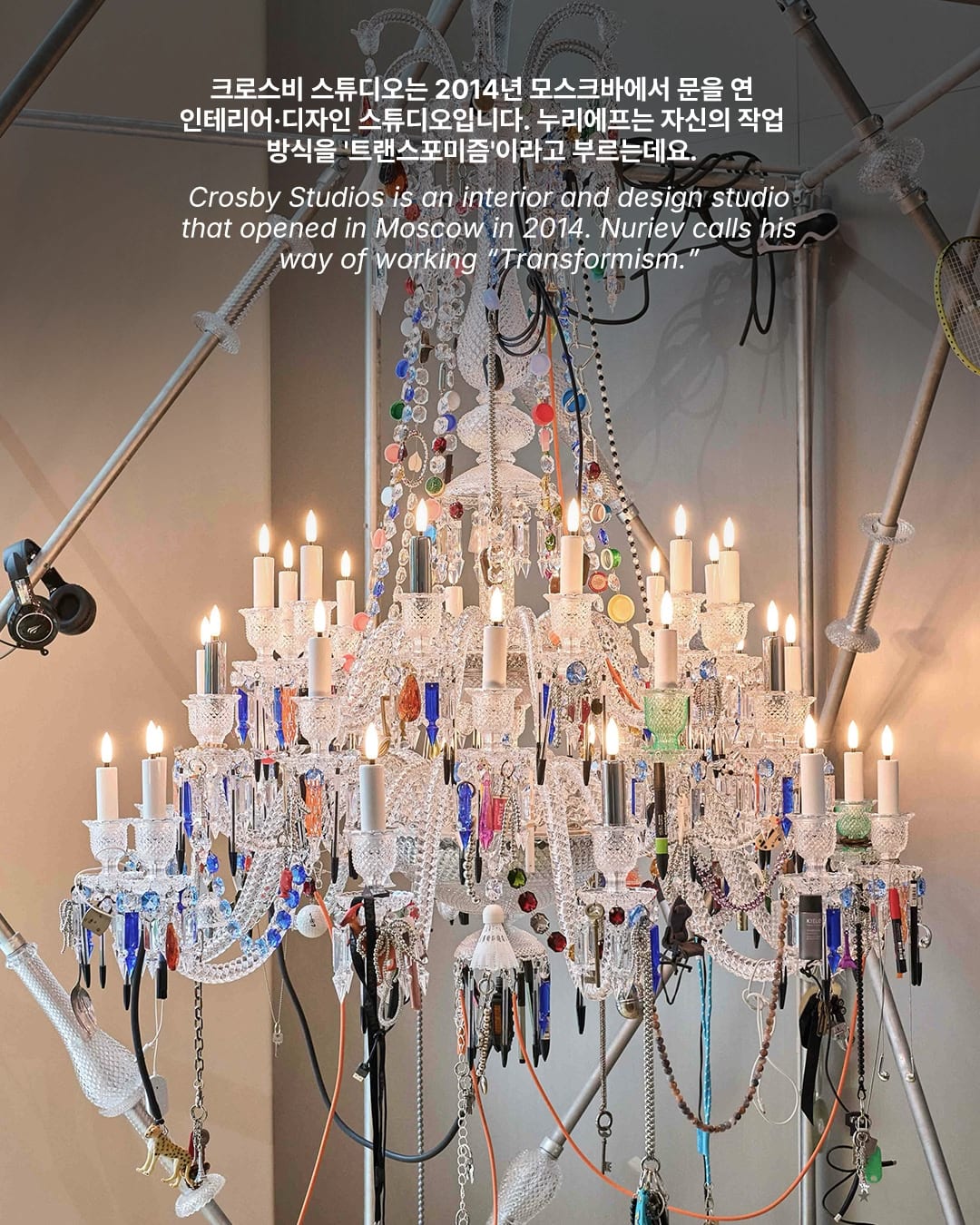
In another work visible in the photos, he wove fluorescent cables, colorful glass fragments and various objects into a crystal chandelier. A classic lighting fixture was transformed into a contemporary installation in an instant. When something passes through Nuriev's hands, the most ordinary object gains a new context.
This winter, how about pulling the odds and ends out of your drawers and hanging them on your tree? No need to go shopping for ornaments. Your everyday life is already the best decoration. What will you hang on your tree this year?
FAQ
What is Harry Nuriev's Objet Trouvé Tree?
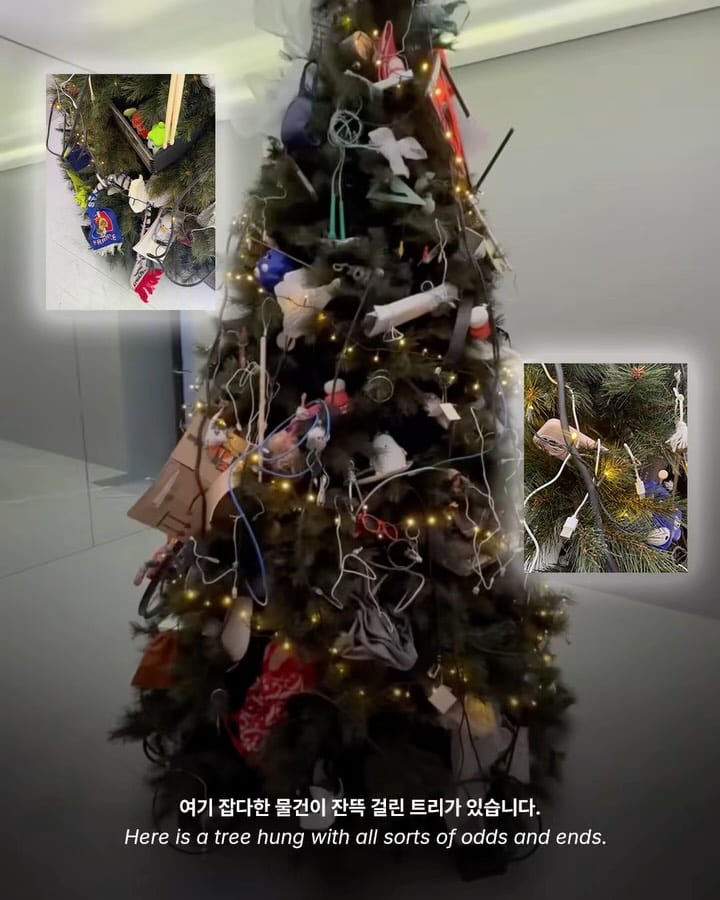
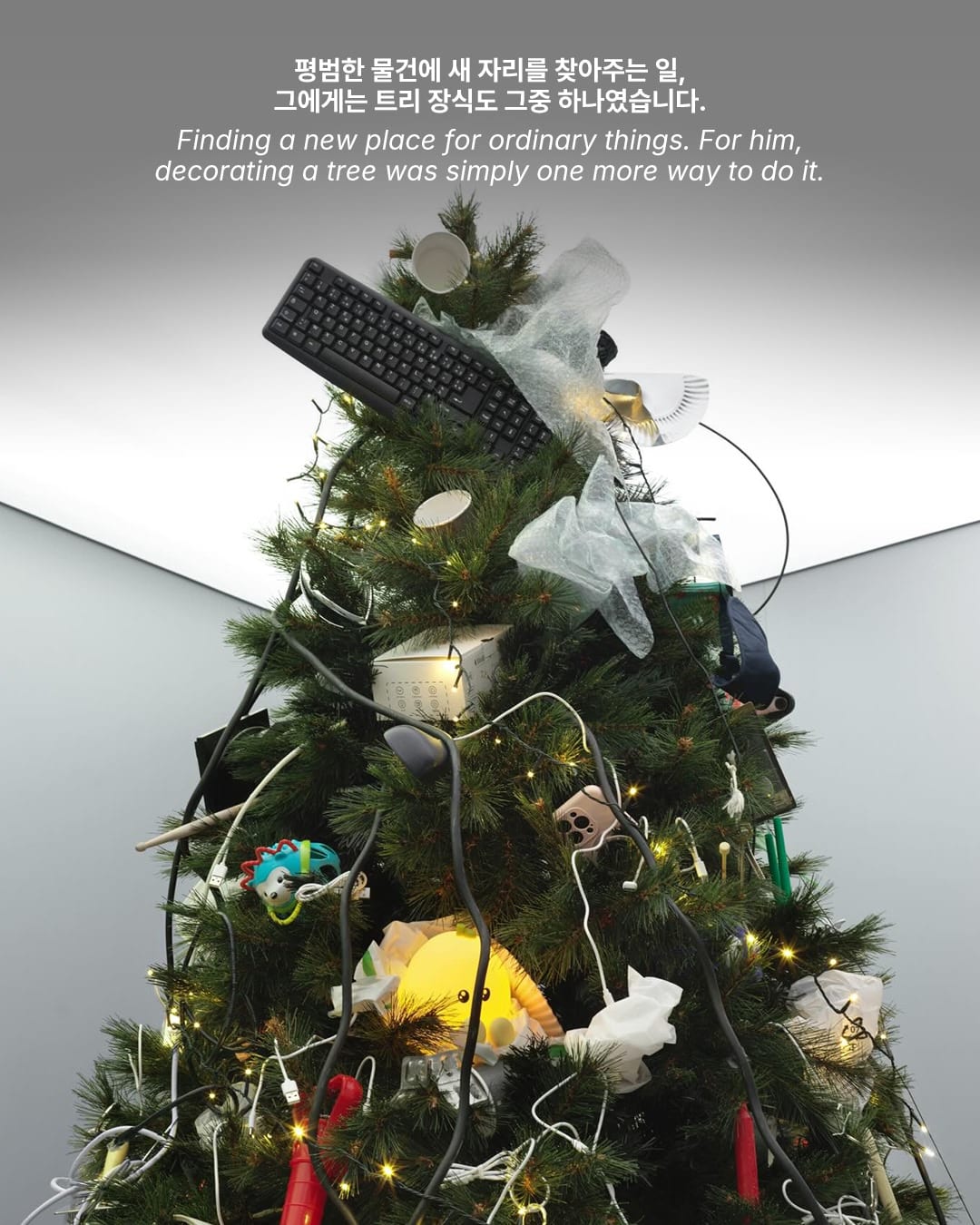
The Objet Trouvé Tree is an installation Harry Nuriev, founder of Crosby Studios, unveiled last Christmas. Instead of glittering ornaments, he hung everyday objects—keyboards, tangled cables, bicycle wheels, gloves—on the tree. Objet trouvé means 'found object' in French, reflecting Nuriev's practice of giving ordinary items new contexts.
Where did Crosby Studios start?
Crosby Studios is an interior and design studio founded in Moscow in 2014. Harry Nuriev calls his approach 'transformism,' lining up household goods and arranging miscellany like a checkerboard to give mundane objects fresh meaning, a practice he continues to explore.
What materials did Harry Nuriev use in his chandeliers?
Harry Nuriev wove neon cables, colored glass shards, and various found objects into crystal chandeliers. The classical lighting fixtures are transformed into contemporary installations, exemplifying his transformism approach where everyday items gain new context through radical recontextualization.