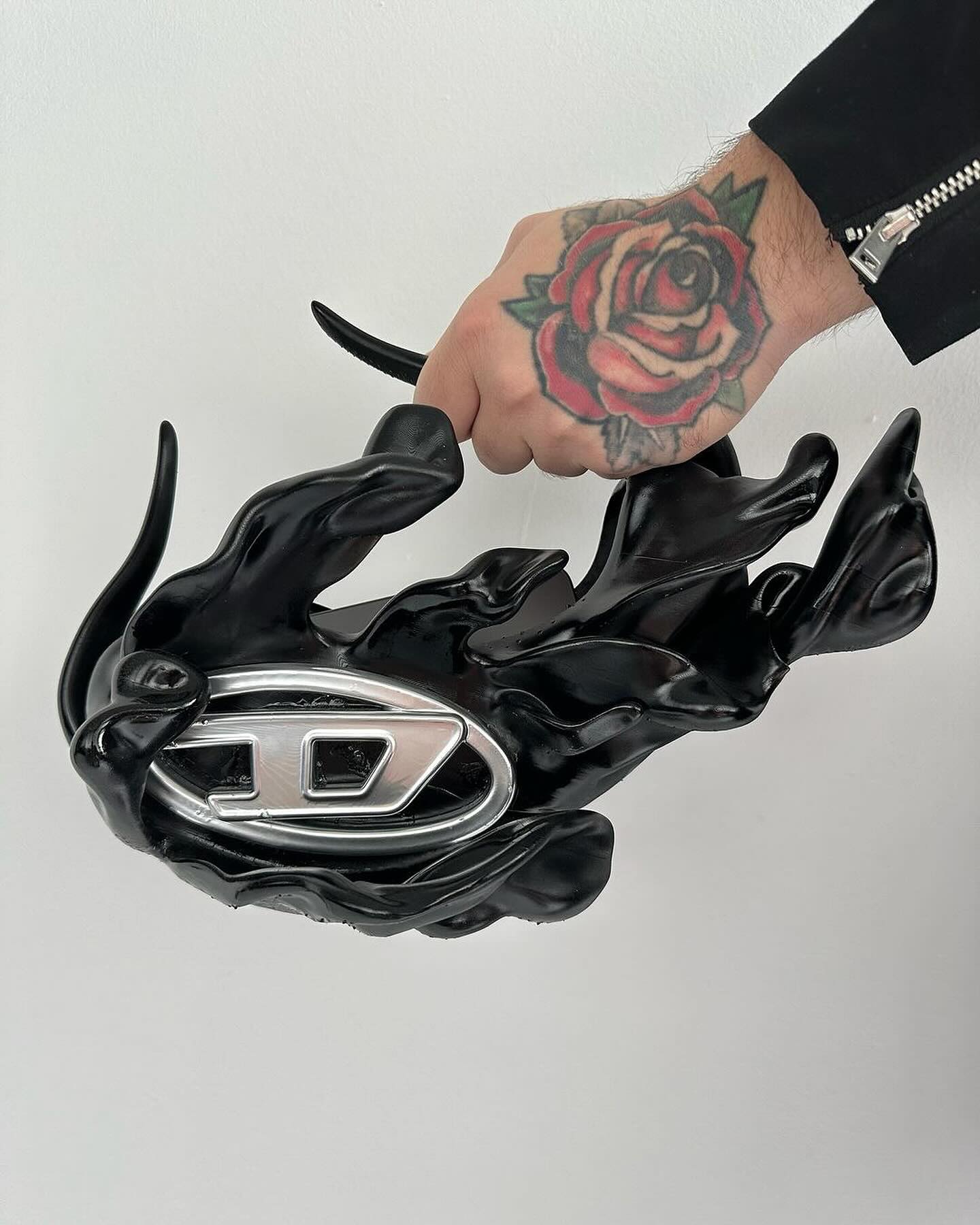
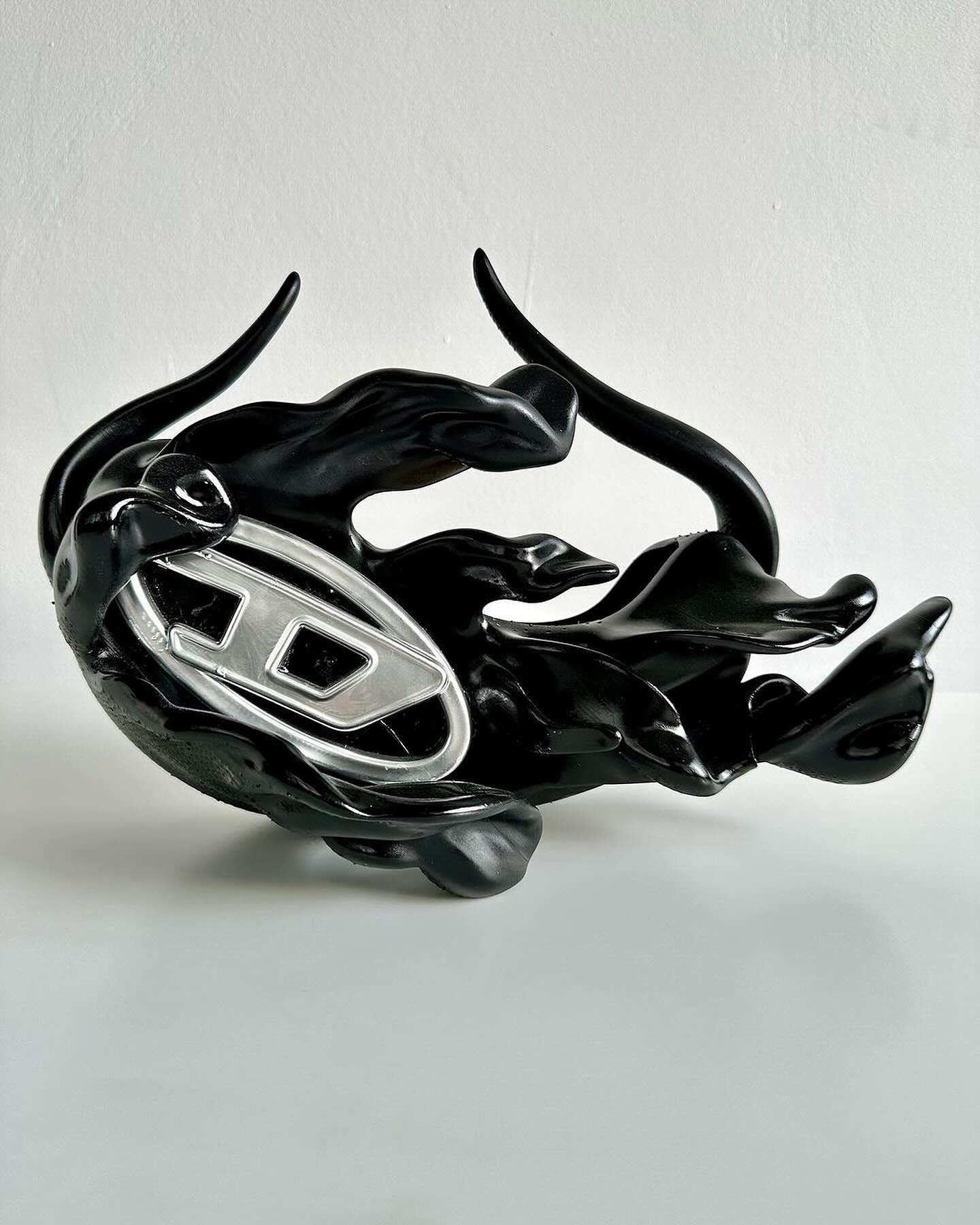
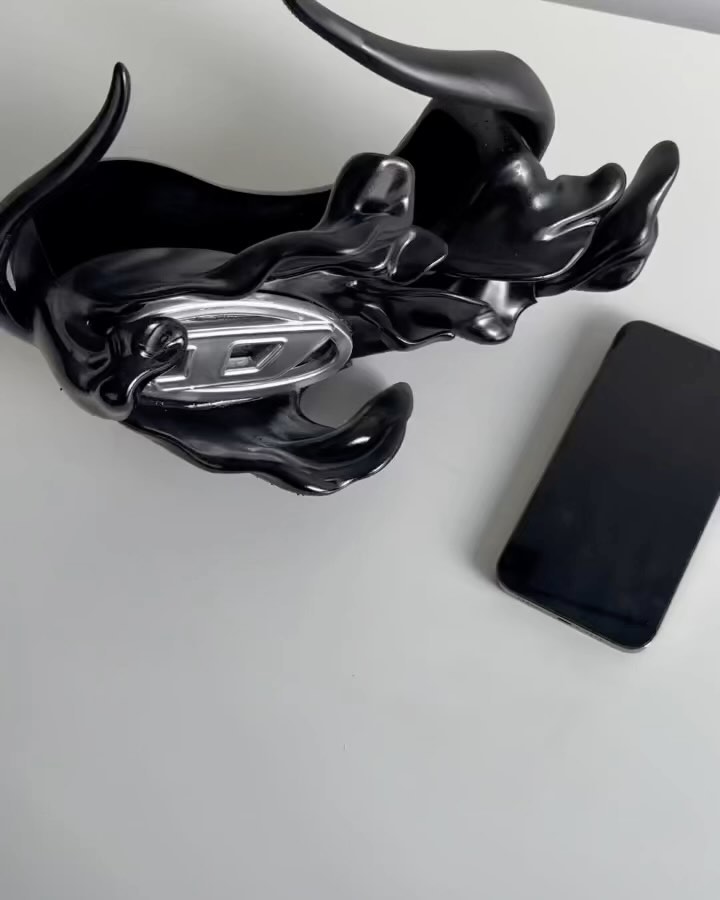
Digital designer Gabriel Oalex has unveiled a striking 3D virtual bag design that reimagines Diesel's iconic logo. Created purely as a conceptual digital work rather than a physical product, the design features a black coral-like sculptural form with an organic silhouette that appears to flow and melt like liquid.
The design's centerpiece is Diesel's oval logo, from which flame-like protrusions extend in all directions. The glossy black leather texture evokes cooled lava captured mid-flow, while sharp spikes recall coral formations infused with punk rebellion. The seamless integration of the handle into the body showcases the kind of radical form experimentation only possible through 3D modeling, free from the constraints of traditional manufacturing.
Virtual design in fashion is no longer a futuristic concept but an active creative laboratory. Before physical production, digital prototypes allow designers to test the boundaries of imagination—particularly evident in accessory design. Oalex's work deconstructs and reconstructs brand identity, exploring the bag as sculptural objet d'art rather than mere functional carrier.
Whether this design will ever be produced as an actual product remains uncertain. Yet the aesthetic direction that digital creatives propose to fashion houses is unmistakable: accessories as artistic expression beyond wearability, continuously challenging and eroding traditional boundaries. Oalex's Diesel bag stands as a provocative vision of fashion's increasingly fluid future between the virtual and physical realms.
The design's centerpiece is Diesel's oval logo, from which flame-like protrusions extend in all directions. The glossy black leather texture evokes cooled lava captured mid-flow, while sharp spikes recall coral formations infused with punk rebellion. The seamless integration of the handle into the body showcases the kind of radical form experimentation only possible through 3D modeling, free from the constraints of traditional manufacturing.
Virtual design in fashion is no longer a futuristic concept but an active creative laboratory. Before physical production, digital prototypes allow designers to test the boundaries of imagination—particularly evident in accessory design. Oalex's work deconstructs and reconstructs brand identity, exploring the bag as sculptural objet d'art rather than mere functional carrier.
Whether this design will ever be produced as an actual product remains uncertain. Yet the aesthetic direction that digital creatives propose to fashion houses is unmistakable: accessories as artistic expression beyond wearability, continuously challenging and eroding traditional boundaries. Oalex's Diesel bag stands as a provocative vision of fashion's increasingly fluid future between the virtual and physical realms.
FAQ
Is Gabriel Oalex's Diesel bag design an actual product?
No, it's a purely virtual 3D design work, not a physical product. Created by digital designer Gabriel Oalex as a conceptual reinterpretation of the Diesel logo, featuring black coral forms and liquid-like dripping sculptural beauty.
What's the standout feature of this Diesel bag design?
Organic forms radiating outward like flames or lava from Diesel's oval logo. Glossy black leather texture with sharp protrusions evoke both coral reefs and punk aesthetics, showcasing free-form experimentation only 3D modeling enables.
Why are virtual designs important in the fashion industry?
Virtual designs serve as digital prototypes for testing creative boundaries before actual production. Especially active in accessory design, they enable artistic experiments deconstructing and reconstructing brand identity without manufacturing constraints.