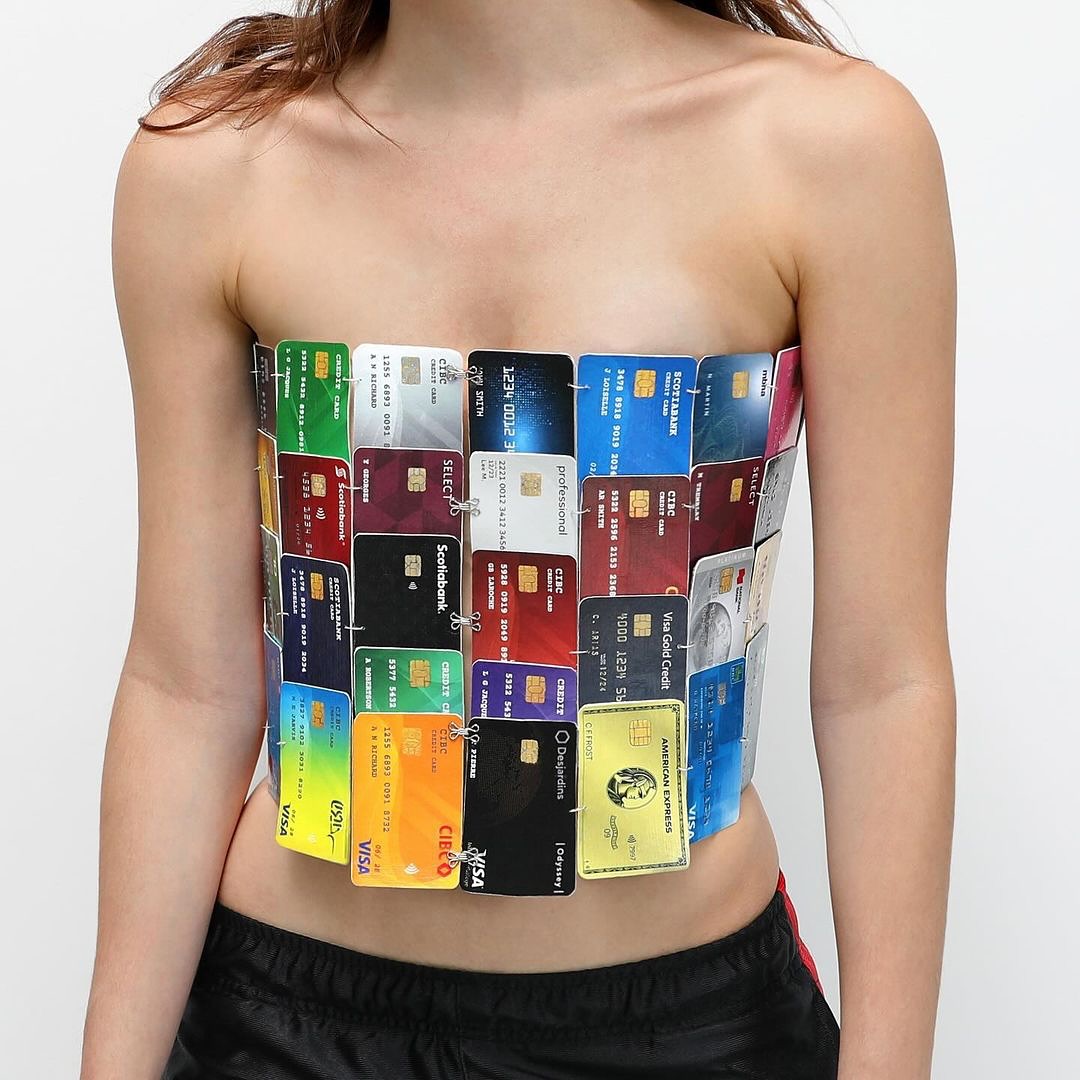
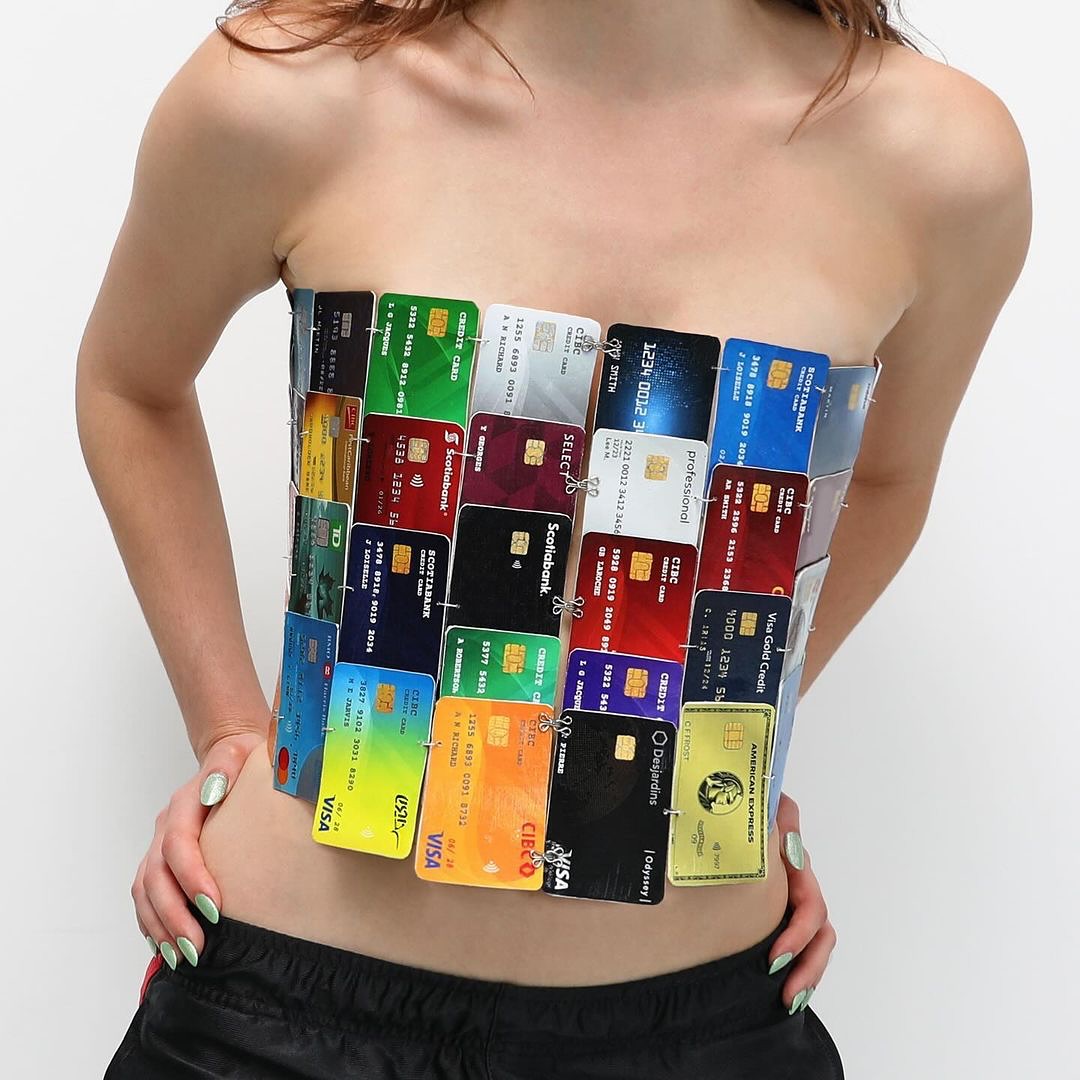
In the featured image, Gabbois wears a tube top meticulously woven from multiple credit cards of various colors and brands. The cards—ranging from green and blue to burgundy and yellow—are interconnected to form a striking patchwork pattern that turns practical banking instruments into a daring fashion statement. Bill-crafted hair accessories complete her 'wealthiest fashion style,' quite literally wearing money as adornment.
The work offers a witty commentary on contemporary society's relationship with consumerism and material value. Gabbois demonstrates that money and credit cards can transcend their transactional purpose to become vehicles of identity and aesthetic expression. Her approach pushes the boundaries of upcycled fashion, proving that discarded or overlooked items can be elevated into thought-provoking art.
As sustainability and creativity become central to the fashion industry, Gabbois's practice stands out as an artistic experiment that breathes new life into forgotten objects. Her card-woven pieces challenge viewers to reconsider what fashion materials can be and what messages our clothing choices convey about wealth, consumption, and personal style.

FAQ
What materials does Gabbois use to create fashion pieces?
Gabbois uses credit cards and banknotes as primary materials. They weave multiple credit cards to make tube tops and create hair accessories from bills, showcasing upcycling work that reimagines financial tools as fashion items.
What is upcycled fashion?
Upcycled fashion is a sustainable design approach that recreates discarded or unused objects into new fashion items. In Gabbois's case, everyday objects like credit cards and banknotes are given new purpose and aesthetic value, conveying messages about consumerism.
What meaning does credit card fashion contain?
Gabbois's credit card fashion is an artistic commentary on modern society's consumerism and material values. By wearing financial tools as clothing, it shows money can become a medium expressing identity and style beyond mere transaction, wittily reinterpreting wealth-fashion relationships.