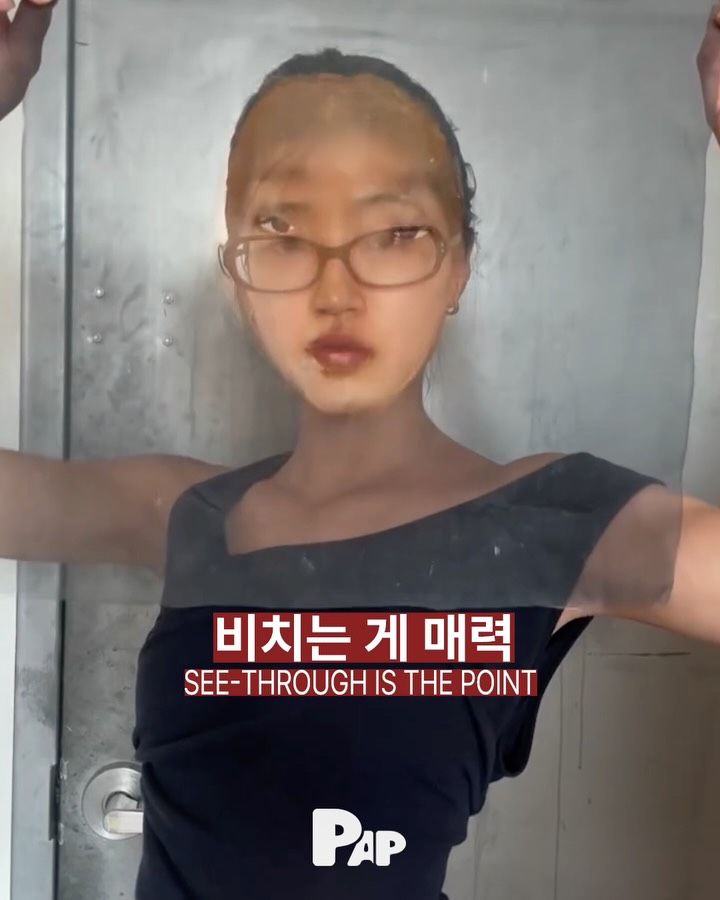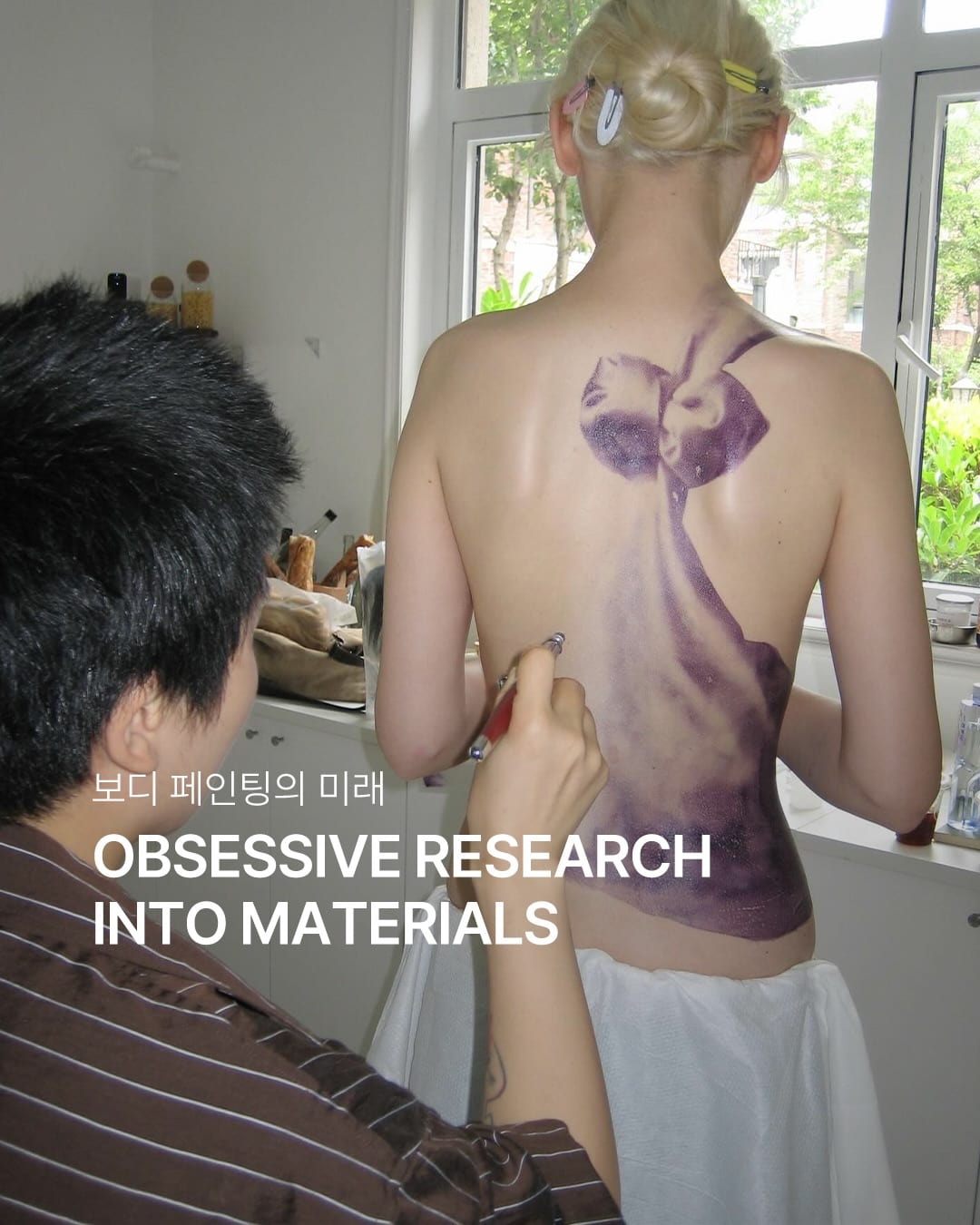
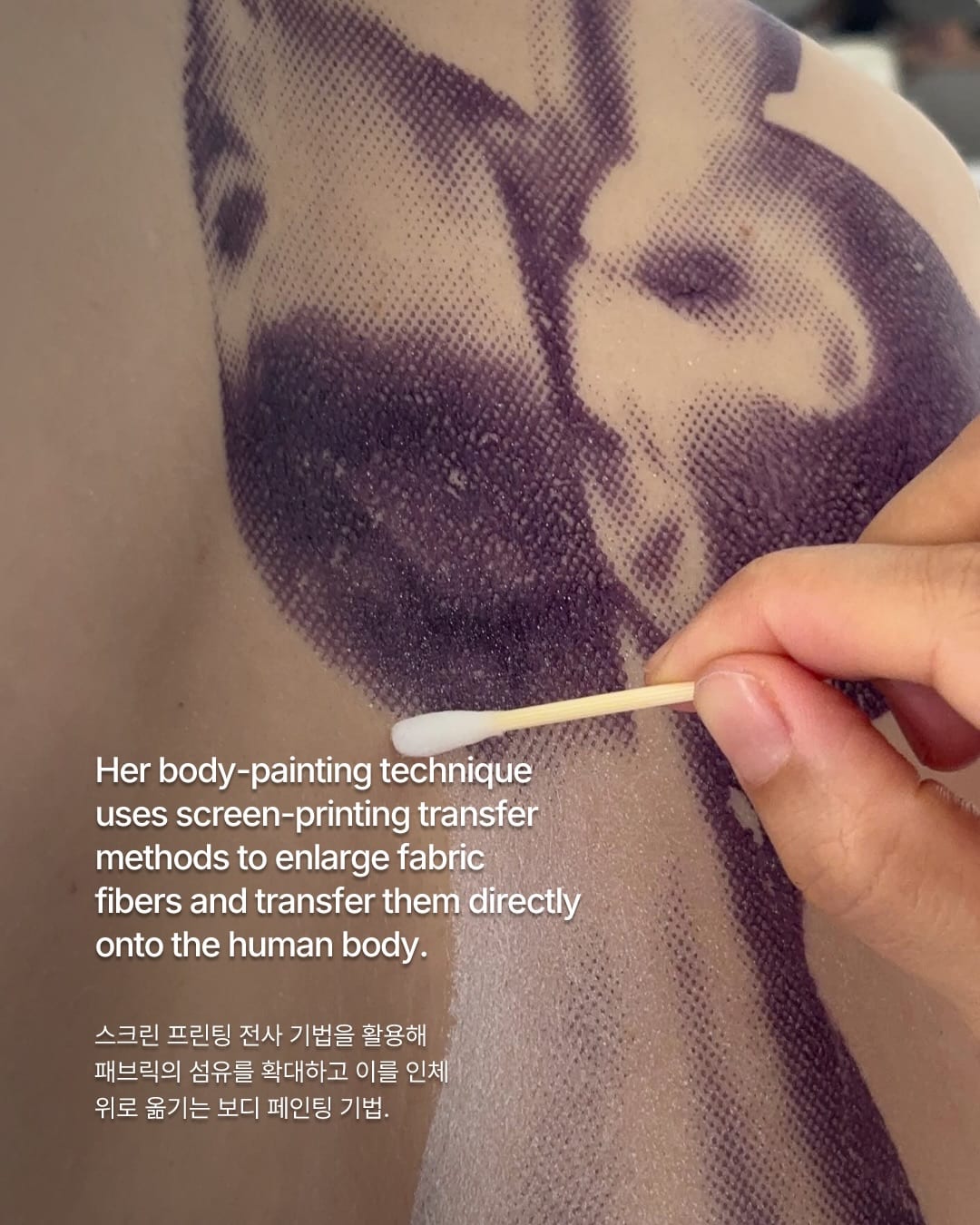
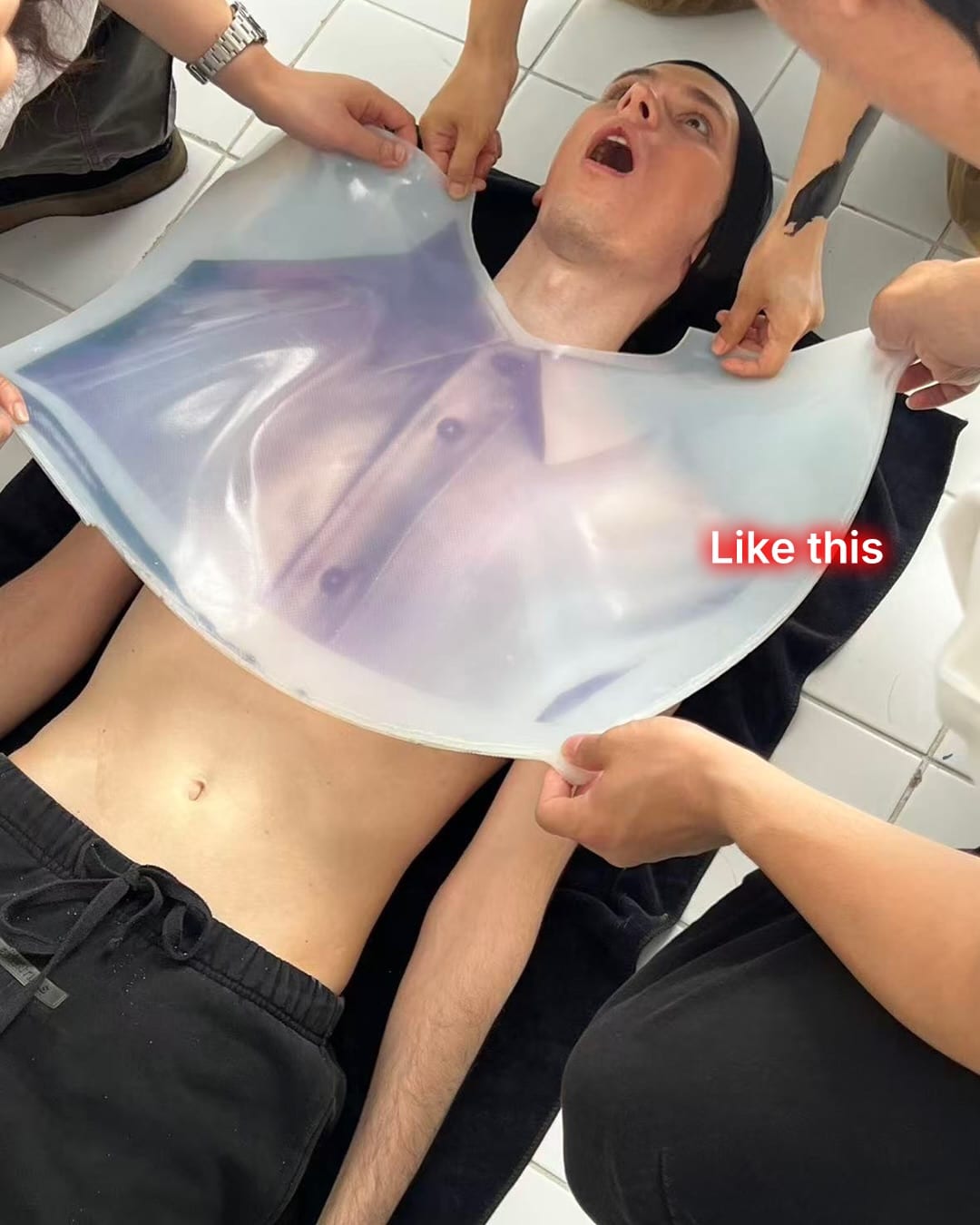
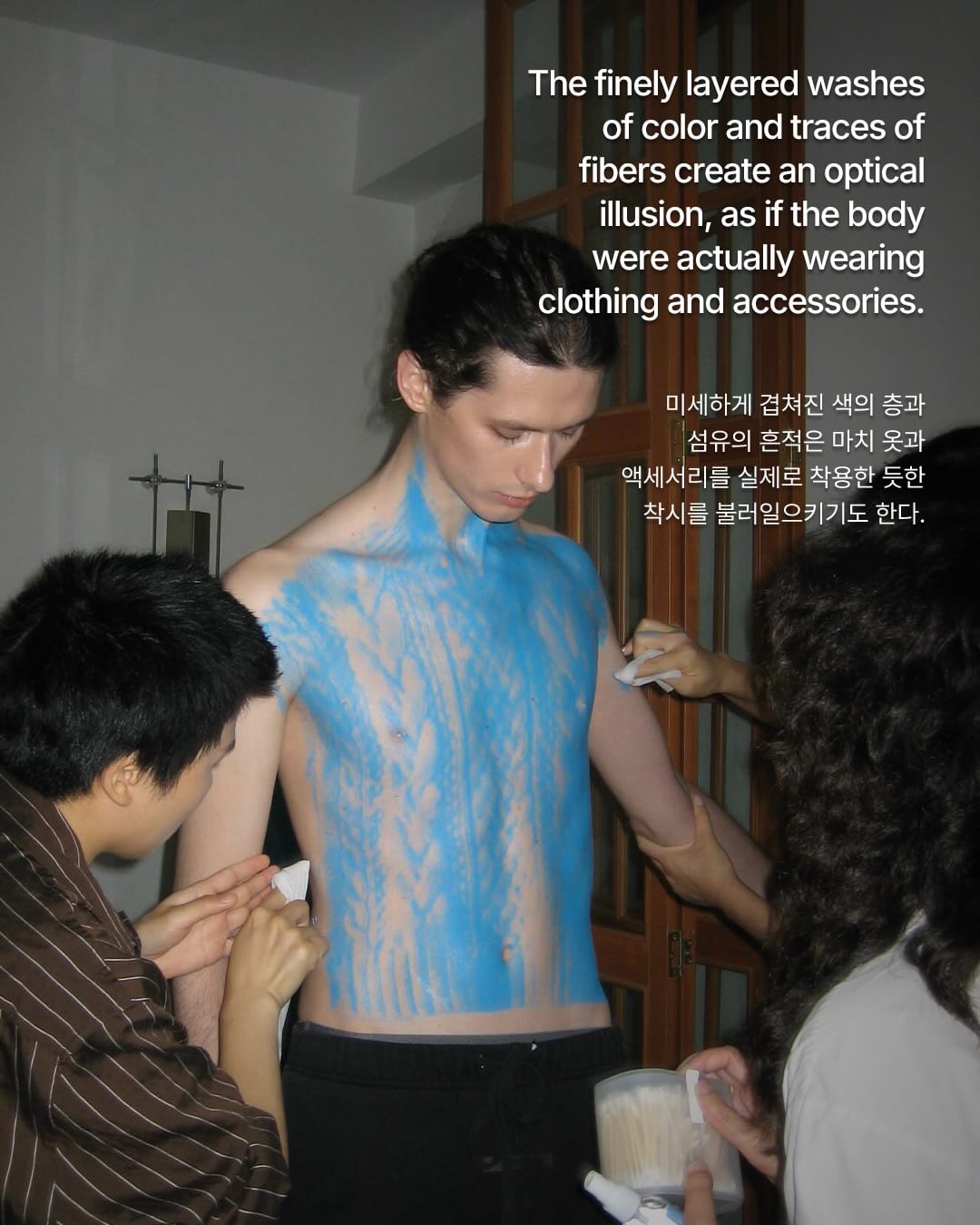
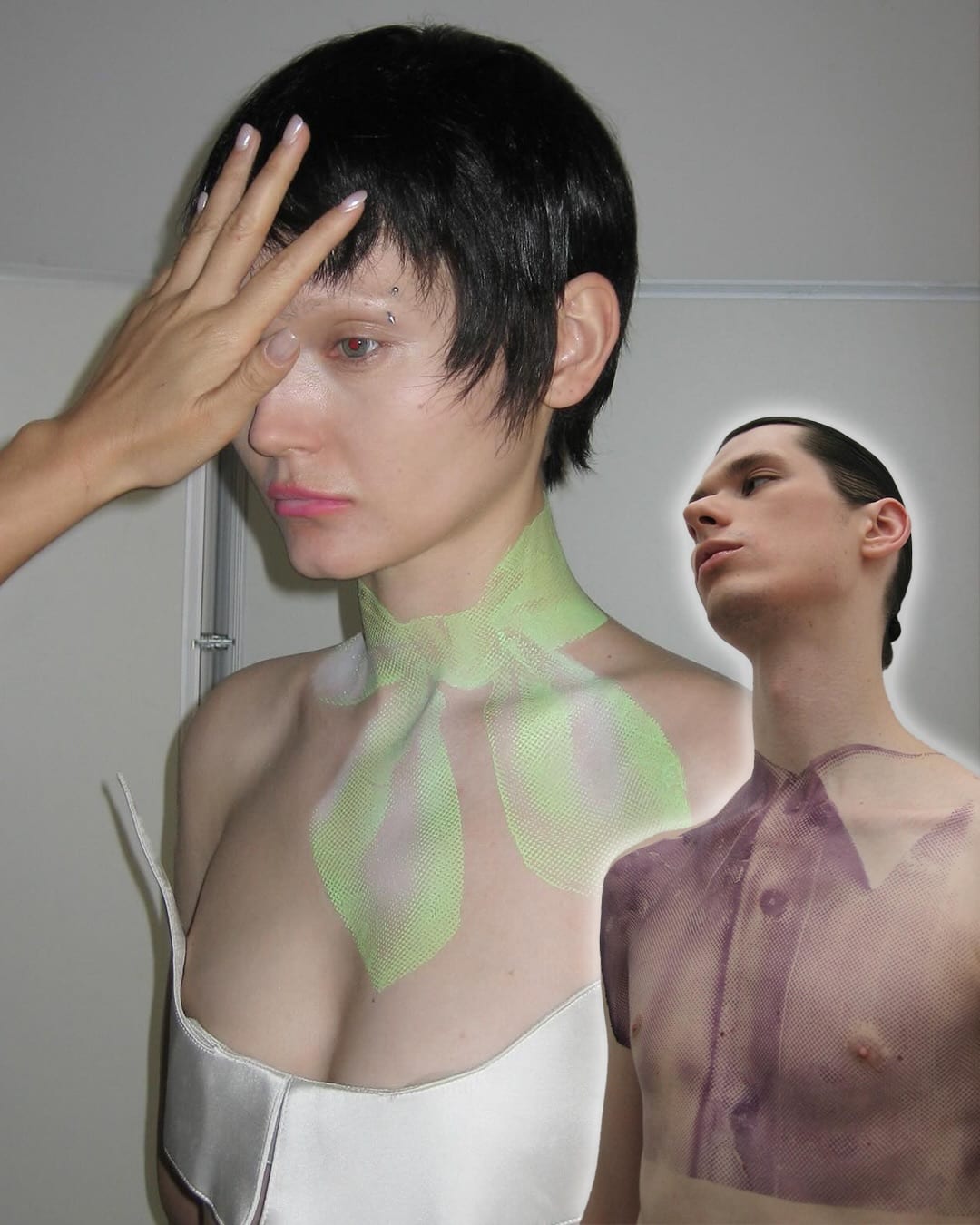
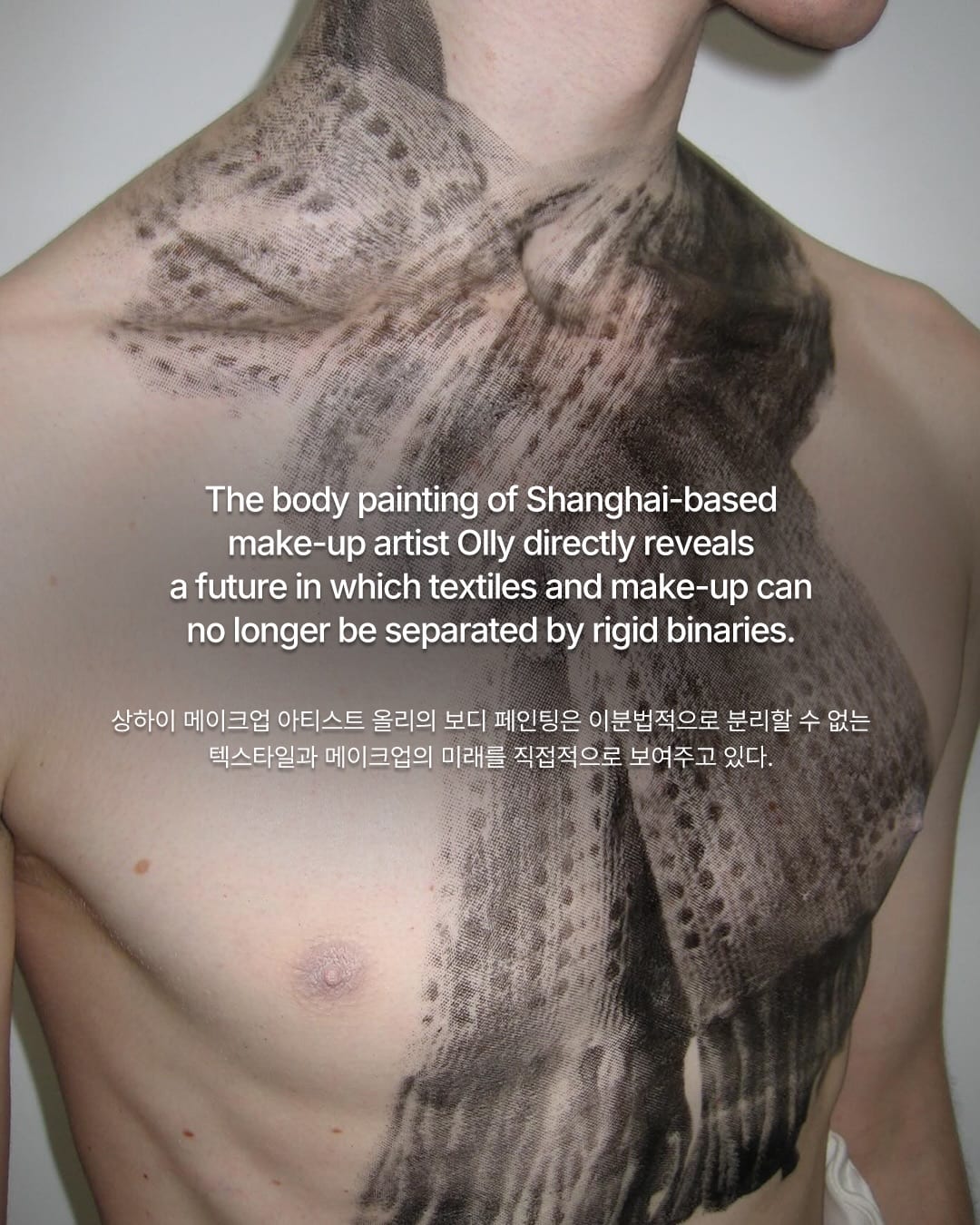
Delicately layered colors and traces of fibers create optical illusions. The effect suggests garments and accessories are actually worn on the body. In the first image, a large purple flower blooms on a person's back; in the second, a cotton swab dots the skin to build up deep violet textile texture. The third image shows someone lifting fabric from their torso—except it isn't fabric, it's an image transferred onto the skin. The transferred pattern can be peeled but clings and moves with the body for a time.
Olly proposes that if textiles evolve in an entirely different way, fibers would remain as imprints and objects as traces. Clothing and ornament need not exist as solid objects. What is painted on can be worn just as legitimately. Her work reveals a future where textiles and make-up cannot be split by binary thinking.
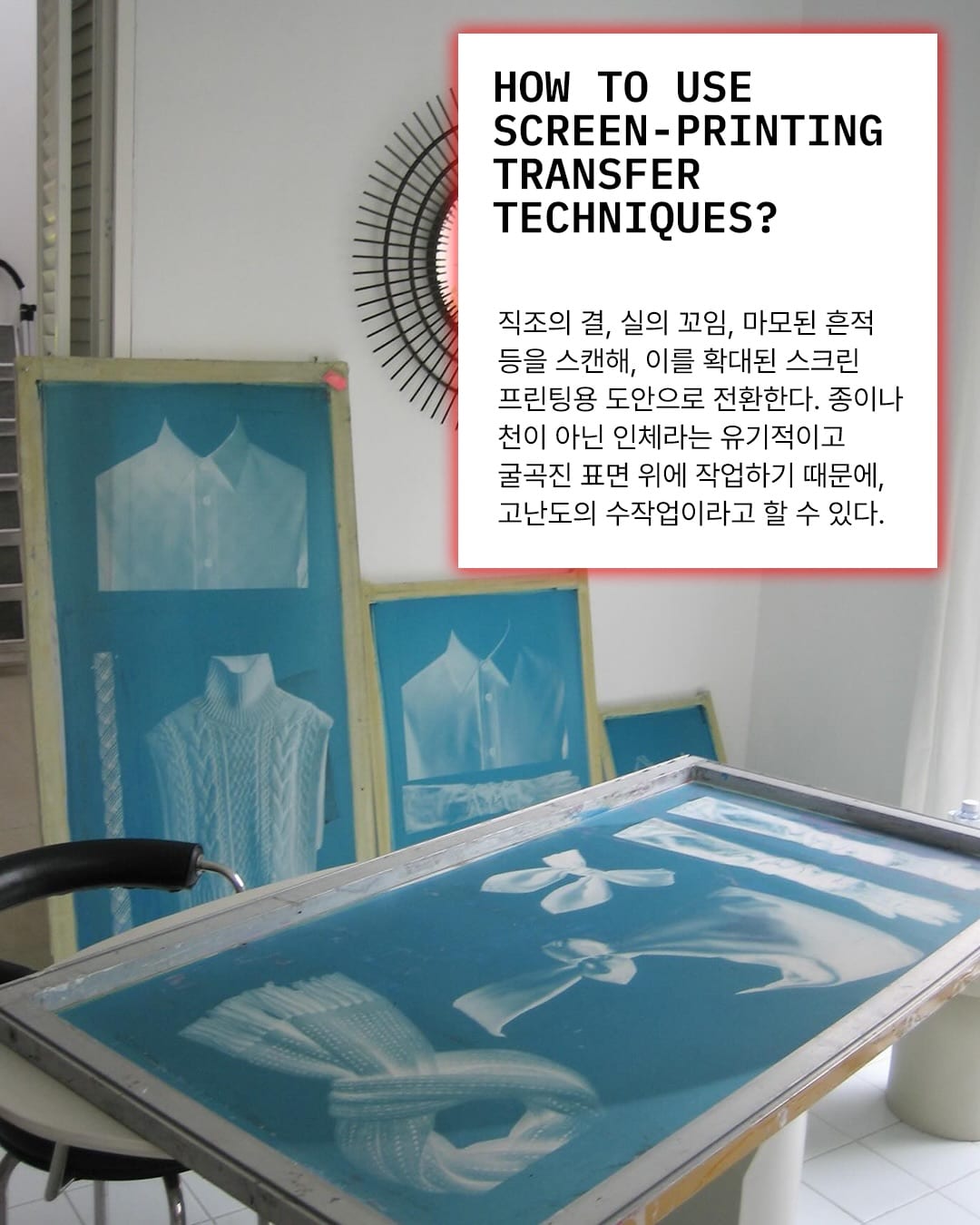
Her body-painting springs from obsessive material research. She observes the texture of weave, the twist of thread, and the shadows cast by fibers under light, then recreates each detail on skin. The fourth image spreads several knits and garments on a blue screen beside experimental frames. These are source files for transfer and textile specimens Olly studies. Have you ever imagined a future where clothing is drawn on rather than put on?
FAQ
What is Ollie Yip's body painting technique?
Ollie Yip uses screen printing transfer technique. This method transfers silk-screened images onto other surfaces; she magnifies fabric fibers and transfers them directly onto human skin, creating woven-like textures and the illusion of wearing clothes.
Who is Ollie Yip?
Ollie Yip is a Shanghai-based makeup artist and head of Nexus Art Group. She creates body painting work using human skin as canvas, magnifying and transferring textile fibers, presenting experimental work that dissolves boundaries between textiles and makeup.
How are fibers expressed in Ollie Yip's work?
Ollie observes and recreates woven textures, twisted thread directions, and fiber shadows under light on skin. Subtly layered colors and cotton-swab dots create fabric textures, with transferred patterns clinging and moving with skin, proposing a future where fibers become traces and objects become marks.