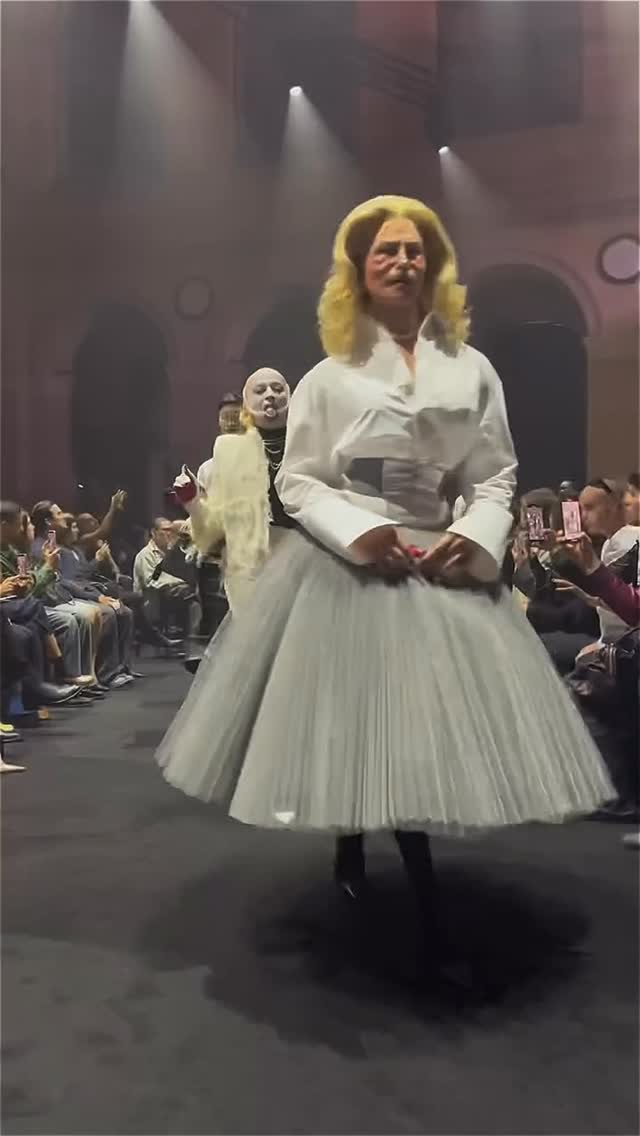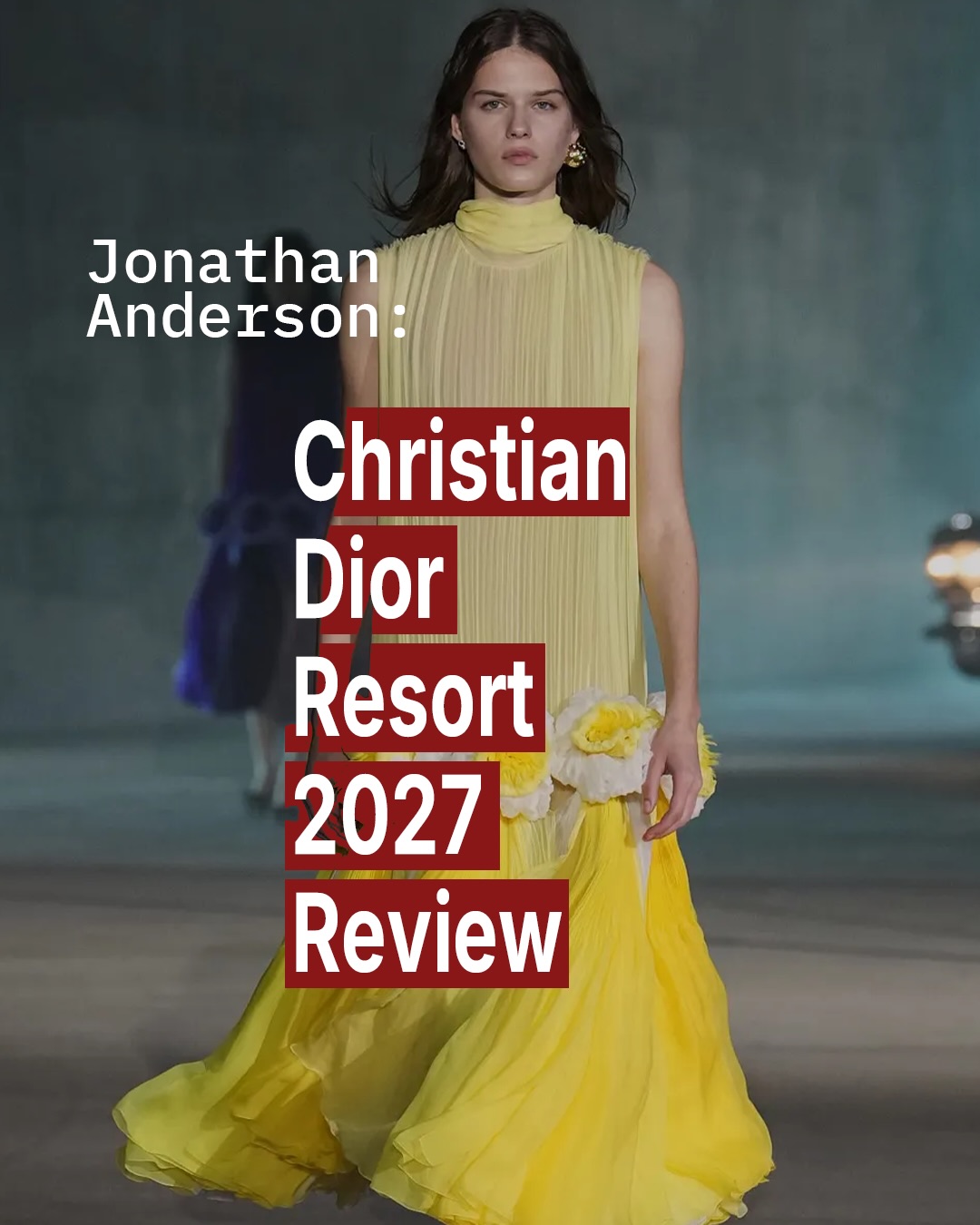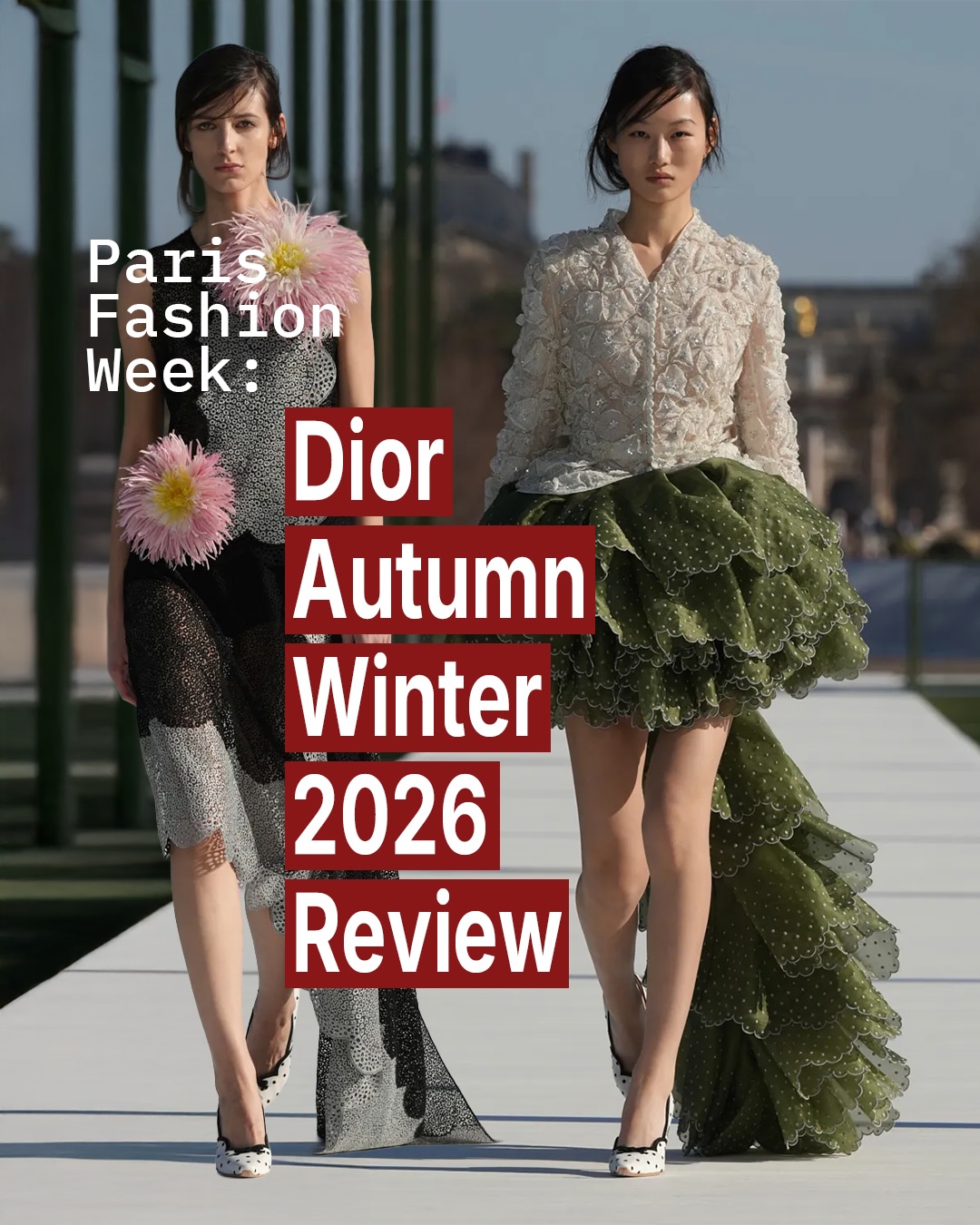
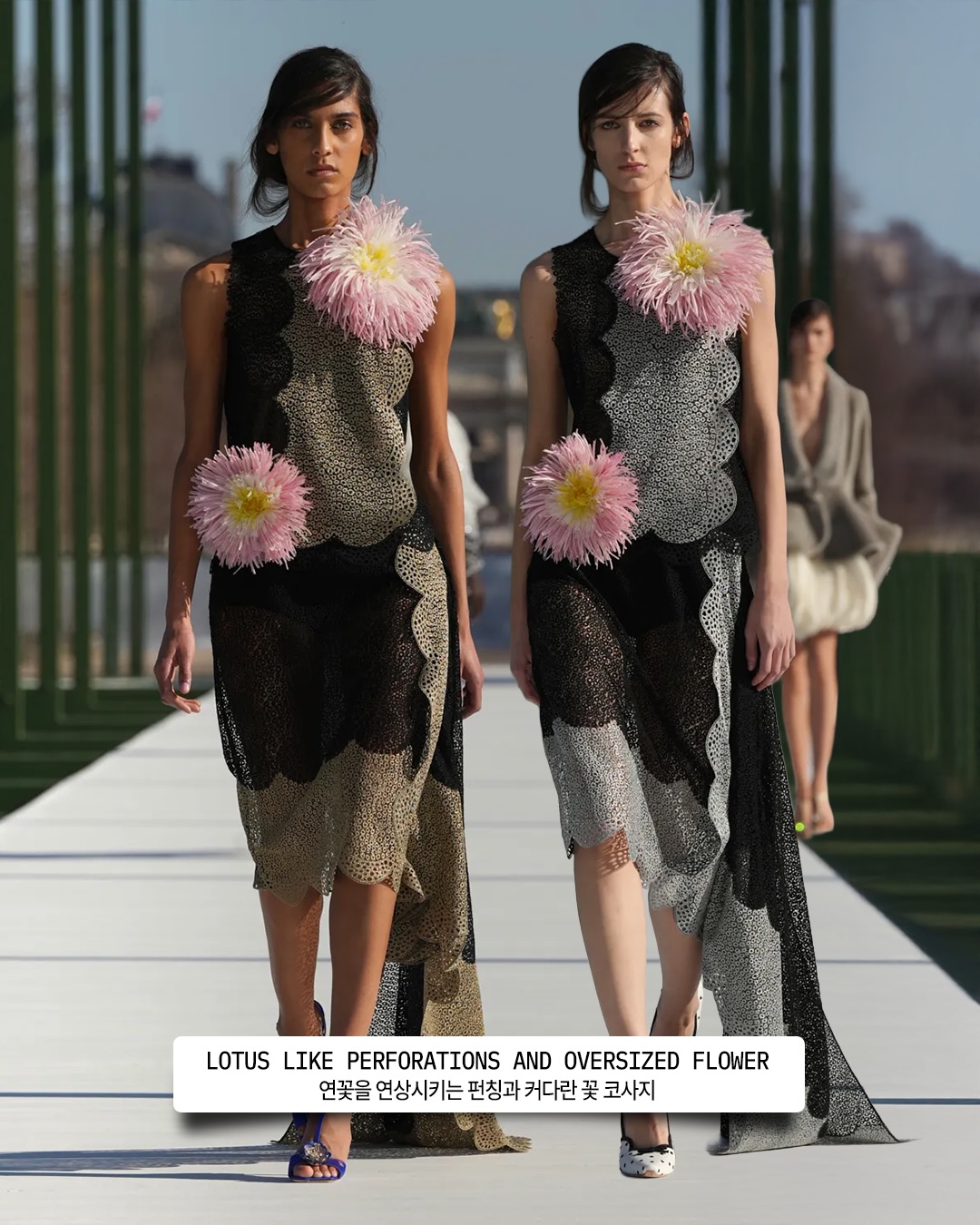
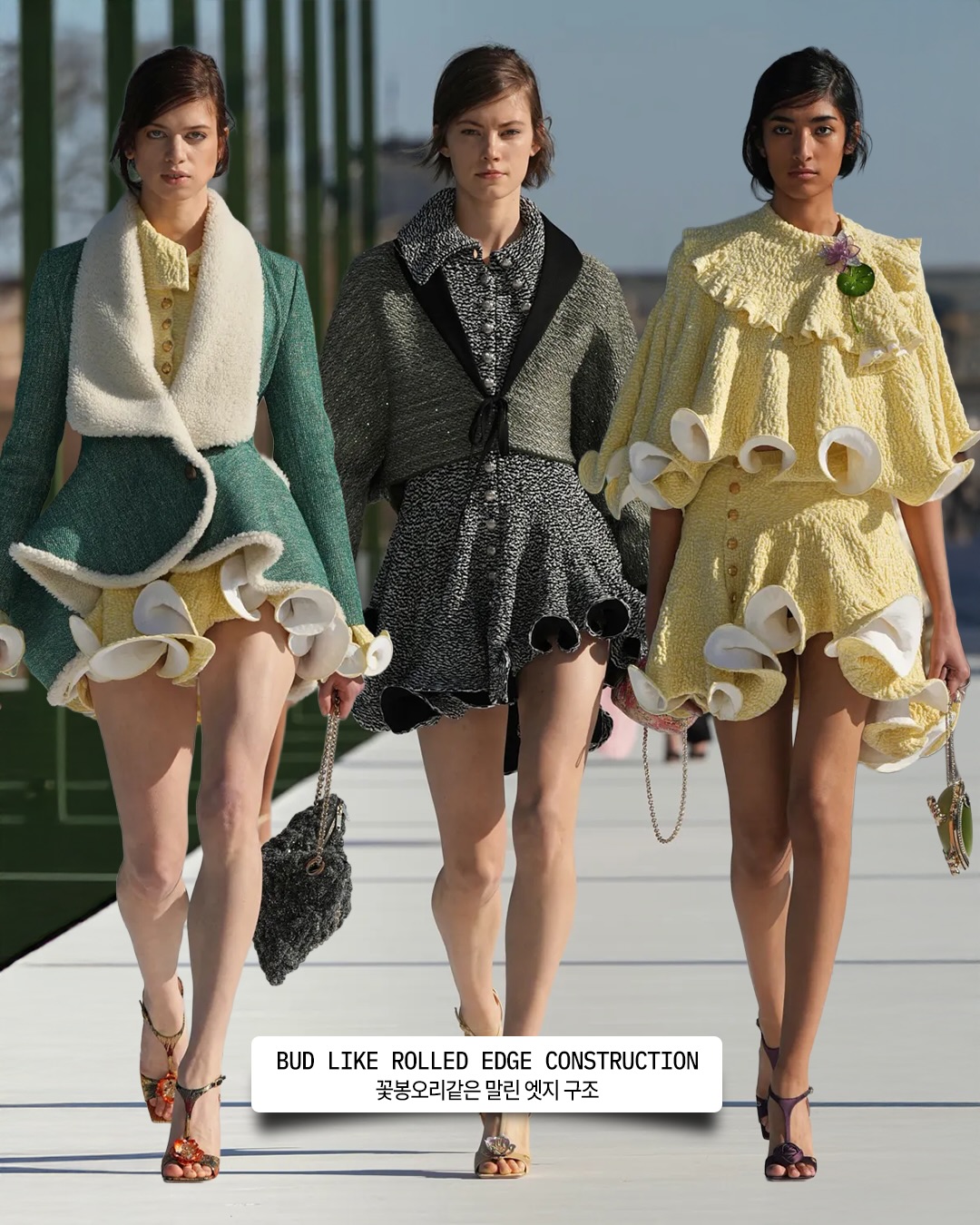
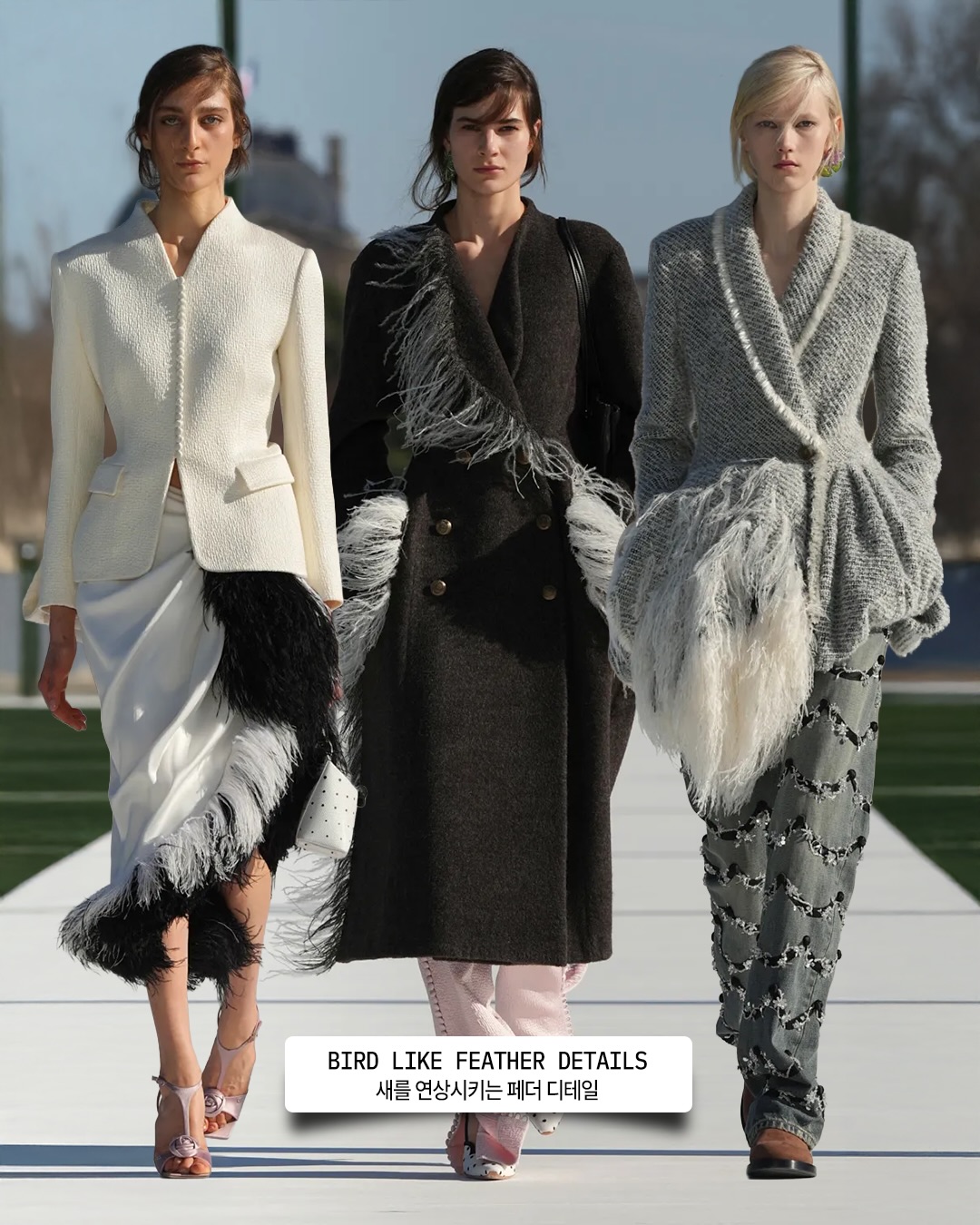
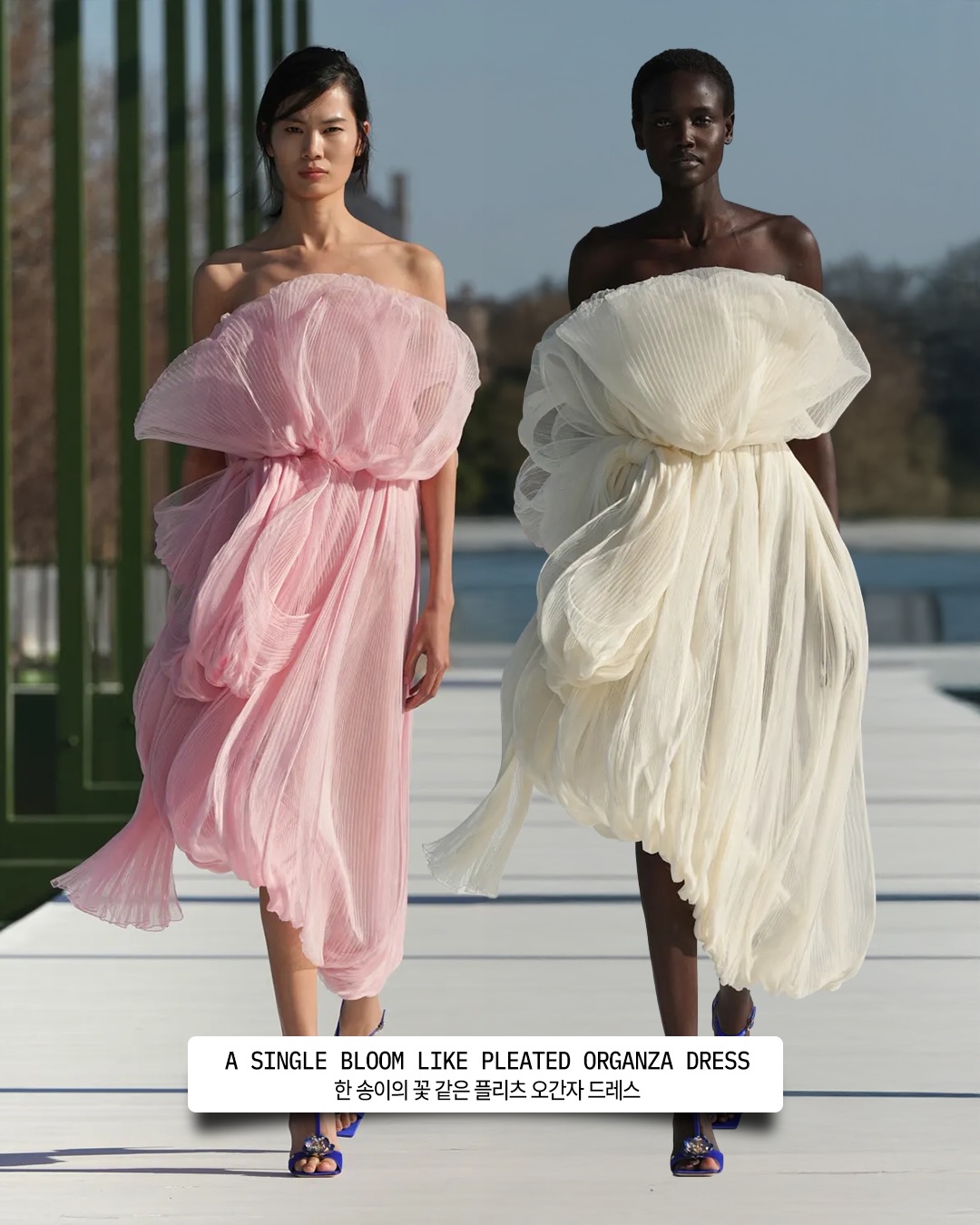
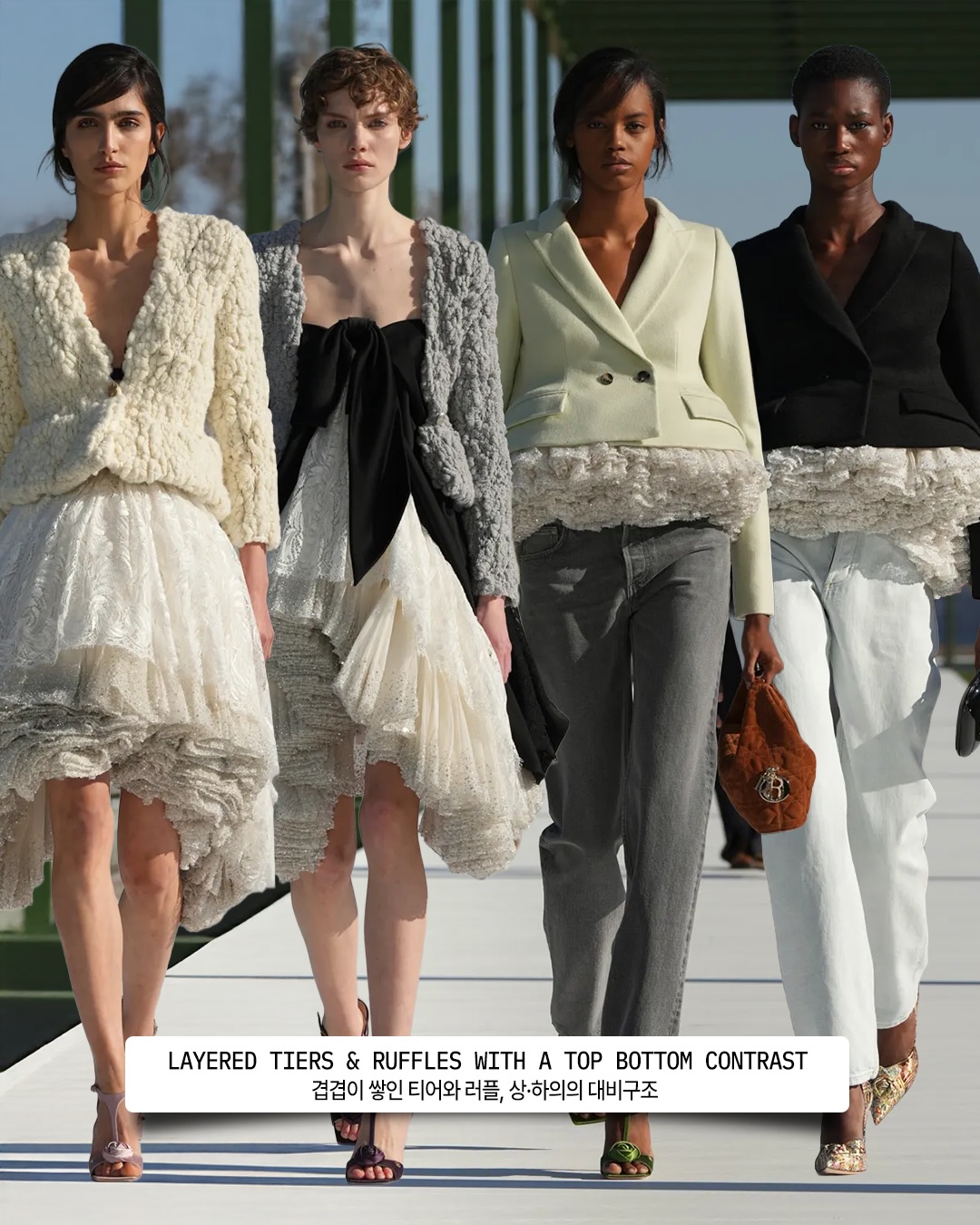
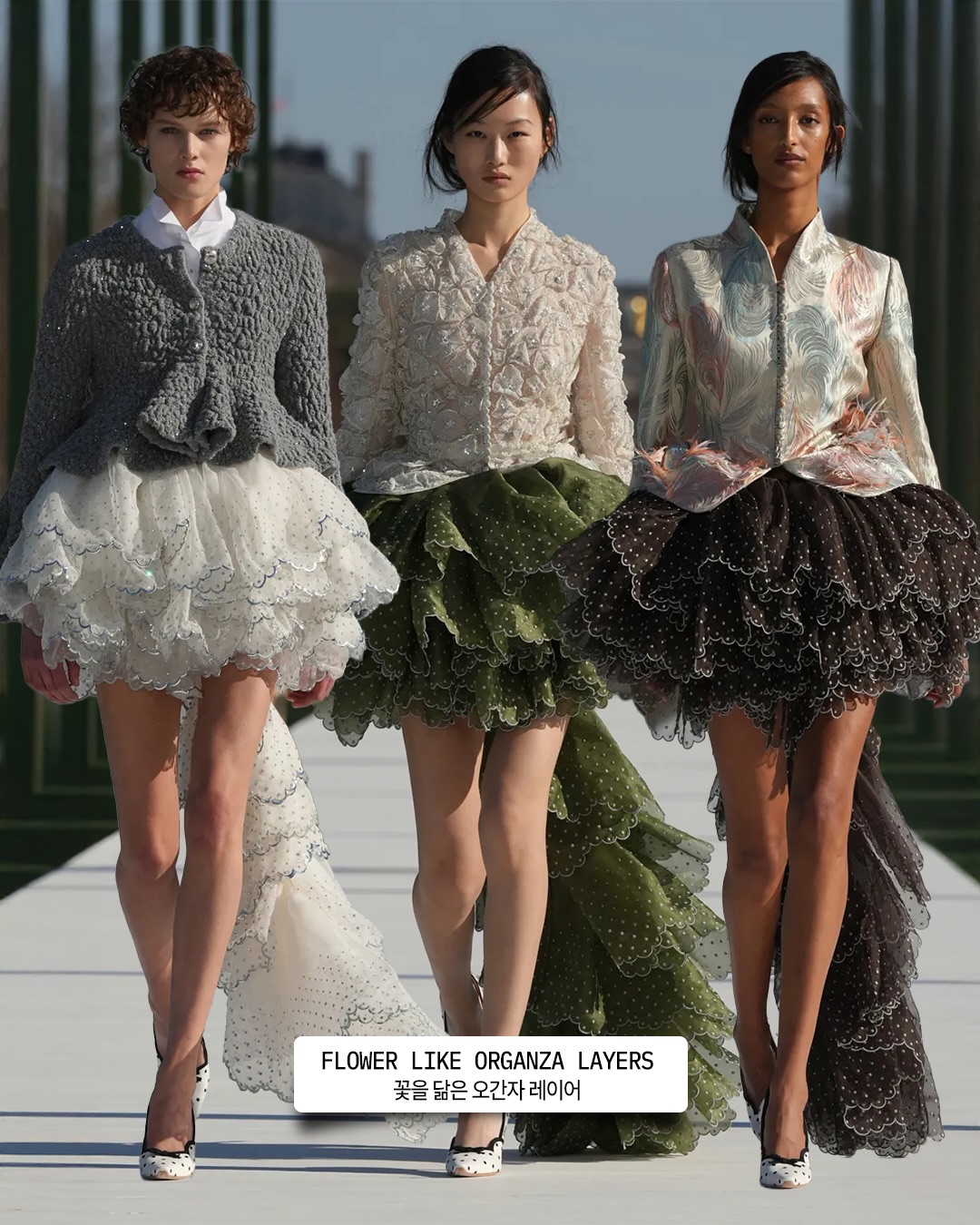
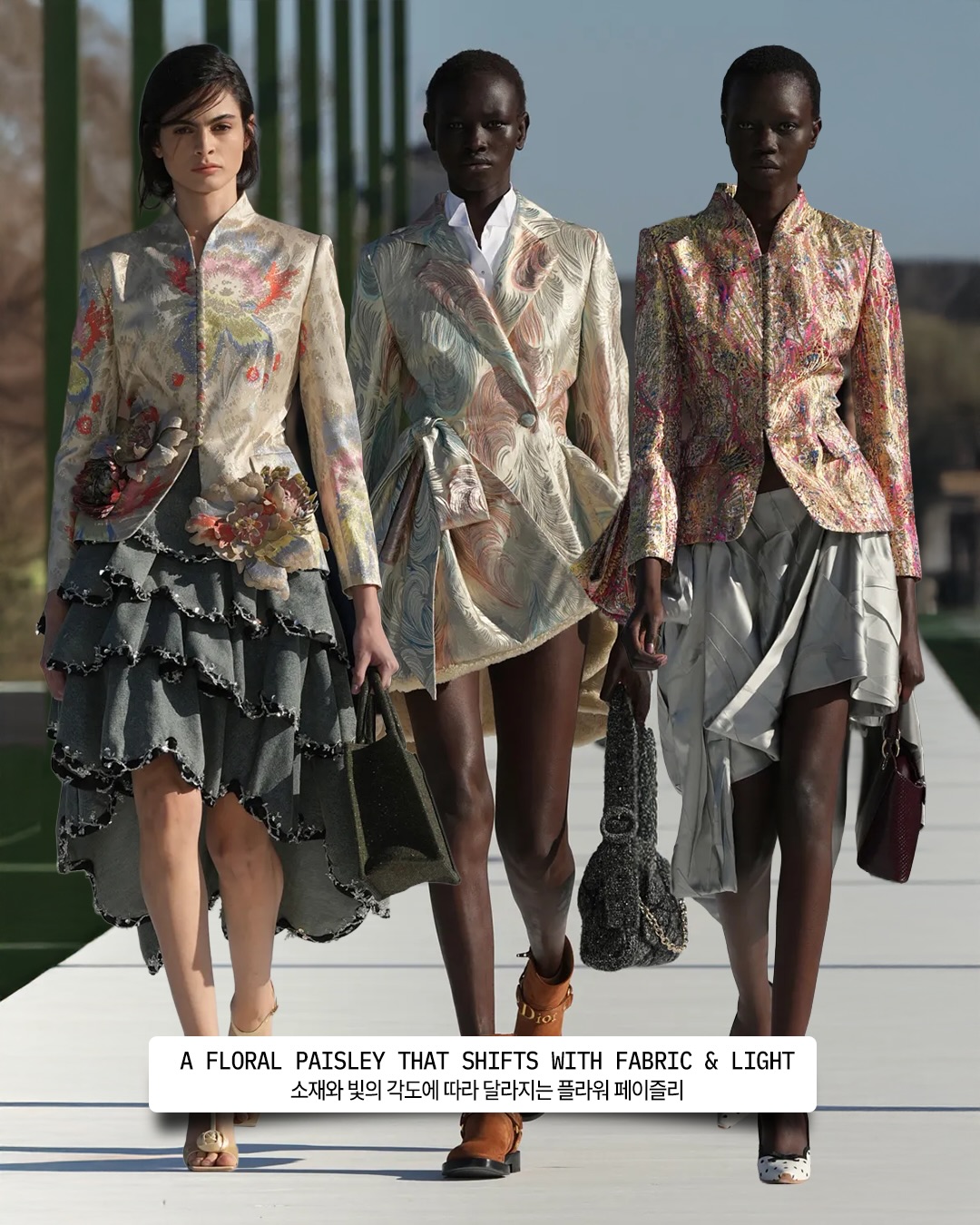
This concept is woven structurally throughout the collection. The venue and color palette echo the distinctive green of the Tuileries' metal chairs, which also appeared on the show invitations. Sequins and micro beading shimmer like sunlight scattered across water, while layers of tulle and organza evoke overlapping lily pads floating on the garden's ponds. Feathered stoles and wing-shaped hemlines capture the flutter of pigeons and ducks that populate the park.
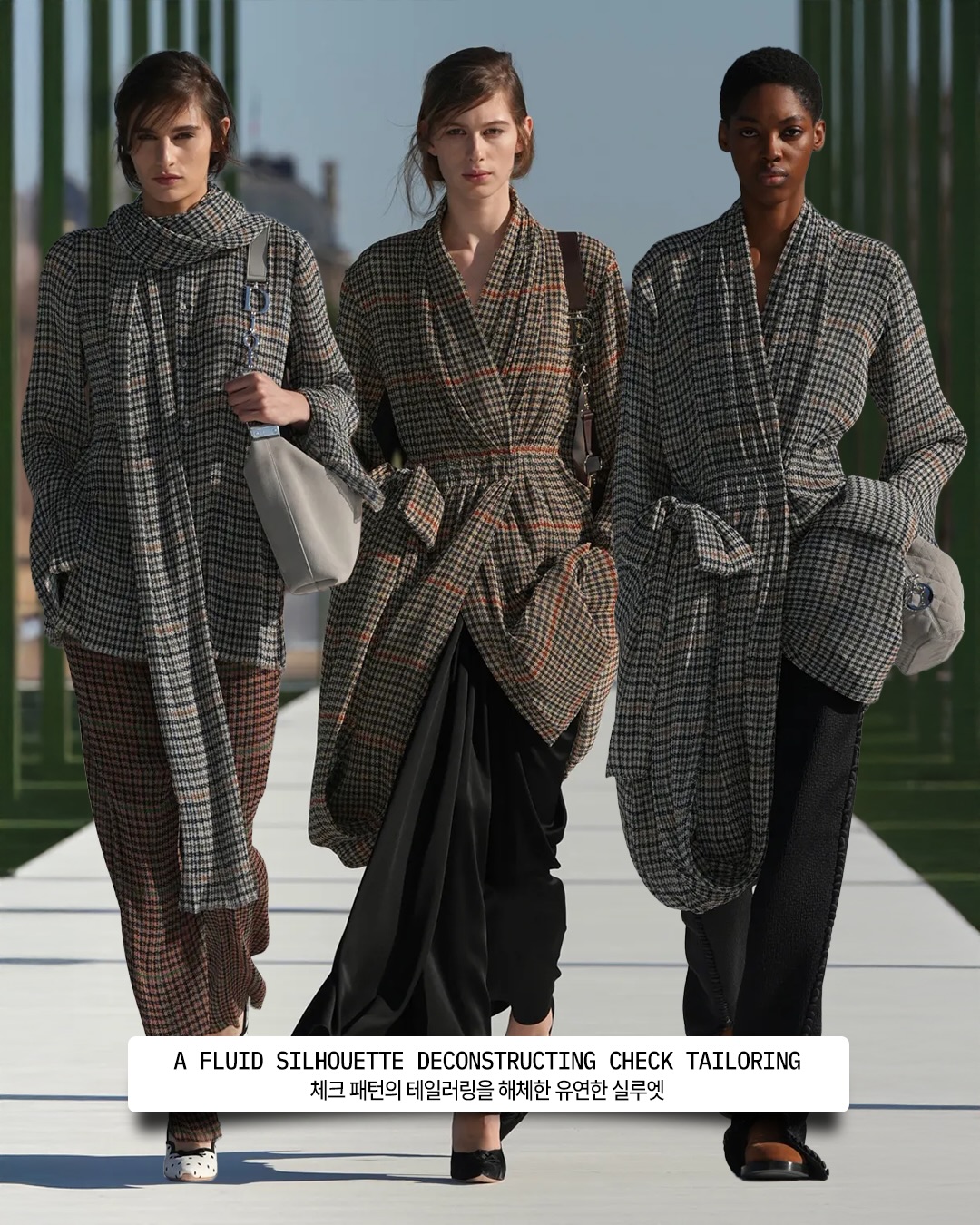
Through architectural tailoring and silhouettes designed for movement, Anderson constructs a uniquely personal vision of Dior. This collection translates everyday Parisian scenery into the language of high fashion, revealing Paris not as a tourist destination but as a living, breathing space. Each detail carries the imprint of place and context, elevating the act of dressing and walking into a ceremonial experience. Anderson once again proves his ability to root couture in specific locations while maintaining Dior's grand aesthetic language.
FAQ
Where did Dior's 2026 Fall-Winter collection draw inspiration from?
Jonathan Anderson drew inspiration from Paris's historic Jardin des Tuileries. He structurally reflected the garden's architectural and natural elements throughout the collection—iconic green iron chairs, water reflections, water lily leaves, pigeons and ducks—reinterpreting the space as a promenade of playful elegance.
What were the main design elements Jonathan Anderson expressed in the Dior show?
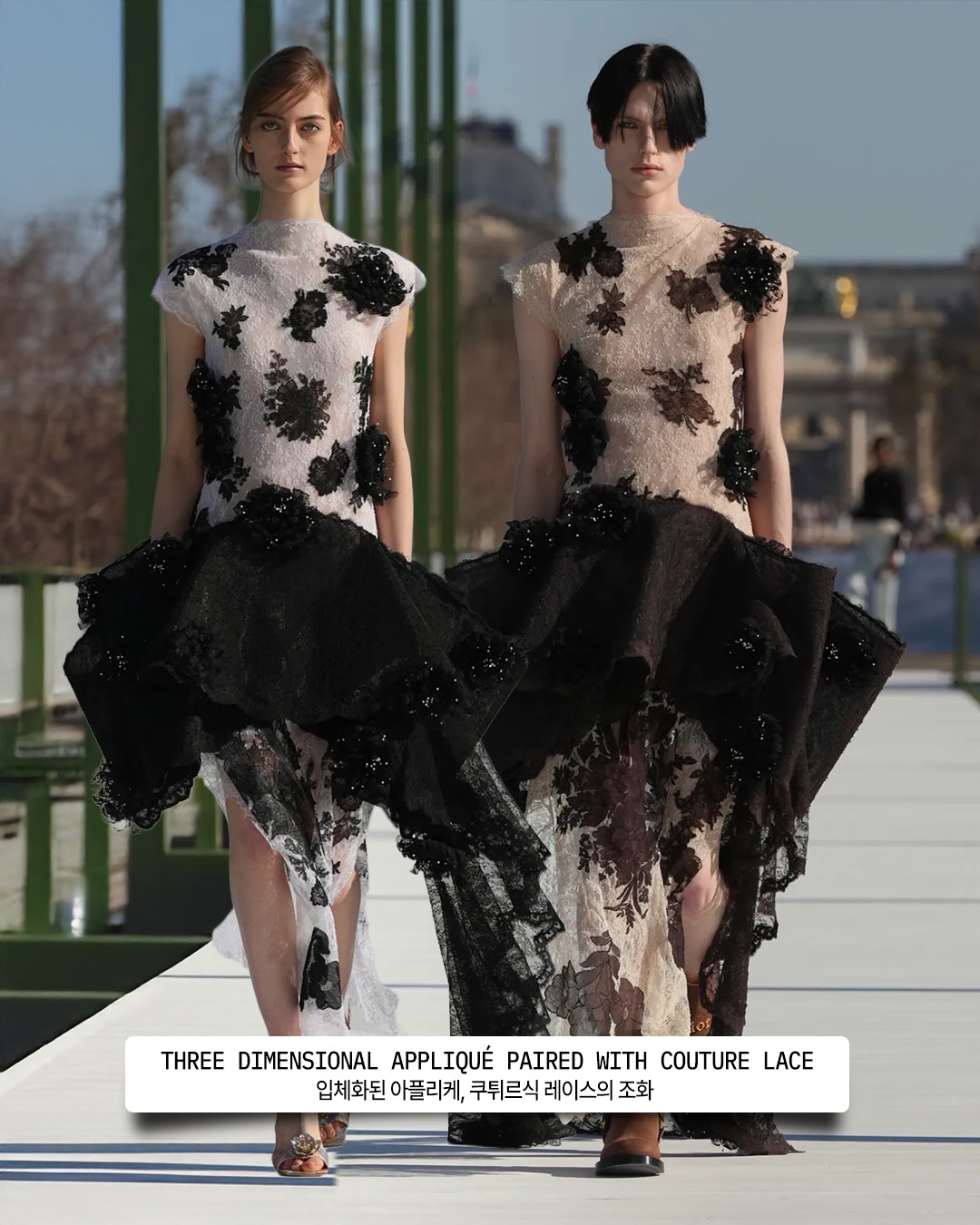
Anderson utilized the Tuileries garden's green color palette, spangles and micro-beading resembling water surfaces, tulle and organza layers like water lily leaves, and fur stoles and wing-shaped skirt hemlines evoking pigeons. He captured the location's essence through architectural tailoring and silhouettes designed for movement.
What message did Jonathan Anderson want to convey in the Dior 2026 collection?
Anderson rediscovered Paris through a tourist's gaze, defining the Tuileries as a 'garden of playful elegance' for dressed-up promenades. He elevated the act of dressing and walking into a ritual, translating Paris's everyday landscapes into high fashion language and expressing Paris as a living, breathing space.