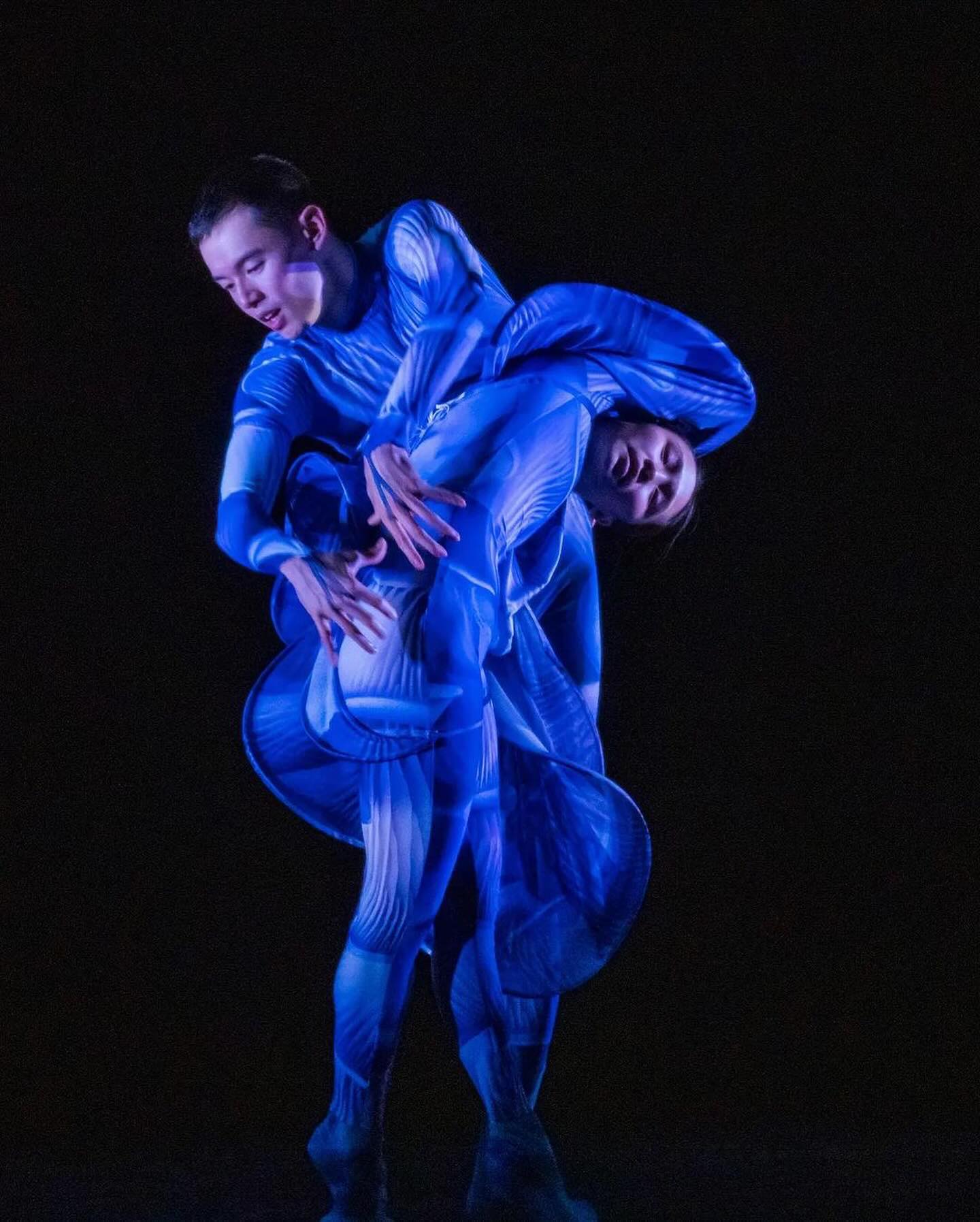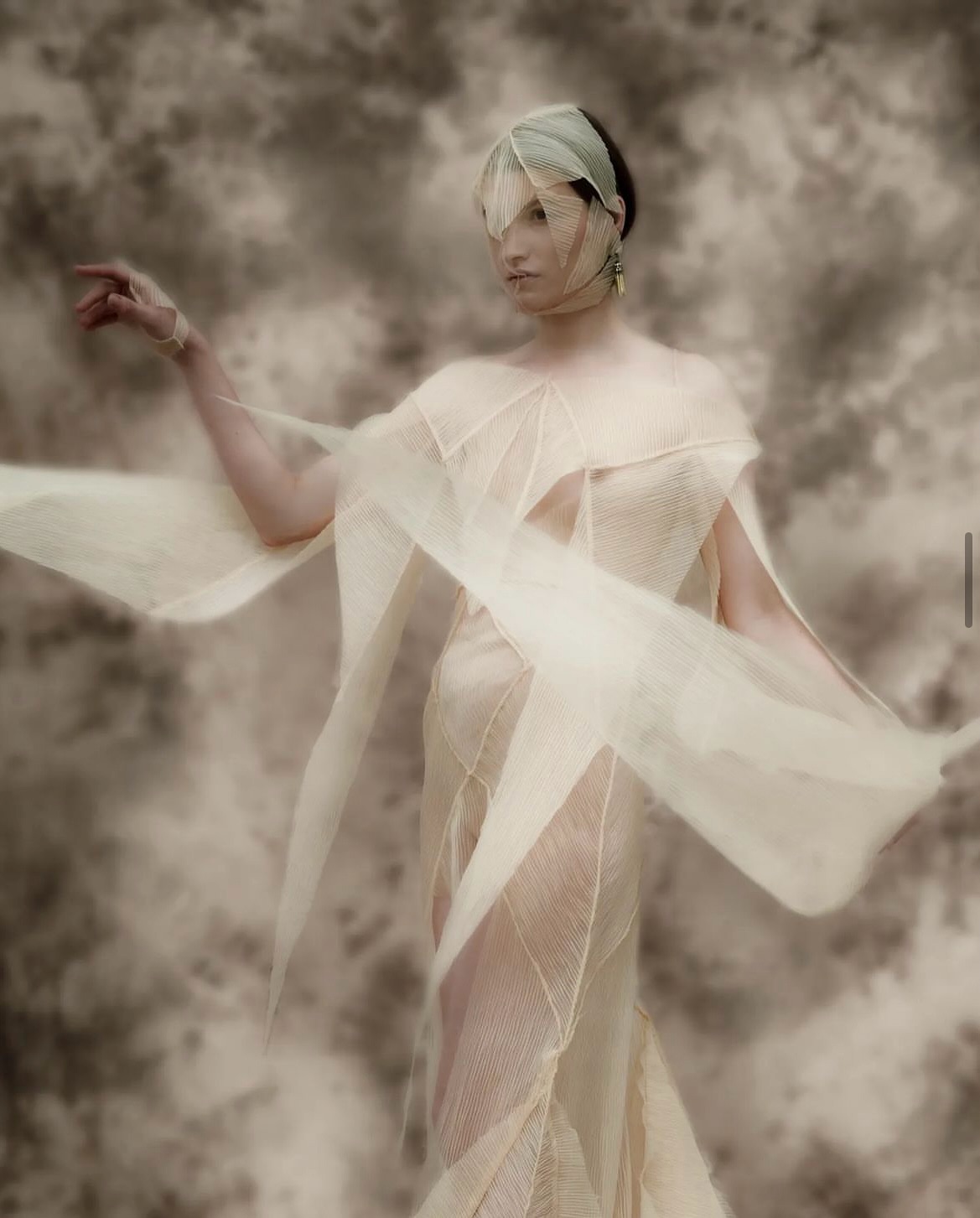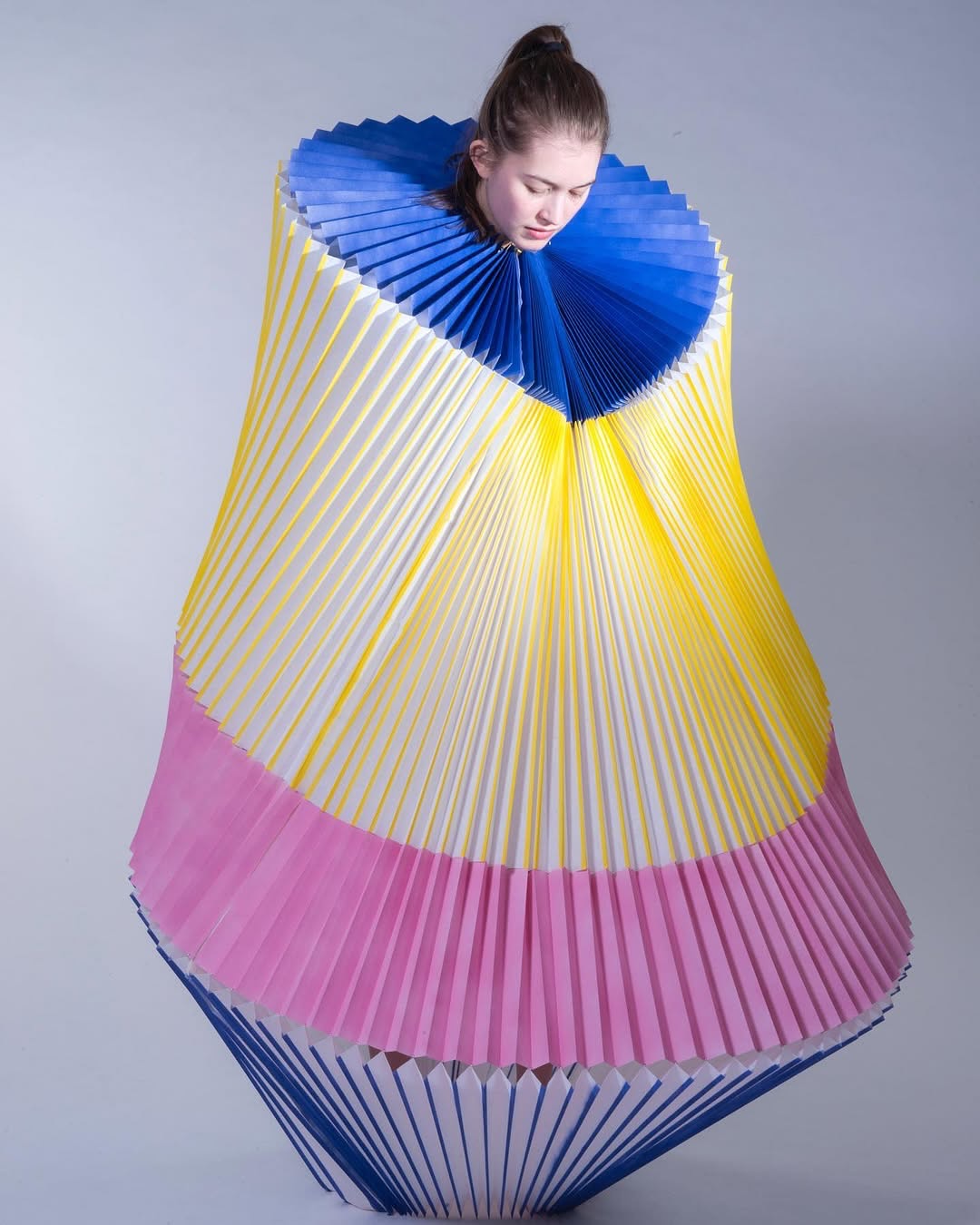
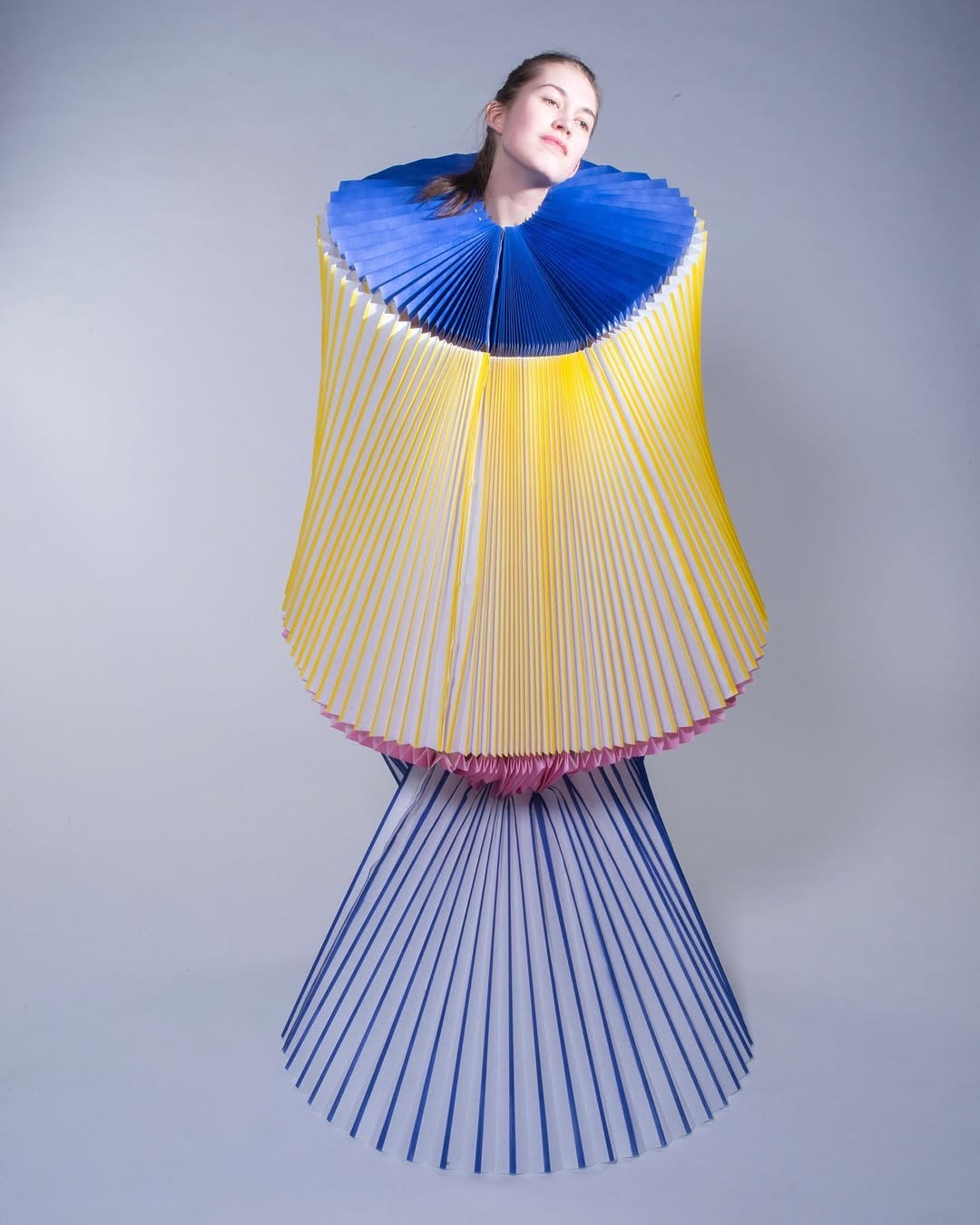
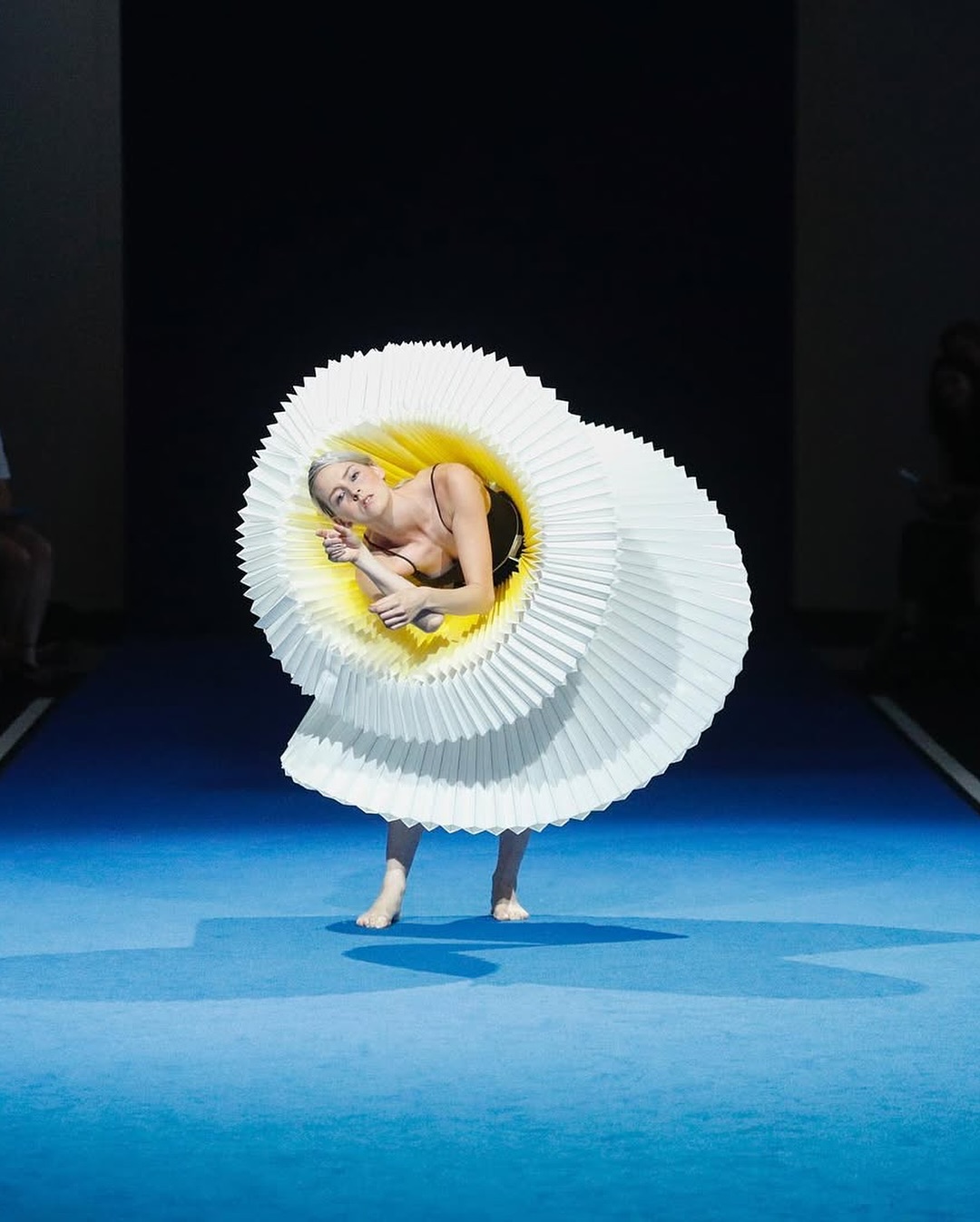
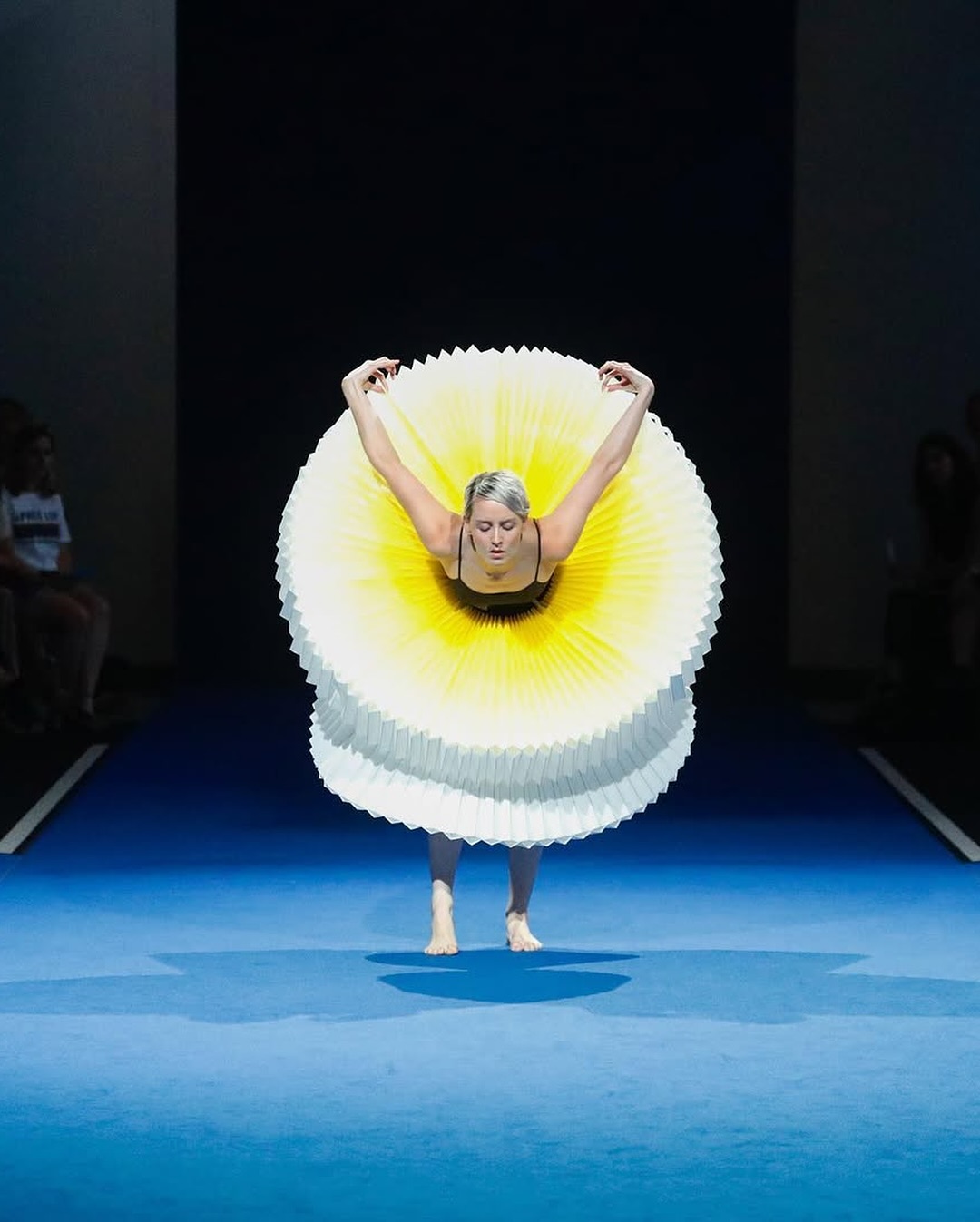
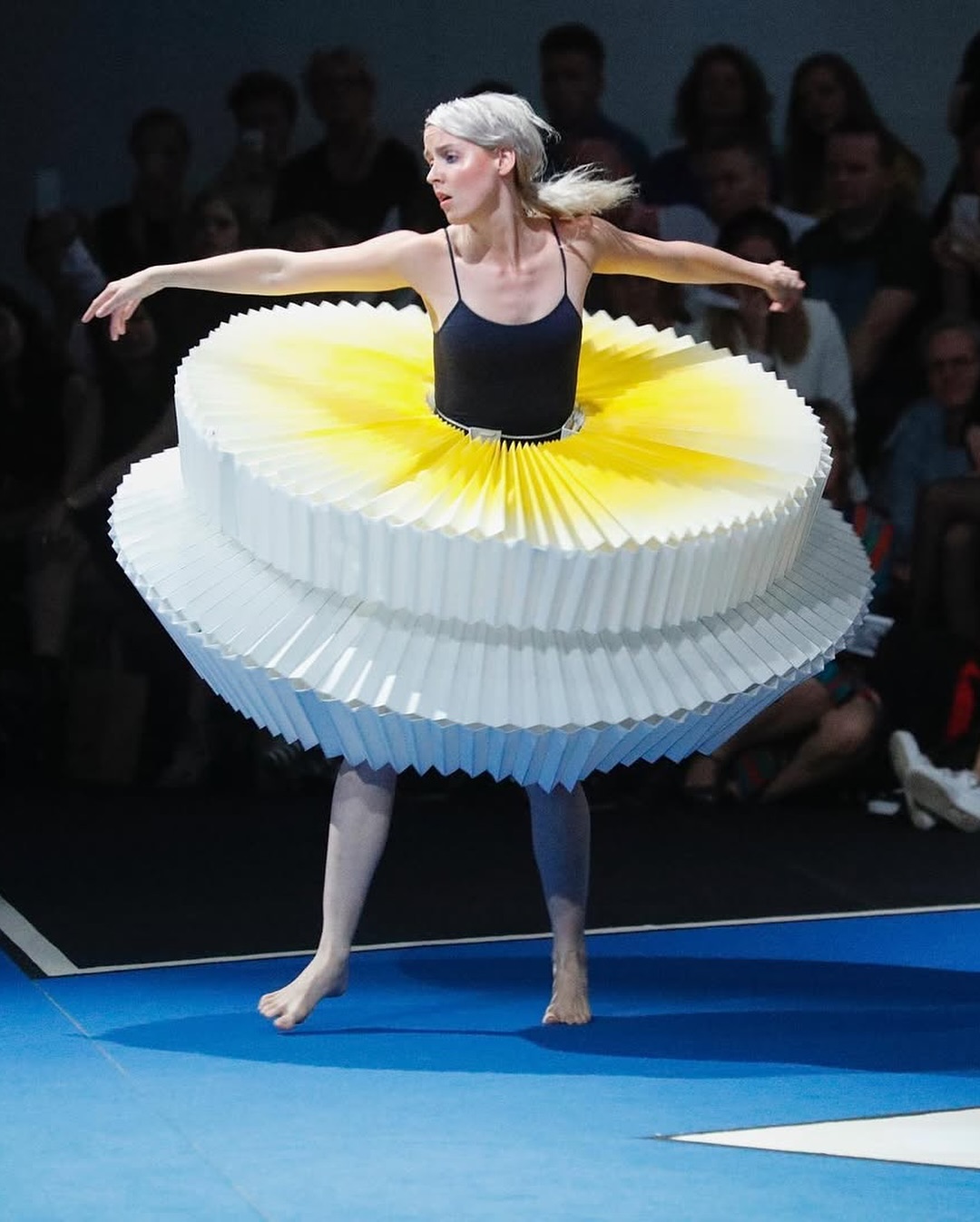
Veurink's costumes achieve their true power when paired with choreography. The multi-layered pleated structures visualize the expansion and contraction of the body, transforming even simple movements into dramatic narratives. Bold color-blocking in blue, yellow, and pink creates increasingly dynamic effects as each layer moves independently. This transformable architecture proves that costumes are not static coverings but living elements that breathe with performers and become integral to the performance itself.
As more designers explore the intersection of fashion and performance, Veurink's work clearly illustrates how costume design can deepen theatrical narrative. Her pleated constructions are recognized not merely as decorative elements but as architectural approaches that sculpt movement itself. While maintaining the tension between stage art and wearable fashion, her vision of seamlessly connecting both worlds presents new possibilities for contemporary costume design.
FAQ
What is Carlijn Peerlings' signature design technique?
Carlijn Peerlings' signature is accordion-style pleating. This technique dynamically transforms garment silhouettes as pleats unfold and fold with the wearer's movement, creating unique visual effects that maximize or conceal a dancer's physical motion.
What role do Peerlings' garments play in stage performances?
Peerlings' garments merge with dancers' choreography to visualize movement itself and amplify dramatic narrative. Multi-layered pleats express bodily expansion and contraction, functioning not as mere decoration but as living artistic elements that deepen performance storytelling.
What characterizes Peerlings' transformable garment designs?
Peerlings' transformable garments begin with seemingly simple linear forms, then shift into entirely different silhouettes as pleats unfold and fold. Bold color-blocked layers in blue, yellow, and pink move independently, creating increasingly dynamic visual effects.