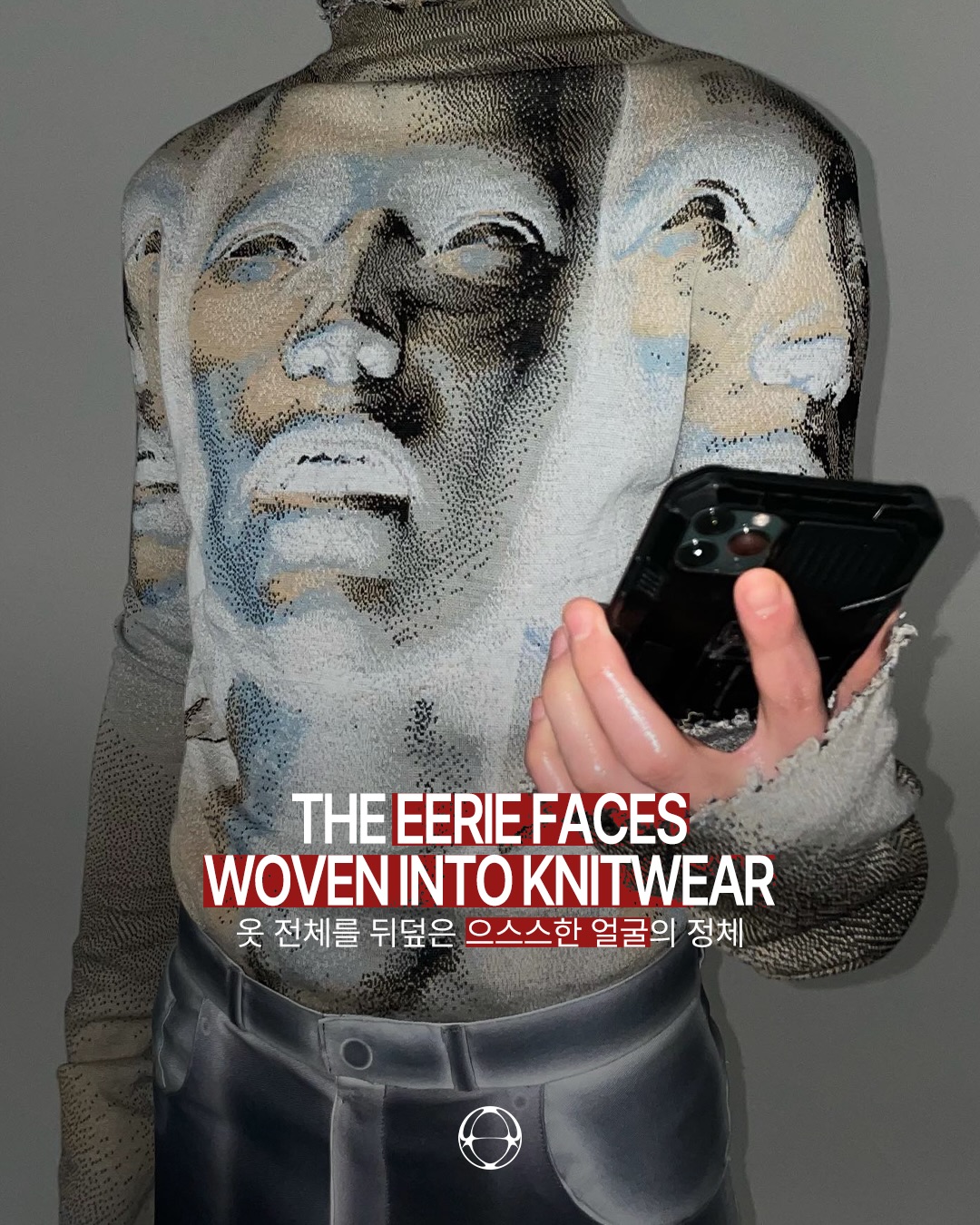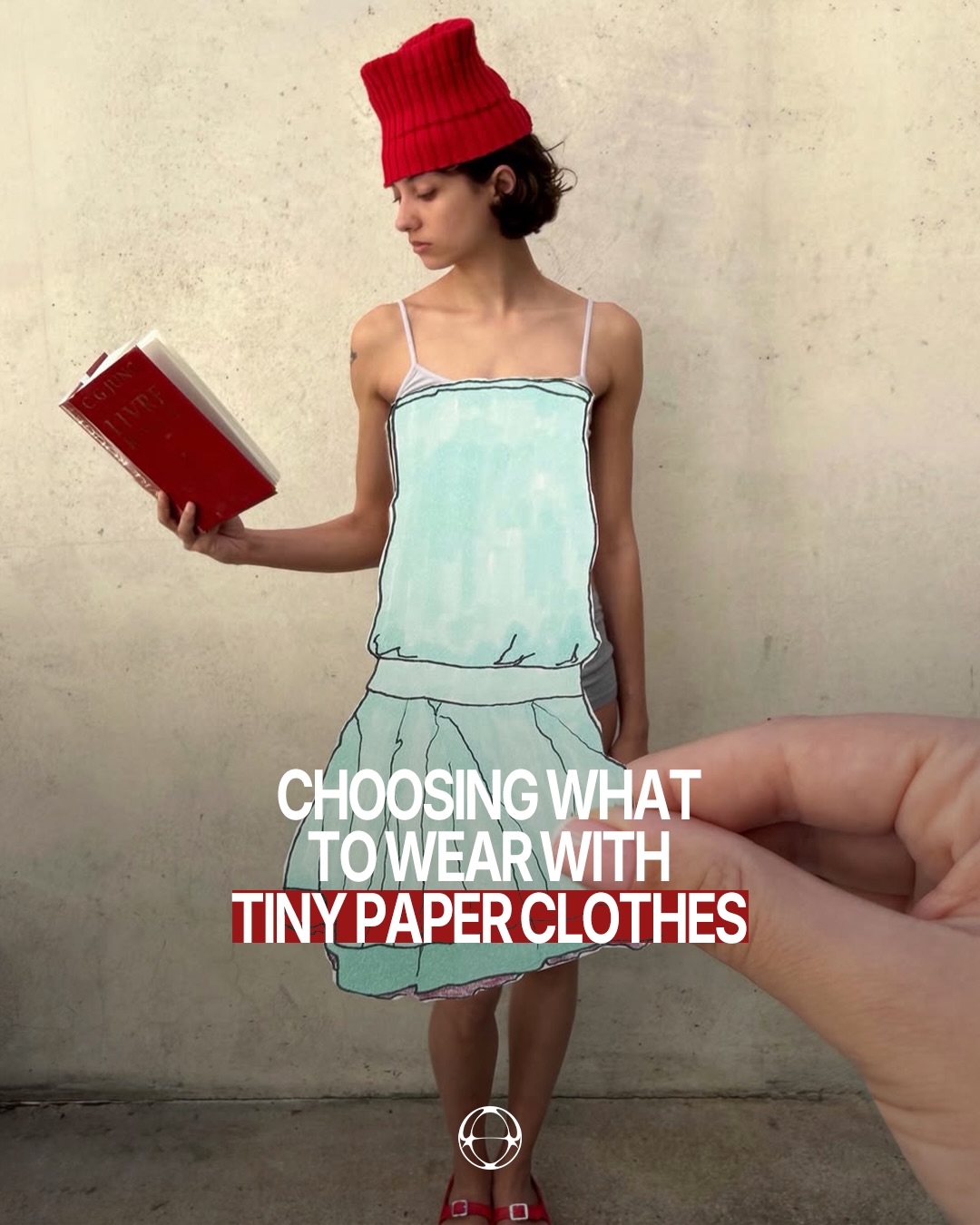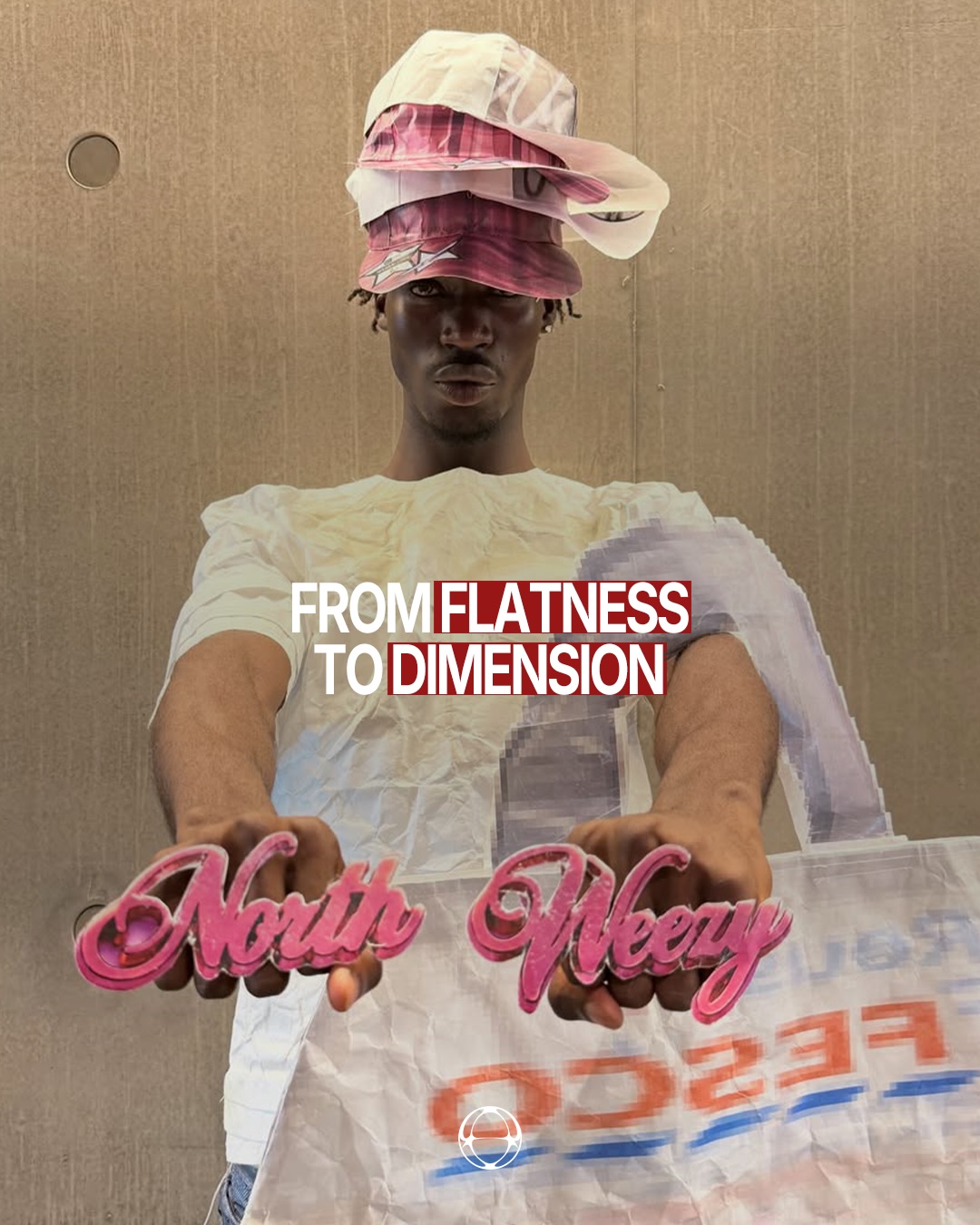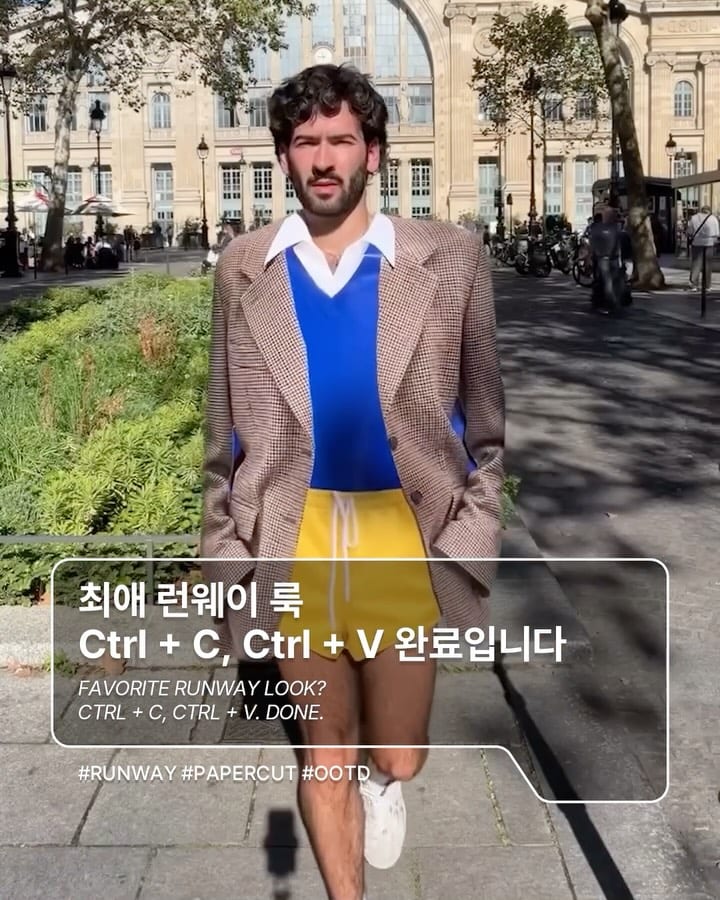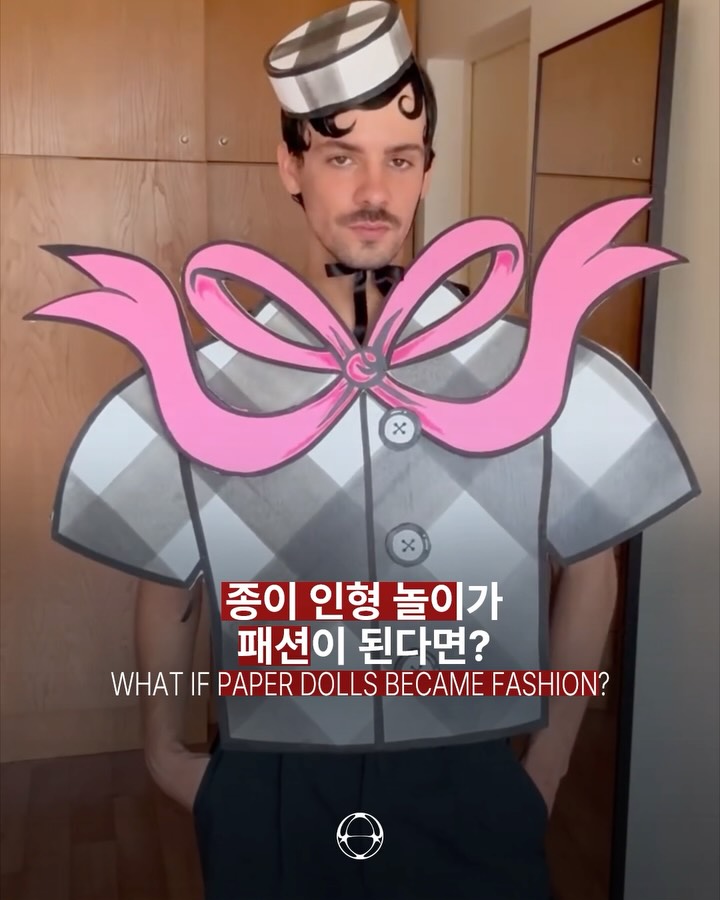
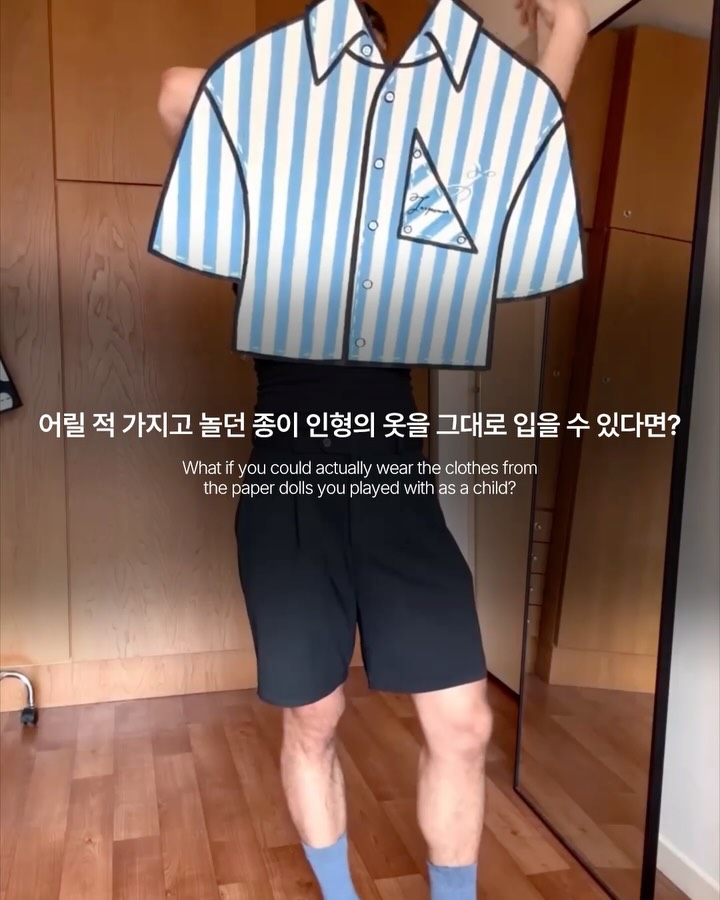
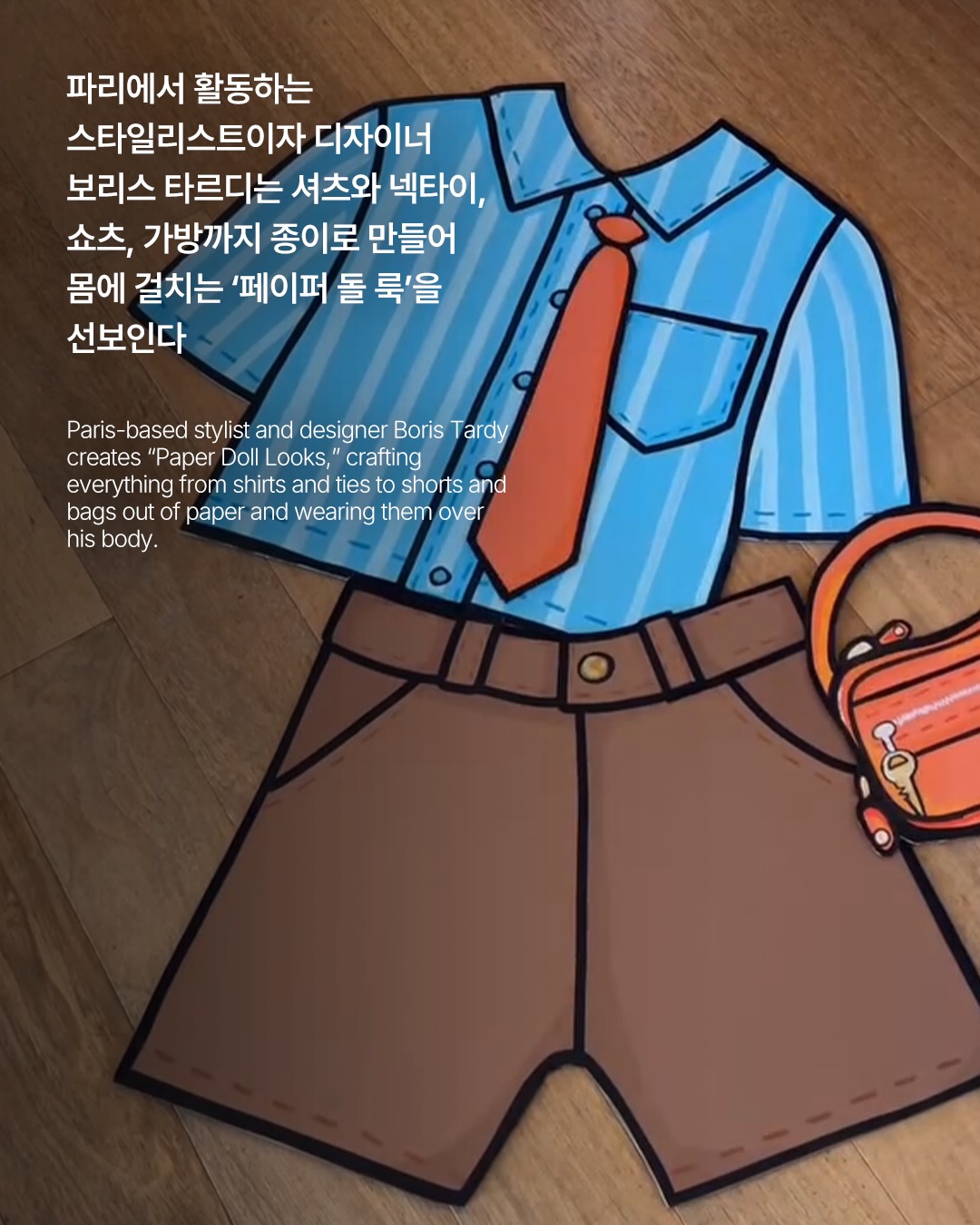
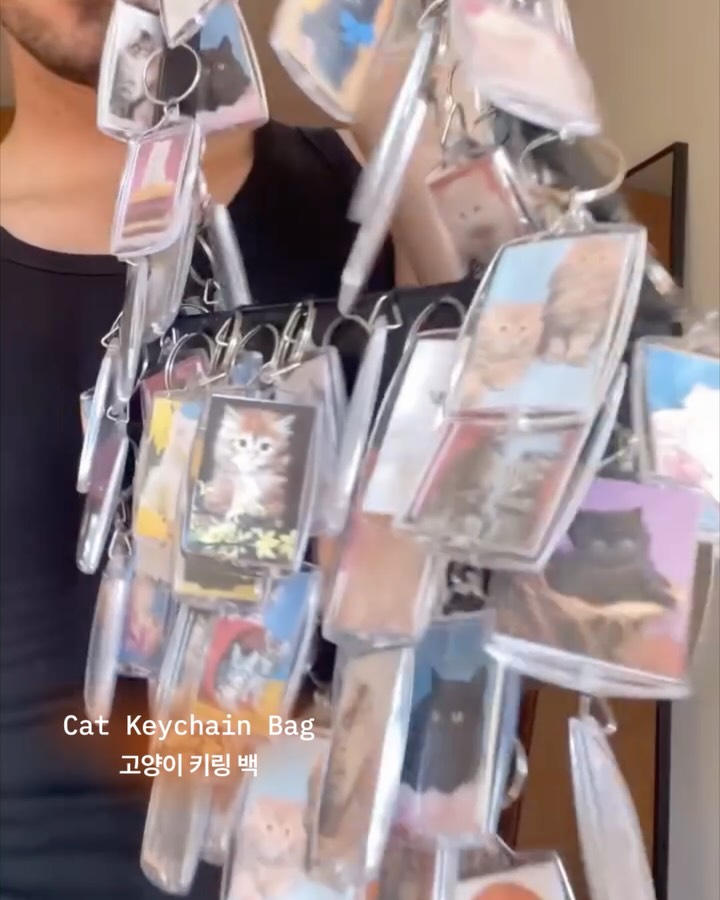
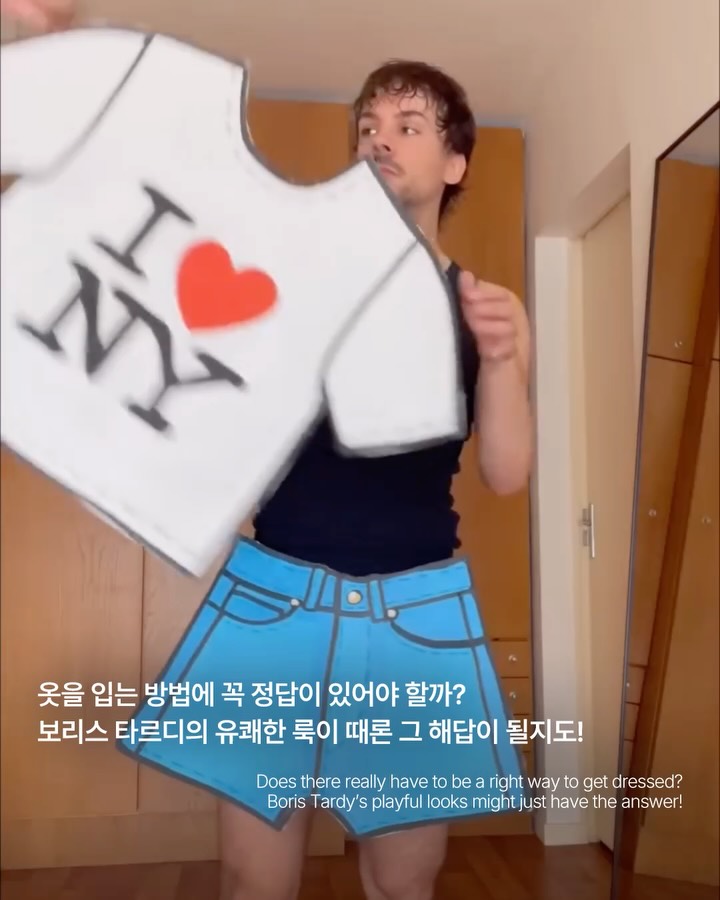
Paris-based stylist and designer Boris Tardy creates "Paper Doll Looks," crafting everything from shirts and ties to shorts and bags out of paper and wearing them over his body. He takes the paper doll outfits we played with as children and blows them up to human scale. Each piece is drawn flat with its outlines and details, then cut and worn in front of the body. A gray checkered top with ribbon details, a striped shirt with a red tie, and brightly colored bags are all made of paper.
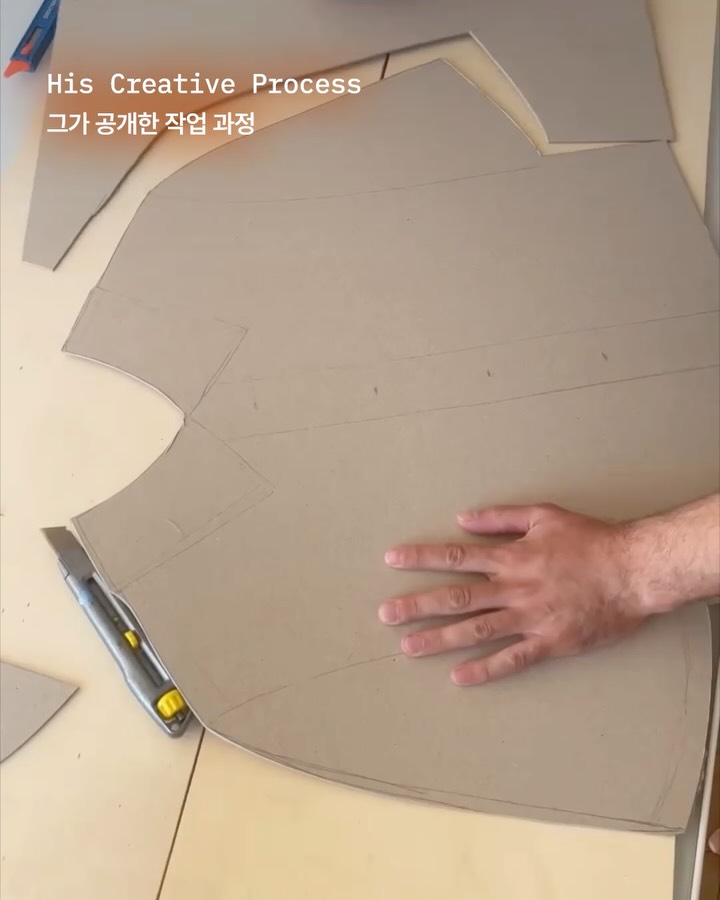
Tardy's process resembles fashion illustration. He sketches the garment on paper and cuts along the lines. Pleats, buttonholes, and pocket details are all rendered meticulously. When the flat drawing overlaps in three-dimensional space, the nostalgia of paper doll play transforms into a fashion experiment. Unlike real clothing, paper looks weigh almost nothing.
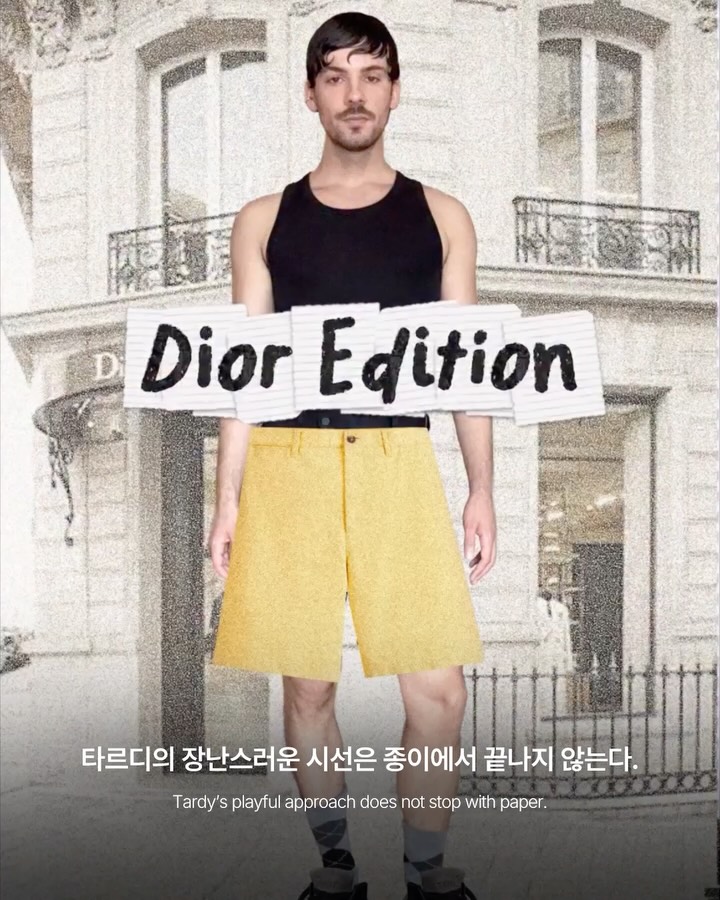
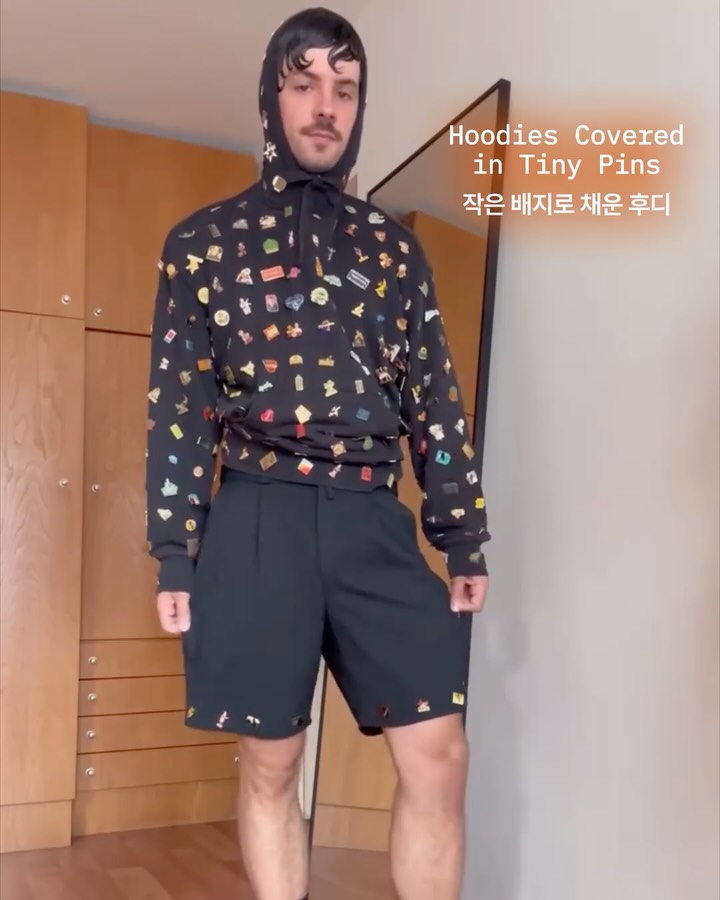
His playful vision does not stop with paper. From hoodies and jackets covered in tiny pins to a hat shaped like a yacht, he adds unexpected elements to familiar garments. Even the way he tilts a round sailor cap and places it on his head defies conventional wear. Tardy pulls fashion outside the rules.
The paper looks prioritize message over utility. They shake the assumption that clothing must be made of fabric and stitching. Even when material and function change, the garment still reads as clothing. Tardy's work reminds us that fashion is not only for wearing but for seeing, enjoying, and questioning. Who says there has to be a right way to get dressed?
Tardy's process resembles fashion illustration. He sketches the garment on paper and cuts along the lines. Pleats, buttonholes, and pocket details are all rendered meticulously. When the flat drawing overlaps in three-dimensional space, the nostalgia of paper doll play transforms into a fashion experiment. Unlike real clothing, paper looks weigh almost nothing.
His playful vision does not stop with paper. From hoodies and jackets covered in tiny pins to a hat shaped like a yacht, he adds unexpected elements to familiar garments. Even the way he tilts a round sailor cap and places it on his head defies conventional wear. Tardy pulls fashion outside the rules.
The paper looks prioritize message over utility. They shake the assumption that clothing must be made of fabric and stitching. Even when material and function change, the garment still reads as clothing. Tardy's work reminds us that fashion is not only for wearing but for seeing, enjoying, and questioning. Who says there has to be a right way to get dressed?


FAQ
What is BORIS TARDIF's paper doll look?
It's an experimental fashion project by Paris designer BORIS TARDIF, who creates shirts, ties, shorts, and bags from paper and layers them on the body. He sketches garment outlines and details flat, cuts them out, and overlays them life-size, recreating childhood paper doll play at human scale.
What materials does BORIS TARDIF work with?
TARDIF primarily uses paper to cut out garment shapes, but also presents regular clothing with unexpected elements—hoodies and jackets densely covered with small badges, yacht-shaped hats, and other surprise additions.
What is BORIS TARDIF's working process?
TARDIF sketches clothing on paper and cuts along the lines with scissors. He meticulously renders creases, buttonholes, and pocket details, transforming flat drawings into three-dimensional pieces worn layered in physical space.