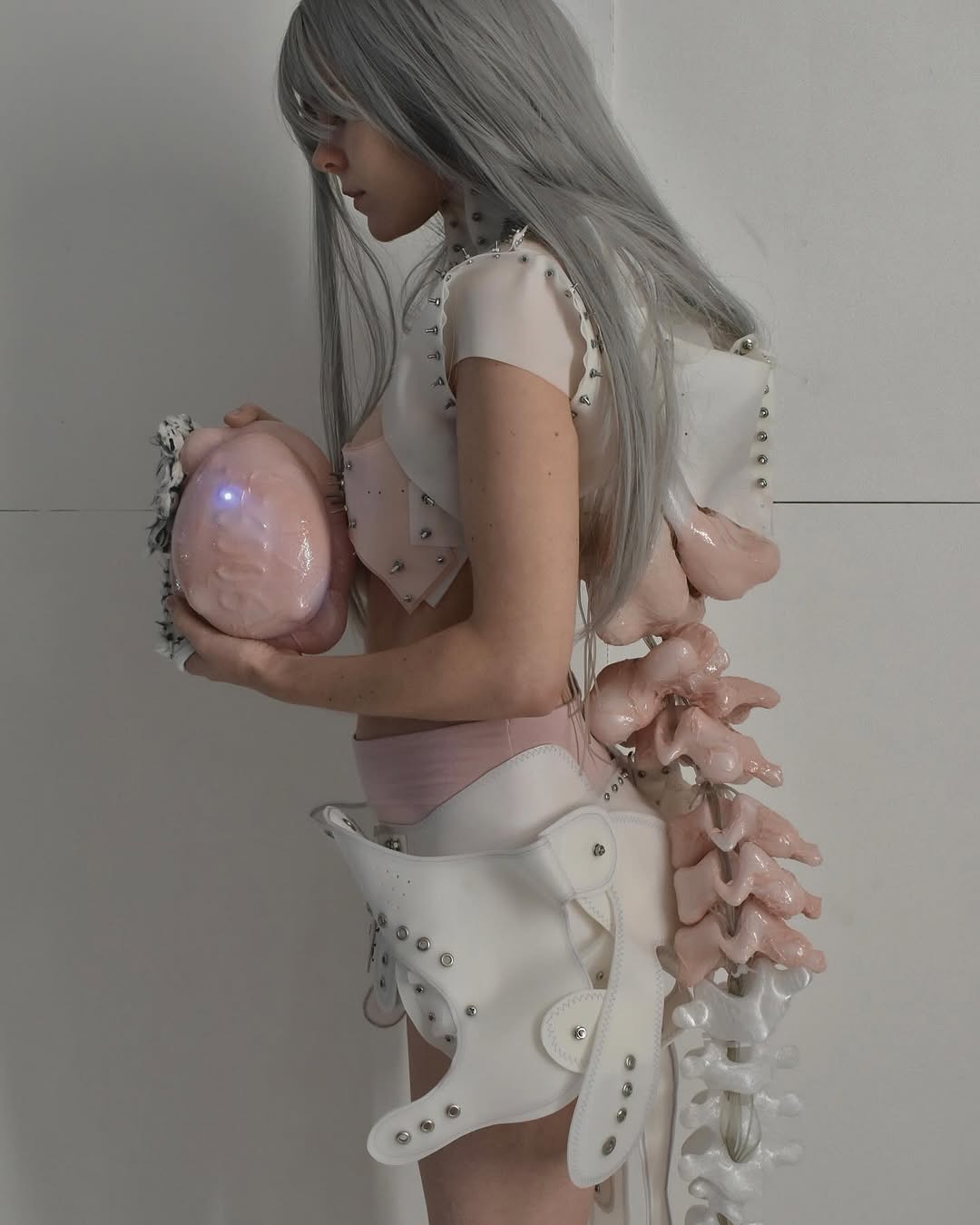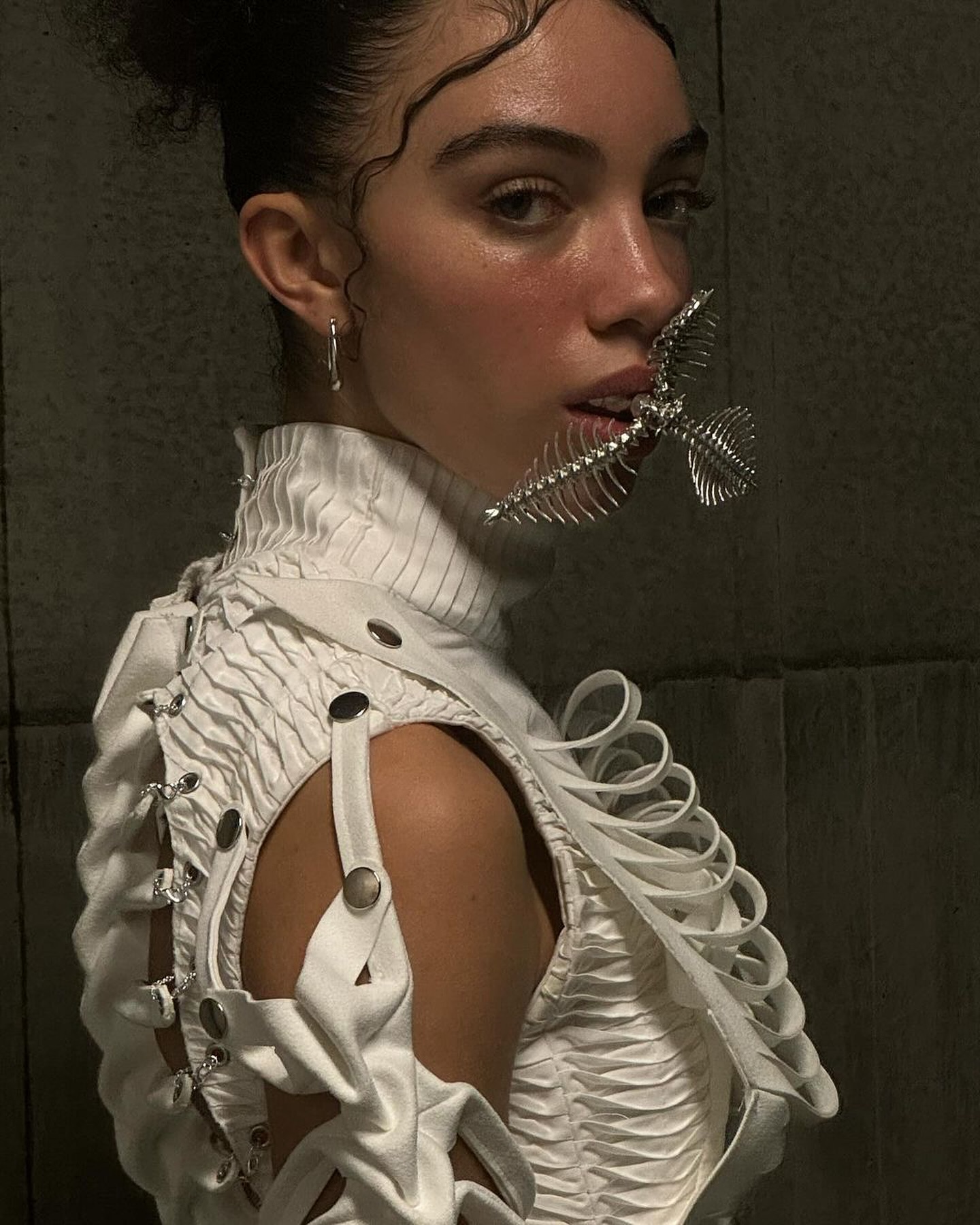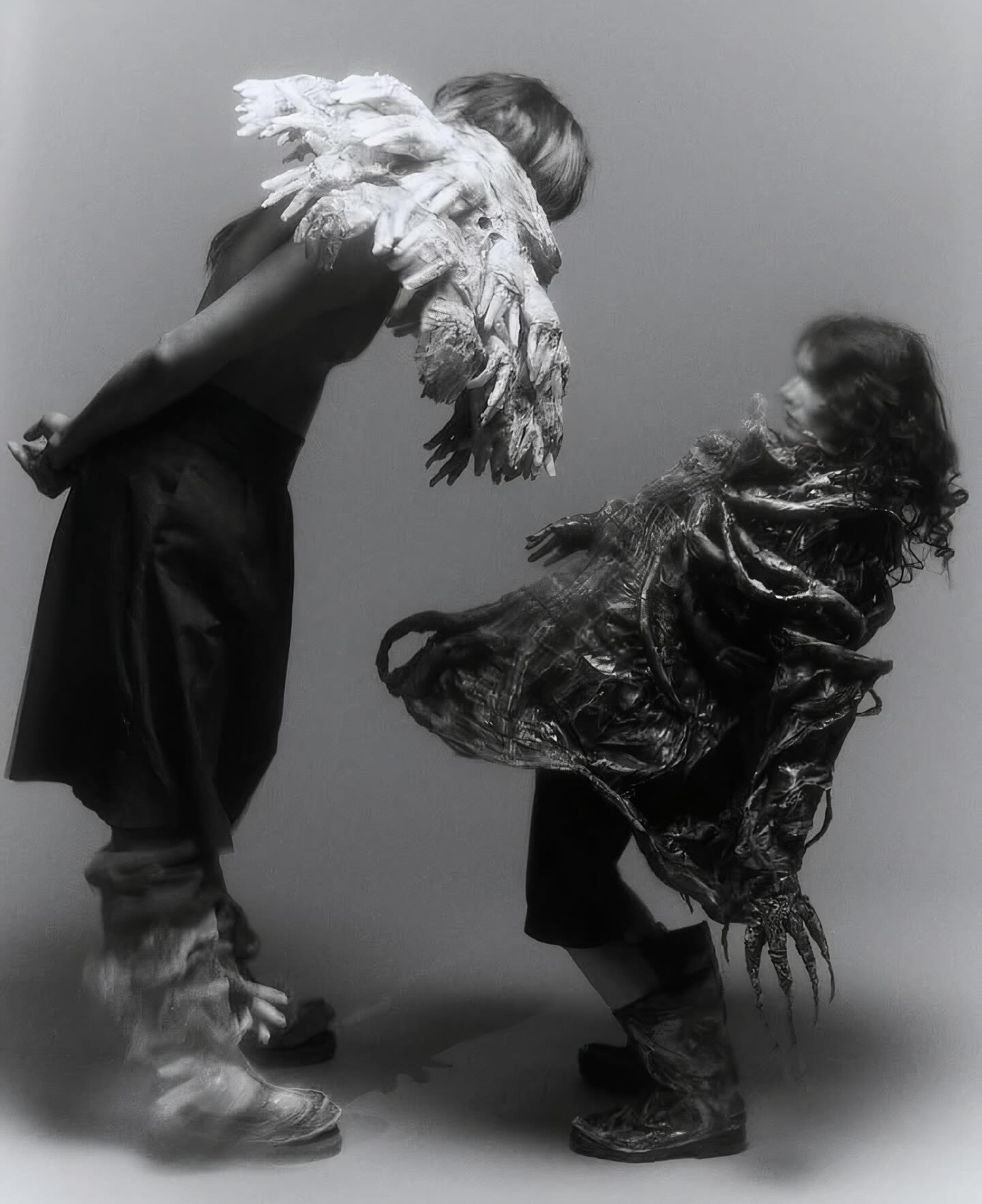
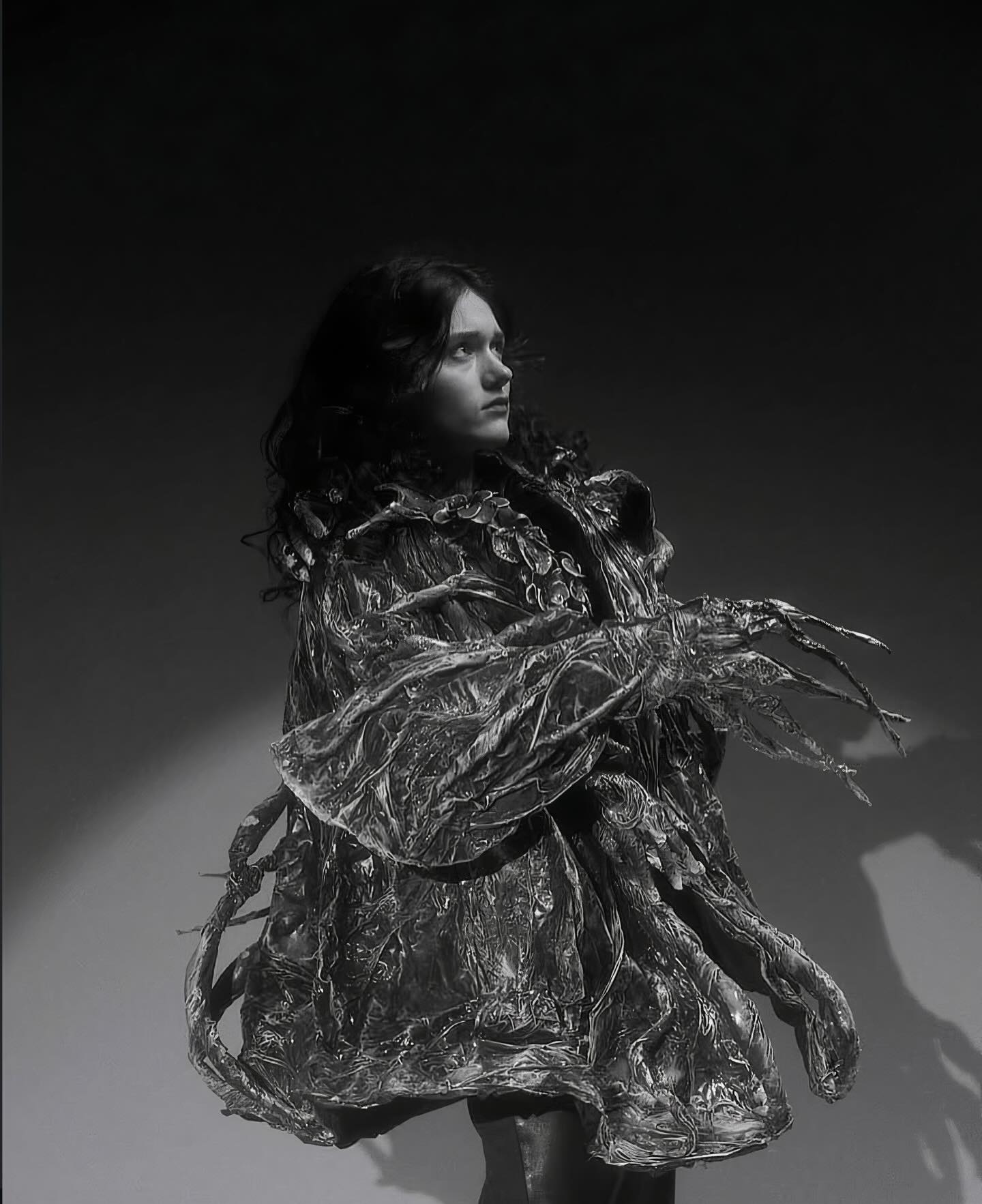
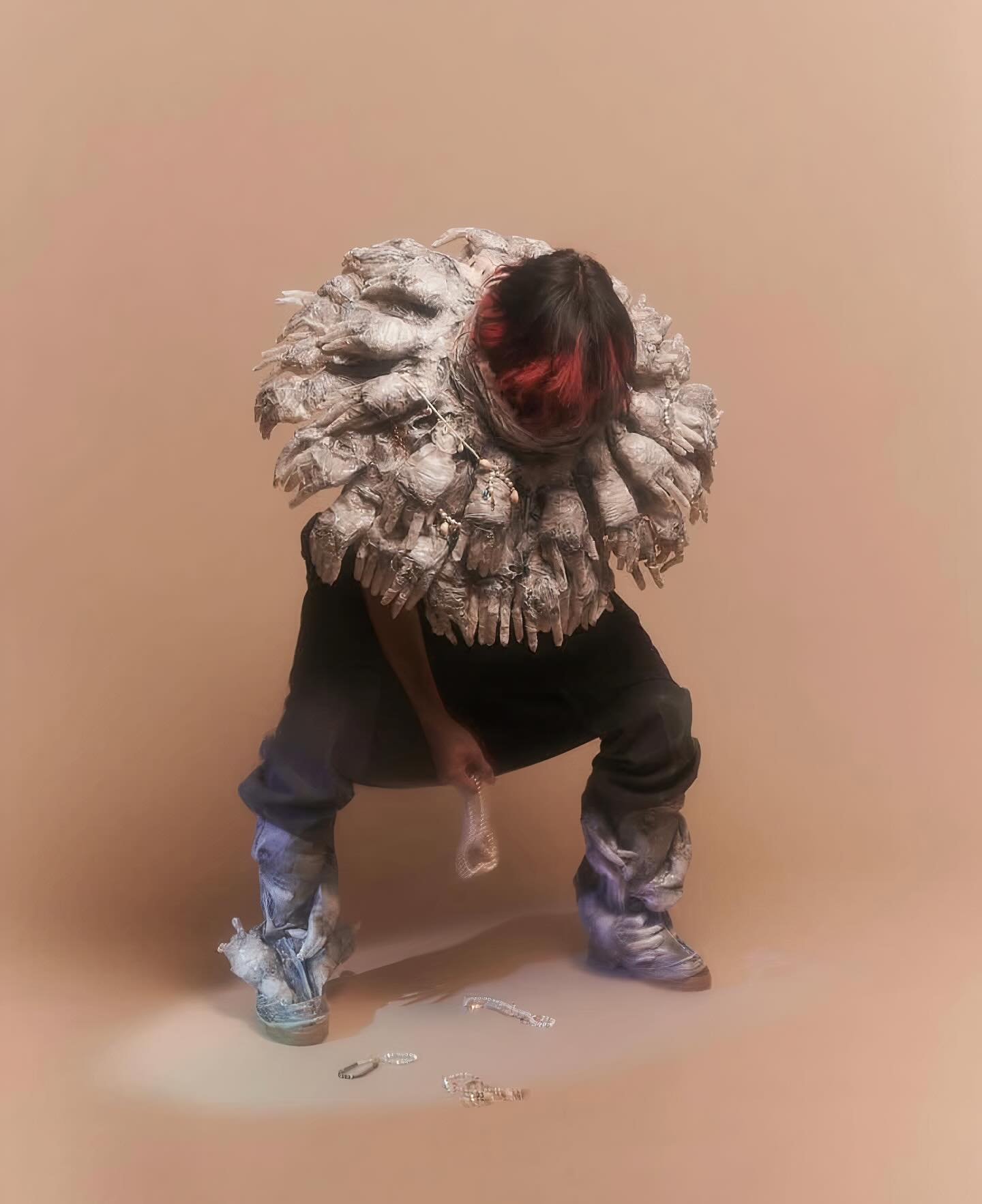
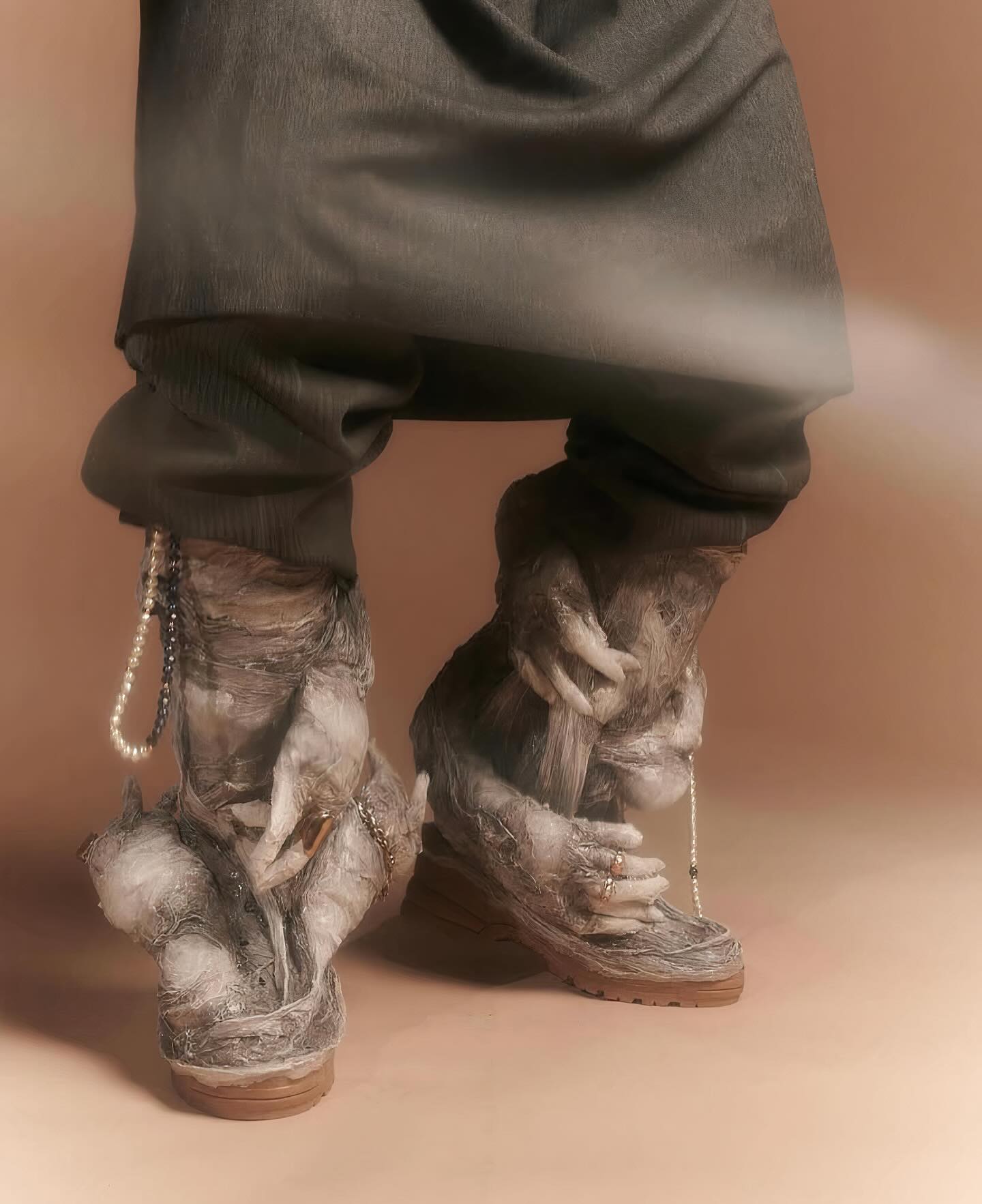
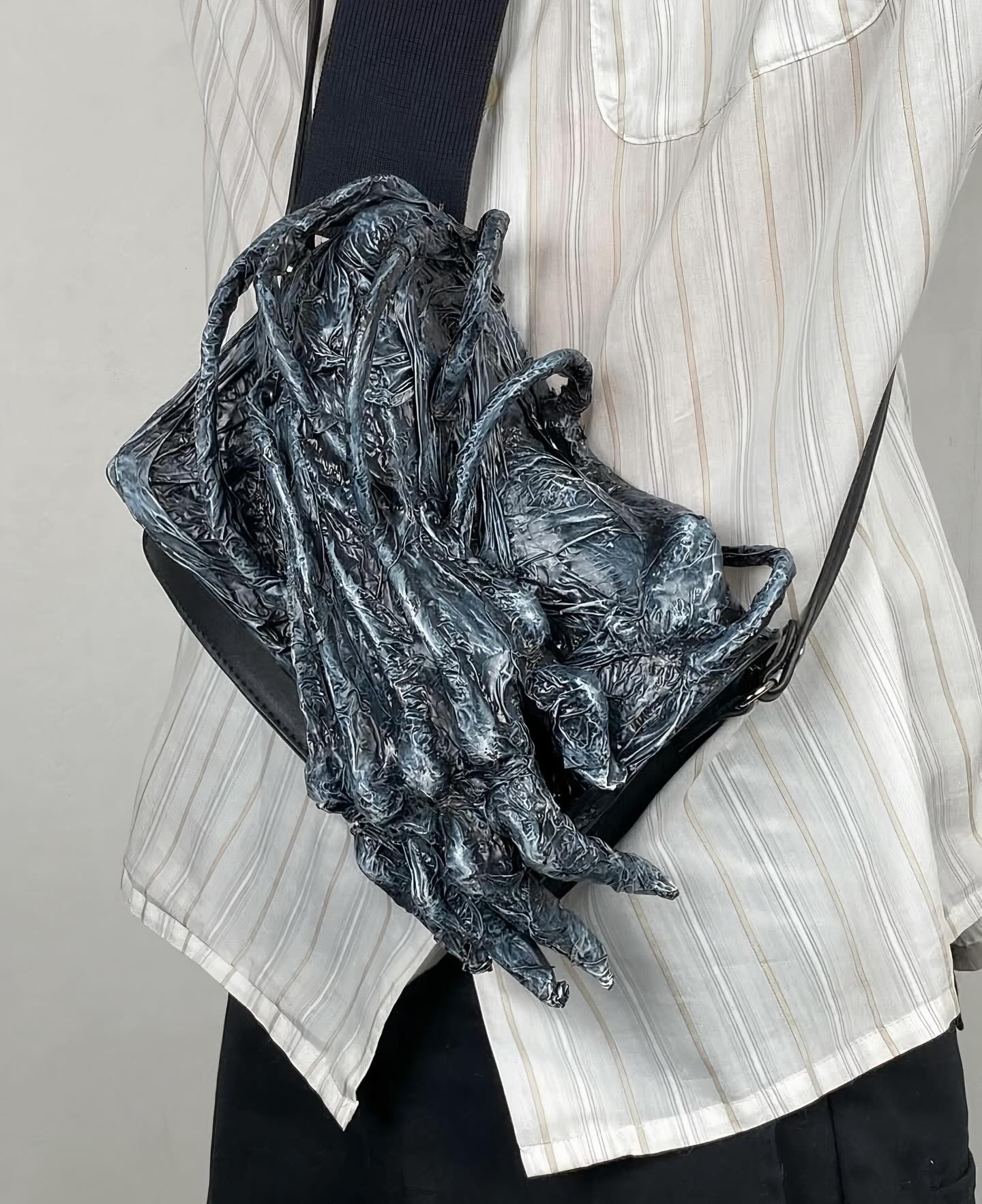
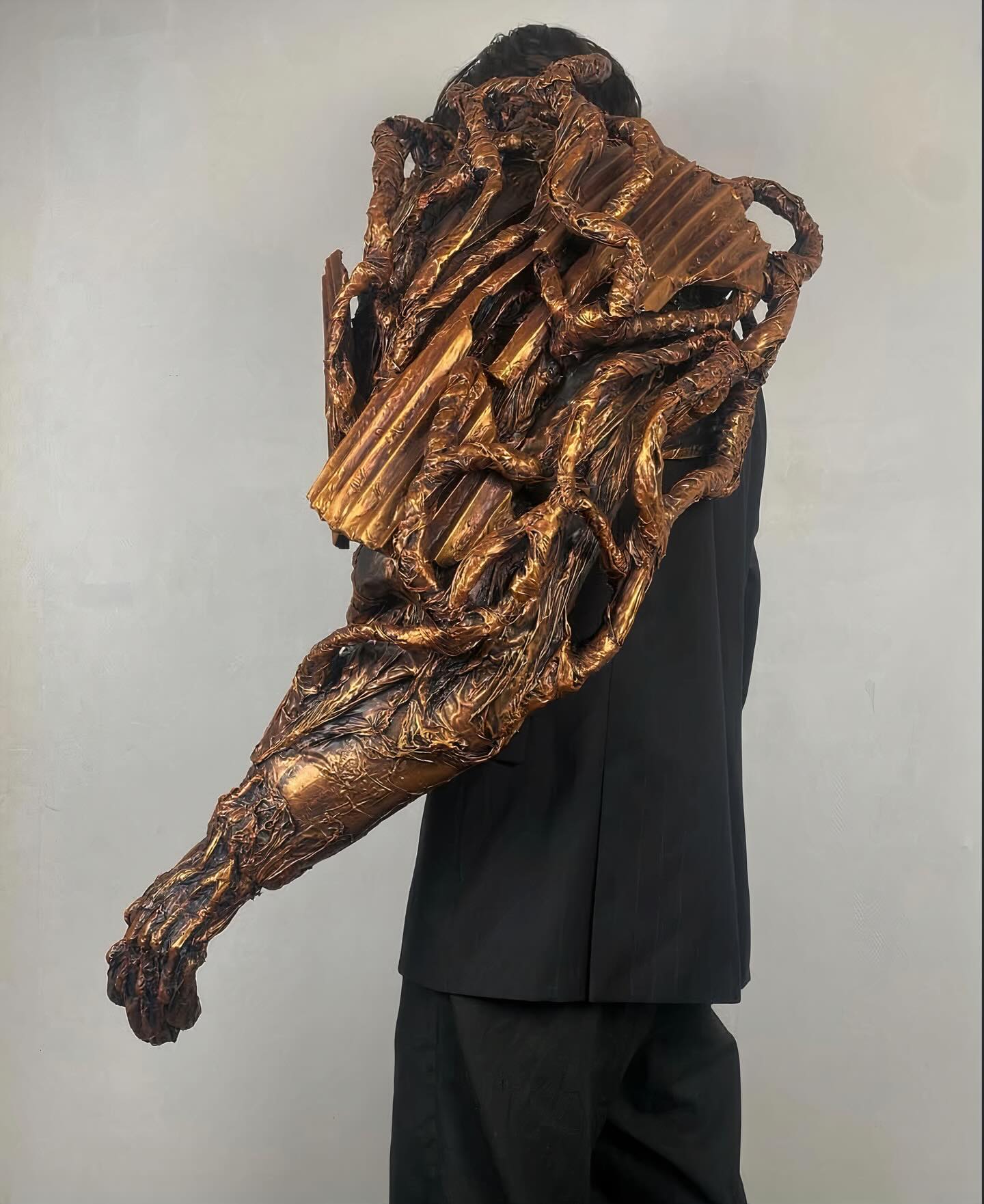
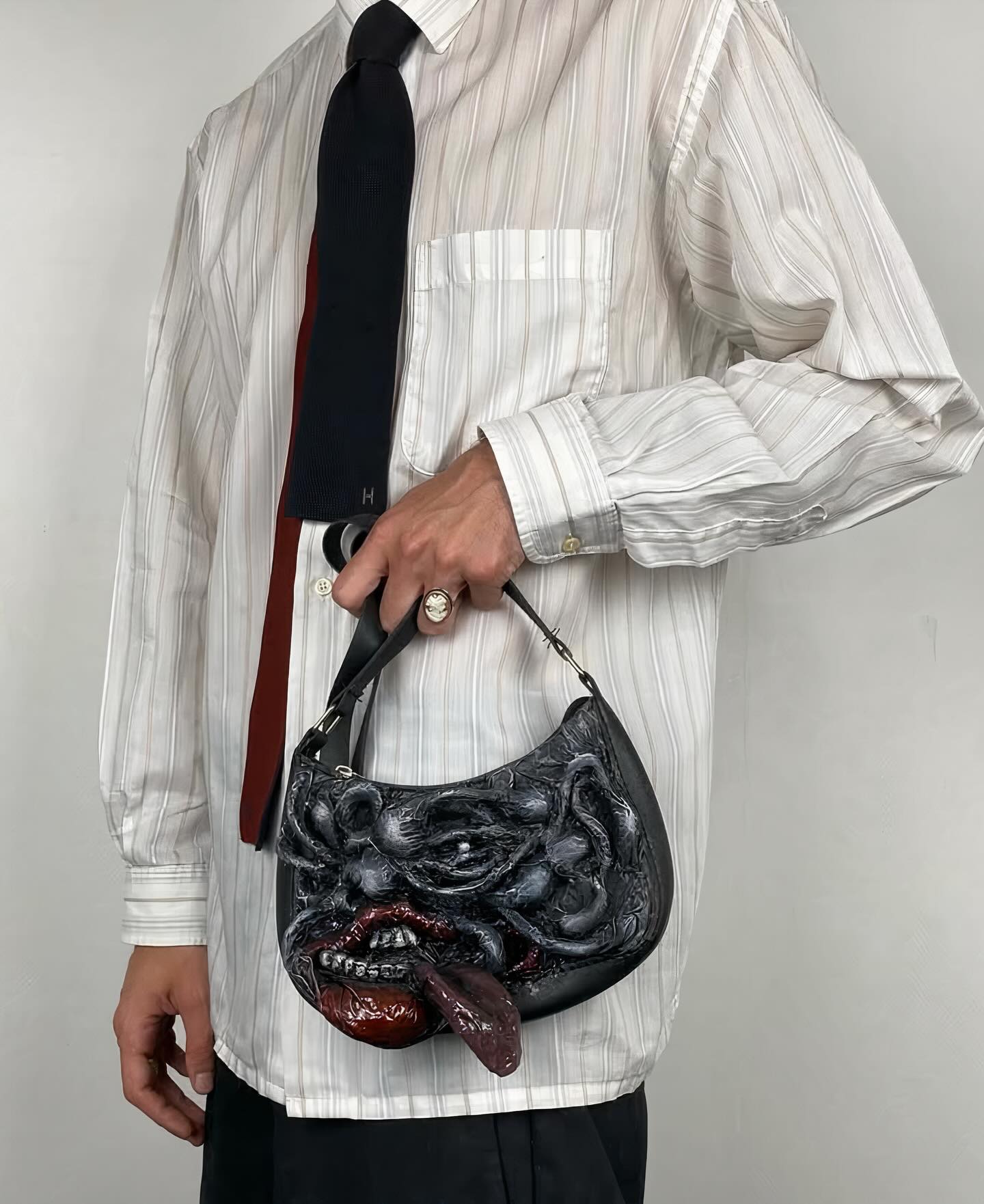
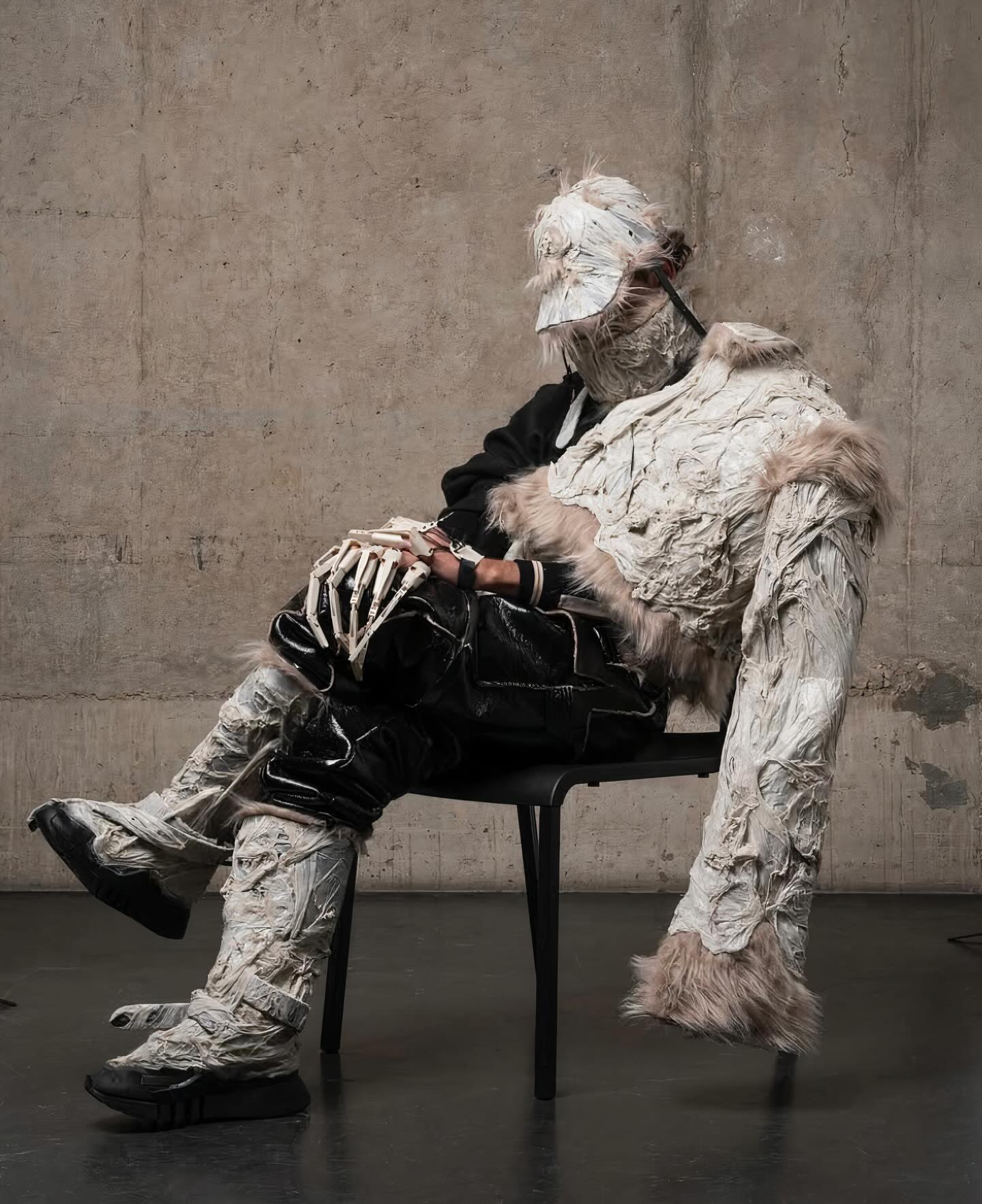
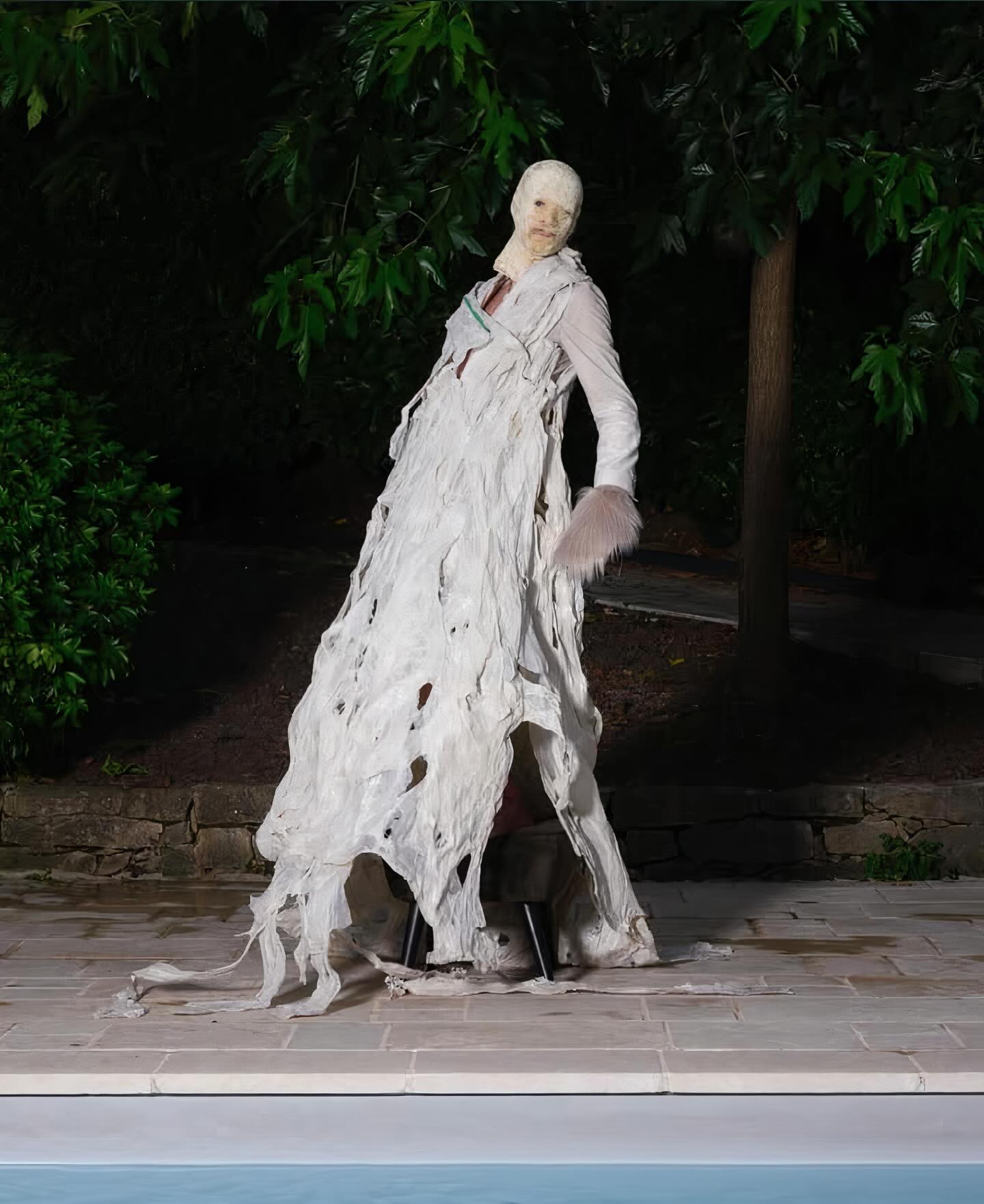
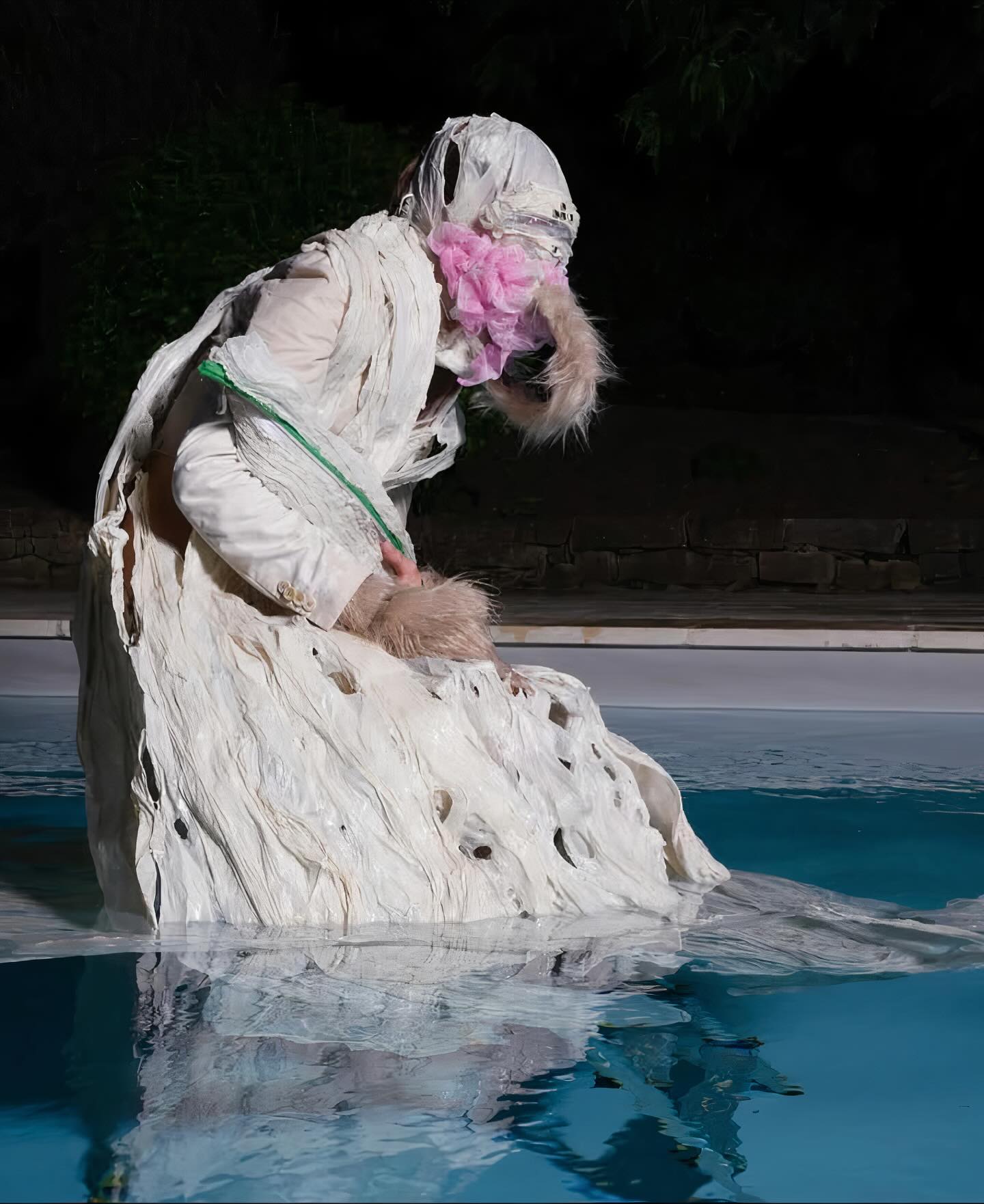
Lenn's aesthetic rejects perfection. The beauty he pursues lies in the rhythm of imperfection, the texture of transformation, and the instinctive energy radiated by existence itself. His work, combining sculptural forms with organic textures, proves that fashion can be a medium that poses existential questions beyond mere decoration. Each piece becomes a testament to the dynamic relationship between material and human form.
PAP Magazine observes this post-human sensibility, exploring the vitality of raw materiality and the aesthetics of metamorphosis. Photographer Marie Hagénin (@marie_hgnin) captures this philosophical vision through stark black-and-white compositions, visually translating the fluid boundaries between body and garment, human and material. Lenn's work demonstrates that fashion can serve as an artistic language for investigating life, change, and the essence of being beyond physical form.
FAQ
What is APOLLO REN's design philosophy?
APOLLO REN redefines clothing not as mere objects to wear but as living organisms. In his work, garments aren't made—they grow, following the body's contours yet creating their own order, functioning as a second skin that merges with the human form.
What does post-human fashion mean?
Post-human fashion moves beyond anthropocentric thinking to dismantle and redefine the boundary between garment and body. As in APOLLO REN's work, it explores moments when clothing transcends covering the body to become the body itself, posing ontological questions through the aesthetics of imperfection and transformation.
What are the texture characteristics of APOLLO REN's work?
Corroded surfaces and tangled fibers visually express cycles of deconstruction and regeneration. These organic textures reject perfection, capturing the rhythm of incompleteness, the vital texture born of transformation, and the instinctive energy radiated by existence itself.