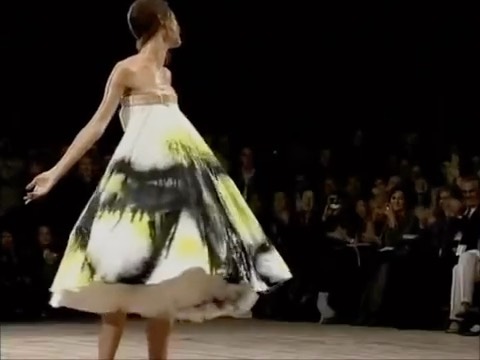
This performance transcended the boundaries of a traditional fashion show, becoming an artistic act in itself. McQueen unveiled the process of garment creation live on the runway, blurring the lines between fashion and performance art. The ecstasy created by the fusion of music, movement, and real-time creation left an indelible impression on the audience.
While Coperni made headlines in 2022 by spray-painting a dress directly onto Bella Hadid's body, McQueen had already introduced the spray-on garment concept 23 years earlier. Though the technical approaches differed, the essence remained the same: elevating the garment-making process into live performance art.
These poetic yet radical moments that Alexander McQueen delivered continue to inspire the fashion world today. We still long for that era of McQueen, when pure aesthetic beauty and artistic audacity coexisted in perfect harmony.
FAQ
What performance happened at Alexander McQueen's 1999 No.13 show?
At the finale of the 1999 S/S No.13 show, a model stood in a pristine white dress while two men spray-painted it with black and yellow. As the model rotated like a music box ballerina, the garment was completed in real time as an artistic performance.
How does the Coperni show relate to Alexander McQueen's spray dress?
While Coperni made headlines in 2022 by spray-painting a dress directly onto Bella Hadid, Alexander McQueen presented the concept 23 years earlier at his 1999 No.13 show. Though the technology differed, the essence of elevating garment creation into live performance was identical.
Why is Alexander McQueen's No.13 show important in fashion history?
The No.13 show was a groundbreaking moment that blurred fashion and performance art. It elevated the garment-making process itself into artistic expression, demonstrating pure aesthetic beauty alongside radical innovation, and remains an inspirational historical reference for the fashion industry today.