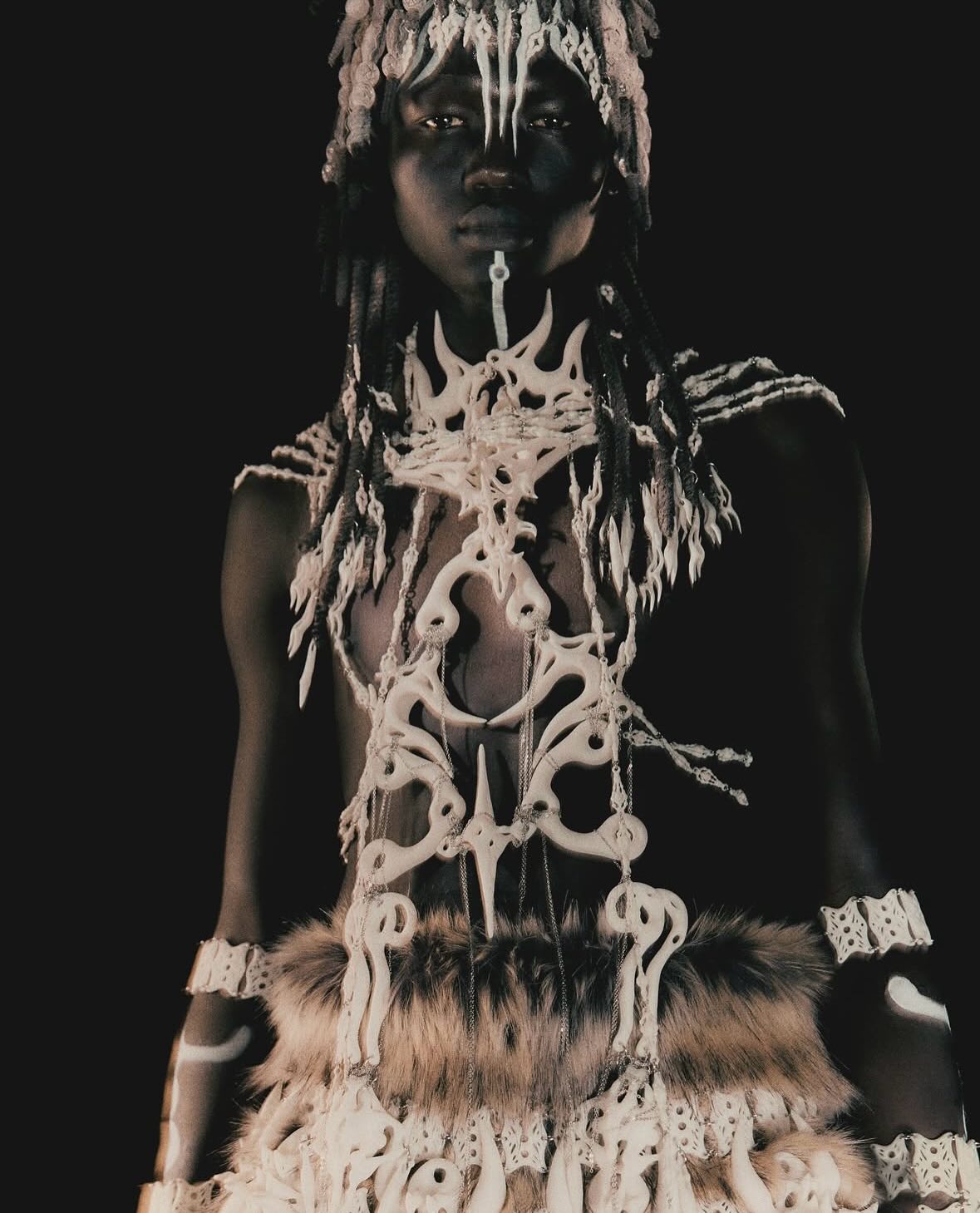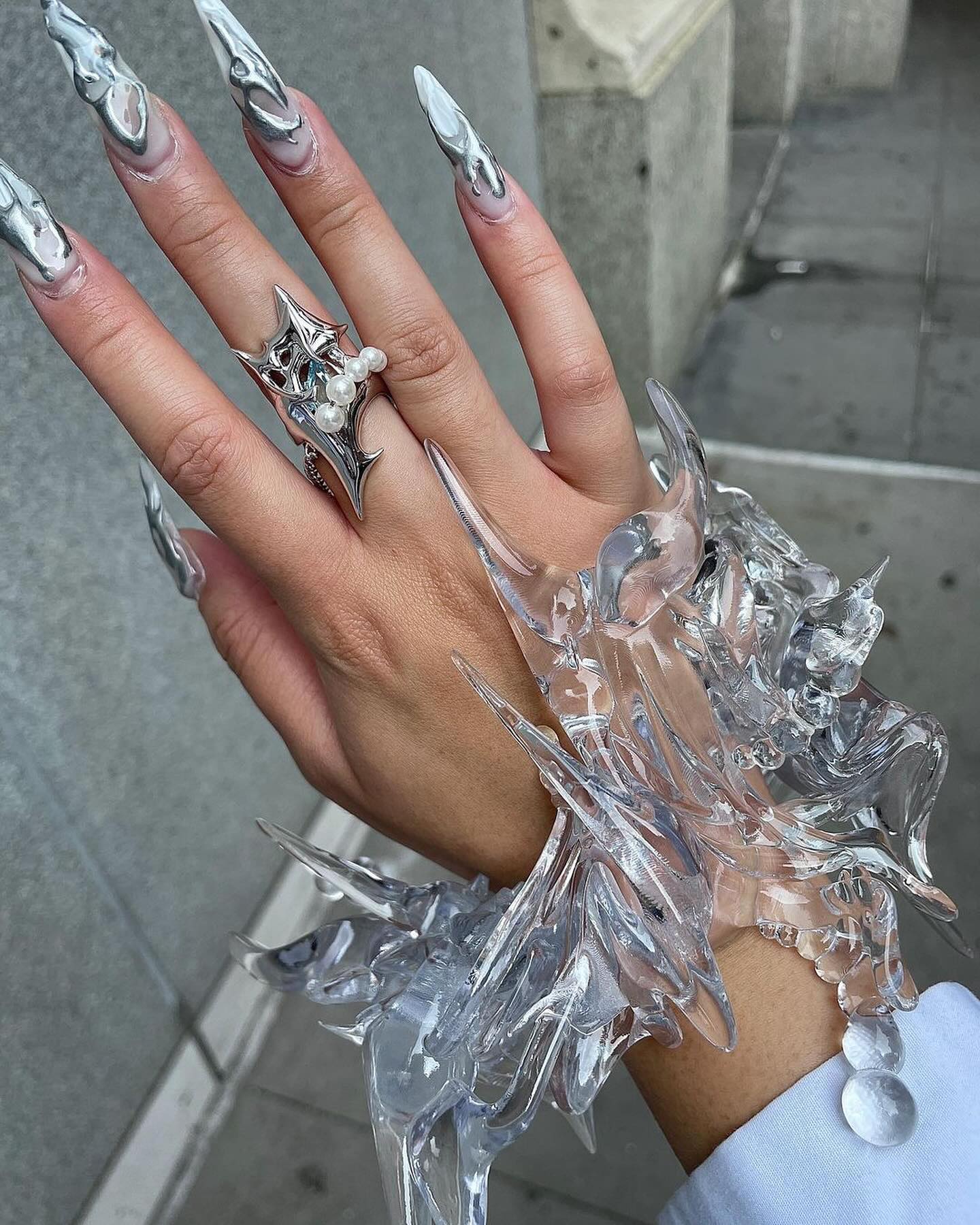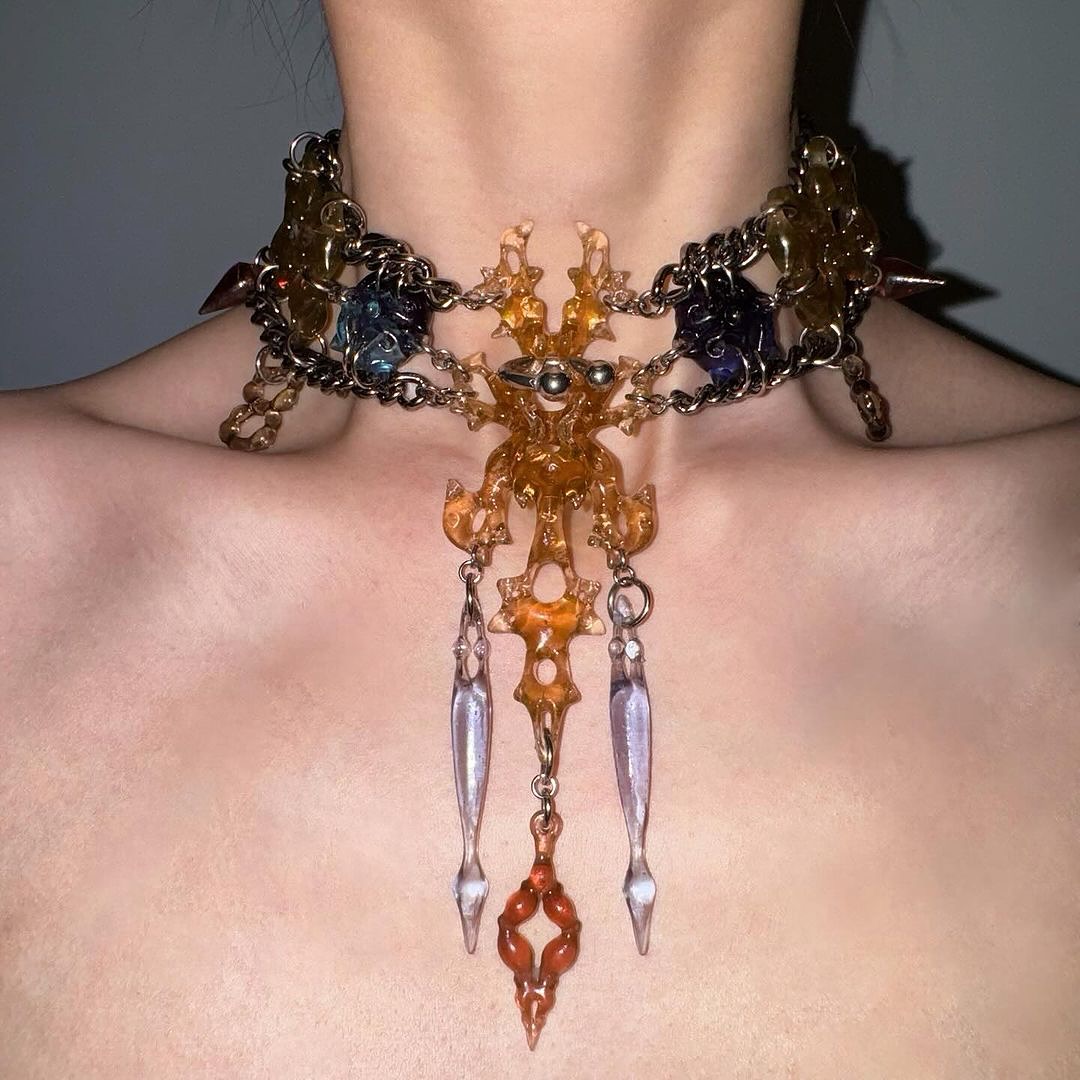
886's design philosophy is rooted in exploring the realm of possibilities based on Ancient Future concepts, drawing inspiration from both natural and artificial structures. The brand employs a unique sculptural language that blurs the boundaries between virtual and physical worlds, proposing a new craft methodology for the digital age.
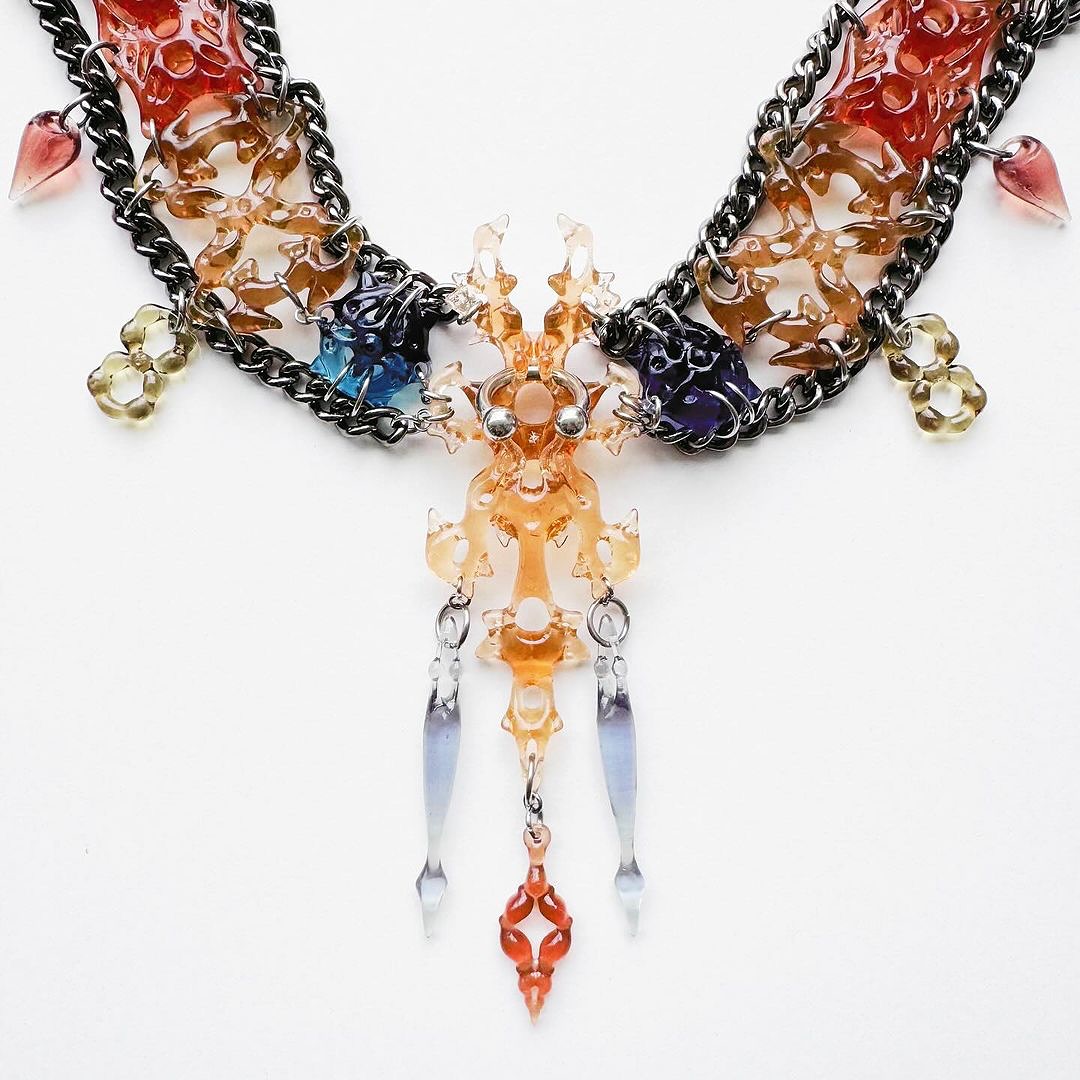
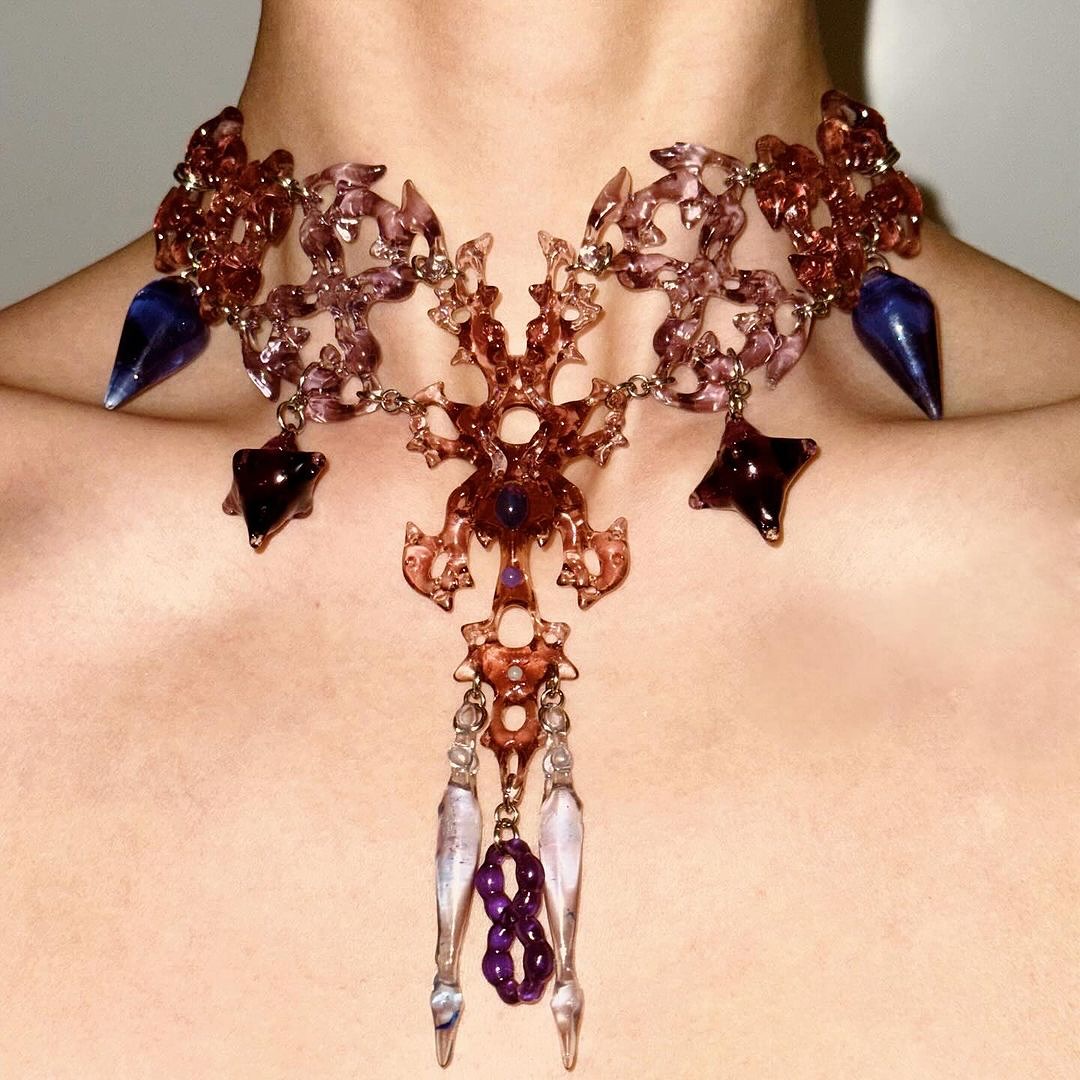
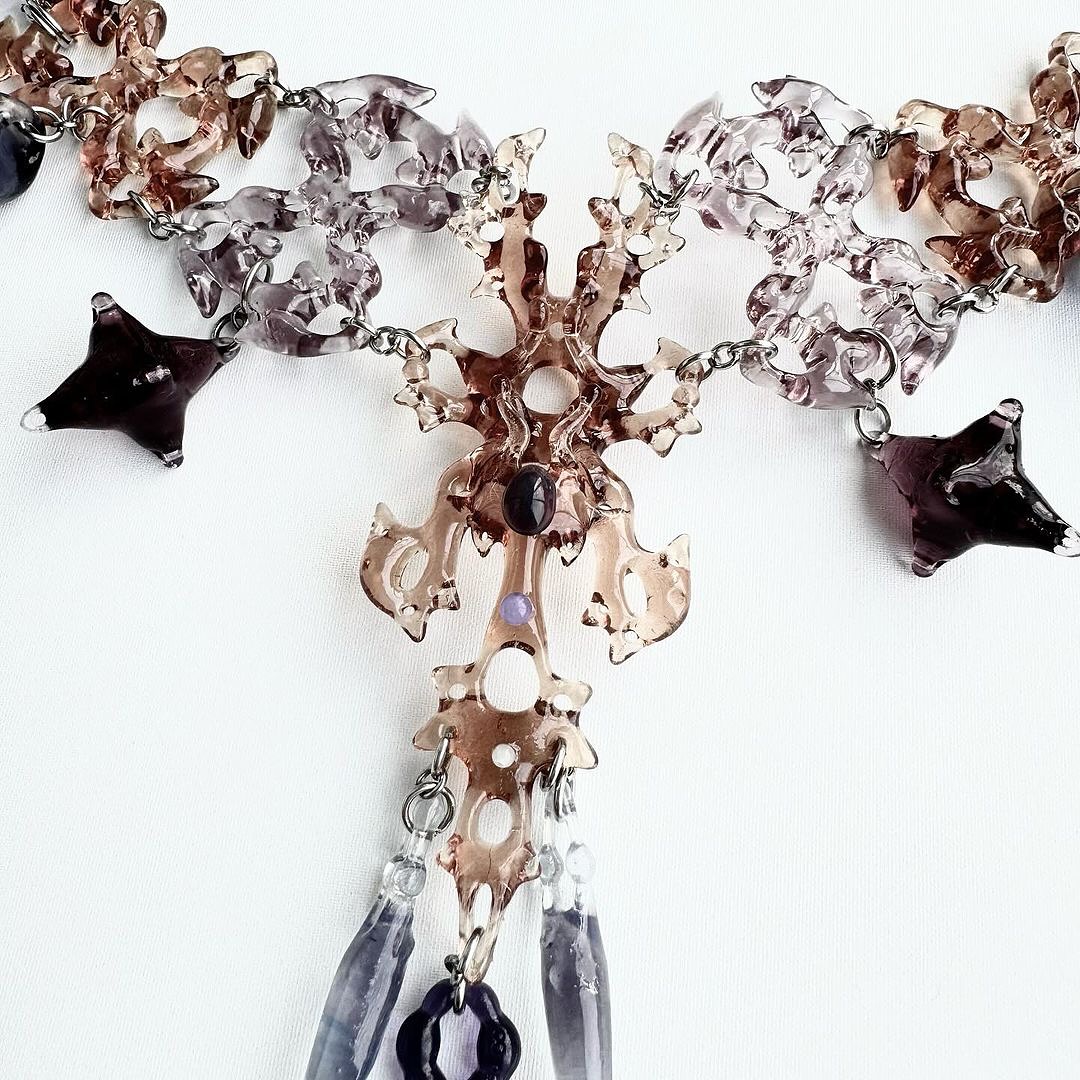
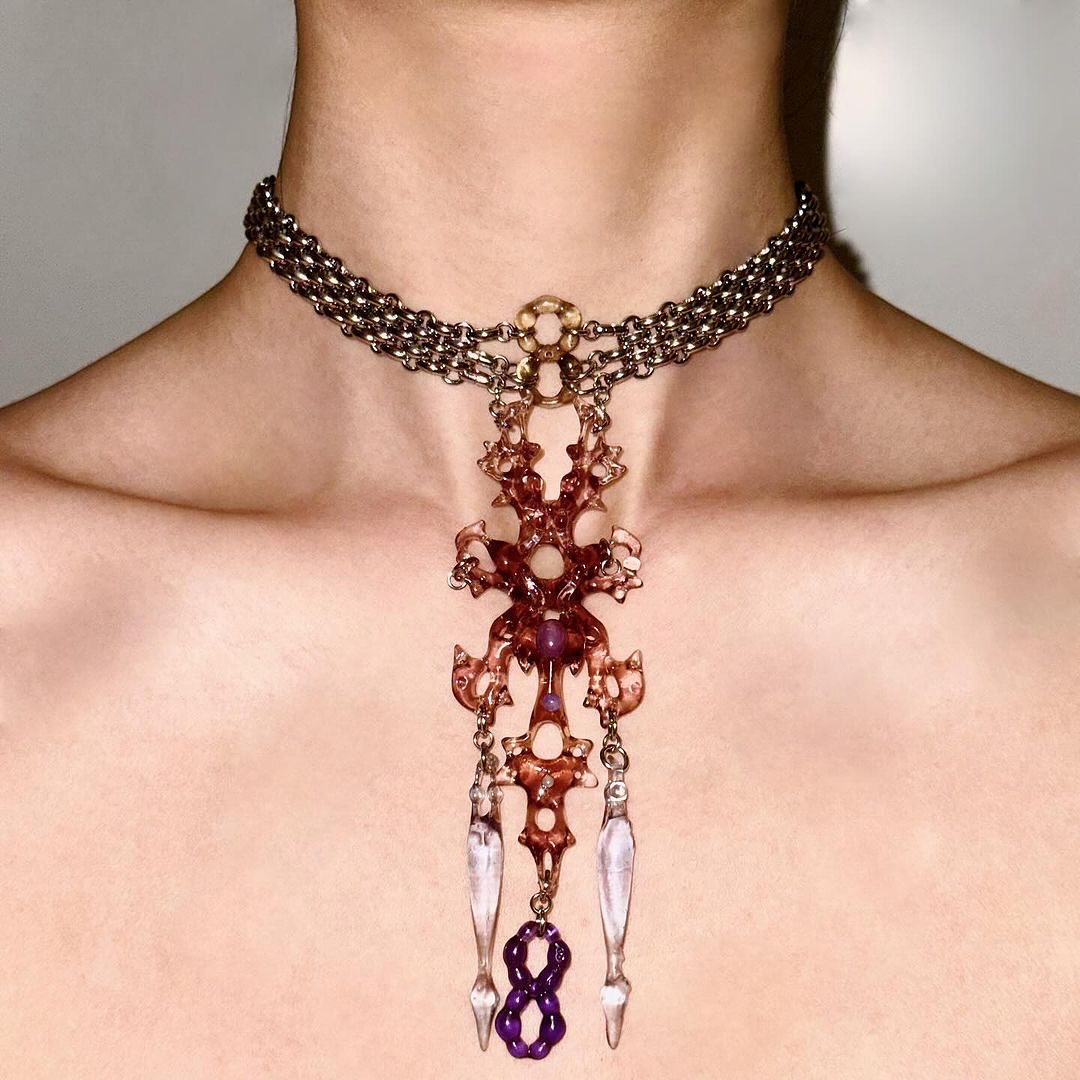
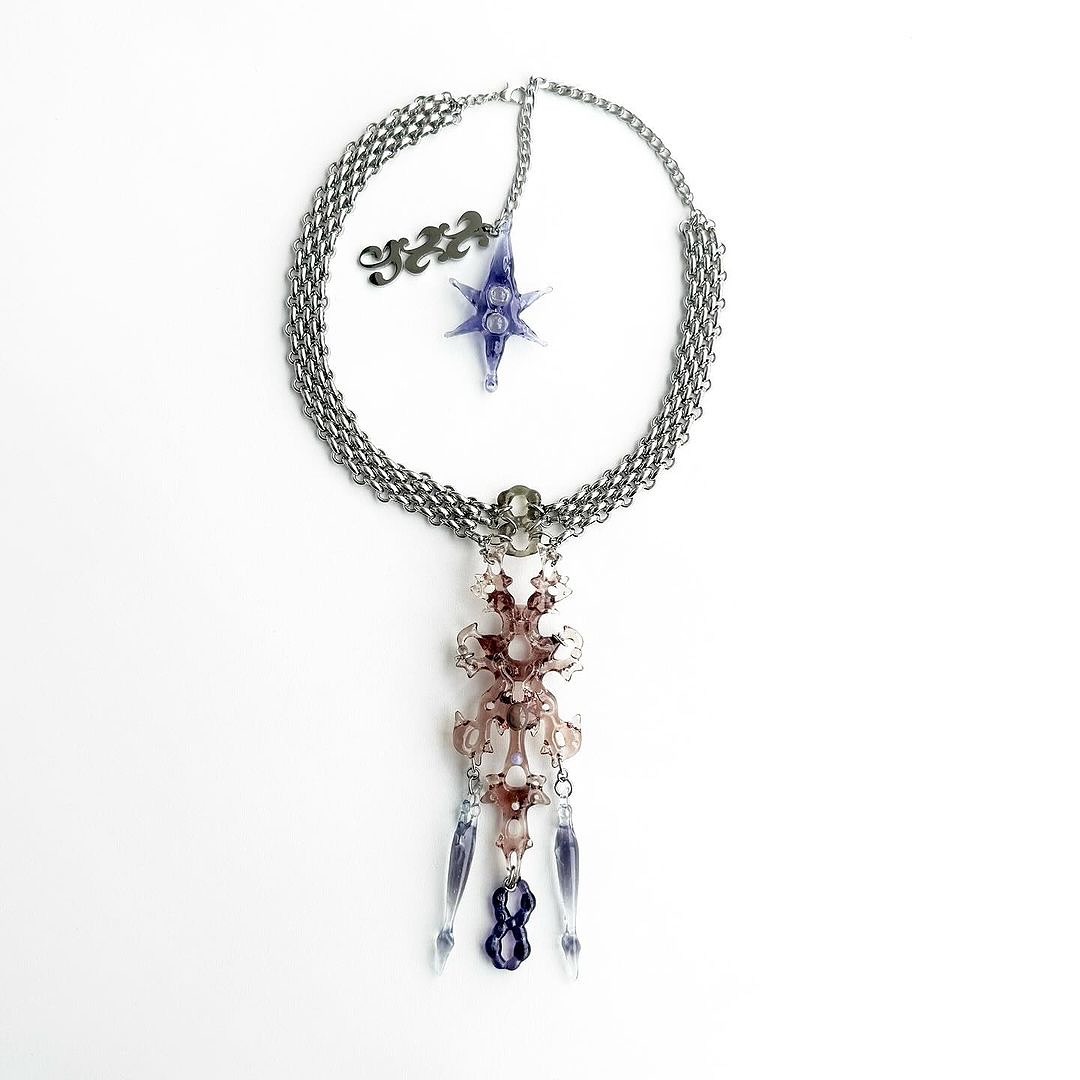
The choker worn around the neck particularly stands out, combining chains with organic 3D-printed elements to create an aesthetic that is simultaneously futuristic and primitive. The interplay of golden hues and transparent resin materials evokes a unique sensibility that exists somewhere between museum artifacts and avant-garde fashion pieces.
886's approach, which merges sustainability with innovative production methods, points toward a new direction for the fashion accessory industry. It demonstrates how 3D printing technology is evolving beyond mere manufacturing technique into a tool for artistic expression.
FAQ
How are 886 brand accessories made?
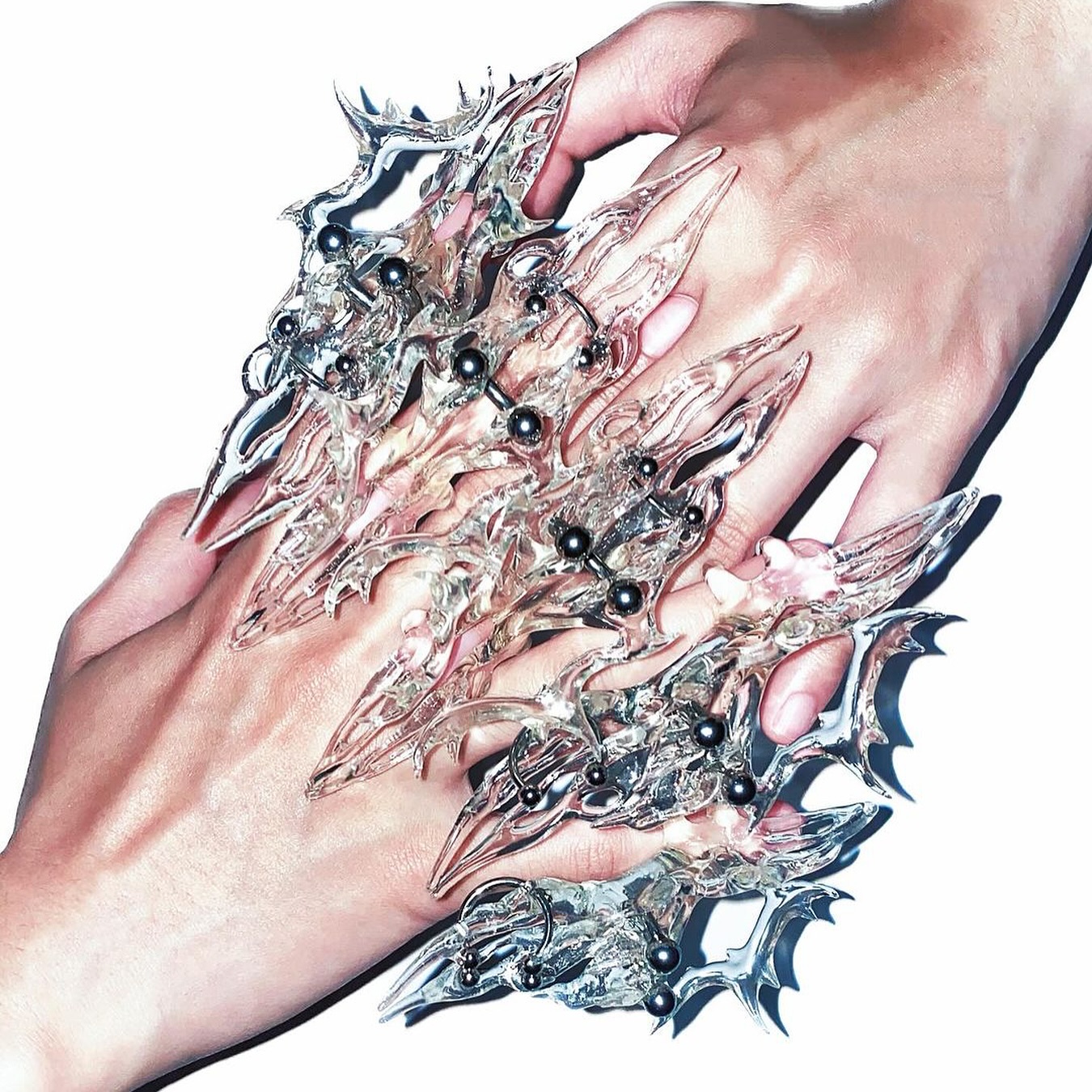
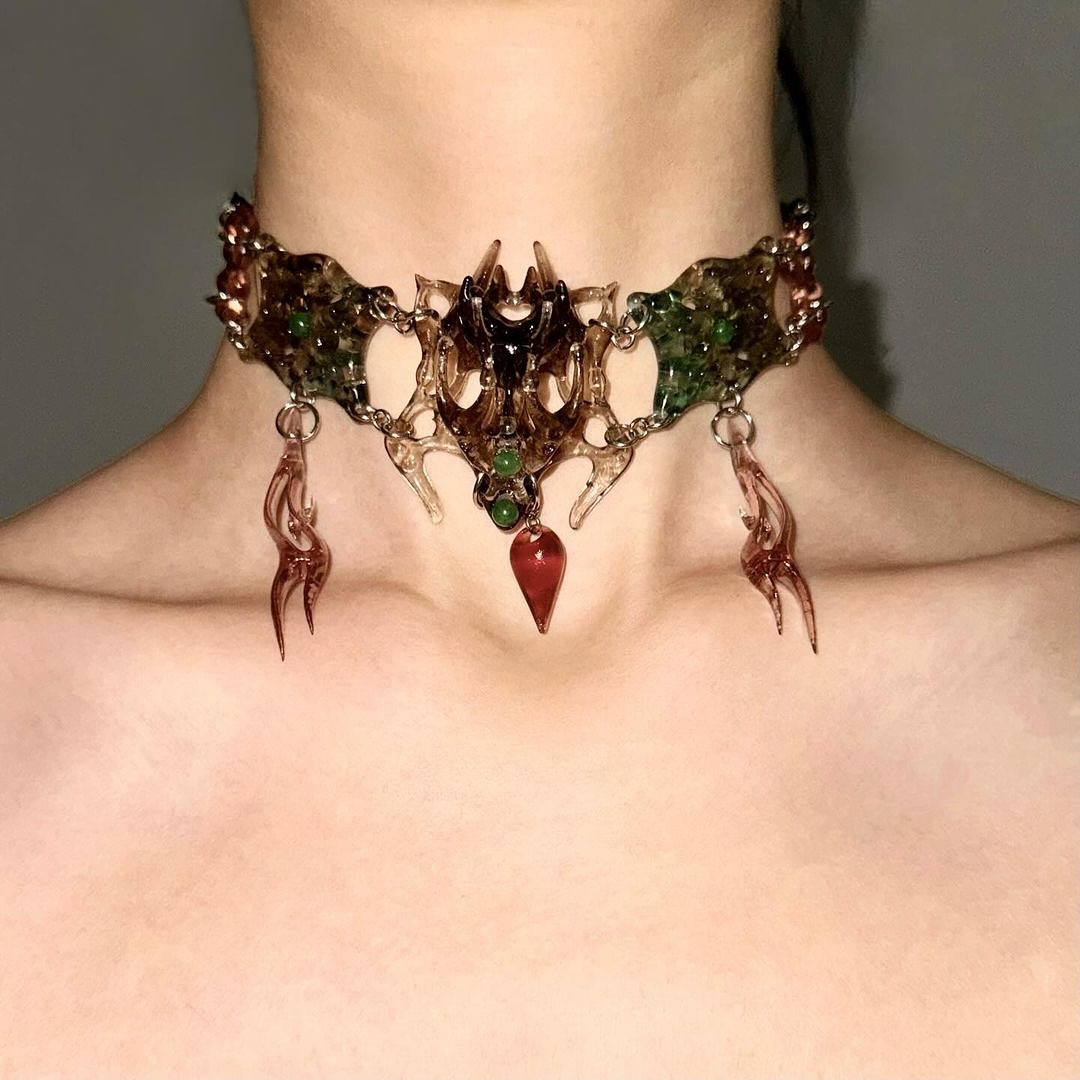
All 886 accessories are handcrafted using 3D techniques with plant-based materials. They feature organic forms that grow like marine life or unknown plants, and are designed with inspiration from nature and artificial structures based on an ancient-future concept.
What are the characteristics of 3D-printed accessories?
3D-printed accessories allow complex, organic forms that are difficult to achieve with traditional methods. In 886's case, they combine transparent resin and metal to blur the boundary between virtual and real, while using plant-based materials to pursue sustainability.
Where does 886 draw design inspiration from?
886 draws inspiration from both nature and artificial structures based on an Ancient Future concept. Using organic forms like marine life or unknown plants as motifs, they explore the boundary between virtual and real worlds through primitive yet futuristic sculptural language.